
Table of Content [Hide]
1. Introduction
2. What Is Bearing Internal Clearance?
3. Why Clearance Matters in Bearing Design
4. Traditional vs. Automated Clearance Selection
5. How Automated Clearance Selection Works
6. Standards and Clearance Classification
7. Benefits of Automated Clearance Testing
8. Real-World Applications
9. Conclusion
Automatic Selection and Detection of Clearance for Inner and Outer Rings of Double-Row Ball Bearings
1: Automatic Selection and Detection of Clearance for Double-Row Ball Bearings
2: What Is Bearing Internal Clearance?
2.1: Why Clearance Matters in Double-Row Ball Bearings
2.2: Automated Clearance Selection vs Manual Methods
2.3: How Automatic Clearance Detection Works
3: Component Scanning and Measurement
3.1: Pairing and Assembly in Automation
3.2: Clearance Verification Testing
3.3: Industry Standards (ISO & Tolerance)
3: Real-World Industrial Application
4: Benefits of Automated Clearance Systems
5: Conclusion
Introduction
In modern machinery, performance, longevity and reliability depend heavily on the bearings that support moving parts. Among various bearing types, double-row ball bearings are widely used in applications requiring radial load capacity with some axial load support, such as automotive transmissions, industrial gearboxes, and heavy rotating equipment. One of the most critical parameters affecting bearing performance is internal clearance — the small, controlled gap between the bearing’s inner and outer rings. Professional wheel hub bearing manufacturers like DSBR apply consistent dimensional measurement, pairing logic, and quality verification across multiple bearing structures to support diverse industrial requirements.
This article explores what bearing clearance is, why it matters, and how automatic selection and detection systems improve the precision and consistency of internal clearance in double-row ball bearings. We will also cover relevant technical standards, measurement methods, and the engineering benefits of optimized clearance control.
What Is Bearing Internal Clearance?
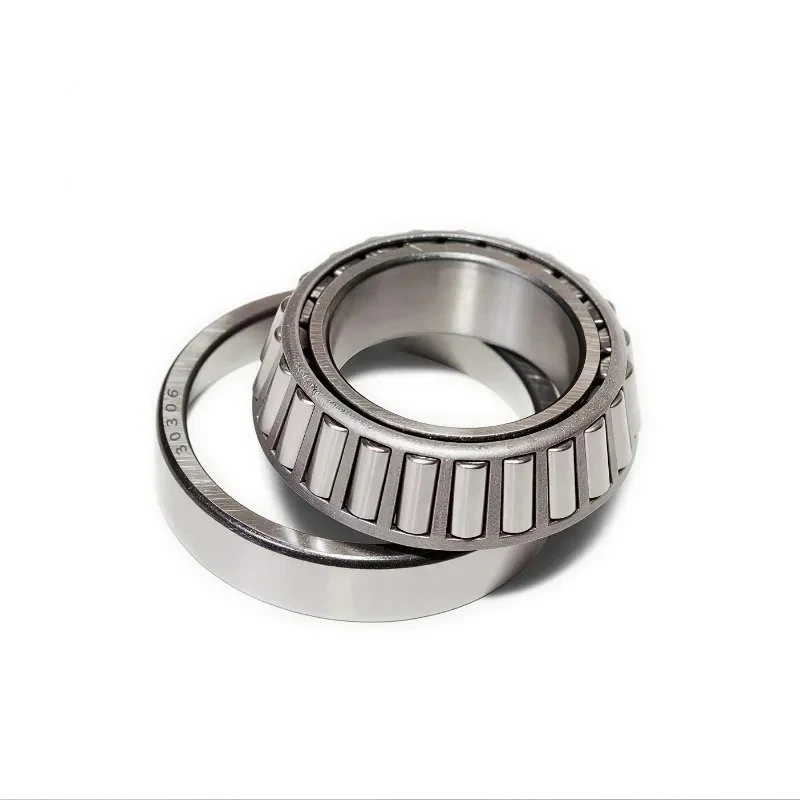
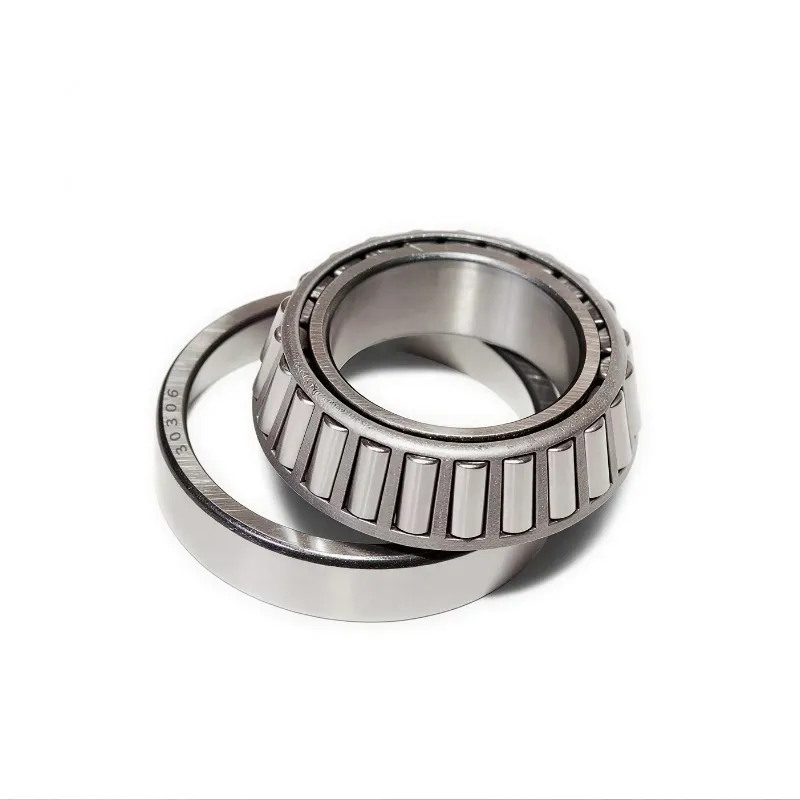
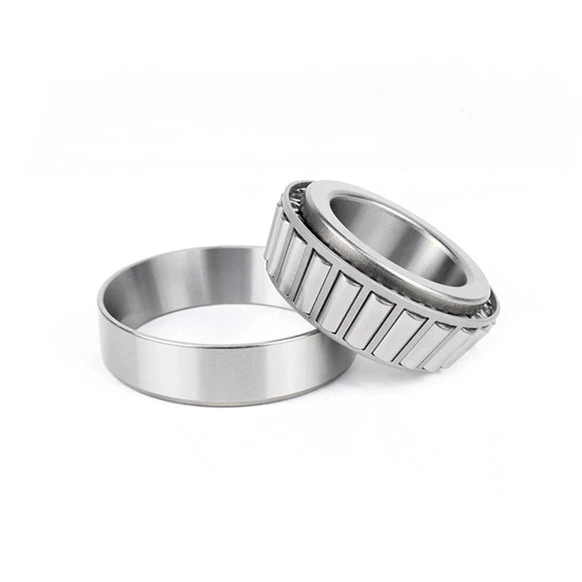
Bearing internal clearance refers to the total distance that one bearing ring (inner or outer) can move relative to the other under no external load. It is typically expressed as either radial or axial clearance:
Radial internal clearance: Movement perpendicular to the bearing axis.
Axial internal clearance: Displacement along the bearing axis.
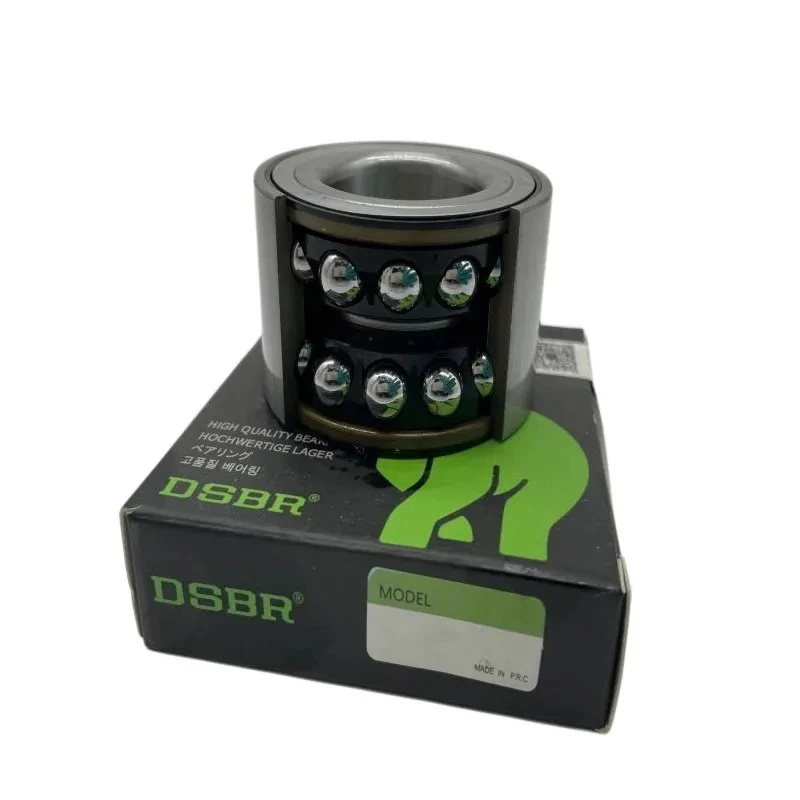
In double-row ball bearings, such as DSBR's double row angular contact ball bearings, this clearance occurs between the raceways of the inner and outer rings, with balls rolling between them. The magnitude of this clearance directly affects friction, heat generation, vibration, noise, and overall durability.
Why Clearance Matters in Bearing Design
Correct bearing clearance is not a luxury — it is a performance necessity. If internal clearance is too tight, bearings can bind, leading to excessive heat, accelerated wear, and premature failure. If clearance is too loose, the bearing may generate vibration, noise, and uncertain load distribution.
Clearance affects several key performance aspects:
1. Service Life
Proper clearance ensures that rolling elements (balls) distribute loads evenly across raceways during operation. Insufficient clearance can cause uneven pressure, leading to early fatigue and pitting.
2. Vibration and Noise
Excessive clearance allows uninhibited movement between components, increasing vibration and noise — undesirable in precision applications like robotics, medical devices or electric motors.
3. Heat Generation and Wear
Low clearance increases friction, which in turn raises temperature and accelerates wear. In contrast, optimized clearance minimizes unnecessary friction while maintaining load support.
4. Operating Conditions
Clearance affects performance under high speed, thermal expansion and load variations. Manufacturers account for this by specifying different clearance classes (e.g., C2, CN, C3, etc.) in catalogs.
Traditional vs. Automated Clearance Selection
Historically, bearing manufacturers and assemblers relied on manual measurement and matching of components to achieve desired internal clearance. Technicians used micrometers, feeler gauges, and comparative fits to guess optimal combinations — a labor-intensive and sometimes inconsistent process.
Today, automated selection and detection systems drastically improve accuracy, repeatability and production throughput.
What Automatic Clearance Selection Means
Automatic selection systems integrate:
High-precision sensors (often optical or contact probes)
Programmable logic controllers (PLCs)
Real-time measurement and sorting software
…into a workflow that selects the optimal inner and outer ring combinations to achieve target clearance values before assembly. This automation can reduce human error and ensure each bearing meets specification consistently.
What Automatic Clearance Detection Means
Once selected, bearings must be verified using automatic measurement systems that:
Detect radial and axial movement under controlled loads
Compare measured values to design specifications
Automatically flag out-of-tolerance bearings
Such systems often use force-controlled actuators and displacement sensors to measure relative movement between inner and outer rings. Detection helps maintain strict quality control and reduces the risk of assembly errors.
How Automated Clearance Selection Works
Bearings consist of an inner race, outer race, cage and rolling elements. For a double-row ball bearing, correct internal clearance requires that these surfaces interact with precise geometry and minimal deviation. Automation improves this process by:
Step 1: Component Scanning
Individual rings are scanned using high-precision measurement tools to determine dimensions such as:
Raceway diameter
Roundness
Ball seat geometry
Automatically recording these dimensions allows the system to determine which inner and outer ring combinations will yield proper clearance.
Step 2: Pairing and Sorting
Based on measurement data and target tolerance ranges, the software matches inner and outer rings to achieve a pre-defined clearance class (e.g., Cn or C3), accommodating manufacturing variations.
Step 3: Machine-Assisted Assembly
Matched rings move to assembly stations where PLCs precisely align and install rings, balls, and cages. Servo motors and fixtures ensure repeatability.
Step 4: Automated Clearance Verification
After assembly, the bearing is placed on a test rig:
A specified radial load is applied
Sensors measure displacement between inner and outer rings
Software evaluates whether clearance falls within tolerance
Out-of-tolerance bearings are automatically segregated for rework or disposal. Automation thus ensures quality before bearings move further down the production line.
Standards and Clearance Classification
Internal clearance selection isn’t arbitrary. International standards, such as ISO 5753-1:2009, provide nominal values and tolerance ranges for radial and axial clearance, including classification into groups (e.g., C1, C2, CN, C3, etc.).
Larger clearances like C3 and above may be used in high-speed, high-temperature or impact-loaded environments to prevent excessive heat and friction, while tighter clearances (C2 or CN) are often used in precision applications.
Benefits of Automated Clearance Testing
Integrating automatic selection and detection systems brings several advantages:
✔ Higher Production Consistency
Automation minimizes human error, ensuring each bearing assembled meets clearance requirements.
✔ Enhanced Product Performance
Precise clearance control can reduce noise and vibration in the field, extending bearing service life.
✔ Faster Cycle Times
Automated detection enables high-volume production without bottlenecks caused by manual inspection.
✔ Quality Traceability
Digital records allow traceability of measured clearance data, helping with warranty claims and process analytics. This consistency is especially valuable for wheel bearing kits suppliers, where dimensional compatibility across multiple components is critical for reliable assembly and long-term field performance.
Real-World Applications
Automated clearance control is crucial in industries where precision and reliability are non-negotiable:
Automotive
In transmissions, wheel hubs and engine bearings, precision clearance reduces noise and enhances operational smoothness.
Robotics and Automation
Low clearance reduces backlash, improving repeatability and precision in robotic joints.
Aerospace
Strict internal clearance control helps maintain reliability under extreme temperature and load conditions.
Heavy Machinery
In gearboxes and industrial equipment, optimized clearance enhances load distribution and reduces maintenance frequency.
Conclusion
The internal clearance between the inner and outer rings of double-row ball bearings plays a critical role in bearing performance, noise, vibration, and service life. Previously, clearance selection and inspection were manual and prone to inconsistencies. Now, automated selection and detection systems provide a robust, accurate, and efficient way to ensure bearings meet specification before they’re assembled into systems.
By leveraging precision measurement, digital control and automated testing, bearing manufacturers can deliver higher quality, reduce defects, and support demanding industrial applications with confidence. As an experienced automobile bearing factory, DSBR applies these automated clearance technologies to ensure stable performance and manufacturing consistency across automotive bearing programs.
As a trustworthy and reliable auto bearing factory, we provide you with double row angular contact ball bearings.



























Sign in to leave a comment.