
Table of Content [Hide]
1. 3. Bearing Types for High-Speed Applications
2. Chapter 4: Key Performance Criteria for High-Speed Bearings
Introduction – Importance of high-speed applications in industries like CNC and automotive.
Understanding High-Speed Applications – Define high speeds, typical use cases, load vs. speed considerations.
Bearing Types for High-Speed Operations
Angular Contact Ball Bearings
Ceramic Hybrid Bearings
Deep Groove Bearings
Type comparison table
Key Design Criteria – Speed limits, DN-value, preload, vibration, noise.
Material Selection – Importance of GCr15, ceramic rolling elements.
Lubrication Strategies – Grease vs. oil, sealing considerations.
Mounting and Tolerance – Importance of precision fits and installation.
Application Cases – Spindles, turbochargers, compressors, robotics.
DSBR Engineering Support – Custom solutions, materials testing, tolerance control.
Conclusion – Summarizing guidance and DSBR’s readiness to assist.
3. Bearing Types for High-Speed Applications
High-speed applications demand bearings that can support significant rotational speed while maintaining stability, low friction, and minimal heat generation. The selection of the correct bearing type is crucial for system efficiency, reliability, and long-term durability. Below, we examine the most widely used bearing types in high-speed systems and their specific advantages.
3.1 Angular Contact Ball Bearings
Angular contact ball bearings are one of the most commonly used bearing types in high-speed environments such as machine tool spindles, aerospace turbines, and precision medical equipment. These bearings are designed to support both radial and axial loads, particularly when arranged in duplex, triplex, or quad sets.
Their contact angle (typically 15°–30°) allows them to handle axial loads more effectively as the speed increases. Lower contact angles reduce friction and heat, while higher angles improve axial rigidity. The use of ceramic balls further enhances performance, offering low thermal expansion and reduced mass, allowing for higher acceleration and speed limits.
Key Benefits:
High axial rigidity
Low heat generation
Available in matched pairs for preload control
Ideal for high RPM and precise positioning
3.2 Ceramic Hybrid Bearings
Ceramic hybrid bearings feature silicon nitride (Si₃N₄) or zirconia (ZrO₂) rolling elements paired with steel races (typically GCr15 or 52100 bearing steel). They are especially suited for ultra-high-speed applications due to their lightweight, high hardness, and low thermal conductivity.
Ceramic balls are 60% lighter than steel, reducing centrifugal force and wear. Their non-conductive nature also protects against electrical arcing, making them popular in electric motors, inverters, and precision robotics.
Advantages:
30–50% higher speed limits than all-steel bearings
Reduced risk of seizure or thermal expansion
Excellent resistance to corrosion and insulation failure
Extended grease life due to reduced friction
3.3 Deep Groove Ball Bearings (DGBB)
While traditionally used for moderate-speed applications, deep groove ball bearings can be adapted for higher speeds with special clearances (C3/C4) and low-friction seals. These are ideal for applications like small motors, blowers, and high-speed fans.
Use When:
Loads are primarily radial
Space is limited
Cost constraints exist but moderate RPM is required
However, DGBBs are not ideal for applications with combined or high axial loads, and their speed capability is typically lower than angular contact or ceramic hybrid bearings.
Chapter 4: Key Performance Criteria for High-Speed Bearings
Selecting a bearing for high-speed operation involves more than choosing a standard size and type. It requires precise analysis of performance-critical parameters that affect not only the bearing’s efficiency, but also the overall safety and longevity of your machinery.
4.1 Limiting Speed and DN Value
A bearing's limiting speed is the maximum rotational speed it can operate at safely without risk of overheating or structural failure. It depends on:
Bearing type and size
Lubrication method
Internal clearance
Cage material
Preload and mounting precision
A common industry metric is the DN value, calculated as:
DN = Pitch Diameter (mm) × Rotational Speed (RPM)
For example, a bearing with a 40 mm pitch diameter operating at 20,000 RPM would have a DN value of 800,000. When the DN exceeds 600,000, you’re likely dealing with a high-speed system that requires specialized bearing design, advanced lubrication, and ceramic rolling elements.
4.2 Friction Torque and Power Loss
At high RPMs, even minimal friction translates into significant power loss and heat generation. Bearings optimized for high speed aim to:
Reduce contact surface area (e.g., optimized raceway geometry)
Use lightweight materials (e.g., ceramic balls)
Apply low-viscosity lubricants or oil-air systems
Utilize low-friction seals or open designs
Reducing friction is critical not only for speed but also for fuel efficiency, thermal stability, and component life span—especially in aerospace and electric vehicle (EV) applications.
4.3 Vibration and Noise Behavior
At high speeds, even minor imbalances or defects can trigger harmonic resonance, leading to:
High-frequency vibration
Noise under load
Accelerated fatigue
Damage to other precision components (e.g., gears, shafts)
To minimize this:
Select bearings with tight roundness and straightness tolerances
Apply optimized preload to suppress vibration modes
Use dynamic balancing in spindle assemblies
Monitor runout (axial and radial) during installation
4.4 Thermal Stability and Dimensional Integrity
High-speed rotation leads to a temperature rise that may:
Alter internal clearances
Reduce lubricant effectiveness
Cause differential expansion between rings and rolling elements
Countermeasures include:
Choosing materials with matched thermal expansion coefficients
Using ceramic hybrids to limit heat transfer
Designing for controlled internal clearance (C2–C4) depending on the application
Summary:
Performance at high speed is defined by more than speed ratings—it’s a result of engineered balance between speed, load, friction, thermal behavior, and vibration control. If even one factor is miscalculated, bearing performance can be compromised.
DSBR Advantage:
Our factory uses advanced simulation tools and vibration analysis software to ensure every bearing meets critical performance benchmarks. DSBR also offers preload calculation support, DN limit consulting, and material testing for OEM applications.
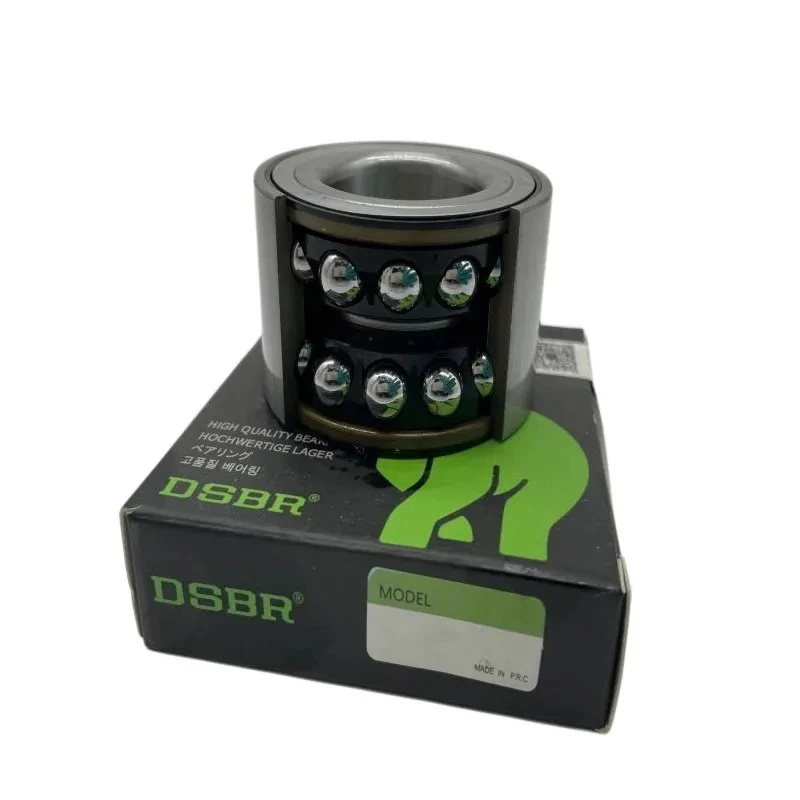
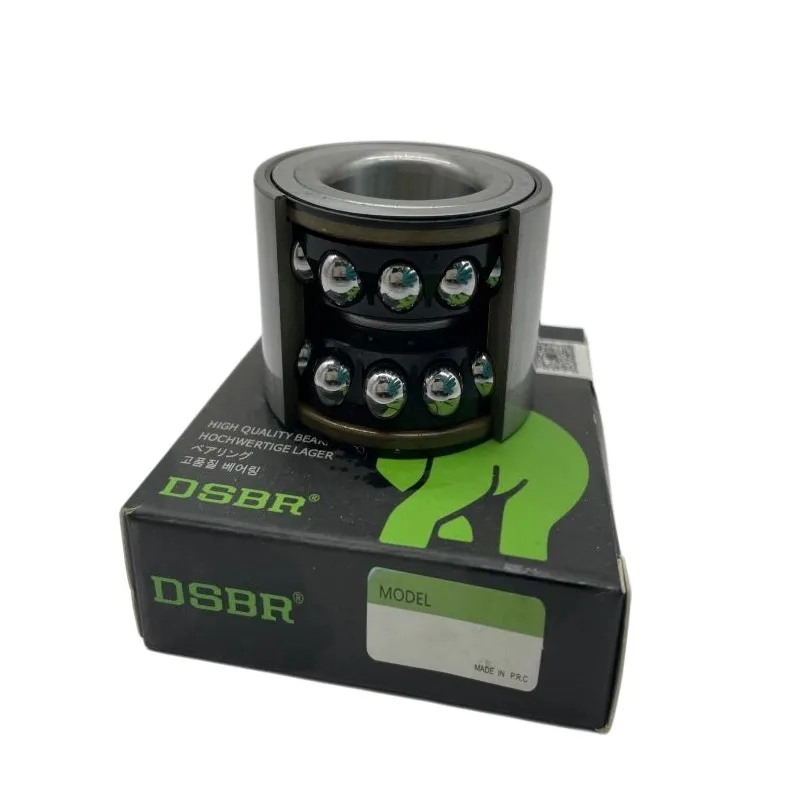
As a trustworthy and reliable auto bearing suppliers, we provide you with wheel hub bearings.
























Sign in to leave a comment.