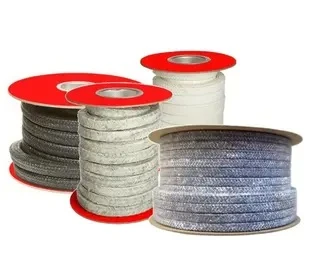
Introduction to Packing Seals in Industrial Equipment
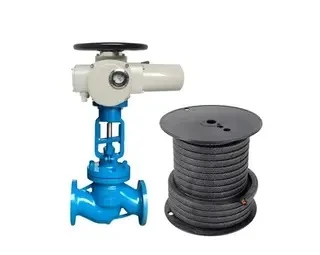
Packing seals play a critical role in ensuring the normal operation of industrial equipment, particularly in large-scale chemical equipment and precise mechanical devices. Their primary function is to prevent leakage and maintain stable performance in various conditions. Despite their simplicity, packing seals are integral to the sealing technology used in many industries.
Sealing Principles of Packing Seals: Labyrinth and Bearing Effects
- Labyrinth Effect
- The microscopic irregularities on the shaft surface create small gaps, forming a labyrinth that hinders the flow of pressurized media. This effect reduces the pressure of the media and prevents leakage by creating multiple stages of throttling.
- Bearing Effect
- A thin liquid film between the packing and the shaft functions as lubrication, reducing friction and wear. This lubrication ensures smoother relative motion, extending the service life of both the packing and the shaft.
Material Characteristics of Packing Seals
Packing seals are designed to withstand various harsh conditions, including high pressure, temperature, and chemical exposure. The materials used must possess several critical properties:
- Elastic-Plasticity
- This property allows packing seals to adapt to changes during operation, filling gaps and improving sealing by deforming elastically and plastically.
- Chemical Stability
- Packing materials must resist chemical reactions with media to prevent degradation and ensure long-term sealing performance in aggressive environments.
- Impermeability
- Effective packing seals must prevent any fluid from leaking through microscopic channels within the material, even under high pressure and temperature.
- Self-Lubrication
- Materials with self-lubricating properties reduce friction and wear between the packing and the shaft, leading to lower energy consumption and prolonged service life.
- Temperature Resistance
- Packing materials must withstand high temperatures without degrading. This is essential for maintaining sealing performance in industrial environments exposed to heat.
- Practical Features
- Packing seals must be easy to install and remove, manufactured simply, and low in cost to make them practical for everyday use in industry.
Braiding Structures of Packing Seals
The structure of the packing braid affects its performance in different sealing conditions. Common braiding structures include:
- Braid-Over-Braid
- Suitable for small cross-sections but prone to roughness and poor compactness for larger sizes.
- Multi-Layer Braid
- Offers strong sealing but lacks fiber interconnections, making it best for static or low-speed applications.
- Core-Inserted Braid
- Incorporates a rubber or metal core for added strength and flexibility, but surface wear can limit its use.
- Interlock Braid
- Features excellent elasticity, wear resistance, and compactness, making it ideal for complex modern applications.
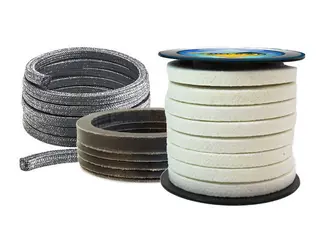
Types of Packing Seals
- Natural Fiber Packing
- Made from cotton, hemp, or wool, suitable for lower temperature and less corrosive media but limited in performance at high temperatures or aggressive chemicals.
- Mineral Fiber Packing
- Includes asbestos, which offers excellent temperature and chemical resistance but poses health risks, leading to reduced use.
- Synthetic Fiber Packing
- Includes advanced materials like graphite, carbon fiber, PTFE, and Kevlar, offering superior wear resistance, self-lubrication, and chemical stability for high-pressure, high-speed, and corrosive environments.
- Ceramic and Metal Fiber Packing
- Suitable for extreme high temperatures and corrosive media but comes at a higher cost and complexity in processing.
Performance Indicators of Packing Seals
The performance of packing seals is evaluated using several key indicators:
- Compression Ratio
- Indicates the material’s ability to deform and improve sealing under pressure. A higher compression ratio improves sealing but excessive compression can reduce elasticity.
- Rebound Ratio
- Reflects the packing’s ability to return to its original shape after compression. High rebound implies better elasticity and durability.
- Wear Resistance
- Measures how well the material resists wear from continuous contact with the shaft. This is critical for maintaining sealing effectiveness over time.
- Self-Lubrication
- Good self-lubrication reduces friction and wear, extending the packing’s service life and reducing energy consumption.
- Stress Relaxation Rate
- A low stress relaxation rate means the packing maintains compression over time, ensuring a consistent seal during operation.
- Thermal Loss
- Indicates the material’s ability to withstand high temperatures without degradation, ensuring reliable sealing in hot environments.
- Acid and Alkali Loss
- Measures the material’s resistance to chemical corrosion, essential for sealing in acidic or alkaline environments.
Selection of Packing Seals
The selection of packing seals should be based on various factors, including:
- Medium Properties (e.g., temperature, pressure, acidity)
- Operating Speed
- Shaft Surface Roughness
- Performance Indicators (e.g., wear resistance, self-lubrication)
For high-temperature, high-pressure, and chemically aggressive environments, graphite or PTFE packing is ideal. For high-speed applications, carbon fiber packing is preferable, while for standard conditions, synthetic or natural fiber packing may suffice.
Conclusion
Packing seals, though small components, play a critical role in ensuring the sealing performance and operational reliability of industrial equipment. By understanding the sealing principles, material properties, braiding structures, and performance indicators, manufacturers and technicians can select the most suitable packing seals for their specific applications. This not only improves equipment efficiency but also extends service life and reduces maintenance costs, making packing seals an indispensable part of industrial sealing technology.It's important to know about Google SEO to help your website rank higher in search results.
























Sign in to leave a comment.