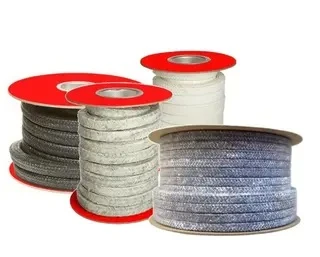
Packing Seals in Industrial Applications: Principles, Materials, and Selection
In industrial operations, whether in large-scale chemical equipment or precision machinery, sealing performance is critical for reliable operation. Packing seals, as a fundamental component of sealing technology, serve as a silent guardian, ensuring equipment integrity through their unique principles and material properties. This article delves into the working mechanisms, material characteristics, structures, and selection strategies for packing seals.
Sealing Principle of Packing Seals
Packing seals rely primarily on two effects to achieve efficient sealing: the labyrinth effect and the bearing effect.
- Labyrinth Effect
- At the microscopic level, shaft surfaces contain numerous tiny irregularities. When packing contacts the shaft, these micro-gaps form a labyrinth. Pressurized media passing through this maze undergo multiple throttling stages, losing energy and effectively preventing leakage. This principle creates a complex barrier that obstructs fluid flow and ensures sealing reliability.
- Bearing Effect
- A thin lubricating film forms between the packing and the shaft, functioning similarly to a sliding bearing. This film reduces friction, minimizes wear, and allows smooth relative movement. By maintaining lubrication, the bearing effect extends packing life and ensures stable equipment operation.
Material Characteristics of Packing Seals
Packing seals must withstand complex industrial conditions, including variable media, high temperatures, pressures, and mechanical stresses. Key material properties include:
- Elastic-Plasticity – Enables packing to deform elastically and plastically, filling gaps caused by vibrations, eccentricities, or surface irregularities.
- Chemical Stability – Resists corrosion and degradation in acidic, alkaline, or neutral environments, ensuring long-term sealing reliability.
- Impermeability – Prevents media leakage even under high pressure or temperature, safeguarding equipment and the environment.
- Self-Lubrication – Reduces friction with the shaft without external lubricants, lowering wear and energy consumption.
- Temperature Resistance – Maintains integrity under high operational or media temperatures.
- Practicality – Easy installation/removal, simple manufacturing, and cost-effectiveness support widespread industrial use.
Braiding Structures of Packing Seals
Braiding forms influence both mechanical properties and sealing performance:
- Braid-Over-Braid: Square cross-section, flexible, compensates for vibration, suitable for small packing cross-sections.
- Multi-Layer Braid: Dense and strong, ideal for static or low-speed equipment but may delaminate under stress.
- Core-Inserted Braid: Incorporates rubber or metal core for improved compactness and stress distribution; best for pumps and valves.
- Interlock Braid: Advanced structure with smooth surface, high wear resistance, and uniform contact; suitable for high-demand modern applications.
Types of Packing Seals
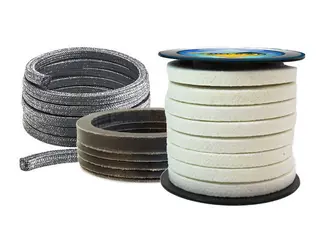
Packing seals are categorized based on the base material:
- Natural Fiber Packing: Cotton, hemp, or wool; suitable for moderate conditions but limited in chemical and temperature resistance.
- Mineral Fiber Packing: Asbestos-based; excellent temperature and chemical resistance but restricted due to health concerns.
- Synthetic Fiber Packing: Includes graphite, carbon fiber, PTFE, Kevlar; offers excellent temperature, chemical stability, wear resistance, and self-lubrication.
- Ceramic and Metal Fiber Packing: Silicon carbide, boron carbide; extremely high temperature and wear resistance, used in specialized applications.
Performance Indicators
Key indicators for evaluating packing seals include:
- Compression Ratio – Ability to deform under load and conform to the shaft.
- Rebound Ratio – Ability to recover shape after stress removal.
- Wear Resistance – Durability against friction and relative motion.
- Self-Lubrication – Reduces friction and wear.
- Stress Relaxation Rate – Maintains sealing pressure over time.
- Thermal Loss – Stability under high temperatures.
- Acid and Alkali Loss – Resistance to chemical corrosion.
Selection of Packing Seals
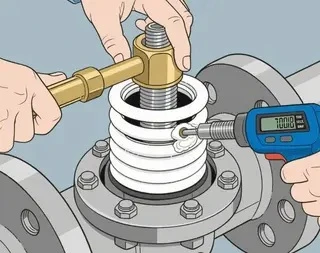
Selecting packing seals requires analyzing working conditions—media type, temperature, pressure, shaft speed, and surface quality—alongside material properties, braiding form, and performance indicators.
- High temperature, high pressure, corrosive media: Graphite or PTFE packing with core or interlock braiding.
- High-speed, high-pressure systems: Carbon fiber packing with dense braiding.
- Ordinary conditions: Natural or synthetic fiber packing may suffice, with attention to wear resistance and self-lubrication.
Conclusion
Although small in size, packing seals play a vital role in industrial equipment, ensuring effective sealing and operational reliability. Understanding their sealing principles, material properties, braiding structures, types, and performance indicators allows engineers to select the most appropriate packing seals, improving equipment performance and longevity. With their versatility and reliability, packing seals remain indispensable components in modern industrial sealing applications.It's important to know about Google SEO to help your website rank higher in search results.



























Sign in to leave a comment.