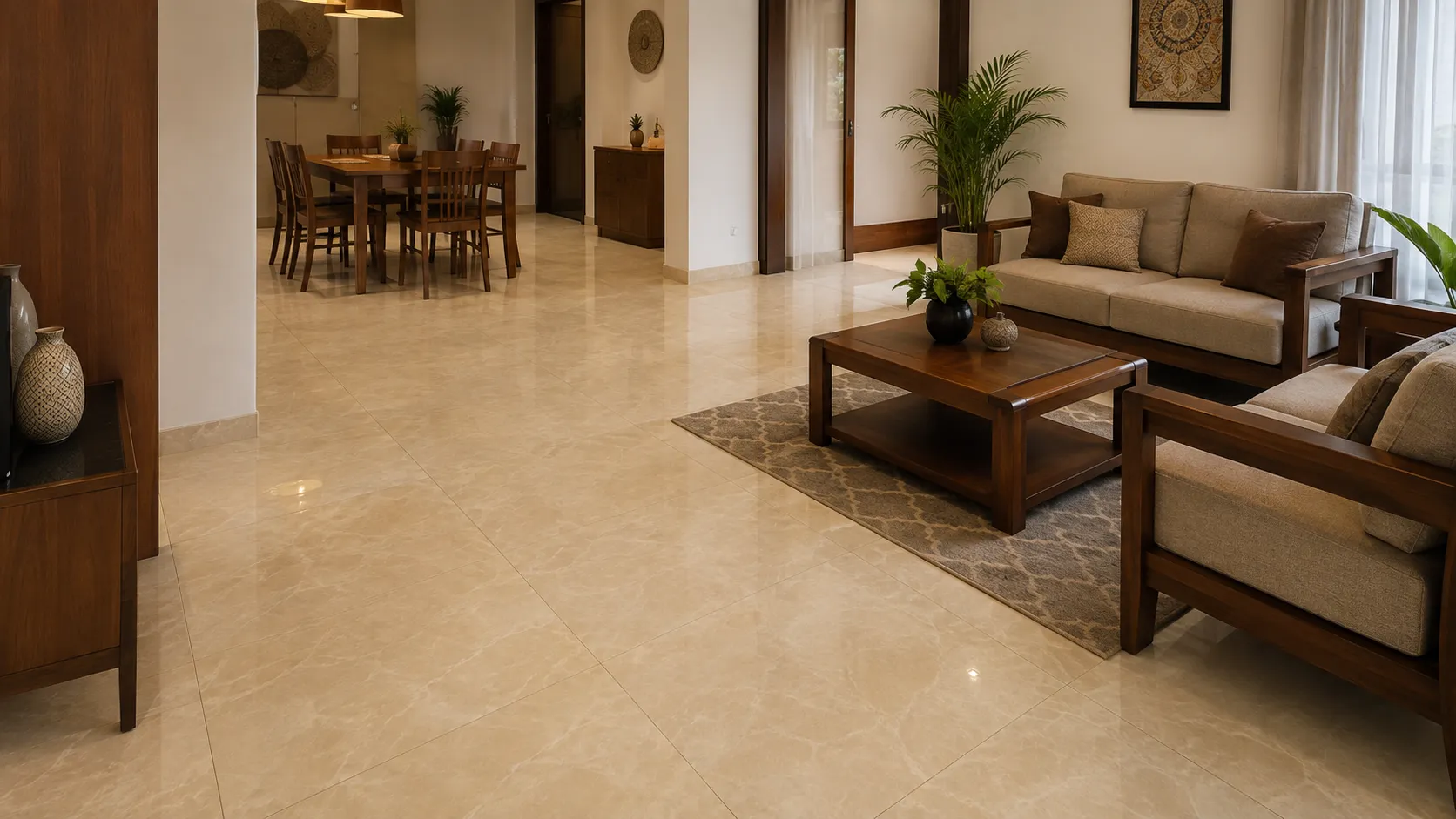

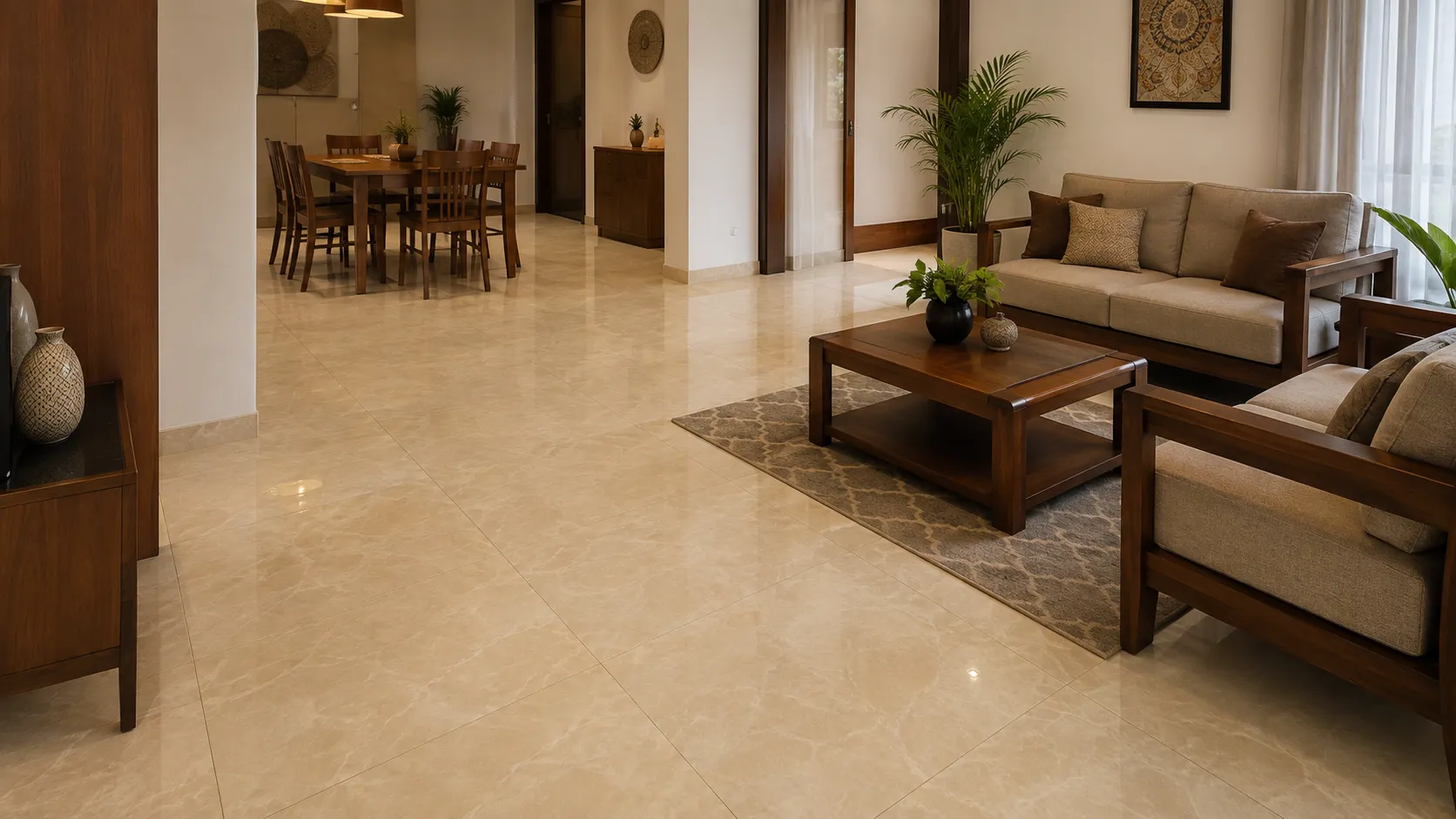
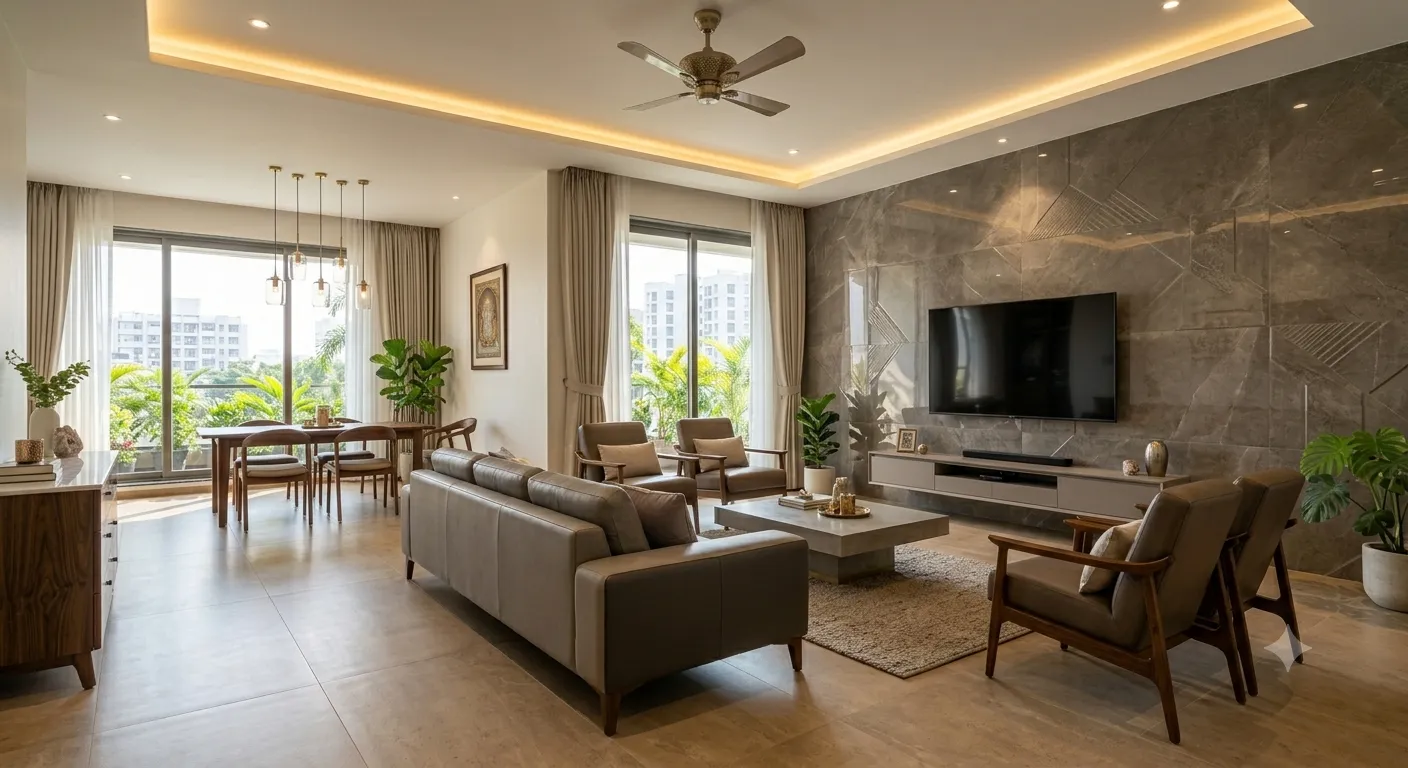
Beige tiles continue to be a dependable option for Indian homes because they offer warmth, softness, and easy coordination with many interior styles. They do not feel as stark as pure white, and they usually create a more welcoming atmosphere than cooler grey tones. This makes them especially useful for homeowners who want a calm, elegant, and long-lasting base for their spaces.
From plain beige surfaces to marble-look, stone-look, and subtle textured finishes, beige tiles are available in many designs and sizes. They can work comfortably in living rooms, bedrooms, kitchens, bathrooms, balconies, offices, and commercial interiors, depending on the tile type and finish.
As an architecture consultant, I usually recommend beige tiles when the goal is to create a space that feels bright but not cold, neutral but not plain, and practical without looking overly utilitarian.
Why Beige Tiles Work So Well in Indian Homes
One of the biggest strengths of beige tiles is their warmth. Indian interiors often use wooden furniture, cream or neutral wall colours, brass accents, and warm lighting. Beige tiles naturally support this palette and help the entire space feel more connected.
They are also highly versatile. A light beige tile can work in a modern apartment, a traditional family home, or a premium villa interior without feeling out of place. This flexibility is useful for homeowners who want a safe long-term choice rather than a strongly trend-driven color.
Beige tiles also make rooms feel comfortable and balanced. In compact rooms, lighter beige shades can help the space appear more open. In larger areas, richer beige or sand tones can prevent the interior from feeling too empty or visually cold.
Another practical advantage is that beige usually hides light dust, minor marks, and everyday wear better than very dark flooring or extremely bright white surfaces. This makes it a useful choice for regularly used family spaces.
Choose the Right Beige Finish and Design
The finish of the tile changes how beige appears in the room.
Matte beige tiles create a calm and natural effect. They work especially well in living rooms, bedrooms, kitchens, passages, and balconies where a softer and less reflective surface is preferred.
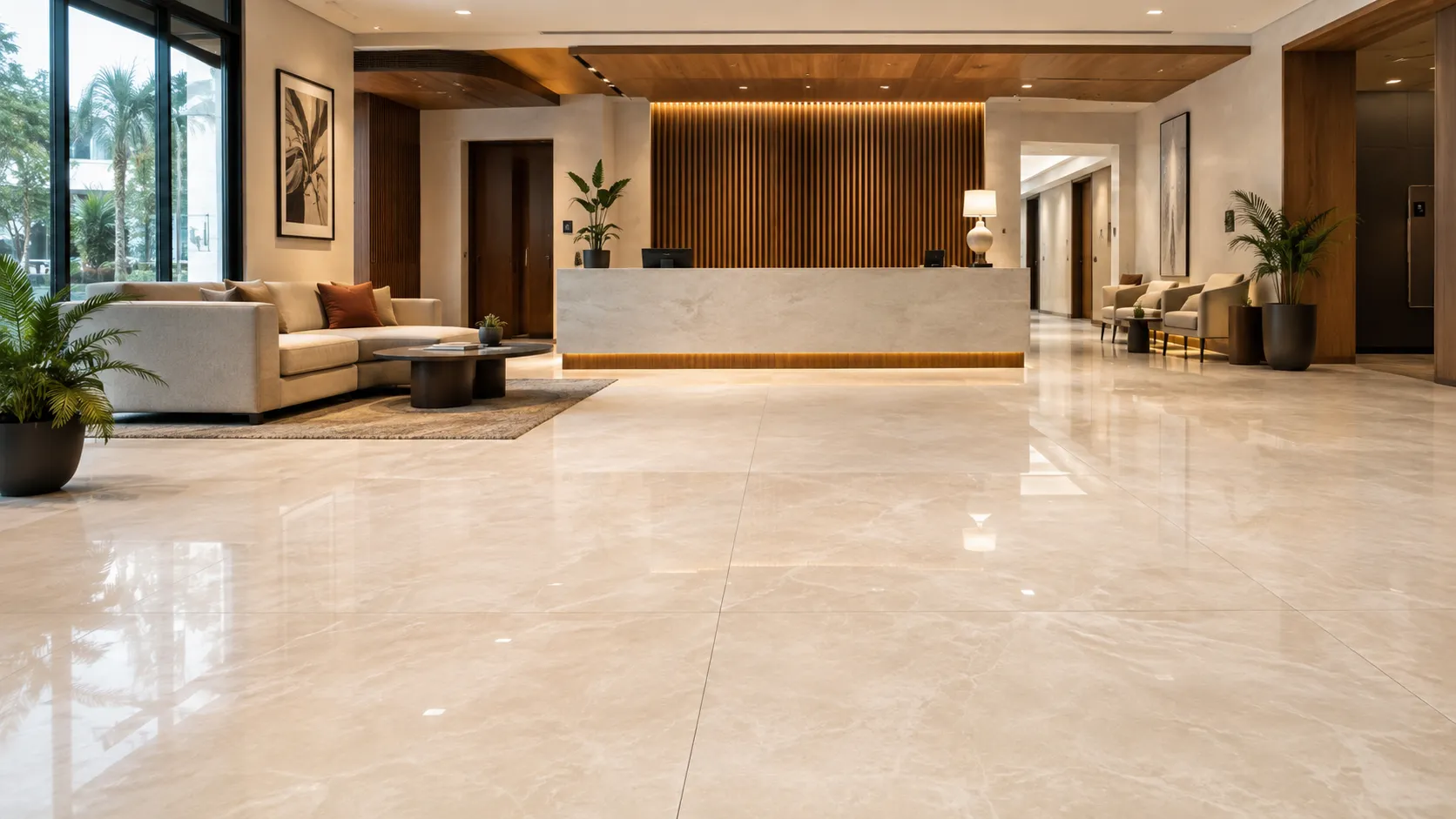
Glossy or polished beige tiles create a brighter and more formal appearance. These can work well in dry indoor areas such as living rooms, bedrooms, and reception spaces where the goal is to add more light reflection and a slightly more premium feel.
Marble-look beige tiles are popular because they introduce visual movement while keeping the room warm and elegant. Stone-look beige tiles tend to feel more grounded and architectural, while plain beige tiles often suit cleaner and simpler interiors.
Bathrooms and wet areas need more careful selection. A polished beige tile may look attractive, but matte, textured, or anti-skid beige tiles are usually more practical for bathroom floors, utility spaces, and balconies.
The tile size should also match the room. Large-format beige tiles can reduce grout joints and create a more continuous surface, while medium-sized formats may work better in compact or irregular spaces.
Coordinate Beige Tiles with Furniture, Lighting, and Grout
Beige tiles are easy to combine, but the final result still depends on what surrounds them.
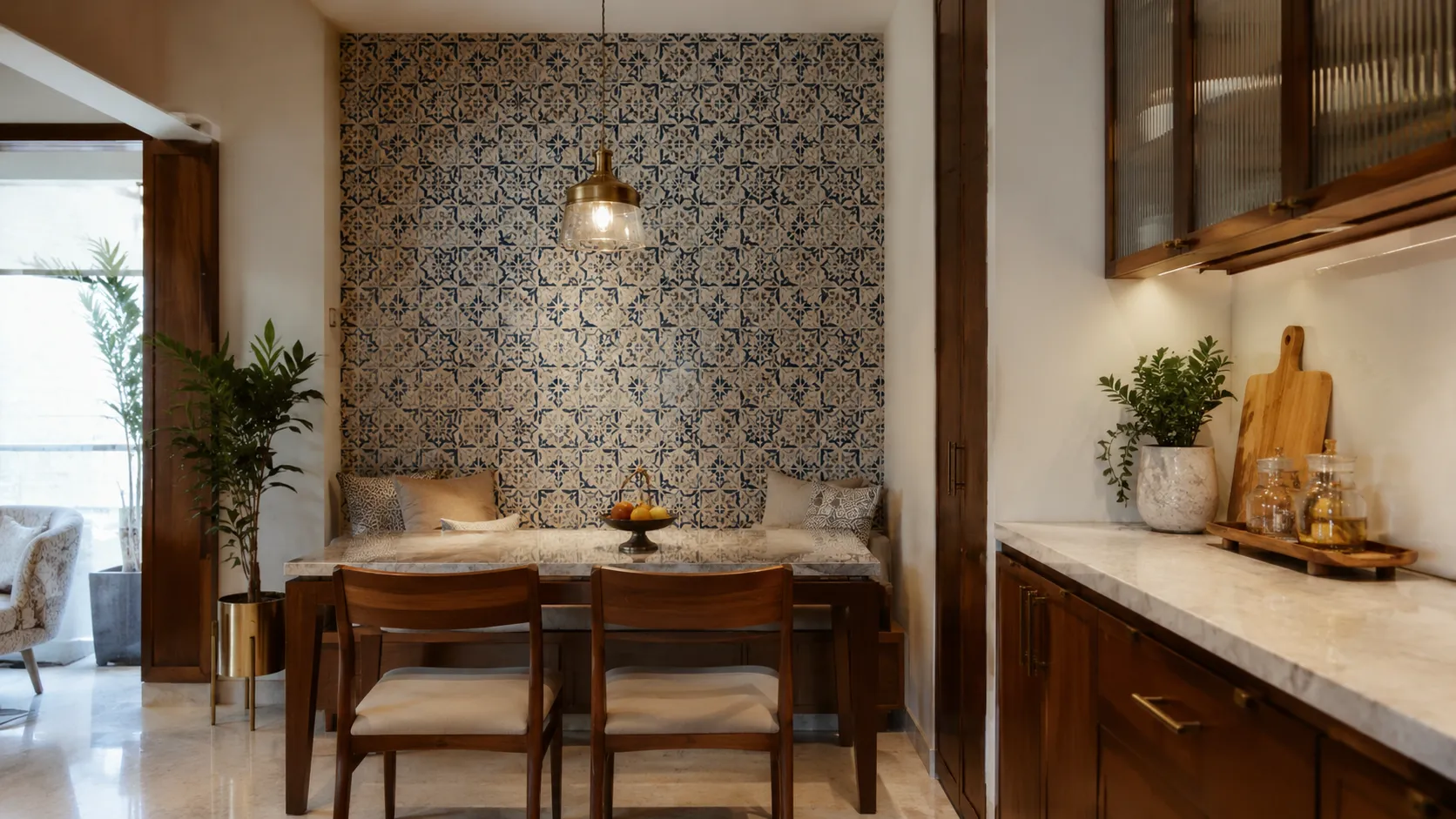
Warm wooden furniture works especially well with beige floors and walls. Walnut, teak, oak, and other wood tones can make beige interiors feel more layered and inviting. Beige tiles also pair comfortably with white, cream, taupe, olive, black, and muted metallic accents.
Lighting plays an important role too. Under warm lighting, beige tiles can feel richer and more golden. Under cooler lighting, some beige tiles may appear flatter or more neutral. This is why it is always better to see the tile sample under actual lighting conditions before making a final decision.
Grout colour also affects the appearance. A grout shade close to the tile colour usually creates a cleaner and more continuous look. Contrasting grout makes the tile grid more visible, which may or may not suit the design style.
Before ordering, it is useful to view several tiles together instead of selecting from a single showroom piece. This helps reveal shade variation, pattern repetition, and how the beige tone behaves across a larger area.
The full required quantity should ideally be purchased from the same batch, with some extra material kept for cutting, future repairs, and accidental breakage.
Conclusion
Beige tiles remain a strong choice for Indian homes because they offer warmth, versatility, and an easy-to-live-with neutral base. They can suit both modern and traditional interiors while helping rooms feel calm, bright, and visually comfortable.
The best results come from choosing the right beige tone, finish, and tile size according to the room’s use, lighting, and surrounding materials. The TilesFinders marketplace helps homeowners, architects, and builders explore beige tiles from verified dealers, compare sizes, finishes, designs, and suppliers, and shortlist options that match both style and everyday practicality.
Written by Nisarg Patel
Architecture Consultant at TilesFinders






















Sign in to leave a comment.