

Modern software systems are evolving rapidly, with organizations releasing updates, patches, and new features more frequently than ever before. Traditional manual testing approaches often struggle to keep pace with these rapid development cycles. As applications grow in complexity and scale, testing strategies must also evolve to ensure consistent quality and reliability. This is where software test automation becomes an essential part of modern software testing practices.
Software test automation refers to the use of specialized tools, scripts, and frameworks to automatically execute test cases, compare expected and actual results, and generate detailed reports. By automating repetitive testing activities, teams can significantly improve efficiency, expand test coverage, and maintain high-quality standards even as their applications grow larger and more complex.
Why Scalable Testing Matters
Scalability in testing means that the testing process can handle increasing workloads without compromising efficiency or accuracy. As applications expand with additional features, integrations, and users, the number of required test cases also increases. Running these tests manually can become impractical.
Software test automation allows teams to scale their testing efforts by executing large volumes of test cases quickly and consistently. This ensures that software remains stable and reliable even as development speeds increase.
Faster Test Execution
One of the most noticeable advantages of software test automation is the significant improvement in test execution speed. Automated test suites can run hundreds or thousands of test cases in a fraction of the time required for manual testing.
This speed enables teams to run tests more frequently during development. For example, automated tests can be triggered every time new code is committed to the repository, allowing teams to quickly identify and address issues before they propagate through the system.
Faster execution also helps organizations maintain rapid release cycles while still preserving software quality.
Improved Test Coverage
Manual testing is often constrained by time, resources, and human effort. As a result, many potential scenarios may remain untested. Software test automation removes many of these limitations by allowing teams to test a broader range of conditions.
Automated tests can cover:
- Multiple user scenarios
- Different browsers and devices
- Various input combinations and edge cases
- Complex workflows across different modules
This expanded coverage helps ensure that applications perform reliably under diverse conditions and user interactions.
Consistency and Reliability in Testing
Human testers may unintentionally skip steps or interpret instructions differently when executing repetitive tests. Automated testing eliminates this variability by following predefined scripts precisely every time the tests run.
This consistency ensures that each test is executed exactly as designed, producing reliable and repeatable results. When issues are detected, teams can confidently trace them back to specific changes in the application rather than inconsistencies in the testing process.
Early Detection of Defects
Detecting defects early in the development cycle is one of the most effective ways to reduce the cost and complexity of fixing them. Software test automation supports early defect detection by enabling continuous testing throughout the development lifecycle.
Automated tests can be integrated into development workflows so that they run immediately after code changes are introduced. This allows teams to identify bugs quickly and resolve them before they affect other parts of the system.
Early defect detection not only improves software quality but also reduces delays during later stages of development.
Seamless Integration with CI/CD Pipelines
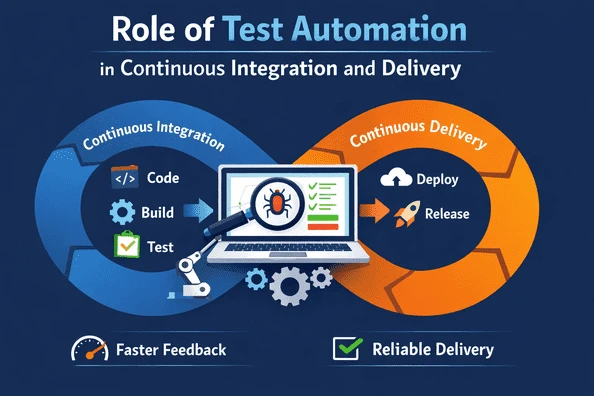
Modern development practices rely heavily on continuous integration and continuous deployment pipelines. These pipelines automatically build, test, and deploy software whenever code changes occur.
Software test automation integrates naturally with CI/CD pipelines by allowing tests to run automatically as part of the build process. This integration provides immediate feedback about whether new code changes have introduced defects.
Automated testing within CI/CD pipelines helps teams maintain stable builds and ensures that only validated code progresses through the deployment pipeline.
Reduced Long-Term Testing Costs
Although implementing automation requires an initial investment in tools, infrastructure, and training, it often leads to significant long-term cost savings. Automated tests can be reused across multiple software releases without requiring repeated manual effort.
Over time, this reduces the amount of time testers spend executing repetitive test cases, allowing them to focus on more complex and exploratory testing tasks. The result is a more efficient testing process and better utilization of QA resources.
Better Testing for Complex Architectures
Modern software systems frequently use microservices, APIs, and distributed architectures. These systems involve multiple components interacting with each other, making manual validation extremely challenging.
Software test automation helps teams validate these complex systems by automatically testing interactions between different services and modules. Automated tools can simulate real-world scenarios and verify that different components communicate correctly.
For example, platforms like Keploy can capture real API interactions and convert them into automated test cases. This approach helps teams build realistic regression test suites for backend services without requiring extensive manual scripting.
Continuous Feedback for Development Teams
Rapid feedback is essential for maintaining development productivity. Automated testing provides instant notifications when a test fails, allowing developers to quickly identify and fix the underlying issue.
This immediate feedback reduces debugging time and helps maintain momentum in development cycles. Instead of discovering defects late in the release process, teams can address them as soon as they appear.
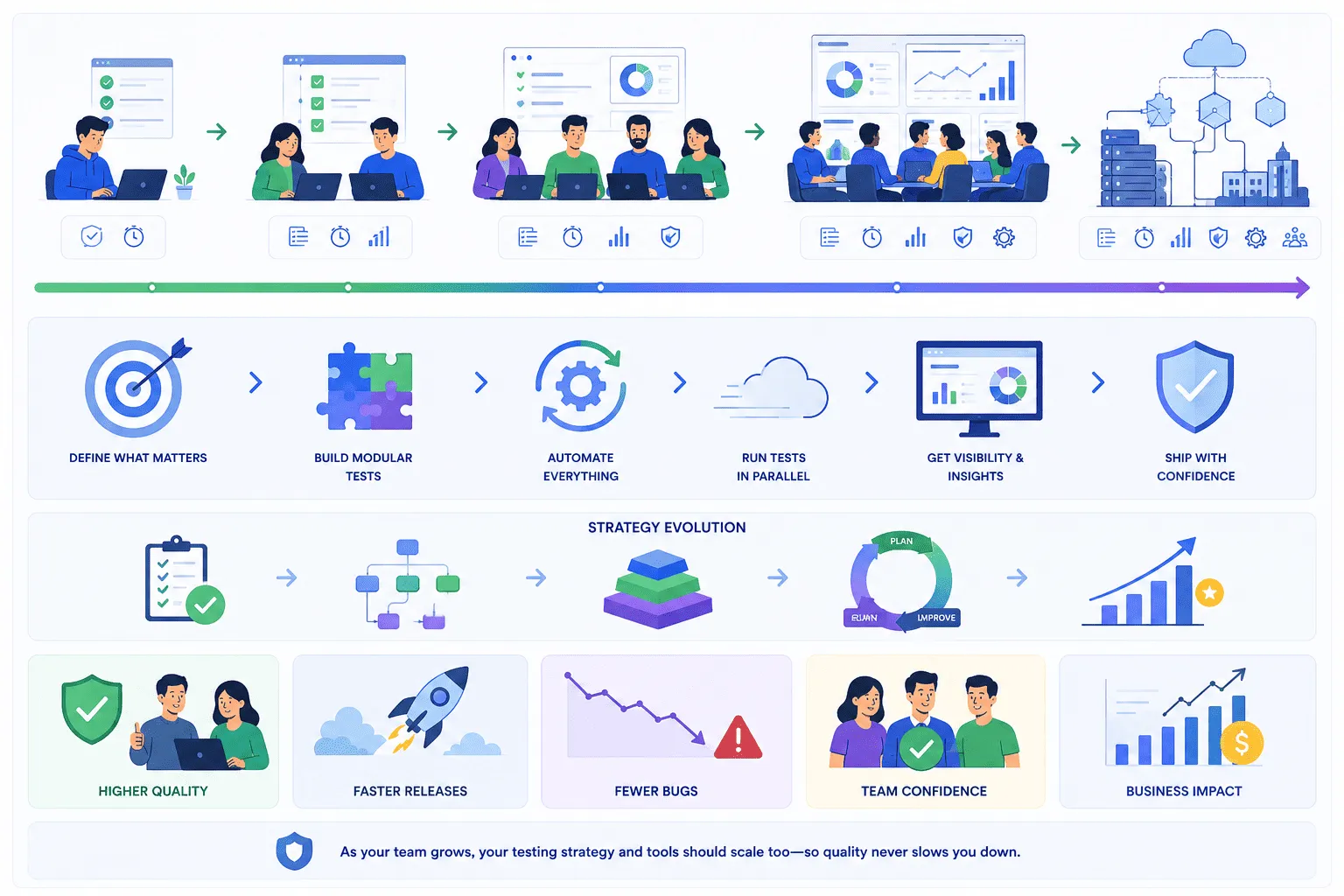
Scalability for Growing Applications
As software products evolve, the number of features, integrations, and supported environments continues to increase. Testing strategies must scale accordingly to maintain quality.
Software test automation supports scalability by enabling parallel test execution across multiple environments. Automated tests can run simultaneously on different operating systems, browsers, or devices, significantly reducing overall testing time.
This scalability ensures that even large and complex applications can be tested efficiently without dramatically increasing testing workloads.
Improved Collaboration Between Teams
Automation also encourages better collaboration between developers, testers, and DevOps teams. Automated test scripts often become part of the shared development repository, allowing all team members to contribute to and maintain the test suite.
This shared responsibility improves communication and helps align development and testing efforts toward common quality goals.
Best Practices for Implementing Software Test Automation
To maximize the value of software test automation, teams should follow several best practices:
- Focus automation on repetitive and high-risk test cases
- Maintain clear and modular test scripts for easier maintenance
- Integrate automated tests into CI/CD workflows
- Regularly review and update automated test suites
- Combine automated testing with exploratory manual testing
Adopting these practices ensures that automation remains effective as the software evolves.
Conclusion
Software test automation has become a fundamental component of scalable testing strategies in modern software development. By enabling faster test execution, broader coverage, consistent validation, and seamless integration with development pipelines, automation allows teams to maintain high software quality even as applications grow in complexity.
Organizations that adopt effective software test automation practices gain the ability to release updates more frequently, detect defects earlier, and deliver reliable software experiences to users. As development environments continue to evolve, automation will remain a key driver of efficient and scalable software testing.






























Sign in to leave a comment.