Indoor air can quietly accumulate pollutants from cleaning products, synthetic furnishings, paints, and even cooking. While mechanical purifiers help, living greenery offers a beautiful, low-tech complement. Certain houseplants absorb volatile organic compounds (VOCs), release oxygen, and add soothing humidity—all while elevating your décor. This guide, with insights from Touch Green, walks you through the most reliable choices, practical care tips, and how to style them so they thrive and make your space feel fresher.
Why plants help (and what to expect)
Plants support better air in two ways: (1) foliage and stomata can take up airborne compounds; (2) the root–soil microbiome can break down some pollutants. They also add mild humidity (great in air-conditioned rooms), soften acoustics, and reduce visual stress. That said, think of plants as part of a healthy-home toolkit—good ventilation, regular cleaning, and low-VOC products still matter.
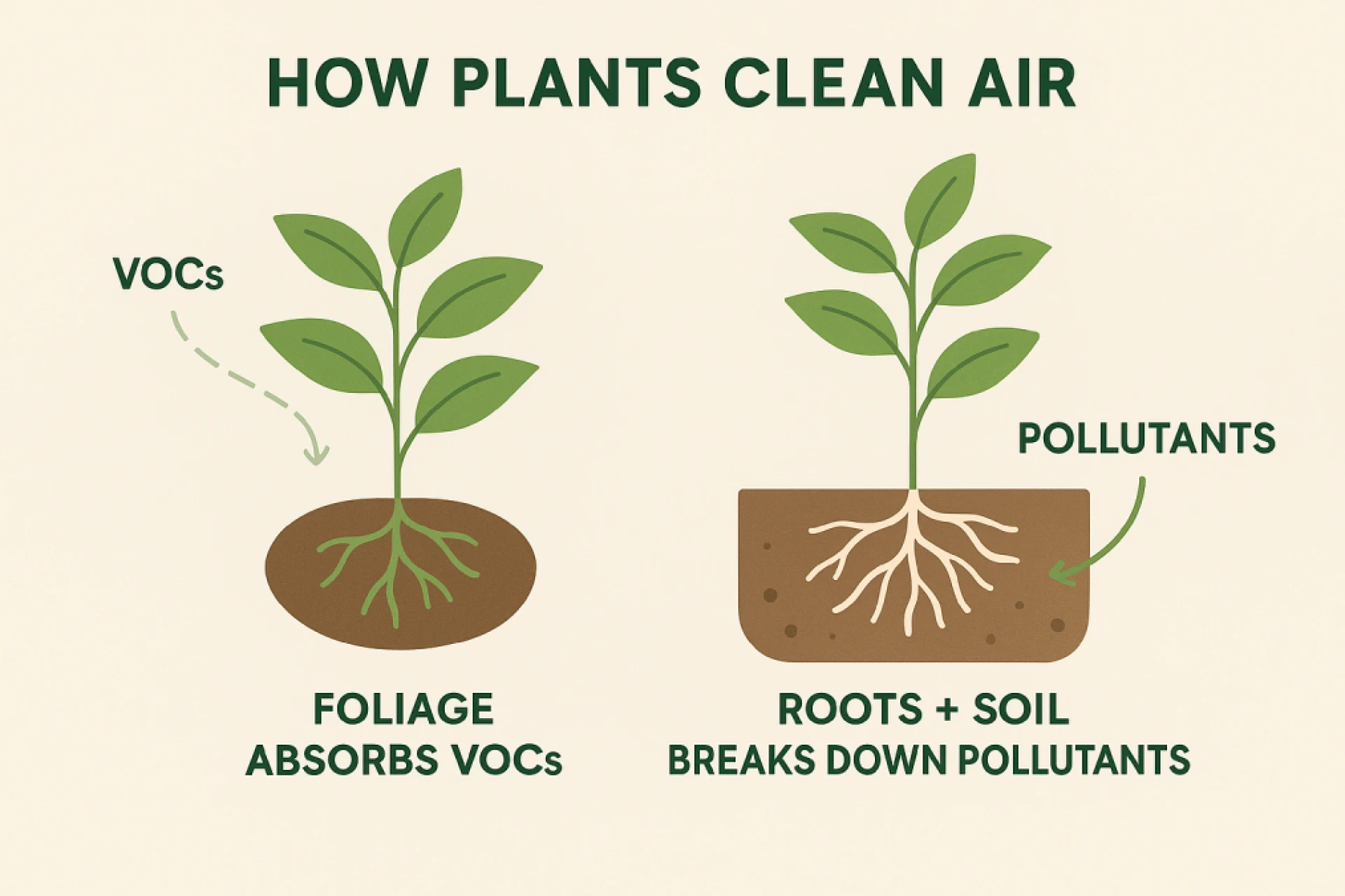
NASA’s famous Clean Air Study revealed that certain indoor plants can absorb these toxins through their leaves and roots, making them natural and effective air purifiers. The best part? They also add beauty, tranquility, and a refreshing vibe to any room.
Quick rule of thumb: Aim for a mix of small and medium plants across rooms you use most. A cluster of 3–5 healthy plants in a living area can make a noticeable difference in freshness and mood. With Touch Green’s easy-care selections, building your cluster becomes stress-free.
15 reliable air-purifying plants (with care notes)
Use this list as a menu—pick by light levels, maintenance comfort, and styling goals.
1) Peace Lily (Spathiphyllum)
- Why it’s great: Filters common indoor pollutants; elegant white bracts. Studies suggest that it can eliminate up to 78% of airborne mold. This makes it perfect for humid areas like bathrooms, kitchens, or laundry rooms.
- Light/Water: Medium, indirect; keep soil evenly moist.
- Note: Slight droop is a built-in “water me” reminder.
2) Snake Plant (Sansevieria / Dracaena trifasciata)
- Why it’s great: Tough as nails, architectural look; tolerates neglect.
- Light/Water: Low–bright, indirect; let soil dry between waterings.
- Bonus: Releases oxygen at night—ideal for bedrooms.
3) Areca Palm (Dypsis lutescens)
- Why it’s great: Gentle humidifier; feathery, room-softening fronds.
- Light/Water: Bright, indirect; regular watering—don’t let dry out fully.
4) Spider Plant (Chlorophytum comosum)
- Why it’s great: Extremely forgiving; great in hanging planters.
- Light/Water: Bright, indirect; water when top inch is dry.
- Bonus: Produces “pups” you can propagate.
5) Pothos / Money Plant (Epipremnum aureum)
- Why it’s great: Fast-growing vine for shelves and ladders.
- Light/Water: Low–bright, indirect; water when partly dry.
- Style tip: Train along a moss pole or wall grid.
6) Rubber Plant (Ficus elastica)
- Why it’s great: Glossy, broad leaves; statement plant for living rooms.
- Light/Water: Bright, indirect; keep slightly moist, not soggy.
- Care: Wipe leaves—dust blocks photosynthesis.
7) ZZ Plant (Zamioculcas zamiifolia)
- Why it’s great: Ultra-tolerant of low light and drought.
- Light/Water: Low–medium light; water sparingly.
- Fit: Office desks, shelves, rental homes.
8) Boston Fern (Nephrolepis exaltata)
- Why it’s great: Classic fern look; boosts humidity.
- Light/Water: Medium, indirect; likes consistently moist soil and humidity.
- Placement: Bathrooms with windows are perfect.
9) Bamboo Palm (Chamaedorea seifrizii)
- Why it’s great: Airy fronds; good for filling empty corners.
- Light/Water: Medium–bright, indirect; steady moisture.
10) Dracaena (marginata, fragrans, etc.)
- Why it’s great: Lean, elegant form; varied leaf colors.
- Light/Water: Medium light; allow topsoil to dry a bit.
11) Aloe vera
- Why it’s great: Succulent that also soothes skin.
- Light/Water: Bright light; water deeply but infrequently.
- Placement: Sunny kitchen window.
12) English Ivy (Hedera helix)
- Why it’s great: Trailing classic; often noted for filtering certain pollutants.
- Light/Water: Bright, indirect; keep slightly moist.
- Tip: Good in hanging baskets away from pets.
13) Heartleaf Philodendron (Philodendron hederaceum)
- Why it’s great: Lush, heart-shaped leaves; easy trailing habit.
- Light/Water: Low–medium light; water when partly dry.
14) Aglaonema (Chinese Evergreen)
- Why it’s great: Variegated foliage; tolerant of lower light.
- Light/Water: Low–medium light; likes consistent, moderate moisture.
15) Gerbera Daisy (Gerbera jamesonii)
- Why it’s great: Color pops and indoor filtering in bright spots.
- Light/Water: Bright light; evenly moist, good drainage.
- Note: Treat like a short-term indoor color accent; blooms in cycles.
Room-by-room plant mapping
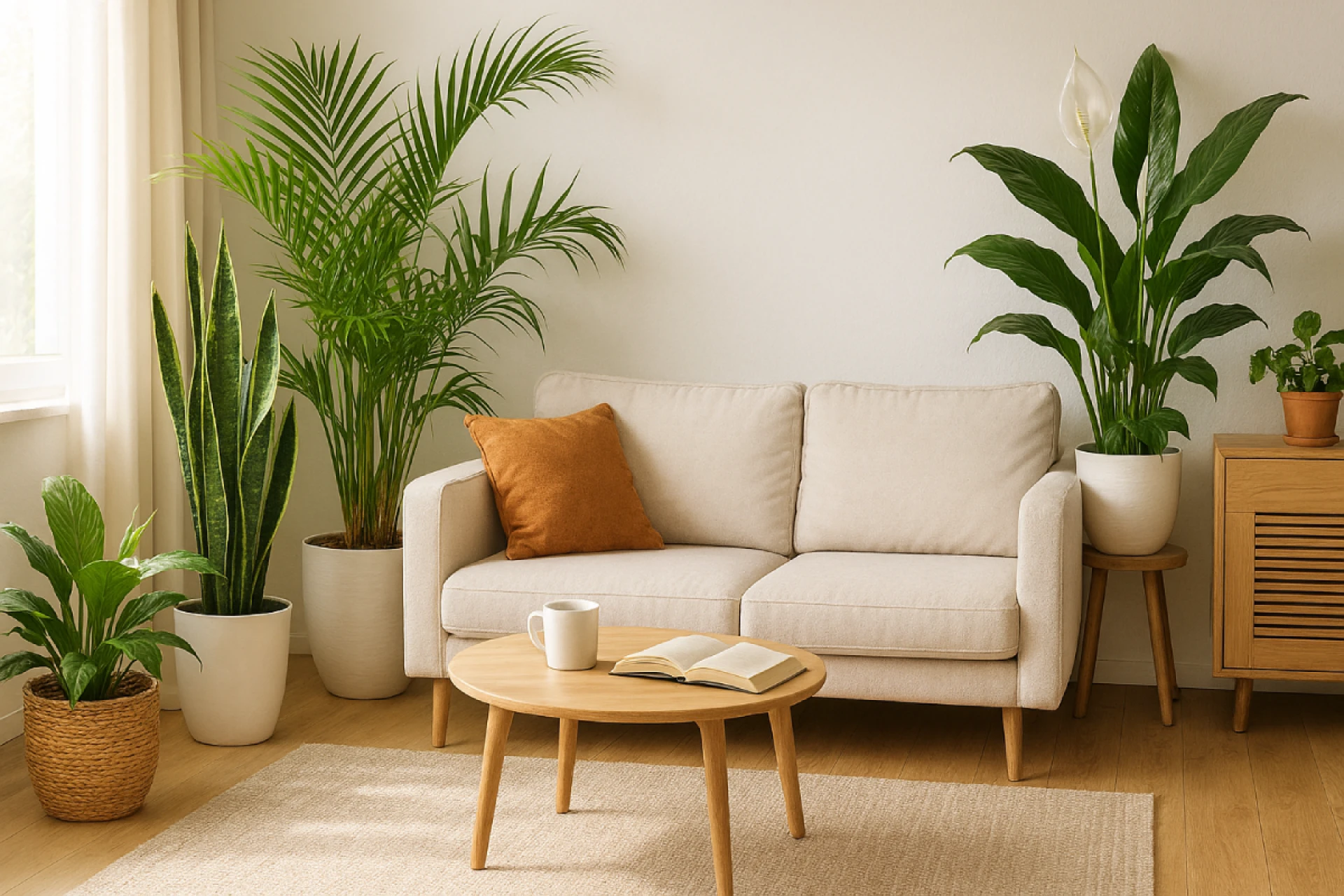
- Living room: Go larger (Areca Palm, Rubber Plant, Bamboo Palm) to anchor seating zones and soften TV glare. Pair with trailing Pothos on shelves for layered height. Touch Green recommends mixing tall anchors with cascading greens for a natural balance.
- Bedroom: Oxygen-forward choices with serene looks: Snake Plant, Peace Lily, Philodendron. These are among the best houseplants for bedrooms for their calm, low-fuss presence. Perfect starter picks from Touch Green.
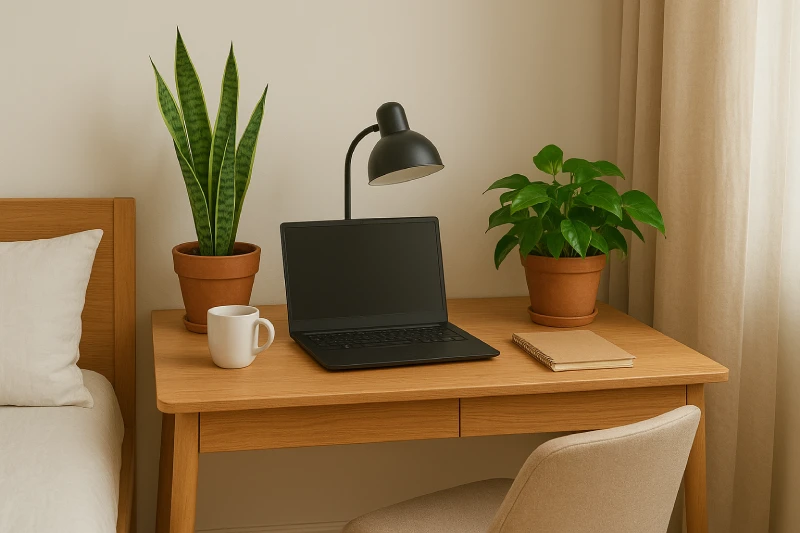
- Home office: ZZ Plant, Dracaena, and Pothos keep a tidy silhouette on or near desks and won’t mind missed waterings.
- Kitchen: Aloe vera (sunny sill), Spider Plant (hanging), Pothos (top of cabinets).
- Bathroom (with window): Boston Fern, Peace Lily, Bamboo Palm—humidity lovers.
Pet safety snapshot
If you have curious cats or dogs, place plants out of reach and choose safer options (e.g., Spider Plant) or use shelves/hanging planters. Many popular varieties (Peace Lily, Philodendron, Pothos, Snake Plant) can be toxic if ingested. Always verify species before bringing plants home.
Care essentials: keep it simple
- Light: Match plants to light, not the other way around. Observe shadows—soft, blurry shadows usually mean bright-indirect light.
- Water: The #1 mistake is overwatering. Test soil with a finger: dry to the first knuckle? Time to water (exceptions: ferns like more consistent moisture).
- Humidity: Group plants or use a tray with pebbles and water under ferns and palms.
- Dusting: Wipe broad leaves monthly; it’s free growth fuel.
- Feeding: During spring/summer, apply a balanced liquid fertilizer at ½ strength monthly.
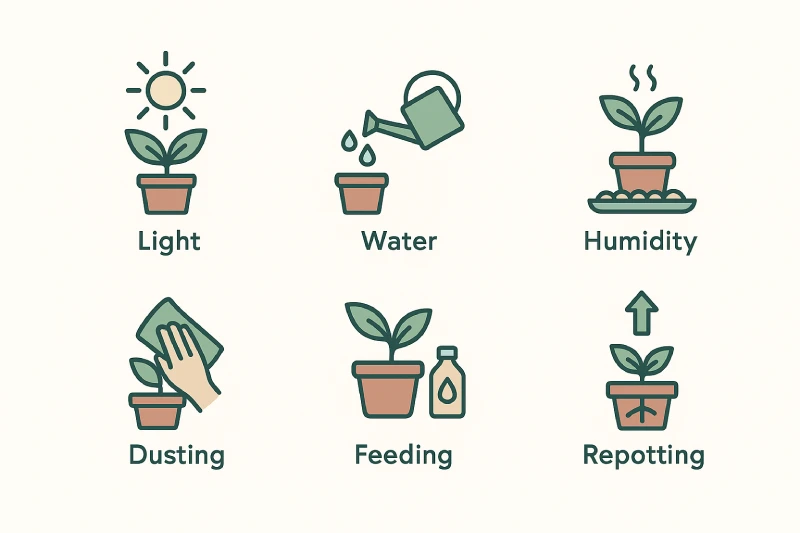
Repotting: Every 12–24 months; step up 1–2 inches in pot size with fresh, well draining mix.
If you prefer set-and-forget greenery, lean on low-maintenance indoor plants like ZZ Plant, Snake Plant, and Pothos—many of which Touch Green highlights in its beginner-friendly collection.
Styling ideas that also help plants thrive
- Odd-number clusters: Group 3 or 5 plants with varied heights (floor palm + mid-table Dracaena + trailing Pothos).
- Vertical green: Ladder shelves or wall grids maximize small spaces and airflow.
- Planter palette: Keep planters cohesive (all matte neutrals or all warm terracotta) to make your jungle look intentional.
- Light lines: Place plant stands near bright windows, but use sheer curtains to diffuse harsh sun.
(Styling ideas are also part of Touch Green’s approach—making functional greenery look effortlessly chic in your home.)
Common myths—cleared up quickly
- Myth: One plant can purify a whole room.
- Reality: A single plant adds freshness, but a collection works better. Plants complement
- Myth: Overwatering boosts growth.
- Reality: Too much water damages roots. Follow each plant’s rhythm.
- Myth: Low-light means no-light.
- Reality: Low-light does not mean zero light. All plants require some ambient or indirect light to survive and grow.
Troubleshooting at a glance
- Yellowing leaves: Often overwatering or poor drainage; check pot holes and soil.
- Dry tips/browning fronds (palms/ferns): Low humidity or underwatering; increase misting/humidity.
- Leggy growth: Not enough light; move closer to a bright window or add a grow lamp.
- Stalled plant: Pot-bound or nutrient-poor soil; consider repotting and light feeding.
How many plants do you need?
For a typical living room or bedroom, start with 3–5 medium plants or 1 large + 2 small. Think coverage, not clutter: aim to green the areas where you spend the most time and where air feels stuffy (near entryways, seating corners, or by a work desk).
Starter Trio Suggestion
- Snake Plant – night collector, survives neglect.
- Peace Lily – elegant, mid-sized, forgiving.
- Pothos – cascading, fast-growing filler.
This trio covers durability, air-refreshing vibes, and a polished visual mix. It’s also a perfect first step into indoor plants for clean air without overwhelming your routine.
Ready to refresh your space?
When you're ready to begin your green transformation, explore a curated selection of air purifier plants for home with Touch Green. These easy-care varieties combine beauty and function, letting you enjoy cleaner air and a calm, refreshing environment.
































Sign in to leave a comment.