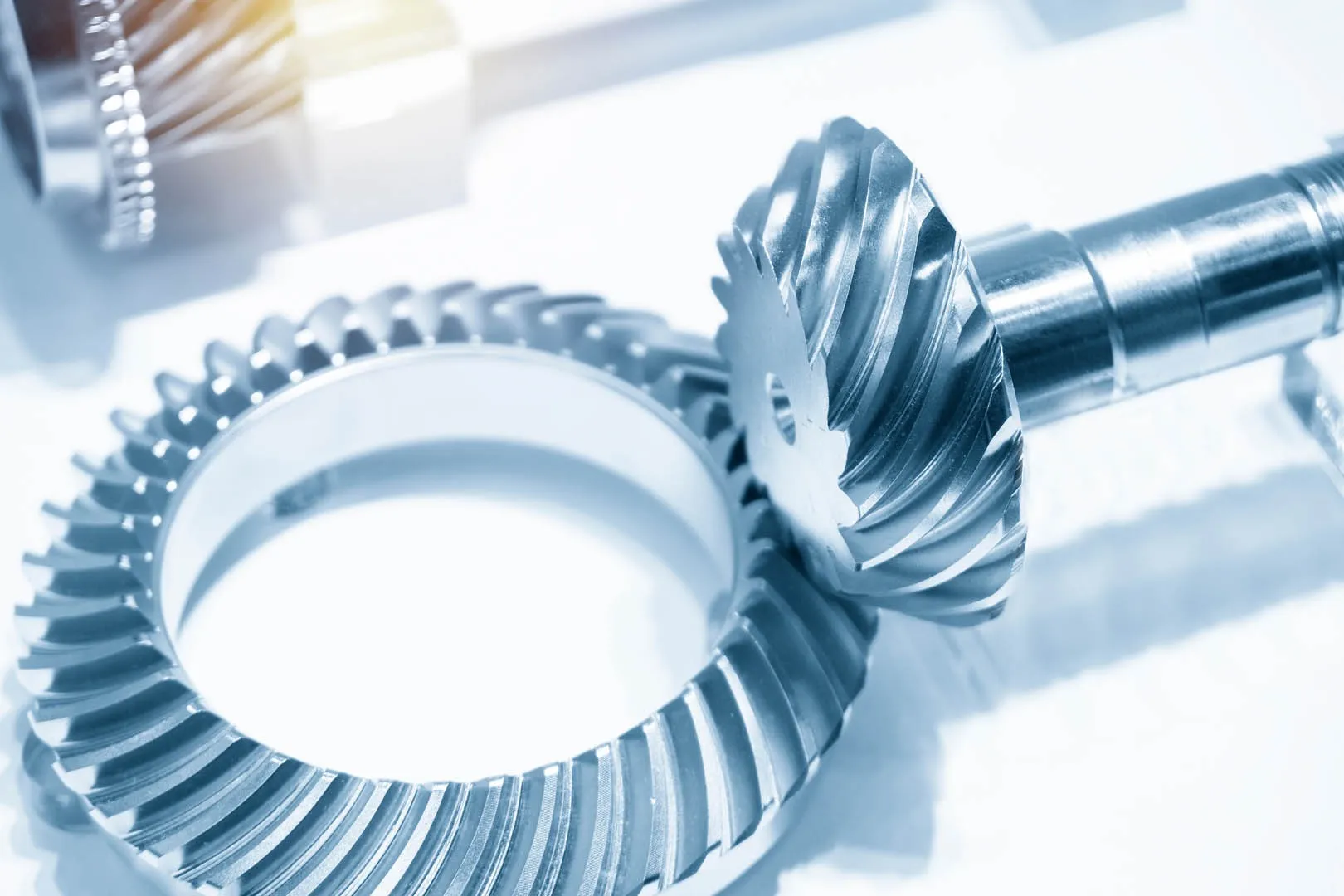

If you've ever wondered how power turns a corner inside a machine, bevel gears are usually the answer. They quietly redirect motion and torque between shafts that meet at an angle, and they sit at the heart of everything from car differentials to cooling tower drives. In this guide, we'll walk through what bevel gears are, the main types you'll come across, where they're used, and how to pick the right one. We'll also share practical maintenance advice drawn from years of hands-on gearbox work.
What Are Bevel Gears and How Do They Work?
Bevel gears are conical gears designed to transmit motion and torque between shafts whose axes intersect, most commonly at a right angle, though other angles are possible. Picture two cones meeting tip to tip: that's the basic geometry at play.
Unlike spur gears, which are cut on flat cylinders, bevel gear teeth are arranged on a pitch cone. As the gears mesh, their tooth surfaces roll and slide against one another, transmitting torque through tangential forces at the contact points. That combination of rolling and sliding is what allows power to change direction smoothly.
The 90° arrangement is by far the most common, which is why bevel gears are the go-to solution wherever a drive needs to turn a corner. Get the geometry right, and you get an efficient, reliable handoff of power between perpendicular shafts.
Common Types of Bevel Gears
Not all bevel gears are cut the same way, and the differences matter enormously in practice. The shape of the teeth affects how quietly a gear runs, how much load it can carry, and how much it costs to produce. Broadly, there are three families worth knowing.
Straight, Spiral and Hypoid Variations
Straight bevel gears have straight teeth that make contact along a line. They're the simplest and most economical option, well suited to low-speed, light-to-moderate loads. The trade-off is noise, they tend to get louder as speeds climb, so they're best kept to gentler duties.
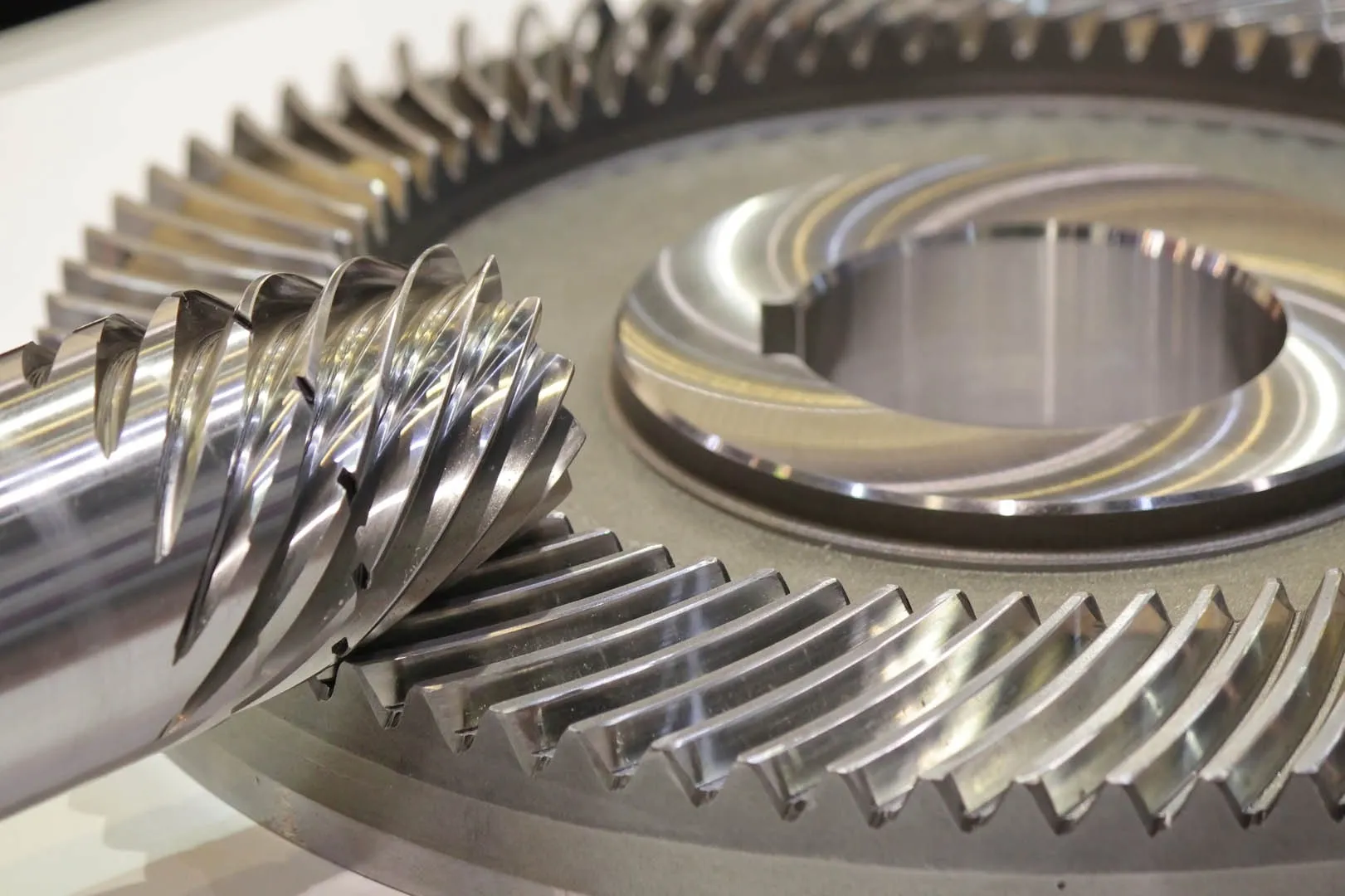
Spiral bevel gears use curved teeth, which increases tooth overlap during meshing. The result is a smoother, quieter drive that copes well with medium-to-high speeds and fluctuating loads. They cost more to manufacture, but for continuous-duty applications the refinement is usually worth it.
Hypoid gears are a helical bevel form with non-intersecting, offset axes. They deliver high torque in a compact package and run remarkably quietly. The catch is that the sliding action demands specialised hypoid gear oil, ordinary lubricant won't hold up.
Key Applications Across Industry
Once you know what to look for, you'll spot bevel gears almost everywhere. The most familiar example is the automotive differential and drive axle, where spiral and hypoid gears route power from the engine to the wheels while allowing them to turn at different speeds.
In our world, though, they're just as vital inside industrial right-angle gearboxes. These crop up in conveyors, processing machinery, cooling towers and power plants, anywhere a drive needs to change direction reliably under sustained load.
Beyond that, bevel gears turn up in machine tools, printing machinery and material handling equipment. They're also found in marine propulsion systems and even rotorcraft tail rotor drives, where compact, high-integrity power transfer isn't optional. It's a versatile component list that spans light-duty and safety-critical alike.
How to Choose the Right Bevel Gear for Your Gearbox
Selecting a bevel gear comes down to matching the gear to the job. Four criteria do most of the heavy lifting: operating speed, torque and load, noise limits, and shaft configuration. Getting clear on those before you specify anything saves a lot of grief later.
Here's how the choices typically shake out:
- Straight bevel, ideal when speeds are low, noise isn't a big concern, and cost matters. A sensible default for simpler, budget-conscious drives.
- Spiral bevel, the pick for medium-to-high speeds and continuous or varying loads where quiet running is a priority.
- Hypoid, the answer when shafts don't intersect and you need high torque in a tight, compact layout.
One thing we'd stress: don't over-spec out of caution. A quieter, higher-capacity gear than you need adds cost and complexity for no real gain. Define the duty cycle honestly and let it guide the decision.
Maintenance Tips From an Industrial Gearbox Specialist
Bevel gears are hard-wearing, but they reward a bit of attention. As an industrial gearbox specialist, we've seen how a modest maintenance routine can stretch service life dramatically, and how neglect turns small issues into expensive rebuilds.
A few habits go a long way:
- Keep it clean. Dust, grit and other contaminants are the enemy. Seal the gearbox environment properly and don't let debris work its way in.
- Watch the lubricant. Check level and quality regularly, and change the oil at intervals suited to the operating conditions, often around 10,000 running hours in normal service. Hypoid gears, remember, need their dedicated oil.
- Inspect the teeth and shafts. Look for wear, pitting, cracks and chipped teeth, and check bearings and shafts for damage. Measuring backlash tells you a lot about how the mesh is holding up.
- Listen and feel. Abnormal noise or vibration is usually the first warning sign. Investigate and repair promptly rather than hoping it settles.
- Keep records. Log inspections and part replacements so you can spot trends and plan ahead instead of reacting to failures.
None of this is complicated, but doing it consistently is what separates a gearbox that runs for decades from one that fails early.
Conclusion
Bevel gears remain one of the most elegant ways to turn power through an angle, and the right choice always starts with the duty at hand, speed, load, noise and shaft layout. Match the gear type to those factors, keep up a steady maintenance routine, and you'll get years of reliable, quiet service from your gearbox.
Frequently Asked Questions About Bevel Gears
What are bevel gears and how do they work?
Bevel gears are conical gears that transmit motion and torque between shafts whose axes intersect, typically at a 90° angle. Their teeth are arranged on a pitch cone, and as they mesh, tooth surfaces roll and slide together, transmitting torque through tangential forces. This rolling and sliding action allows power to change direction smoothly between perpendicular shafts.
What's the difference between straight, spiral and hypoid bevel gears?
Straight bevel gears have straight teeth and are economical but noisier at higher speeds ideal for low-speed, light loads. Spiral bevel gears feature curved teeth, offering quieter operation and better load capacity for medium-to-high speeds. Hypoid gears have non-intersecting, offset axes, delivering high torque quietly in compact spaces, but require specialised hypoid gear oil.
How do I choose the right type of bevel gear for my application?
Match your choice to four key factors: operating speed, torque and load requirements, noise limits, and shaft configuration. Choose straight bevel for low-speed, cost-sensitive applications; spiral bevel for medium high speeds with quiet running priority; and hypoid for non-intersecting shafts needing high torque in confined spaces.
Where are bevel gears commonly used in industry?
Bevel gears are found in automotive differentials and drive axles, industrial right-angle gearboxes in conveyors and cooling towers, machine tools, printing machinery, material handling equipment, marine propulsion systems, and rotorcraft tail rotor drives anywhere compact, reliable power transfer between angled shafts is essential.
What maintenance is required to extend bevel gear service life?
Keep the gearbox clean to prevent dust and debris contamination. Check lubricant level and quality regularly, changing oil around every 10,000 running hours in normal service hypoid gears need specialised oil. Inspect teeth, shafts and bearings for wear, pitting and cracks. Monitor for abnormal noise or vibration and maintain detailed maintenance records.
Why do hypoid gears require specialised oil?
Hypoid gears use a helical bevel form with offset, non-intersecting axes that create significant sliding action during meshing. This sliding generates extreme pressure at tooth contacts, which ordinary lubricant cannot withstand. Specialised hypoid gear oil contains extreme-pressure additives to protect surfaces and prevent failure under these demanding conditions.

























Sign in to leave a comment.