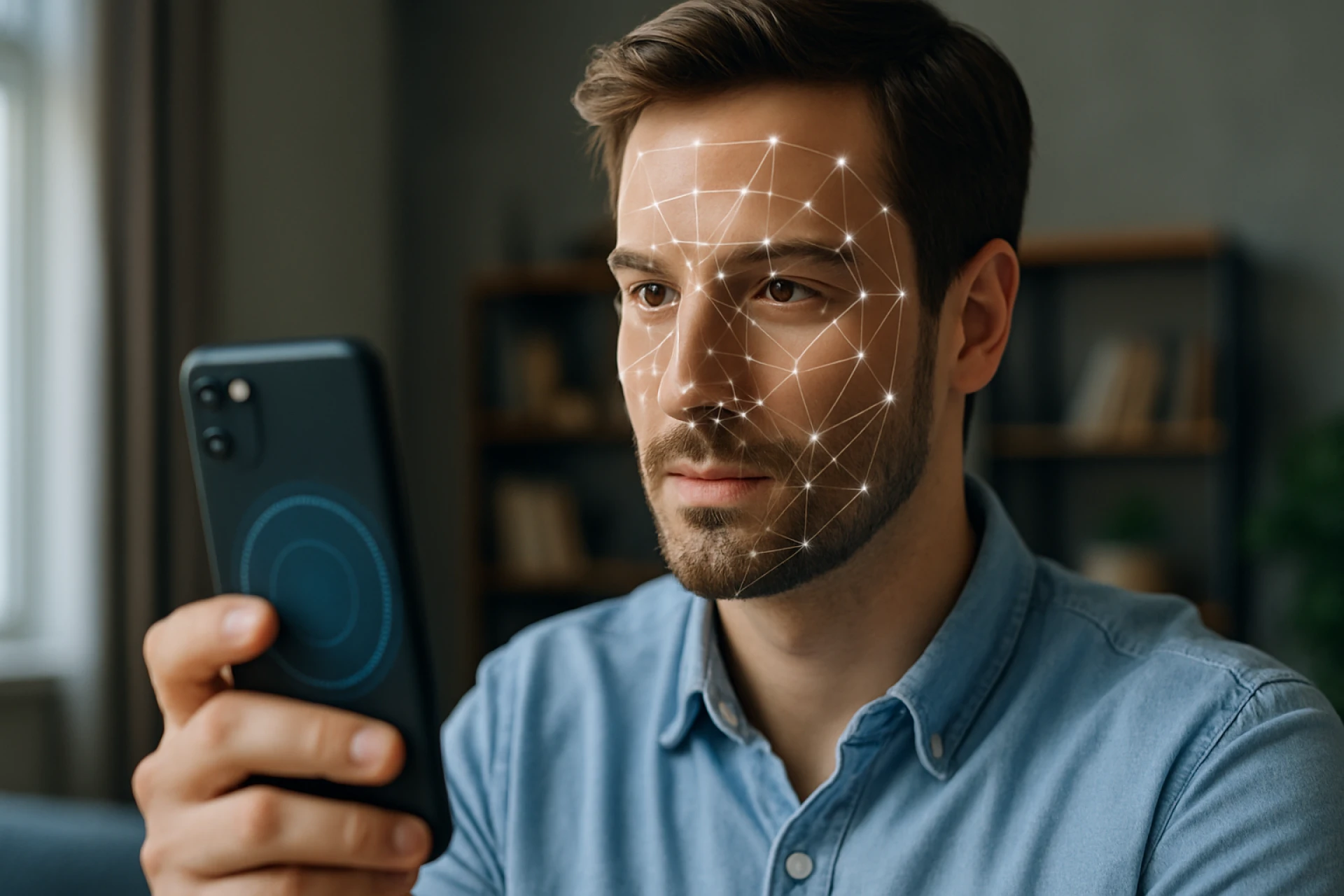

Face authentication isn’t science fiction anymore. From unlocking your phone to verifying a payment, it’s become part of everyday life. But what powers this seemingly magical experience behind the scenes? That’s where a face authentication SDK steps in. It’s the digital toolkit that developers use to integrate facial recognition into apps and systems, and in 2025, it’s becoming essential across industries.
🧠 What Is a Face Authentication SDK?
A face authentication SDK (Software Development Kit) is a collection of tools, APIs, and pre-trained machine learning models that allow developers to embed face verification capabilities into their applications or devices.
Think of it like a ready-made recipe for facial recognition; instead of building every ingredient from scratch, you get the full package with instructions.
🧩 Core Features You Can Expect:
- Real-time face detection
- Liveness detection (active or passive)
- Face matching & verification
- Anti-spoofing mechanisms
- Easy integration with mobile and web platforms
These SDKs are tailored for high accuracy, fast performance, and iron-clad security.
🚀 Why Businesses Are Adopting It Rapidly
In 2025, trust and convenience rule the tech world. A face authentication SDK delivers both, and companies are loving it.
📊 Here’s why industries are integrating it:
Banking
- Use Case: Login & transaction verification
- Benefits: Reduces fraud and password fatigue
Healthcare
- Use Case: Patient identification
- Benefits: Minimizes identity theft & errors
E-commerce
- Use Case: Quick identity check at checkout
- Benefits: Speeds up process, boosts trust
Education
- Use Case: Remote exam proctoring
- Benefits: Prevents cheating, ensures credibility
Workforce
- Use Case: Biometric employee clock-in
- Benefits: Prevents buddy punching & improves logs
🧾 Fun Fact: Mastercard partnered with fintech apps to test face-based payment in 2023. The result? Over 80% of users found it easier than passwords.
🔐 How Face Authentication SDKs Work: The Simple Flow
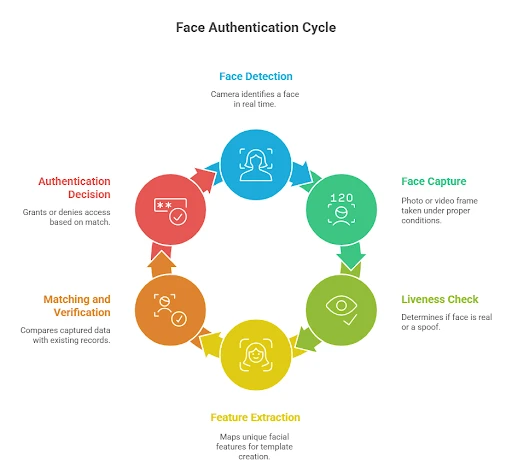
Whether you're unlocking your phone or verifying your identity on a banking app, most face authentication systems follow a straightforward process. It all starts with face detection, where the camera identifies a human face in real time. Once a face is detected, the system moves to the face capture stage, where a photo or video frame is taken under proper lighting and angle to ensure accuracy.
Next comes the liveness check, a crucial step where the SDK determines whether the face is from a real person or a spoof attempt using a photo, video, or even a 3D mask. If the face passes this test, the system performs feature extraction, mapping out unique facial features like the distance between the eyes, nose shape, and jawline to create a secure biometric template.
The system then enters the matching and verification stage, where the freshly captured facial data is compared against the existing biometric records to confirm identity. If there’s a match, the SDK proceeds to the authentication decision, granting or denying access based on the result.
Behind the scenes, this entire process relies heavily on deep learning algorithms, particularly convolutional neural networks (CNNs), to ensure precision. Many SDKs also leverage edge computing to boost processing speed and responsiveness, especially on mobile devices. Depending on the provider, these systems can run offline or online, giving developers flexibility in how they implement the solution.
⚔️ Face Authentication SDK vs Traditional Login Systems
Why not just stick to passwords, OTPs, or good ol' fingerprint scanners?
Here’s a quick breakdown:
Security
- Password-Based Login: Prone to breaches
- Face Authentication SDK: Highly secure, hard to spoof
User Experience
- Password-Based Login: Often frustrating
- Face Authentication SDK: Seamless and instant
Accessibility
- Password-Based Login: Typing needed
- Face Authentication SDK: Hands-free, great for all users
Cost in Long Term
- Password-Based Login: High due to support
- Face Authentication SDK: Lower after integration
📱 Popular Use Cases of Face Authentication SDK in 2025
Let’s explore where face authentication is showing up in real life.
💳 Banking & Fintech
- Secure logins
- Transaction approvals
- KYC processes
Case Study: PayPal’s experimental face authentication pilot showed a 45% drop in account fraud during early testing phases.
🏥 Healthcare
- Patient verification in telemedicine
- Quick check-ins at clinics
- Data access control in EHRs
🛍️ E-Commerce
- Verifying customer identity
- Personalized shopping experiences
- Preventing account takeovers
🎓 Education
- Proctoring online exams
- Automated attendance systems
🚔 Public Safety
- Entry control in sensitive buildings
- Verifying driver identity in logistics
- Border security verifications
🔍Smart Tips for Picking the Right Face Authentication SDK
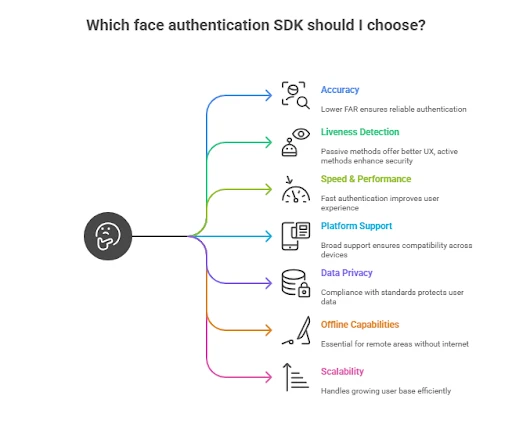
Every face authentication SDK has its own strengths, so choosing the right one means looking beyond just flashy features. Start with accuracy; the lower the False Acceptance Rate (FAR), the better, with <0.01% being ideal.
Liveness detection is another must; passive methods offer a smoother user experience, while active checks are generally more secure. Don’t overlook speed and performance either a reliable SDK should authenticate a user in under one second. Ensure broad platform support too, including Android, iOS, web, and embedded systems.
Ensuring data privacy isn’t optional, the SDK should fully comply with standards such as GDPR, CCPA, or other relevant data protection laws. If your app needs to work in remote areas, choose one with strong offline capabilities. Finally, think long-term scalability is key if your user base is expected to grow, so make sure the SDK can handle high volumes of daily verifications.
🔄 Integration: Is It Complicated?
Most modern face authentication SDKs come with:
- Well-documented APIs
- Sample code for quick setup
- Cross-platform support (Flutter, React Native, Python, etc.)
So whether you’re a startup building a fintech app or a healthcare giant optimizing patient check-ins, integration is now faster and cheaper than ever.
🧠 Final Thoughts
Face authentication SDK is no longer a luxury; it’s a necessity for businesses that care about security, user experience, and future scalability. It enables everything from faster banking to safer classrooms. But what really sets it apart is the blend of AI precision with human convenience. Your reflection holds all the proof you need.
Recognito Vision is helping shape this future by empowering developers and businesses with next-gen biometric authentication. NIST FRVT top evaluated in face recognition, you can also checkout their Github for more.
























Sign in to leave a comment.