

The language model market is developing rapidly. New models appear with different capabilities, pricing structures, deployment options, and performance characteristics.
For enterprises, this creates both opportunity and complexity.
Rather than selecting one model and building everything around it, organisations can create a multi-model AI architecture.
What Does Multi-Model AI Mean?
A multi-model architecture allows an enterprise application to work with different LLMs.
The application communicates with a common AI layer rather than being directly dependent on one model.
This makes it possible to test new models, change providers, or introduce specialised models without redesigning the entire application.
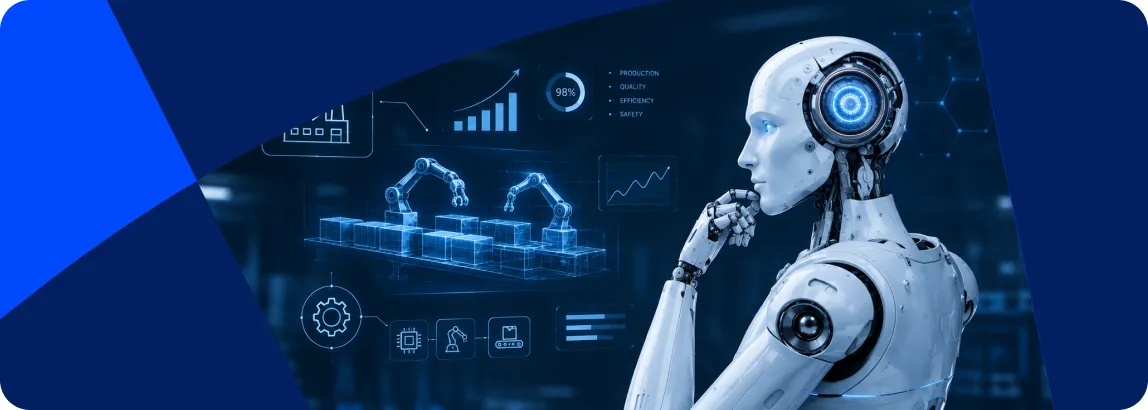
Manufacturing Is a Good Example
Manufacturing environments contain diverse AI workloads.
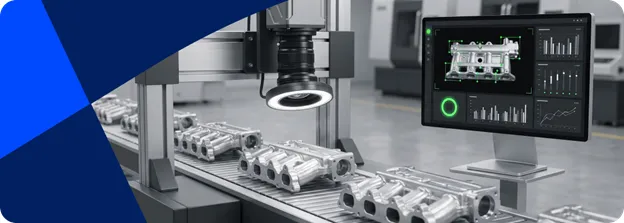
Employees may need simple knowledge queries. Engineers may need advanced reasoning. Procurement teams may require document analysis. Customer support may require conversational AI. Quality teams may work with images.
These use cases can have different model requirements.
Model Selection Through Routing
A routing system can evaluate incoming requests and direct them to a suitable model.
The decision can be influenced by the complexity of the task, required context, data sensitivity, expected response quality, cost, and model availability.
A fallback model can also be configured to maintain service availability.
Orchestration for AI Agents
AI agents often perform several actions rather than generating one response.
An agent may retrieve information, call an API, interact with a database, use a tool, and ask a language model to interpret the results.
Orchestration manages these activities and coordinates the different components.
Governance and Visibility
As the number of models increases, governance becomes increasingly important.
Organisations need to understand who can use each model, what information can be sent, what tools agents can access, and when human approval is required.
Observability helps provide visibility into model usage, latency, cost, failures, fallbacks, and workflow performance.
Can Private LLMs Be Included?
Yes. An enterprise can combine self-hosted models, private-cloud deployments, cloud models, and specialised AI models under the same architecture.
This can be useful when certain manufacturing information needs to remain within controlled infrastructure.
Iconflux's Approach
Iconflux helps businesses build enterprise AI architectures around their actual workloads rather than one model provider.
Routing, orchestration, RAG, governance, integrations, and private AI can work together to create a flexible foundation.
As AI technology changes, the architecture can evolve without requiring every application to be rebuilt from scratch.
Reference Blog: https://iconflux.com/blog/llm-agnostic-ai-why-the-smartest-enterprises-are-not-betting-on-a-single-model


























Sign in to leave a comment.