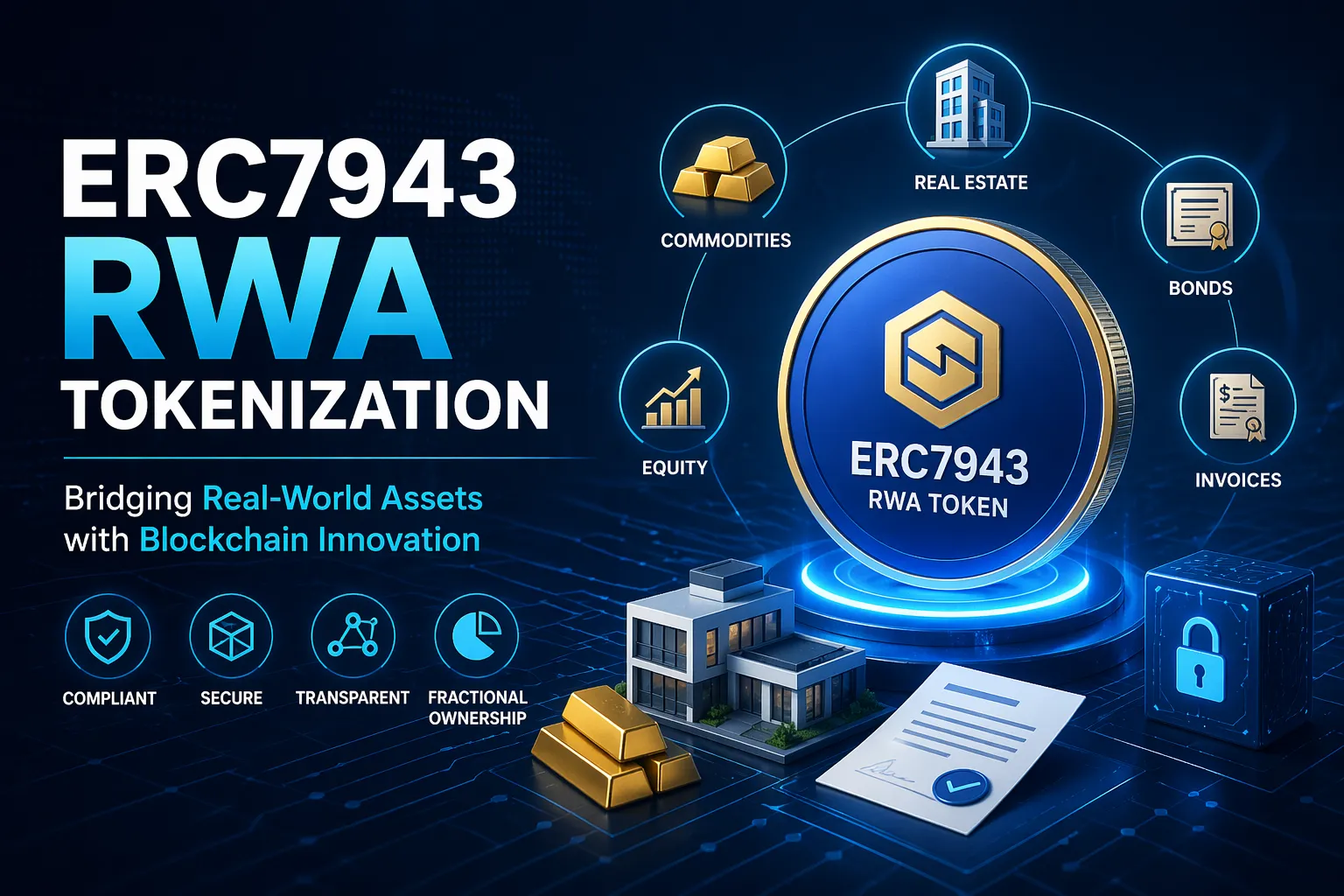

Real-world asset (RWA) tokenization is rapidly transforming how physical and financial assets are owned, traded, and managed. From real estate and commodities to invoices and government bonds, tokenization brings liquidity, transparency, and fractional ownership to traditionally illiquid markets. Emerging token standards like ERC7943 are designed to address the limitations of earlier frameworks and provide a more robust foundation for compliant, scalable RWA solutions.
What is ERC7943?
ERC7943 is a next-generation token standard tailored for real-world asset tokenization. Unlike general-purpose standards, it introduces features specifically designed for compliance, identity integration, and asset lifecycle management. This makes it particularly suitable for regulated industries where ownership rights, transfer restrictions, and auditability are critical.
Architecture of an ERC7943-Based RWA Platform
Building a tokenization platform using ERC7943 typically involves a layered architecture:
1. Asset Layer
This is the foundation where real-world assets are identified, verified, and legally structured. Assets such as real estate, art, or financial instruments are linked to digital tokens through legal agreements and custodianship.
2. Tokenization Layer
At this layer, ERC7943 smart contracts are deployed to represent ownership of the underlying asset. These contracts handle minting, burning, and transferring tokens while embedding compliance rules like KYC/AML checks and transfer restrictions.
3. Compliance & Identity Layer
ERC7943 integrates identity verification directly into the token logic. Only verified participants can hold or transfer tokens, ensuring regulatory compliance. This layer often connects with third-party identity providers or decentralized identity systems.
4. Application Layer
This includes user-facing platforms such as dashboards, trading interfaces, and APIs. Investors can buy, sell, or track tokenized assets, while administrators manage asset performance and compliance.
5. Integration Layer
To function in the real world, the system integrates with external services like payment gateways, custodians, legal registries, and oracles that provide real-time data about asset value or status.
Key Use Cases
Real Estate Tokenization
Property ownership can be divided into fractional tokens, allowing investors to buy shares in high-value real estate. ERC7943 ensures that only eligible investors can participate and that ownership records are transparent and immutable.
Private Equity and Venture Capital
Startups and private funds can tokenize equity, making it easier to raise capital and provide liquidity to early investors. Transfer restrictions help maintain compliance with securities regulations.
Trade Finance and Invoices
Businesses can tokenize invoices or receivables, enabling faster access to liquidity. Investors can purchase these tokens as short-term investment opportunities with clear risk profiles.
Commodities and Precious Metals
Assets like gold or oil can be tokenized and traded globally. ERC7943 ensures that tokens are backed by verifiable reserves and that ownership transfers follow compliance rules.
Why ERC7943 Matters?
Traditional token standards often lack built-in compliance and require complex off-chain solutions. ERC7943 bridges this gap by embedding regulatory logic directly into the smart contract, reducing operational risk and simplifying development.
Conclusion
ERC7943 is poised to play a pivotal role in shaping the future of real-world asset tokenization by addressing critical challenges around compliance, scalability, and transparency. Its architecture enables seamless integration between blockchain systems and traditional financial frameworks, making it an ideal choice for enterprises and developers entering this space. As the demand for tokenized assets continues to grow, adopting ERC7943 RWA Tokenization Development strategies can help businesses unlock new opportunities, improve liquidity, and build secure, regulation-ready digital asset platforms.



















Sign in to leave a comment.