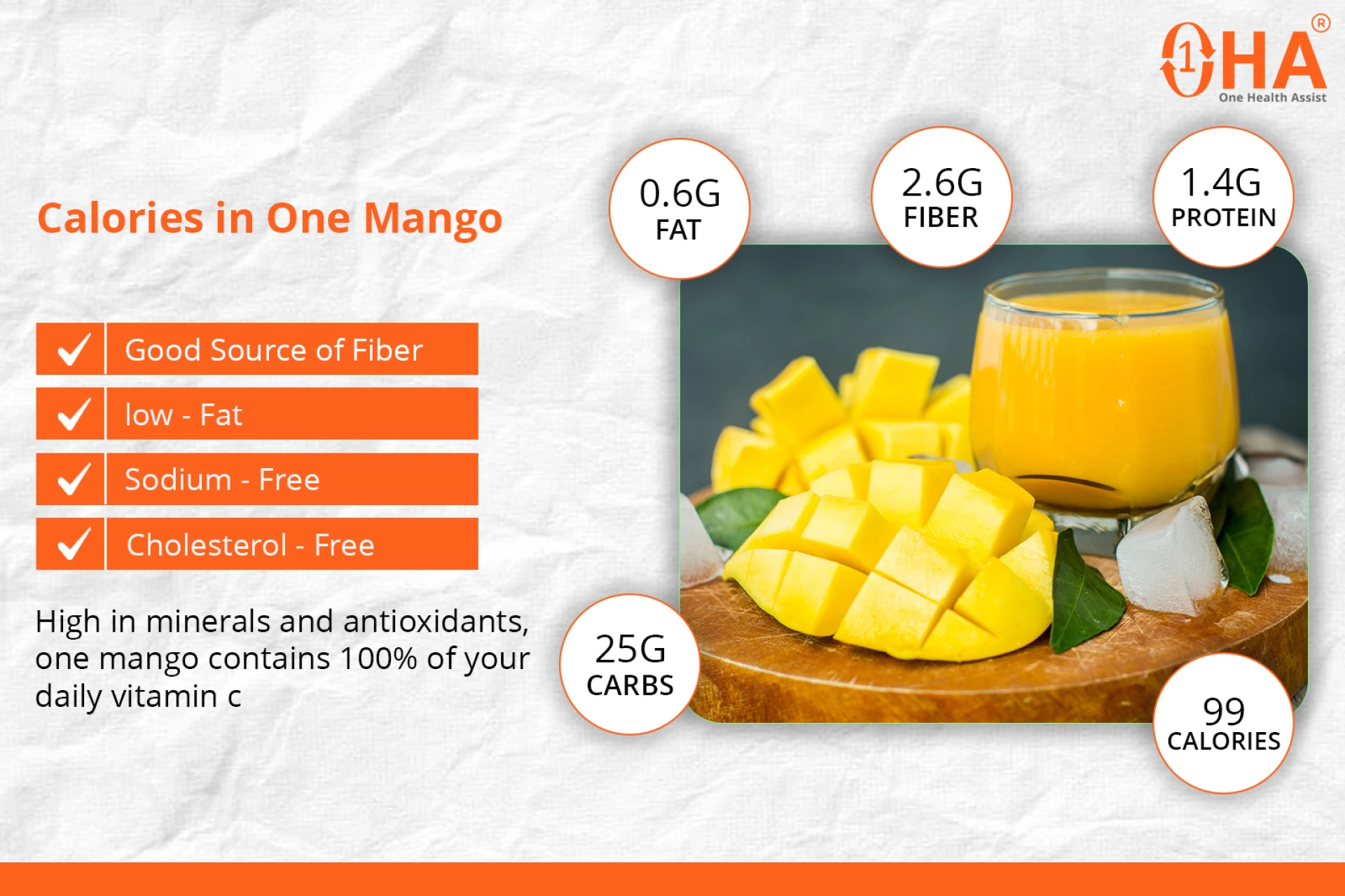

On average, a medium-sized mango (around 200 grams) contains approximately 120–135 calories. But there’s more to this tropical delight than just numbers it’s packed with vitamins, fiber, and antioxidants that make it a nutritional powerhouse worth understanding.
Table of Contents
- Calories in One Mango: Exact Numbers, Easy Portions, No Confusion (India Edition)
- Calories in One Mango: Why it varies
- Different mango types = different calories in one mango fruit
- Key characteristics that change calories
- Calories in One Mango: 6 benefits
- Antioxidant-style food choice that replaces junk
- Calories in One Mango: The “problem amplification”
- Calories per 100 g mango
- Calories in one mango (Small vs medium vs large)
- Mango vs mango products (shake, juice, Amaras)
- Pros and cons of eating mango
What is Calories in One Mango
Mango is often called the king of fruits, but when it comes to calories, many people aren’t sure what they’re actually eating. One person avoids mango thinking it’s “too sugary,” while another eats two without a second thought. The truth sits somewhere in between.
The calories in one mango depend on a few simple factors its size, variety, and how ripe it is. On average, a single medium-sized mango contains around 120–150 calories, mostly from natural fruit sugars. Smaller mangoes provide fewer calories, while larger, fully ripe ones can cross the 180-calorie mark.
Understanding Mango Varieties and Their Calorie Differences
Why mango varieties matter for calories
Mango calories mostly come from natural sugars. The more fibrous and less juicy the mango, the slower those sugars hit your system. Softer, ultra-sweet mangoes tend to pack more calories per bite because they’re denser in sugars and easier to overeat.
On average, mangoes contain 60–65 calories per 100 grams, but that number can swing up or down based on the variety.
Not all mangoes are created equal. India alone grows over 1,000 varieties, but only a handful dominate the market. The calories in one mango fruit vary based on size, variety, and ripeness. Here’s a quick breakdown:
Type of Mango Varieties and Calorie Content:
Alphonso (Hapus)
Alphonso is rich, buttery, and intensely sweet. This is the mango people wait all year for and for good reason.
Because of its creamy texture and high natural sugar content, Alphonso sits on the higher-calorie side, roughly 70 calories per 100 grams. It’s delicious, but also very easy to overconsume. One medium Alphonso can quietly cross 200 calories without you realizing it.
Best enjoyed mindfully, especially if you’re calorie-conscious.
Kesar
Kesar is sweet but slightly lighter than Alphonso, with a more balanced flavor and aroma.
Calorie-wise, it usually falls around 65–68 calories per 100 grams. It’s still energy-dense, but not as heavy as Alphonso. If you want sweetness without going all-in, Kesar is a safer middle ground.
Dasheri
Dasheri mangoes are juicy, aromatic, and less creamy than Alphonso. They feel lighter in the mouth, which often means slightly lower sugar density.
They average around 60–62 calories per 100 grams. Because of their juiciness, they also feel more refreshing and less filling, making them popular for raw consumption.
Langra
Langra mangoes are unique mildly sweet with a tangy edge and a firmer texture.
Thanks to their higher fiber and slightly lower sugar content, Langra mangoes tend to be around 58–60 calories per 100 grams. They’re a good option if you like flavor complexity without excessive sweetness.
Banganapalli
Banganapalli mangoes are large, pale yellow, and mildly sweet. They’re not as intense as Alphonso or Kesar.
Because of their lower sugar concentration, they sit at about 55–58 calories per 100 grams, making them one of the lighter mango varieties. Great if you want volume without too many calories.
Totapuri
Totapuri is more tangy than sweet and often used in salads, juices, and cooking.
It’s one of the lowest-calorie mango varieties, usually 50–55 calories per 100 grams. The firm flesh and sour notes make it harder to overeat, which naturally keeps calorie intake in check.
Raw Mango
Unripe mangoes are a completely different game.
They’re very low in sugar and higher in acids and fiber, coming in at roughly 35–40 calories per 100 grams. While not eaten like ripe mangoes, they’re excellent for digestion and summer hydration when used in chutneys or drinks.
Key Characteristic:
As a mango ripens, its internal composition changes significantly. Starches break down into natural sugars like fructose and glucose, which increases sweetness, softens the flesh, and slightly raises calorie density. Fully ripe mangoes generally provide around 60–70 calories per 100 grams, depending on the variety and degree of ripeness.
What changes as a mango ripens:
- Sugar content increases: Natural sugars develop during ripening, making the mango sweeter and more calorie-dense compared to its raw form.
- Starch content decreases: Unripe mangoes contain more starch, which gradually converts into sugars as the fruit matures.
- Acidity reduces: Raw mangoes are high in organic acids, giving them a sharp, tangy taste. This acidity drops as the mango ripens.
- Texture becomes softer: Ripening breaks down fiber and cell walls, resulting in a smoother, juicier mouthfeel.
- Calorie density rises slightly: While the difference isn’t extreme, riper mangoes deliver more calories per bite than raw or semi-ripe ones.
- Digestibility improves: Ripe mangoes are generally easier to digest, while raw mangoes may feel heavier for some people due to higher acidity and fiber.





























Sign in to leave a comment.