
What is Paneer?
Paneer is a fresh Indian cheese made by boiling milk and then curdling it with lemon juice, vinegar, or yogurt. The curds are strained and pressed into a block.
It tastes mild, creamy, and slightly sweet.
It’s vegetarian but not vegan because it’s made from dairy.
What is Tofu?
Tofu is made from soybeans. Soy milk is extracted from soaked soybeans, then coagulated using a coagulant (like nigari), and pressed into blocks.
It has a neutral, bland taste that absorbs flavours very well.
It’s completely vegan.
Table of Contents
- Types of Paneer and Tofu
- Key Nutritional Characteristics
- Benefits of Tofu and Paneer
- Choosing Wrong Protein: Real Consequences
- Key Statistics and Misconceptions
- Protein Quality and Digestibility
- Micronutrient Density Comparison
- Processing and Purity Concerns
- Insight Box: Expert and Experienced Insights
- Tofu vs Paneer: Pros & Cons
What is Paneer vs Tofu?
Paneer and tofu may look similar in shape, but they are completely different in how they’re made, how they taste, and how they fit into your diet. Paneer is a fresh cheese made by curdling cow or buffalo milk, giving it a creamy, rich flavour that works beautifully in Indian dishes. It’s higher in calories and fat but also packs more protein per serving. Tofu, on the other hand, is made from soybeans and has a neutral taste that absorbs whatever flavours you cook it with. It’s lighter, lower in calories, and vegan-friendly, making it a great choice for weight loss and heart-healthy meals. Both are versatile and nutritious paneer is perfect if you want richness and stronger texture, while tofu is ideal when you want something light, clean, and adaptable.
Paneer vs Tofu Comparison Table
Feature
Paneer
Tofu
Made From
Dairy milk
Soybeans
Diet Type
Vegetarian (not vegan)
Completely vegan
Taste
Creamy, milky, slightly sweet
Neutral, bland on its own
Texture
Firm, soft, holds shape
Varies: silken to extra-firm
Calories (100g)
High (~265 kcal)
Low (~80–95 kcal)
Protein (100g)
High (~18 g)
Moderate (~8–10 g)
Fat (100g)
High (~20 g)
Low (~4–6 g)
Carbs
Very low
Low
Calcium
High
Very high if calcium-set
Iron
Low
Higher
Fiber
None
Slightly present
Best For
Rich curries, grilling, high-protein meals
Weight loss, vegan dishes, light cooking
Cooking Style
Indian gravies, tikkas, parathas
Stir-fries, soups, salads, curries, smoothies
Understanding Tofu and Paneer the Characteristics
Paneer is a traditional Indian cottage cheese made by curdling full-fat milk using acidic agents like lemon juice, vinegar, or citric acid. The result is a fresh, unsalted cheese with a firm yet crumbly texture that holds its shape beautifully when cooked. Paneer doesn’t melt, making it perfect for grilling, frying, or adding to rich gravies. It’s a staple in North Indian cuisine, appearing in dishes like palak paneer, paneer tikka, and matar paneer. Since it’s dairy-based, paneer naturally contains lactose and animal-derived fats.
Tofu, on the other hand, originates from China and is made entirely from soybeans. Soy milk is coagulated using calcium sulfate or magnesium chloride, then pressed into soft, white blocks. Unlike paneer, tofu is plant-based, lactose-free, and cholesterol-free. It comes in several varieties silken tofu (soft and creamy), firm tofu (holds shape well), and extra-firm tofu (ideal for grilling and stir-frying). Tofu has a neutral flavor profile, which means it absorbs marinades and spices exceptionally well, making it versatile across Asian, Western, and fusion cuisines.
Types of Paneer
1. Fresh Paneer
Soft, mildly creamy, and the most commonly eaten form. It absorbs curry flavours well. Used in dishes like paneer butter masala, palak paneer, kadai paneer.
2. Malai Paneer
Made from rich, high-fat milk. Texture is extra soft and almost melts in the mouth. Ideal for premium dishes, tikkas, and restaurant-style gravies.
3. Homemade Paneer
Prepared by curdling milk at home. Usually softer, slightly crumbly, and more natural because no preservatives are used. Perfect for bhurji, parathas, and home-style curries.
4. Store-bought / Industrial Paneer
Firm, dense, and uniform in shape. Designed to hold up during cutting, grilling, and heavy cooking. Often used in restaurants and catering.
5. Low-Fat Paneer
Made with toned or skimmed milk. Lower calories and saturated fat. Slightly firmer and less creamy but great for weight-loss diets or low-fat meal plans.
6. Paneer Bhurji-style
A texture variation where paneer is crumbled instead of cut. Soft and grainy, used in wraps, sandwiches, and high-protein breakfast dishes.
7. Chhana
Very soft, moist, and not fully pressed. Mainly used to make sweets like rasgulla, chamcham, rasmalai, and sandesh. Not ideal for frying.
8. Aged or Flavoured Paneer
Sometimes infused with herbs, spices, or chilli. Used in fusion dishes and gourmet recipes.
Types of Tofu
1. Silken Tofu
Very soft, with a custard-like consistency. Blends smoothly. Used in soups, desserts, smoothies, and creamy sauces. Breaks easily.
2. Soft Tofu
Slightly firmer than silken but still delicate. Ideal for soups like miso, tofu scramble, steamed dishes, and light Asian recipes.
3. Medium-Firm Tofu
Has a balance of softness and structure. Good for sautéing, pan-frying, soups, and dishes
where you want tofu to hold shape but still be tender.
4. Firm Tofu
Most commonly used worldwide. Absorbs marinades well and is perfect for stir-fries, curries, pan-searing, and shallow frying. Great substitute for paneer in Indian dishes.
5. Extra-Firm Tofu
Denser with less water. Holds shape during grilling, baking, and air-frying. Ideal for protein-rich vegan meals or mock-meat style dishes.
6. Super-Firm / High-Protein Tofu
Very compact, almost no water content. Chewy, meat-like texture. Best for shredded tofu, mock chicken dishes, and high-protein diets.
7. Smoked Tofu
Pre-smoked to give a strong, savoury, BBQ-like flavour. Needs no marination. Great in sandwiches, salads, wraps, and Buddha bowls.
8. Fermented or Pickled Tofu
Has a strong, sharp flavour similar to cheese. Used in Chinese cooking, sauces, hotpots, and spreads. Very umami-rich.
9. Tofu Skin
Made from the thin skin formed on heated soy milk. Sold as sheets or rolls. Used in stir-fries, dumplings, vegan meat substitutes, and wraps.
10. Baked or Marinated Tofu
Pre-seasoned tofu ready to eat. Great for quick snacks, salads, and protein bowls.
Tofu vs Paneer Nutrition: Complete Breakdown
Calories and Macronutrients
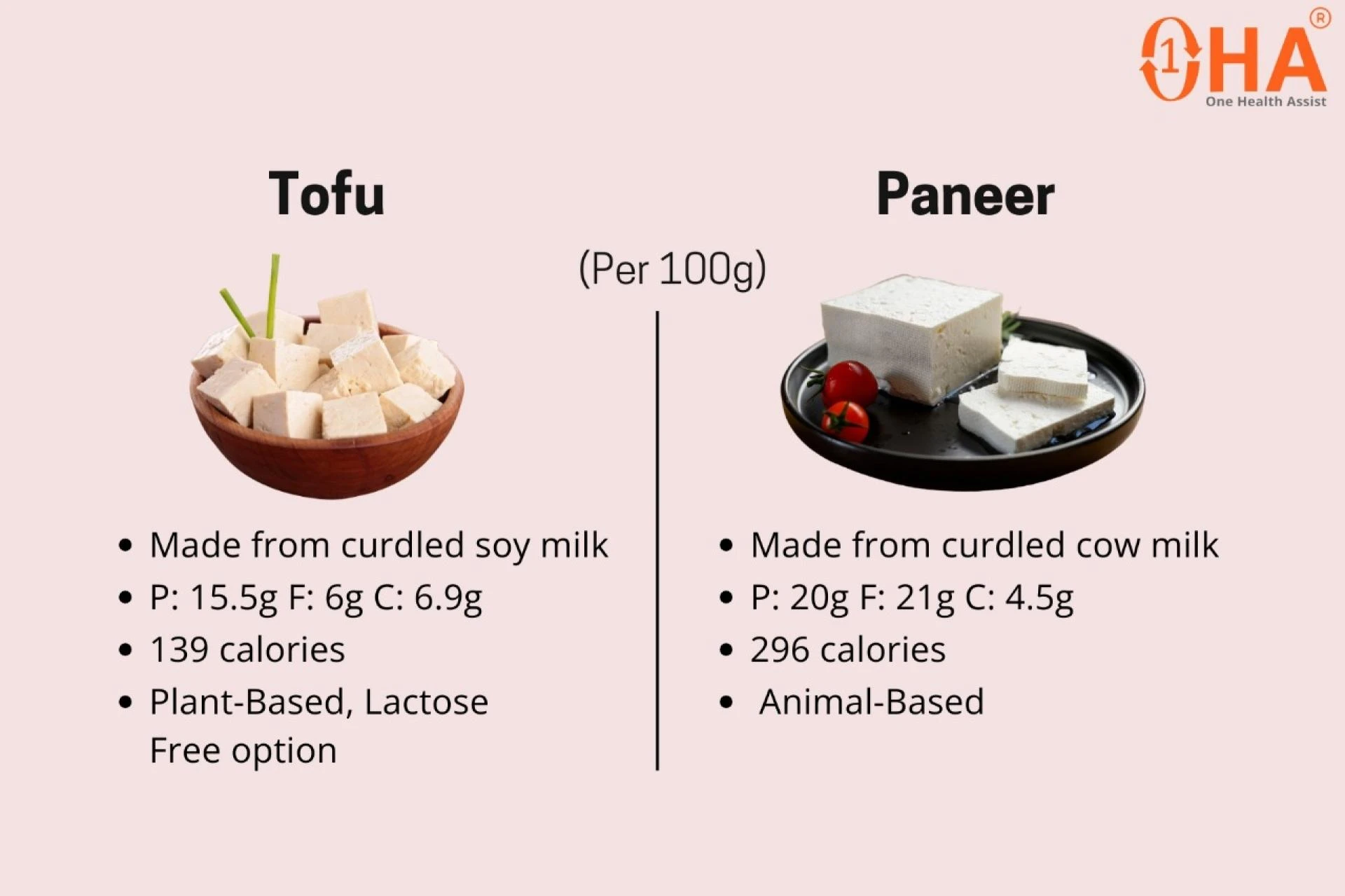
The calorie difference between tofu and paneer is striking. Paneer contains approximately 265 calories per 100 grams, making it a calorie-dense food ideal for those looking to gain weight or build muscle mass. In contrast, tofu contains only 62-76 calories per 100 grams that’s nearly 70% fewer calories than paneer. Research published in the Journal of Food Science and Technology confirms that soy-based proteins like tofu offer substantial satiety with minimal caloric load, making them excellent for weight management.
Here’s where it gets interesting for your macros:
- Protein: Paneer delivers 18-21 grams of protein per 100 grams, while tofu provides 6.9-12 grams depending on firmness. That’s roughly 2-3 times more protein in paneer.
- Fat: Paneer packs 20.8 grams of fat (mostly saturated), while tofu contains just 2.7-4.8 grams of fat (mostly unsaturated). That’s 90% less fat in tofu.
- Carbohydrates: Paneer has 1.2-4.5 grams of carbs, while tofu sits at 1.9 grams both are low-carb options, but paneer wins slightly for keto dieters.
Protein Quality and Amino Acid Profile
Here’s where the protein in tofu vs paneer debate gets nuanced. While paneer has more protein by weight, tofu offers a complete amino acid profile, meaning it contains all nine essential amino acids your body cannot produce on its own. Paneer, being dairy-based, has a good but incomplete amino acid spectrum, lacking certain essential amino acids in optimal ratios.
Micronutrient Comparison
The tofu vs paneer nutrition facts extend beyond macros into vital micronutrients:
Iron Content: Tofu dominates with 5.4 mg of iron per 100 grams compared to paneer’s mere 0.1 mg. That’s 54 times more iron in tofu, making it a superior choice for those managing anemia or vegetarians at risk of iron deficiency. The National Institutes of Health reports that adequate iron intake supports oxygen transport, energy production, and immune function.
Calcium Content: Paneer provides 208 mg of calcium per 100 grams, while tofu (when prepared with calcium sulfate) can deliver up to 350 mg 68% more calcium than paneer. Research in Osteoporosis International highlights that calcium-fortified tofu meets bone health requirements for vegans and lactose-intolerant individuals.
Vitamin B12: Paneer contains vitamin B12 , while tofu has virtually none unless fortified. This makes paneer crucial for vegetarians who rely on dairy for B12.
Magnesium: Tofu provides 30 mg of magnesium compared to paneer’s 10 mg, supporting muscle function, nerve transmission, and blood sugar regulation.
Benefits of Choosing Tofu Over Paneer
1. Superior Weight Loss Support
Tofu’s low-calorie, high-protein combination creates the perfect metabolic environment for fat loss. With 70% fewer calories than paneer, tofu helps maintain a caloric deficit without sacrificing satiety. A clinical trial published in Obesity Research found that participants consuming soy-based proteins lost 2.4 kg more body fat over 12 weeks compared to those eating equivalent dairy proteins, largely due to improved thermogenesis and reduced hunger hormones.
2. Heart-Healthy Fats and Cholesterol Management
Unlike paneer’s saturated fat content, tofu contains primarily polyunsaturated and monounsaturated fats the heart-healthy kind. Research in Circulation journal demonstrates that replacing saturated fats with plant-based fats reduces LDL cholesterol by 10-15%. Tofu is also cholesterol-free, while paneer contains dietary cholesterol that can accumulate in arterial walls over time.
3. Plant-Based Protein with Complete Amino Acids
For vegans, vegetarians, and those reducing animal products, tofu provides complete protein without compromising on quality. The soy protein in tofu supports muscle repair, immune function, and hormone production just as effectively as animal proteins, according to research in the Journal of the International Society of Sports Nutrition.
4. Fights Anemia with High Iron Content
With 54 times more iron than paneer, tofu is a game-changer for individuals with iron-deficiency anemia. A study in the British Journal of Nutrition found that women consuming soy-based foods had significantly higher ferritin levels (iron storage markers) after three months compared to dairy consumers. Pairing tofu with vitamin C-rich foods enhances iron absorption even further.
5. Better Digestibility for Lactose-Intolerant Individuals
Approximately 65% of the global population has reduced lactase activity after infancy, making dairy products like paneer difficult to digest. Tofu is entirely lactose-free and plant-based, eliminating digestive issues like bloating, gas, and diarrhea that often accompany dairy consumption.
6. Lower Environmental Footprint
Tofu production generates 73% fewer greenhouse gas emissions compared to paneer production, according to data from the Environmental Science & Technology journal. Soy cultivation requires significantly less water and land than dairy farming, making tofu the more sustainable protein choice for environmentally conscious consumers.
7. Nutrient Absorption
Tofu’s neutral flavor and porous texture allow it to absorb marinades, spices, and flavors better than paneer. This means you can create nutrient-dense meals by pairing tofu with antioxidant-rich vegetables, herbs, and healthy fats, maximizing your overall nutritional intake in every bite.
Paneer vs Tofu – Nutrition Comparison (per 100g)
1. Calories
- Paneer: ~265 kcal
- Tofu (firm): ~80–95 kcal
- Paneer is more calorie-dense because it’s dairy + higher fat.
2. Protein
- Paneer: ~18 g
- Tofu (firm): ~8–10 g
- Paneer gives more protein per 100g, but tofu is lower-calorie per gram of protein.
3. Fat
- Paneer: ~20–21 g (mainly saturated + milk fat)
- Tofu: ~4–6 g (healthy unsaturated fats)
- Tofu is much lighter and heart-friendly.
4. Carbs
- Paneer: ~1–2 g
- Tofu: ~2–3 g
- Both are almost zero-carb, good for low-carb diets.
5. Calcium
- Paneer: High (~200–250 mg)
- Tofu: Very high if calcium-set (~300–350 mg)
- Tofu sometimes beats paneer in calcium depending on coagulant used.
6. Iron
- Paneer: Low
- Tofu: Moderate to high (~2–5 mg)
- Tofu has clearly more iron.
7. Fiber
- Paneer: 0 g
- Tofu: ~1–2 g
- Tofu adds a little fiber; paneer has none.
8. Saturated Fat
- Paneer: High
- Tofu: Very low
- Big reason tofu is preferred in heart-healthy diets.
Tofu vs Paneer for Weight Loss, Muscle Gain, and Diabetes
Weight Loss: Tofu Takes the Crown
For anyone on a weight loss journey, tofu is the clear winner. Its minimal calorie content (62-76 kcal per 100g) combined with moderate protein makes it ideal for creating sustainable caloric deficits. The high water content in tofu also promotes satiety, helping you feel full longer without overeating.
Muscle Gain: Paneer Wins for Sheer Protein Quantity
If your goal is muscle hypertrophy or weight gain, paneer delivers nearly triple the protein of tofu (18-21g vs 6.9-12g per 100g). This makes it easier to hit your daily protein target of 1.6-2.2 grams per kilogram of body weight recommended for muscle building by the International Society of Sports Nutrition.
Diabetes Management
For diabetics monitoring blood sugar, paneer’s lower carbohydrate content (1.2-4.5g vs tofu’s 1.9g) and higher fat content can help stabilize glucose levels by slowing carbohydrate absorption. Research in Diabetes Care suggests that high-protein, moderate-fat meals improve glycemic control in type 2 diabetes patients.
5 Insights on Tofu vs Paneer You Won’t Find Elsewhere
Insight #1: Calcium Bioavailability Is Higher in Tofu
While paneer contains natural dairy calcium, tofu prepared with calcium sulfate offers superior bioavailability. The plant-based calcium in tofu doesn’t require vitamin D activation to the same extent as dairy calcium, making it more accessible for individuals with vitamin D deficiency.
Insight #2: Paneer’s Whey Protein Gets Discarded
During paneer production, whey protein (a highly bioavailable protein) is drained and discarded. You’re essentially losing out on 20% of milk’s total protein content. Tofu production, however, retains nearly all soy protein in the final product.
Insight #3: Tofu Supports Hormonal Balance Through Isoflavones
Soy isoflavones in tofu act as phytoestrogens, which may support menopausal symptoms and bone health in women. A meta-analysis in Menopause journal found that soy isoflavone consumption reduced hot flash frequency by 26% in postmenopausal women.
Insight #4: Paneer Is Better for Immediate Energy Needs
Thanks to its higher fat and calorie content, paneer provides quick, sustained energy ideal for endurance athletes or those with high physical activity levels. Tofu, being lower in calories, may require pairing with carbohydrates for similar energy output.
Insight #5: Food Pairing Amplifies Nutritional Benefits
Combining tofu with vitamin C-rich foods (like bell peppers or tomatoes) boosts iron absorption by up to 300%. Similarly, pairing paneer with fiber-rich vegetables (like spinach or broccoli) balances its fat content and improves overall nutrient density.
Pros and Cons: Tofu vs Paneer at a Glance
Tofu Advantages
1. Lower in Calories
With roughly 76 kcal vs 265 kcal per 100g, tofu is a lighter option, making it perfect for fat-loss diets, calorie deficits, or anyone trying to keep meals clean without feeling heavy.
2. Complete Plant Protein
Tofu contains all nine essential amino acids, which makes it one of the very few complete plant proteins. This is especially useful for vegans and vegetarians who struggle to balance amino acid intake.
3. Higher in Iron and Calcium
Iron levels are significantly higher (5.4 mg vs 0.2 mg in paneer) and calcium content can reach 350 mg per 100g, especially in calcium-set tofu. This supports stronger bones, better energy levels, and improved oxygen flow.
4. Contains Fiber for Digestion
Paneer has zero fiber, while tofu offers around 2.3g, helping with digestion, gut health, and smoother bowel movements.
5. Heart-Healthy Fat Profile
Tofu is extremely low in saturated fats and contains healthy polyunsaturated fats that support heart health, reduce cholesterol, and lower the risk of cardiovascular issues.
6. Lactose-Free and Vegan-Friendly
Completely plant-based, making it suitable for vegans, lactose-intolerant individuals, and people with dairy sensitivity.
7. Budget-Friendly Protein Source
In many Indian markets, tofu is cheaper per gram of protein compared to paneer, especially daily retail packs or wholesale bulk options.
8. Highly Versatile in Global Cooking
Tofu absorbs flavours very well, making it ideal for stir-fries, curries, Asian dishes, salads, and high-protein snacks.
Tofu Disadvantages
1. Lower Protein Density
To match the protein content of paneer, you need to eat a larger portion of tofu. This makes it less efficient for high-protein targets unless eaten in bigger quantities.
2. Contains Phytoestrogens
Soy contains natural compounds that mimic estrogen in the body. While generally safe in normal amounts, some people still worry about hormonal balance or thyroid sensitivity.
3. Can Have a Beany Taste
If not pressed, marinated, or cooked properly, tofu may taste bland or beany. It needs a little technique to get the perfect texture and flavour.
4. GMO Concerns
A lot of soy worldwide is GMO. Unless labelled organic or non-GMO, tofu may come from genetically modified sources.
5. Not Suitable for Soy Allergies
Anyone with soy intolerance or allergy must avoid tofu completely.
6. Extra Prep Time
To get a firm, restaurant-quality texture, tofu needs pressing to remove water. This adds an extra step before cooking.
Paneer Advantages
1. High Protein Density
Paneer delivers around 18–25g of protein per 100g, making it ideal for muscle building, strength training, and high-protein Indian diets.
2. Rich, Satisfying Taste
Creamy, soft, and flavourful, paneer blends naturally with Indian spices and gravies. It gives a fuller, more satisfying meal feel.
3. Source of Vitamin B12
Since B12 is mostly found in animal products, paneer becomes an important source for vegetarians to maintain nerve health and energy levels.
4. No Phytoestrogen Concerns
Unlike soy-based foods, paneer doesn’t carry hormonal concerns making it a “safe” protein for those cautious about soy.
5. Quick and Easy to Cook
Paneer requires almost no prep. No soaking, no pressing—just slice, fry, grill, or drop into your curry.
6. Familiar Flavour Profile
Paneer fits effortlessly into Indian cuisine curries, tikkas, parathas, biryanis, and snacks. This makes it practical for daily Indian meals.
7. Slow-Digesting Casein Protein
Paneer contains casein, which releases protein slowly. This helps with overnight muscle recovery and keeps you full longer.
Paneer Disadvantages
1. High in Calories and Saturated Fat
Paneer averages 265–321 kcal and contains 20–25g of saturated fat, which can lead to weight gain or cholesterol issues if eaten in excess.
2. Zero Fiber
Paneer offers no fiber at all, which means it doesn’t support digestion or gut health.
3. Almost No Iron
With only around 0.2 mg of iron, paneer contributes very little, making it less suitable for people with anemia or low hemoglobin.
4. Not Vegan or Lactose-Free
Paneer is dairy. People who are vegan or lactose intolerant must avoid it.
5. More Expensive per Serving
Paneer usually costs more than tofu for the same protein quantity, especially in metro cities and branded packs.
6. Additives in Commercial Paneer
Store-bought paneer may contain preservatives, stabilizers, or milk powders that change its quality and nutrition.
People Also Ask
Which has more protein: tofu or paneer?
Paneer contains significantly more protein, with 18-21 grams per 100 grams compared to tofu’s 6.9-12 grams. However, tofu offers a complete amino acid profile, making its protein more bioavailable and easier to digest than paneer’s incomplete amino acid spectrum.
Is tofu healthier than paneer for weight loss?
Yes, tofu is healthier for weight loss due to its minimal calorie content (62-76 kcal vs paneer’s 265 kcal per 100g) and lower fat content. Studies show that plant-based proteins like tofu promote greater fat loss while preserving lean muscle mass compared to dairy-based proteins.
Can I replace paneer with tofu in Indian recipes?
Absolutely. Firm or extra-firm tofu works well as a paneer substitute in curries, tikkas, and stir-fries. Press tofu to remove excess water, then marinate it to absorb spices. While the texture differs slightly, tofu’s flavor absorption makes it an excellent alternative.
Which is better for diabetics: tofu or paneer?
Paneer has a slight edge for diabetics due to its lower carbohydrate content and higher fat, which helps stabilize blood sugar. However, tofu’s low glycemic index and plant-based composition also support glycemic control. Individual glucose response should guide your choice.
Does tofu contain vitamin B12 like paneer?
No, tofu naturally lacks vitamin B12, while paneer provides it through dairy content. Vegans relying on tofu should consume fortified foods or take B12 supplements to prevent deficiency-related neurological issues.
Is tofu good for building muscle?
Yes, tofu supports muscle building when consumed in adequate amounts. While it has less protein per serving than paneer, combining tofu with other plant proteins (lentils, quinoa, chickpeas) easily meets muscle-building protein requirements of 1.6-2.2g per kg body weight.
FAQs
Can I eat tofu and paneer together?
Yes, combining tofu and paneer in the same meal provides complementary nutrients—paneer’s vitamin B12 and tofu’s iron create a nutritionally balanced dish. Just watch your total calorie and fat intake.
Which absorbs flavors better: tofu or paneer?
Tofu absorbs marinades and spices more effectively than paneer due to its porous, sponge-like texture. Pressing tofu before marinating enhances flavor absorption even further.
Is tofu high in estrogen?
No, tofu contains phytoestrogens (plant compounds), not actual estrogen. Research shows that moderate soy consumption (2-3 servings daily) doesn’t affect hormone levels negatively in men or women and may even support hormonal balance.
Which is more sustainable: tofu or paneer?
Tofu is significantly more sustainable, generating 73% fewer greenhouse gas emissions and requiring less water and land than dairy-based paneer production. Choosing tofu reduces your carbon footprint substantially.
Can lactose-intolerant people eat tofu?
Yes, tofu is completely lactose-free and plant-based, making it an ideal protein source for lactose-intolerant individuals who cannot digest paneer or other dairy products.
How much tofu should I eat daily?
Health experts recommend 1-2 servings (100-200 grams) of tofu daily as part of a balanced diet. This provides adequate protein and nutrients without excessive soy isoflavone intake.






















Sign in to leave a comment.