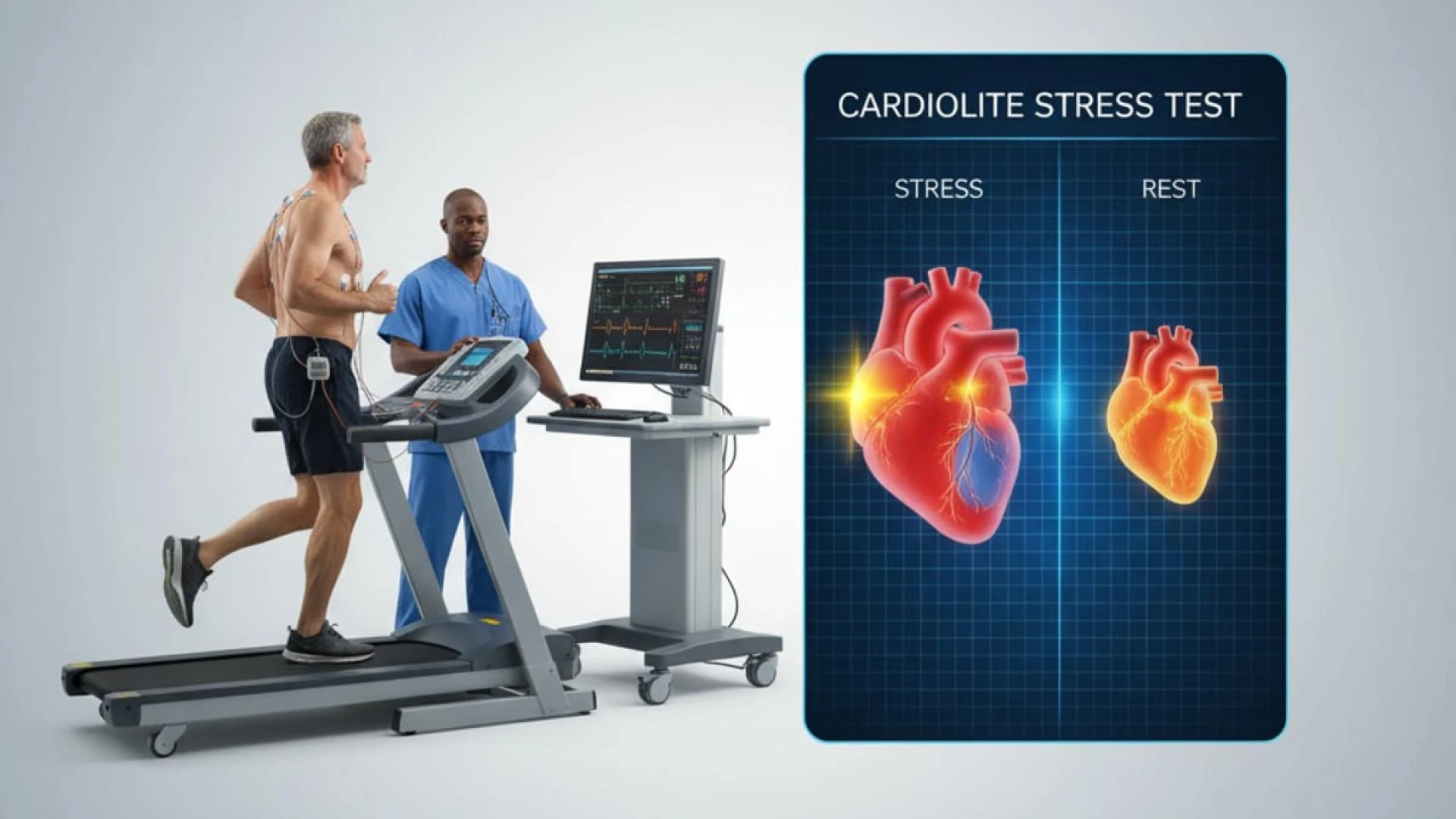

A Cardiolite stress test is a noninvasive procedure that checks how well your heart performs under stress. It’s a type of nuclear stress test that uses a small dose of a radioactive tracer to create detailed images of blood flow to your heart muscle. By comparing results from rest and stress phases, doctors can detect poor circulation, a potential sign of coronary artery disease (CAD) or other heart issues.
This test is especially useful for patients who can’t exercise effectively or have had inconclusive treadmill tests.
How Cardiolite Works
Cardiolite is a brand name for technetium-99m sestamibi, a radiotracer that helps capture heart images. It’s injected into a vein, travels to the heart, and emits low-level radiation. Special gamma cameras then create images showing how blood is flowing to the heart tissue.
The tracer is typically injected twice — once at rest and once during stress — to highlight areas where blood flow may be reduced.
Cardiolite vs. Lexiscan: What’s the Difference?
Both are nuclear stress tests, but they differ in how they induce stress:
- Cardiolite: Can involve exercise or a medication to simulate physical activity.
- Lexiscan: Uses regadenoson, a drug that mimics exercise effects without requiring movement.
In some cases, a Lexiscan Thallium test is used, which uses a different radiotracer (thallium). Lexiscan is typically chosen for patients unable to perform physical exercise due to mobility or health limitations.
Nuclear Stress Test vs. Traditional Stress Test
A standard treadmill stress test measures heart rate, rhythm, and blood pressure during exercise. In contrast, nuclear stress tests provide imaging that reveals how well blood reaches the heart muscle. This leads to more accurate detection of early-stage or hidden heart disease.
Why Doctors Recommend a Cardiolite Stress Test
- To Diagnose Heart Problems: It identifies areas of reduced blood flow due to narrowed arteries.
- To Monitor Heart Health Over Time: Used after heart surgeries or treatments to track recovery and guide care.
- To Clarify Unclear Results: When other heart tests are inconclusive, this provides additional clarity.
Step-by-Step: What Happens During the Cardiolite Test
Preparation
- Avoid caffeine and certain meds for 24–48 hours.
- Fast for a few hours before the test.
- Wear comfy clothing and bring a list of your medications.
Phase 1: Resting Imaging
You’ll get an IV and the first Cardiolite injection. After about 30 minutes, your heart is scanned while you’re at rest.
Phase 2: Stress Phase
Depending on your fitness, you’ll either walk on a treadmill or receive a drug like Lexiscan to simulate exercise.
Phase 3: Post-Stress Imaging
A second Cardiolite dose is given, and more images are taken. The entire process takes 2 to 4 hours.
What to Expect with Lexiscan
During a Lexiscan stress test, you may experience:
- Rapid heartbeat
- Mild shortness of breath
- Flushed or warm feeling
These effects are typically short-lived. Your medical team will monitor you closely throughout.
Benefits of Cardiolite and Nuclear Stress Testing
Clinical Advantages
These tests detect heart disease more accurately than standard tests — even small problem areas are easier to find.
Patient Benefits
They’re noninvasive, low-risk, and provide clear results to guide personalized treatment plans.
Risks and Side Effects
Is Cardiolite Safe?
Yes — the radiation exposure is minimal. Side effects are rare but may include allergic reactions.
Lexiscan Side Effects
Common temporary effects include:
- Dizziness
- Headache
- Flushing
- Mild chest discomfort
Serious issues are very rare and handled promptly by medical staff.
Who Should Not Take This Test?
It may not be suitable for:
- Pregnant or breastfeeding women
- People with known tracer allergies
- Patients with unstable heart conditions
Alternative testing methods may be recommended for these individuals.
How to Prepare for the Test
What to Tell Your Doctor
Share your complete medical history, allergies, and medications. Some meds may need to be paused before testing.
On Test Day
- Follow all fasting and medication instructions.
- Don’t use lotions, powders, or oils on your chest.
- Bring your ID, insurance, medication list, and comfort items.
- Arrange transportation if sedative medications are involved.
Interpreting Your Results
Doctors will examine the images for areas that absorb less tracer, which may indicate poor blood flow or damaged heart tissue. Whether it’s a Cardiolite or Lexiscan test, the analysis is similar.
Your next steps may include more testing, lifestyle changes, or adjustments to your treatment plan.
Frequently Asked Questions
Is the radiation dangerous?
No — it’s low and considered safe for most.
How long do side effects from Lexiscan last?
Usually just minutes to a few hours.
Will insurance cover the test?
Most insurance plans cover nuclear stress tests deemed medically necessary. Check with your provider.
Can I take my medications?
Some medications may interfere — follow your doctor’s instructions.
How long does it take?
Typically 2–4 hours.
I’m nervous — what should I do?
Let your care team know. They’ll guide you and help ease any concerns.
Cardiolite or Lexiscan: Which One Is Right?
Both are effective. Your cardiologist will recommend the one that best fits your health needs and ability to exercise. Each method is tailored to provide the most accurate heart assessment.
Final Thoughts
Cardiolite stress test and Lexiscan nuclear stress tests are valuable tools for diagnosing and managing heart conditions. They involve minimal risk and can uncover issues that may go unnoticed with standard tests.
With the right preparation and understanding, the experience can be smooth and informative. Always ask your doctor questions so you feel confident and informed before your test.
Additional Resources
For further reading, visit:
- American Heart Association (AHA)





























Sign in to leave a comment.