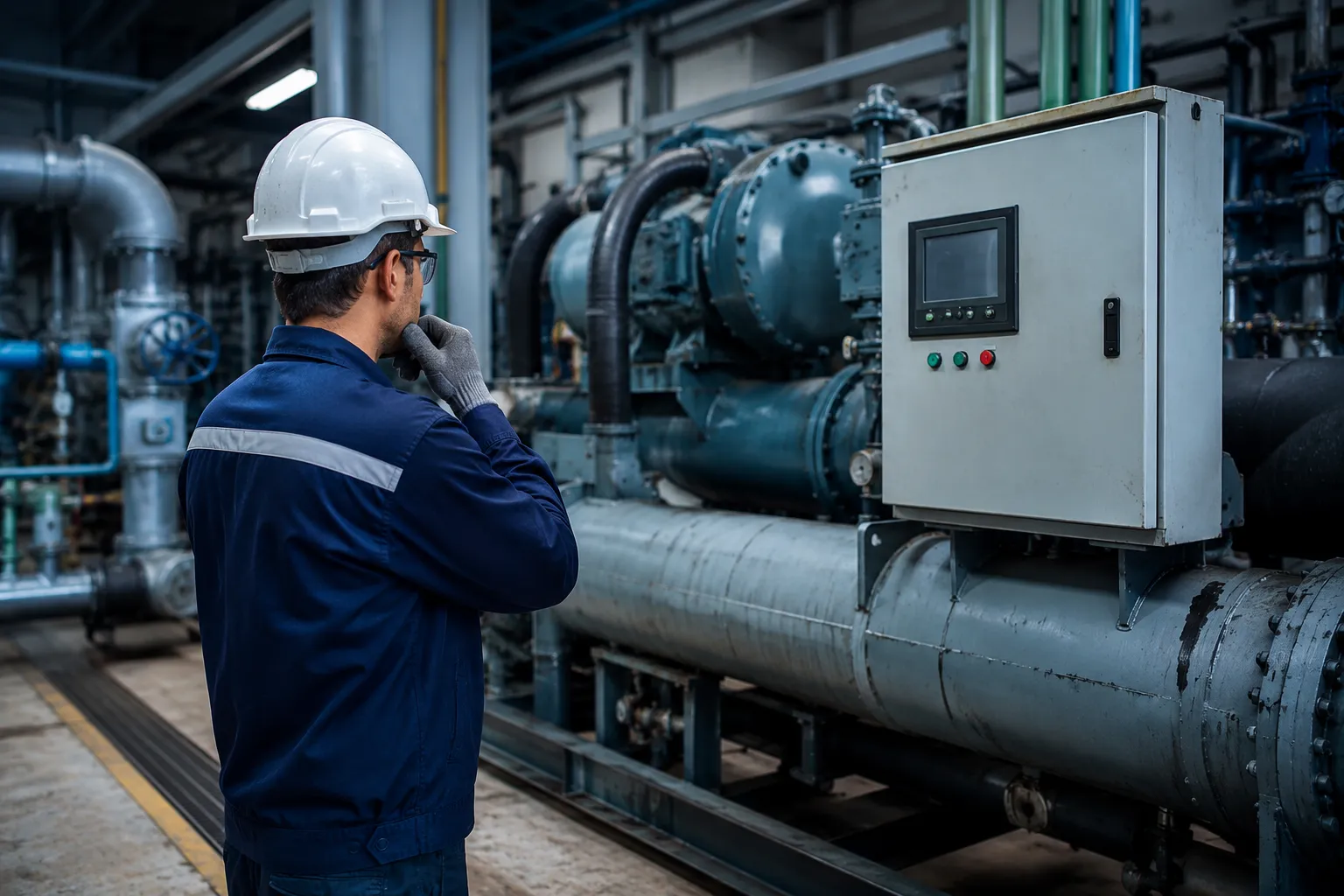

A commercial or industrial chiller rarely stops working without warning. In most cases, the system shows several signs before a major breakdown happens. Ignoring these symptoms can lead to expensive repairs, rising energy bills, production delays, and complete cooling failure.
Facility managers and building operators often notice small performance changes but delay action until the problem becomes serious. Understanding the early warning signs can help prevent downtime and extend the lifespan of the equipment.
Here are seven critical symptoms that may indicate your chiller is close to failure.
1. Unusual Noises From the Chiller System
A properly functioning chiller should operate with a steady and consistent sound. Loud rattling, grinding, banging, or squealing noises usually indicate internal mechanical issues.
These sounds may come from:
- Worn bearings
- Loose components
- Compressor problems
- Damaged fan motors
- Refrigerant pressure issues
Strange noises should never be ignored. A minor mechanical problem can quickly turn into compressor damage if left untreated.
2. Reduced Cooling Performance
One of the clearest warning signs is when the chiller struggles to maintain the required temperature. If rooms, production areas, or equipment are not cooling properly, the system may already be under stress.
Common causes include:
- Refrigerant leaks
- Dirty condenser coils
- Blocked airflow
- Compressor inefficiency
- Sensor malfunctions
Reduced cooling performance often increases system workload, forcing the chiller to consume more electricity while delivering weaker results.
3. Rising Energy Bills
A sudden increase in energy consumption without any major operational change can point to chiller inefficiency.
When internal components begin to fail, the system works harder to maintain cooling output. This increases power usage and operating costs.
Dirty heat exchangers, low refrigerant levels, and failing compressors are among the most common reasons for energy spikes in industrial chillers.
Routine inspections and professional chiller repair services can help identify the root cause before utility costs rise further.
4. Frequent System Cycling
Chillers are designed to run in controlled operating cycles. If the system constantly turns on and off within short periods, there may be an underlying issue.
Frequent cycling can be caused by:
- Faulty thermostats
- Electrical issues
- Refrigerant imbalance
- Improper load handling
- Sensor failures
Short cycling increases wear on compressors and electrical components. Over time, it significantly shortens equipment lifespan.
5. Refrigerant Leaks
Low refrigerant is a serious problem in any cooling system. If the chiller is leaking refrigerant, cooling efficiency drops immediately.
Signs of refrigerant leaks include:
- Ice formation on coils
- Hissing sounds
- Reduced cooling output
- Higher energy usage
- Pressure irregularities
Refrigerant leaks should only be handled by qualified technicians. Delayed repairs can damage the compressor and create compliance issues in commercial facilities.
6. Water Leaks Around the Chiller
Water pooling around the unit is another common warning sign. Leaks may result from blocked drain lines, damaged seals, corroded pipes, or pump issues.
Even a small leak can affect system performance and damage nearby equipment or flooring.
In industrial facilities, moisture problems can also create safety risks and increase maintenance expenses. Any visible leakage should be inspected immediately.
7. Repeated Alarm Notifications or System Faults
Modern chillers use sensors and automated controls to detect operating problems. If the system frequently shows alarms, warning codes, or unexpected shutdowns, it usually indicates deeper performance issues.
Some common alarm triggers include:
- High pressure
- Low pressure
- Flow problems
- Temperature imbalance
- Electrical faults
Resetting alarms without diagnosing the actual issue only delays necessary repairs. Repeated faults often indicate that the chiller is approaching a major failure point.
Why Early Chiller Maintenance Matters
Many businesses wait until the cooling system completely fails before calling technicians. Unfortunately, emergency breakdowns are usually more expensive than preventive maintenance.
Early detection helps:
- Reduce repair costs
- Improve energy efficiency
- Prevent unexpected downtime
- Extend equipment lifespan
- Maintain stable cooling performance
Scheduled inspections also help identify hidden issues before they affect operations.
Final Thoughts
A failing chiller almost always gives warning signs before a complete shutdown occurs. Unusual noises, weak cooling, refrigerant leaks, rising electricity costs, and repeated alarms should never be ignored.
Fast action can prevent operational disruption and avoid major repair expenses. Regular maintenance and timely servicing keep commercial chillers operating efficiently throughout the year.
For facilities that depend on stable cooling performance, proactive maintenance is far more cost effective than emergency repairs after a breakdown.




























Sign in to leave a comment.