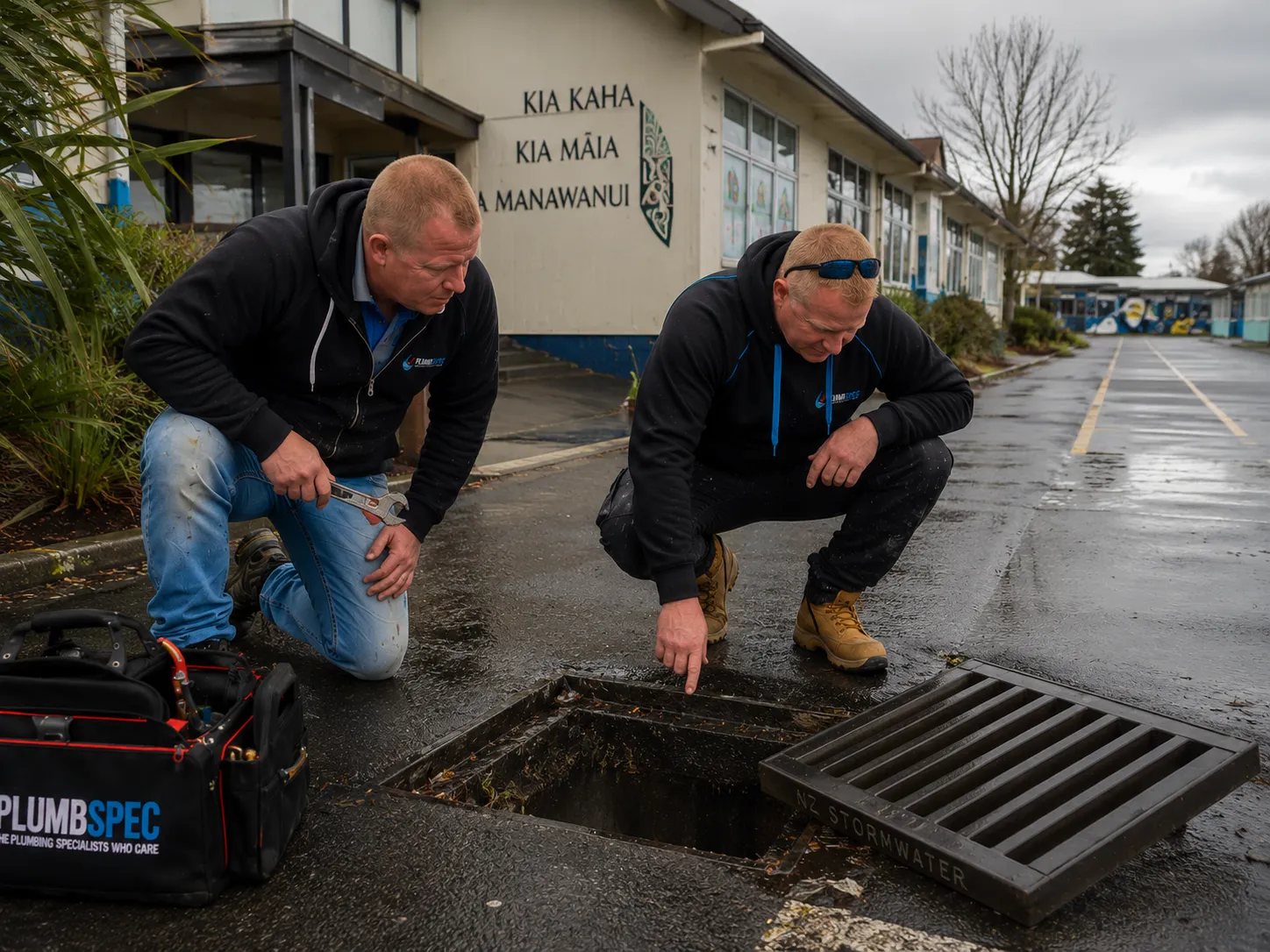

Drainage is one of those things that only gets attention once it starts causing trouble.
Most of the time, nobody thinks much about where the water is going. Then Wellington gets a decent spell of rain, a car park starts holding water, a toilet block backs up, or tenants start complaining about a smell that will not go away.
By that point, it is usually urgent.
For property managers, schools, offices, and commercial sites, the best approach is to catch drainage problems before they turn into a disruption. You do not need to know every detail of the pipework underground, but it does help to know the warning signs.
When Water Sits Around After Rain
A bit of surface water during heavy rain is not unusual. But if water is still sitting around long after the rain has passed, something probably needs checking.
It might be pooling in a car park, sitting around a low entry point, running across a footpath, or collecting near a retaining wall. On some Wellington sites, especially steep or older ones, stormwater can move fast and end up in places it should not.
Sometimes the fix is simple. A sump might be full of silt or leaves. A stormwater drain might need clearing. Other times, the issue is further down the line, where the pipe is blocked, damaged, or not coping with the amount of water coming through.
The main thing is not to ignore it. Water sitting around a commercial property can damage surfaces, create slip risks, affect access, and cause bigger issues if it starts tracking toward the building.
Slow Drains in Bathrooms and Kitchens
Commercial bathrooms and kitchens get hammered day after day.
In an office, it might be the same toilets and basins being used by staff and visitors all week. In a school, the bathroom blocks get heavy use in short bursts. In a cafe or commercial kitchen, the sinks and waste lines work hard every day.
So when a drain starts slowing down, it is worth paying attention.
One slow basin may not feel like a major issue, but it can be the first sign of build-up further along the line. If the same area keeps blocking, clearing it over and over is probably only treating the symptom. There may be roots in the pipe, a damaged section, poor fall, or something caught where it should not be.
That is where CCTV drain inspections are useful. Instead of guessing, a camera can show what is actually happening inside the pipe.
Smells That Keep Coming Back
Bad smells around drains are not just unpleasant. They can also be a sign that something is not right.
This can be a real issue in shared commercial buildings, hospitality spaces, schools, and offices. Tenants do not want to hear that it is “probably nothing” when the smell keeps coming back near a bathroom, kitchen, service area, or outside drain.
The cause might be fairly minor, like a dry trap or build-up in a drain. But it could also be wastewater sitting in a low section of pipe, a damaged drain, poor venting, or a blockage starting to form.
If the smell keeps returning after basic cleaning or clearing, it is worth getting the drainage looked at properly. Nobody wants to keep dealing with the same complaint every few weeks.
Roof Water Can Cause Ground-Level Problems
A lot of drainage issues do not start at ground level.
Roof water has to go somewhere. If gutters, downpipes, sumps, or stormwater lines are blocked, water can overflow and end up running down walls, across paths, into ceiling spaces, or around the base of the building.
From a property manager’s point of view, this can get frustrating quickly. A tenant reports a leak, but the actual issue may be a blocked stormwater line outside. Someone clears a gutter, but the problem returns because the blockage is further down the drain.
That is why roof water and stormwater drainage need to be looked at together. Clearing what is visible is not always enough.
The Repeat Jobs Are the Ones to Watch
Every commercial property has the odd plumbing or drainage callout. That is normal.
The ones to watch are the repeat jobs.
If the same drain blocks every few months, the same car park floods in heavy rain, or the same bathroom area keeps causing complaints, there is usually a reason behind it. At that point, it makes sense to stop guessing and find the cause.
For many sites, CCTV drain inspections can save time and disruption. They help show if there are tree roots, cracks, collapsed sections, silt build-up, or other problems hidden underground.
This is especially useful for older Wellington properties, schools, industrial sites, and buildings where access is awkward. Digging up the wrong spot is the last thing anyone wants.
A Bit of Planned Maintenance Goes a Long Way
Commercial drainage does not need to be overcomplicated.
A practical maintenance plan from commercial plumbers like Plumbspec might include stormwater drain cleaning before winter, checking problem areas after heavy rain, keeping an eye on slow drains, and using camera inspections when an issue keeps coming back.
That kind of approach makes life easier for property managers. It gives you fewer surprise callouts, fewer tenant complaints, and a better idea of what needs fixing before it becomes urgent.
Good drainage is not something people notice when it is working properly. But when it fails, everyone notices.
For commercial properties, schools, offices, and industrial sites, staying ahead of drainage problems is simply good building management. A small check at the right time can save a lot of disruption later.






























Sign in to leave a comment.