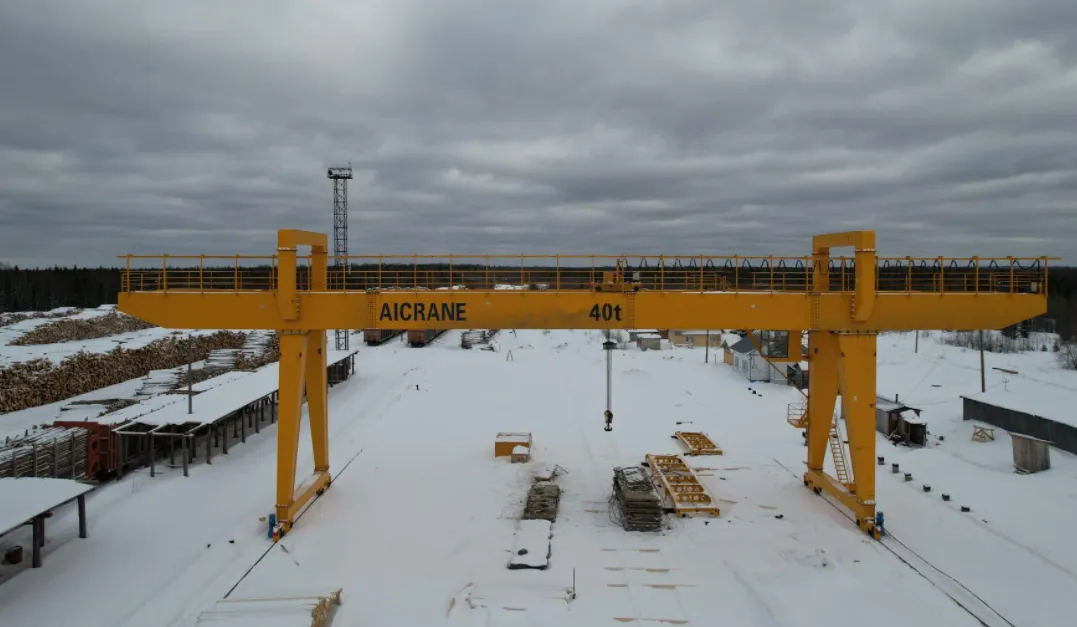

Track alignment is one of the most critical factors affecting the safe and efficient operation of a 40 ton gantry crane. Whether used in precast concrete production, steel fabrication, railway freight handling, shipyards, warehouses, or outdoor industrial yards, gantry cranes rely heavily on properly aligned rails to ensure stable movement, smooth traveling performance, and long-term structural reliability.
Even small track alignment problems can create serious operational issues over time, including wheel wear, structural stress, abnormal vibration, motor overload, derailment risks, and reduced lifting precision. For a gantry crane 40 ton operating under continuous heavy-duty conditions, poor rail alignment may also lead to expensive downtime and premature equipment failure.
Understanding the most common track alignment issues and how to correct them is essential for crane owners, maintenance teams, and project engineers seeking to improve crane reliability and extend service life.
Why Track Alignment Matters for 40 Ton Gantry Cranes
A 40 ton gantry crane generates substantial wheel loads during operation. The rails and supporting foundation must maintain accurate geometry to distribute these loads evenly.
Proper alignment helps ensure:
- Smooth crane travel
- Balanced wheel loading
- Reduced friction
- Stable lifting operations
- Lower structural stress
- Accurate positioning
- Longer wheel and rail lifespan
When alignment problems occur, the crane structure may experience uneven forces that negatively affect both mechanical and electrical systems.
Common Causes of Gantry Crane Track Alignment Problems
Track alignment issues usually develop gradually due to environmental conditions, operational stresses, installation inaccuracies, or insufficient maintenance.
Typical Causes Include
- Foundation settlement
- Poor rail installation
- Thermal expansion
- Loose fastening bolts
- Heavy impact loading
- Rail wear
- Corrosion
- Concrete cracking
- Ground movement
- Inadequate inspection procedures
Understanding the root causes helps maintenance teams implement effective corrective actions before problems become severe.
Rail Gauge Deviation
One of the most common alignment issues in 40 ton gantry crane systems is rail gauge deviation.
What Is Rail Gauge?
Rail gauge refers to the distance between the two crane rails. This distance must remain within specified tolerances throughout the entire runway length.
Problems Caused by Incorrect Gauge
If the rails become too narrow or too wide, the crane wheels may experience:
- Side loading
- Wheel flange wear
- Increased rolling resistance
- Skewing during travel
- Abnormal motor load
- Structural twisting
Severe gauge deviation may even cause wheel climbing or derailment risks.
Common Causes of Gauge Deviation
Foundation Settlement
Uneven settlement beneath rail foundations can gradually shift the rail position.
Loose Rail Clips or Bolts
Fastening systems may loosen due to vibration and repeated loading cycles.
Improper Initial Installation
Incorrect surveying during installation can create long-term alignment problems.
How to Fix Rail Gauge Problems
Perform Precision Surveying
Use laser alignment systems or total station surveying equipment to measure rail spacing accurately.
Adjust Rail Positioning
Realign the rails according to manufacturer tolerances by loosening fastening systems and repositioning the rails.
Repair Foundation Defects
If settlement is the root cause, reinforce or repair the concrete foundation before reinstallation.
Re-Tighten Fastening Systems
Inspect and properly torque all rail clips, anchor bolts, and fastening hardware.
Routine inspections help prevent future gauge deviations.
Rail Elevation Differences
Rail elevation inconsistency is another major issue affecting gantry crane performance.
What Happens When Rail Heights Differ?
If one rail sits higher than the other, the crane structure may twist during operation.
This can lead to:
- Uneven wheel loading
- Structural fatigue
- Increased vibration
- Drive system stress
- Reduced lifting stability
- Premature bearing wear
Common Causes of Elevation Problems
Uneven Foundation Settlement
Outdoor crane systems are especially vulnerable to soil movement and concrete settlement.
Poor Concrete Construction
Improper leveling during foundation construction may create long-term elevation issues.
Rail Pad Deterioration
Damaged or compressed rail pads can affect rail height consistency.
How to Fix Rail Elevation Issues
Conduct Elevation Measurements
Use precision leveling instruments to identify vertical deviations.
Shim Low Rail Sections
Install steel shims beneath rail supports to restore proper elevation.
Grind High Spots
Minor elevation differences can sometimes be corrected through controlled rail grinding.
Reconstruct Damaged Foundations
Severe settlement may require partial foundation rebuilding.
Proper drainage systems should also be installed to reduce future soil instability.
Rail Straightness Deviation
Rails must remain straight to ensure smooth crane travel.
Problems Caused by Crooked Rails
Rail straightness deviation can cause:
- Crane skewing
- Increased wheel flange pressure
- Abnormal vibration
- Motor overload
- Reduced positioning accuracy
Over time, crooked rails accelerate wear on wheels, bearings, and drive systems.
Causes of Rail Straightness Problems
Thermal Expansion
Outdoor crane rails expand and contract with temperature changes.
Improper Welding Procedures
Poor rail welding may introduce distortion.
Mechanical Impacts
Heavy loads or collisions can deform rail sections.
How to Fix Rail Straightness Problems
Laser Alignment Inspection
Use laser alignment tools to identify deviation areas accurately.
Rail Repositioning
Loosen fastening systems and adjust rail sections back into alignment.
Replace Damaged Rail Segments
Bent or severely worn rails should be replaced entirely.
Install Expansion Joints
Expansion joints help accommodate thermal movement in long crane runways.
Crane Skewing During Travel
Crane skewing occurs when the gantry crane moves diagonally instead of traveling straight along the rails.
This is one of the most noticeable signs of alignment problems.
Symptoms of Crane Skewing
- Uneven wheel wear
- Loud wheel flange noise
- Jerking movement
- Increased motor current
- Structural vibration
- Rail side wear
Causes of Skewing
Rail Misalignment
Even slight rail positioning errors can create skewing forces.
Unequal Wheel Diameters
Worn wheels may rotate at different speeds.
Drive System Imbalance
Motor synchronization problems may contribute to skewing.
How to Fix Crane Skewing
Inspect Rail Alignment First
Track alignment should always be checked before adjusting mechanical systems.
Check Wheel Diameters
Replace excessively worn wheels to maintain consistent rolling diameter.
Adjust Drive Synchronization
Modern cranes often use variable frequency drive (VFD) systems that require proper synchronization settings.
Install Anti-Skew Systems
Advanced anti-skew monitoring systems automatically detect and correct travel deviations.
Excessive Wheel and Rail Wear
Track alignment problems often become visible through abnormal wheel and rail wear patterns.
Common Wear Indicators
- Flange wear
- Rail head deformation
- Uneven wheel tread wear
- Metal spalling
- Cracking
- Surface pitting
Why Misalignment Causes Wear
When rails are misaligned, wheels experience additional lateral forces and friction.
This increases:
- Heat generation
- Material fatigue
- Rolling resistance
- Mechanical stress
How to Reduce Wear Problems
Realign the Rails
Correcting alignment is the most important step.
Lubricate Properly
Use rail and wheel lubrication systems where appropriate.
Replace Damaged Components
Severely worn wheels or rails should not remain in operation.
Improve Inspection Frequency
Early detection prevents severe damage.
Foundation Cracking and Settlement
The rail system depends heavily on foundation integrity.
How Foundation Problems Affect Alignment
Cracked or unstable concrete foundations can shift rail geometry and create progressive alignment issues.
Common Causes
- Poor soil compaction
- Water erosion
- Freeze-thaw cycles
- Heavy dynamic loading
- Insufficient reinforcement
How to Fix Foundation Issues
Conduct Geotechnical Evaluation
Identify soil instability or drainage problems.
Repair Cracked Concrete
Use industrial-grade repair materials for structural restoration.
Improve Drainage Systems
Proper drainage helps prevent soil movement beneath crane rails.
Reinforce Weak Areas
Additional reinforcement may be required in high-load sections.
Thermal Expansion Issues in Outdoor Gantry Cranes
Outdoor 40 ton gantry cranes are heavily influenced by environmental temperature changes.
Problems Caused by Thermal Expansion
Rails may expand or contract, creating:
- Rail buckling
- Joint misalignment
- Increased stress
- Fastener loosening
Solutions for Thermal Movement
Install Expansion Gaps
Expansion joints accommodate rail movement safely.
Use Flexible Fastening Systems
Modern fastening systems allow controlled thermal movement.
Perform Seasonal Inspections
Alignment should be checked during major seasonal temperature shifts.
Importance of Regular Track Alignment Inspection
Preventive maintenance is the most effective way to avoid serious alignment problems.
Recommended Inspection Methods
Laser Rail Alignment Systems
Provide highly accurate alignment measurements.
Total Station Surveying
Useful for long crane runways.
Wheel Load Monitoring
Helps identify uneven load distribution.
Visual Inspection
Detects cracks, wear, and loose fasteners early.
Benefits of Proper Track Alignment
Maintaining proper rail alignment offers major operational advantages.
Improved Crane Safety
Proper alignment reduces derailment risks and structural instability.
Longer Equipment Lifespan
Reduced stress extends the life of:
- Wheels
- Bearings
- Motors
- Gearboxes
- Rails
Lower Maintenance Costs
Preventive alignment maintenance reduces expensive emergency repairs.
Better Operational Efficiency
Smooth crane travel improves:
- Handling precision
- Productivity
- Energy efficiency
Future Trends in Gantry Crane Rail Alignment Technology
Modern rail gantry crane systems increasingly incorporate advanced monitoring technologies.
Emerging Solutions Include
- Real-time rail monitoring sensors
- Automated skew correction
- Digital twin runway analysis
- AI-based predictive maintenance
- Smart wheel load diagnostics
These technologies help operators identify alignment issues before major failures occur.
Conclusion
Track alignment plays a critical role in the safety, efficiency, and long-term reliability of 40 ton gantry cranes. Problems such as rail gauge deviation, elevation inconsistency, crooked rails, crane skewing, excessive wear, and foundation settlement can severely affect crane performance if left uncorrected.
Fortunately, most alignment problems can be prevented or resolved through proper surveying, precision installation, regular inspections, foundation maintenance, and timely corrective actions.
For industries relying on heavy-duty gantry crane operations, investing in proper rail alignment management is essential not only for equipment protection but also for improving operational efficiency, reducing downtime, and ensuring safe material handling performance over the long term.







![The Benefits of Using a CNC Touch Probe [Infographic]](https://writeupcafe.com/data/post/1677697/bfdf3e040e67936848aa232d2dfe3d03.jpg.webp)




Sign in to leave a comment.