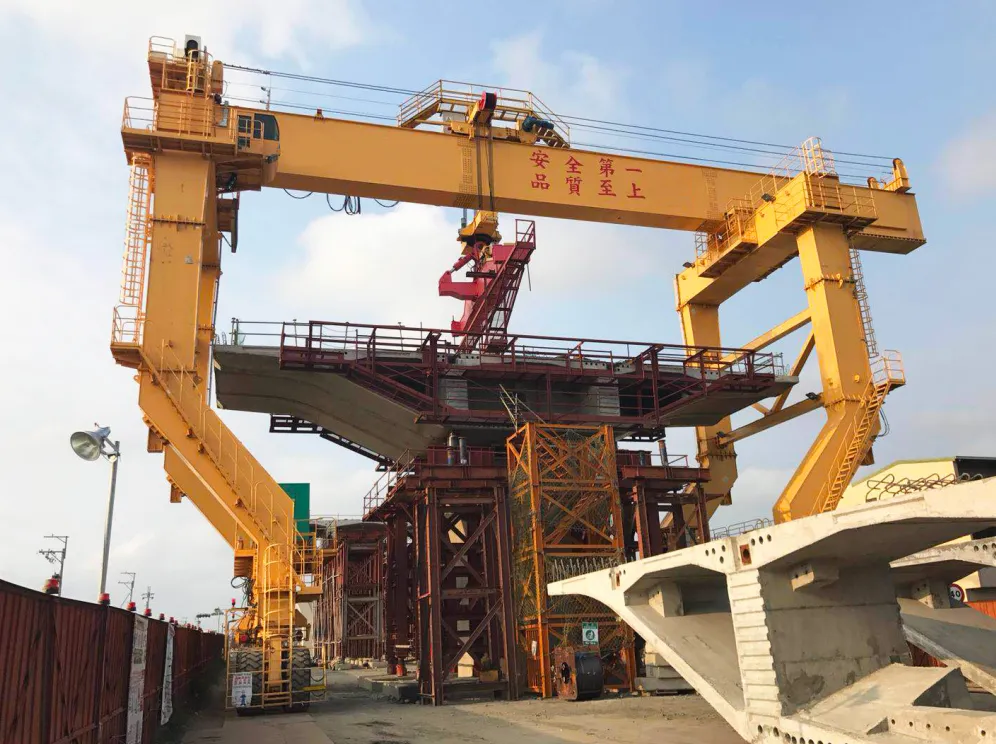

When a major infrastructure project—such as a bridge, a high-speed railway section, or a heavy manufacturing plant—reaches completion, project managers face a significant logistical challenge: relocating the heavy equipment to the next job site. Among these assets, a 200-ton gantry crane is one of the largest and most complex to move.
A crane of this capacity is not a single, transportable vehicle. It is a massive steel structure comprised of double girders, heavy-duty support legs, end carriages, hoisting trolleys, and electrical cabins. Moving it safely, legally, and cost-effectively from Site A to Site B requires weeks of preparation, a fleet of specialized transport vehicles, and a highly coordinated team of engineers, riggers, and transport specialists.
This article breaks down the practical, step-by-step logistics process involved in relocating a 200-ton gantry crane.
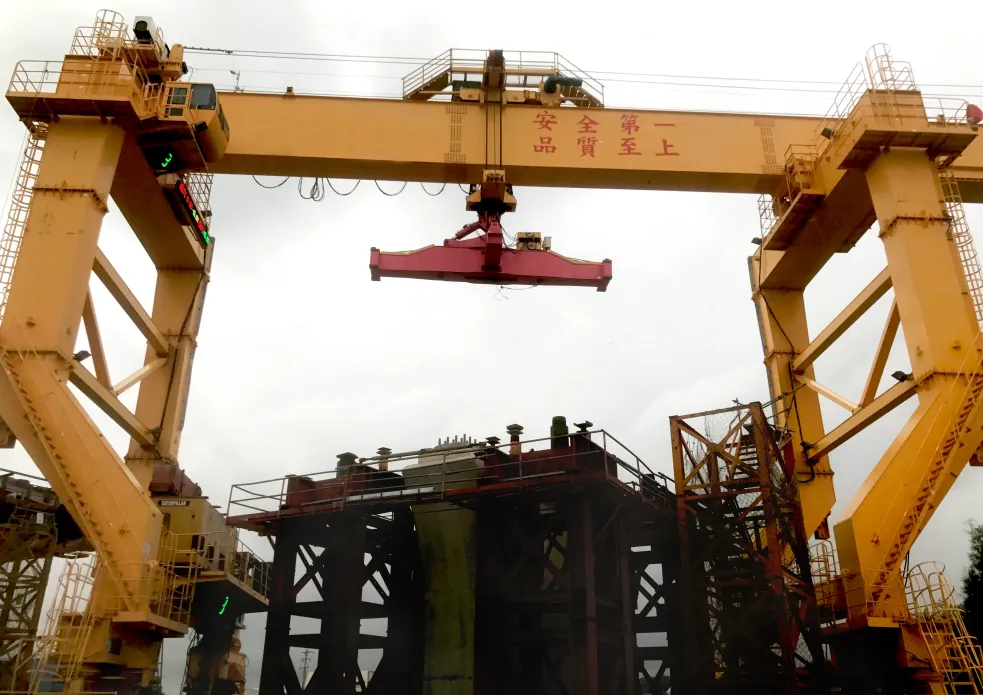
Phase 1: Pre-Move Planning, Route Surveys, and Permitting
Before a single bolt is loosened, a thorough planning phase must occur. Because the components of a 200 ton gantry crane exceed standard transport dimensions and weights, they are classified as "superloads" or oversized/overweight (OSOW) cargo.
1. Route Survey (The Critical Path)
A transport engineer must physically survey the route between the two sites. A 200-ton crane’s main girders can easily exceed 30 or 40 meters in length. The survey must identify:
- Bridge Weight Limits: Can the bridges along the route support the gross vehicle weight of a multi-axle heavy hauler?
- Overhead Clearance: Are there low-clearance bridges, utility lines, or traffic signals that will block the load?
- Turning Radii: Can a 45-meter-long trailer make the tight turns on local roads or highway exit ramps?
- Grade and Slope: Are there steep inclines that require pull trucks or specialized prime movers?
2. Permitting and Coordination
Moving oversized components requires official permits from local, state, or national transportation authorities.
- Superload Permits: These permits define the exact route, travel times (often restricted to night hours or weekends), and maximum speed limits.
- Utility Coordination: If power lines need to be raised temporarily, utility companies must be scheduled to accompany the convoy.
- Police Escorts: Most jurisdictions require civil escorts or police vehicles to block intersections and manage traffic during the transit of exceptionally long loads.
Phase 2: Dismantling the Giant
Dismantling a 200-ton gantry crane is essentially the reverse of its installation, but it carries unique risks because structural integrity must be maintained during disassembly.
1. Preparing the Work Area
The ground around the crane must be level and stable enough to support "assist cranes"—usually two mobile all-terrain hydraulic cranes (often in the 100-to-250-ton class) that will lift and lower the gantry components.
2. The Disassembly Sequence
To prevent structural collapse, riggers must follow a strict, engineered sequence:
- Electrical De-commissioning: All power is disconnected. Cable reels, festoon systems, and the main electrical control cabin are carefully disconnected, labeled, and packed.
- Trolley and Hoist Removal: The hoisting trolley (the heaviest single machinery component, often weighing 30 to 50 tons on a 200T crane) is rolled to a designated dismantling point, rigged to an assist crane, lifted off the tracks, and lowered to the ground.
- Girder Disconnection: The main double girders are secured by the assist cranes. The connection bolts between the girders and the legs are removed. The girders are then lowered slowly to ground level.
- Leg and End Carriage Disassembly: Once the main weight of the girders is removed, the vertical support legs (flexible and rigid legs) are stabilized by cranes, unbolted from the ground-level end carriages, and laid down horizontally on support blocks to prevent bending.
Phase 3: Loading and Heavy Transport Logistics
A 200-ton gantry crane cannot be loaded onto standard flatbed trucks. It requires a tailored fleet of transport vehicles.
| Crane Component | Typical Dimensions/Weight | Vehicle Type Required |
|---|---|---|
| Main Girders (x2) | 30m–45m long, 30–50 tons each | Extendable steerable pole trailers or multi-axle modular trailers (SPMTs) |
| Hoisting Trolley | Compact but heavy (30+ tons) | Lowboy trailer (low deck height to manage center of gravity) |
| Support Legs | Long, awkward shapes (15m–20m) | Drop-deck or flatbed trailers with custom timber dunnage |
| End Carriages & Bogies | Heavy steel assemblies (10–15 tons) | Standard heavy-duty flatbeds |
| Electrical Cabin & Cable Reels | Delicate, weather-sensitive components | Enclosed dry vans or tightly tarped flatbeds |
Securing the Loads
Steel-on-steel contact has a low coefficient of friction. Heavy duty gantry crane parts must be placed on heavy wooden dunnage (blocks) and secured using high-tensile chains and load binders. Delicate components, such as open gearboxes, wire ropes, and exposed limit switches, must be wrapped in protective industrial plastic or heavy-duty tarpaulins to prevent road grime and moisture damage during transit.
Phase 4: Ground Preparation and Reassembly at the New Site
Logistics do not end when the trucks arrive at the destination. The new site must be fully prepared to receive and support the crane.
1. Foundation and Runway Rail Inspection
A 200-ton crane exerts massive wheel loads on the ground. Before reassembly begins:
- The concrete foundations for the runway rails must be fully cured and tested for load-bearing capacity.
- The rails must be surveyed for perfect span width, alignment, and elevation tolerance. Even a few millimeters of deviation over 50 meters can cause the crane to "skew" or bind during operation.
2. The Reassembly Process
Using the same dual assist crane method, the process is reversed:
- The end carriages and bogies are placed on the rails and locked in place.
- The legs are erected and temporarily guyed (secured with steel cables) for stability.
- The main girders are lifted, positioned on top of the legs, and bolted to exact torque specifications using high-strength structural bolts.
- The hoist trolley is lifted and set onto the girder rails.
- All electrical festoons, limits, and control cabins are reinstalled and rewired.
Phase 5: Commissioning, Load Testing, and Sign-off
The final step of the move is certifying that the crane is safe to operate at the new location. You cannot simply plug it in and start lifting 200 tons.
1. No-Load Testing
Before lifting any weight, technicians run the crane through its full range of motions. They check:
- Limit switches (hoist limits, travel limits).
- Motor currents and brake response.
- The alignment of the rails as the crane travels the length of the runway.
2. Static and Dynamic Load Testing
To comply with occupational safety standards (such as OSHA or local equivalents), the crane must undergo a certified load test. This involves:
- Static Load Test: Lifting a test weight equal to 125% of the rated capacity (250 tons for a 200T crane) and holding it to check for structural deflection and brake holding capability.
- Dynamic Load Test: Operating the crane with 110% of its rated capacity (220 tons) to ensure all clutches, brakes, and safety systems function under active load conditions.
Once the test results are verified and signed off by a certified third-party inspector, the crane is officially handed over to the construction team.
Conclusion
Moving a 200-ton gantry crane is a project within a project. It is not merely a transport task, but a highly coordinated engineering exercise. By treating the relocation as a structured, phased process—covering route surveys, precise dismantling, specialized transport configurations, and rigorous post-assembly testing—project managers can avoid costly project delays, protect their valuable machinery assets, and ensure the safety of everyone on site.















![The Benefits of Using a CNC Touch Probe [Infographic]](https://writeupcafe.com/data/post/1677697/bfdf3e040e67936848aa232d2dfe3d03.jpg.webp)













Sign in to leave a comment.