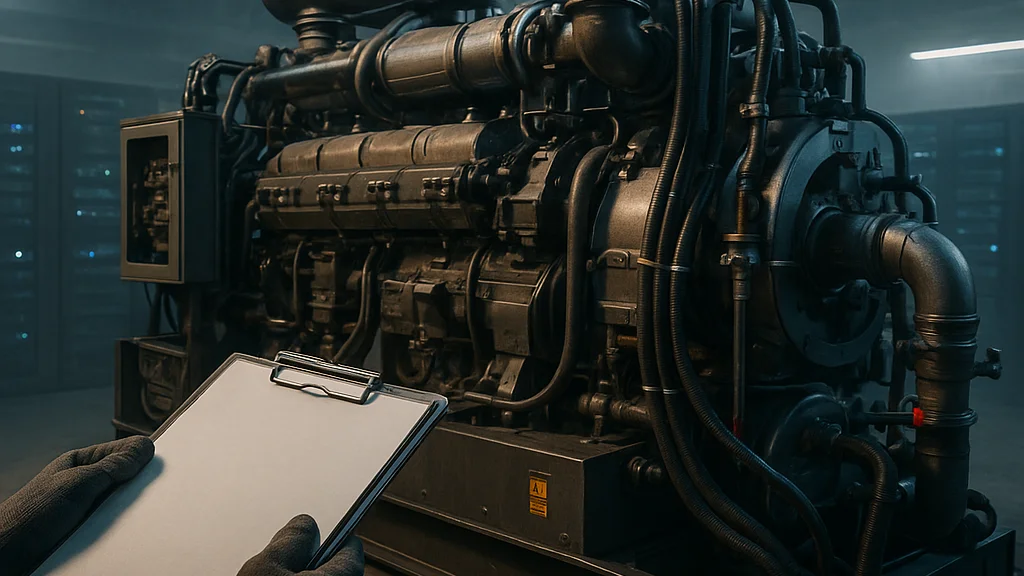

A striking contradiction is easy to spot, but harder to understand
Picture the scene for a moment... a company that has spent years presenting itself as a champion of carbon-free energy is tied to a new data center project reportedly backed by a massive gas plant. For many readers, the reaction is immediate: hypocrisy, greenwashing, failure. That instinct is understandable. Yet the most common mistakes in discussing A New Google-Funded Data Center Will Be Powered by a Massive Gas Plant begin right there, in the rush to flatten a technically messy story into a moral slogan.
The reporting that sparked this debate, especially Wired’s detailed account of the gas-backed data center arrangement, landed because it exposed a real tension in modern clean-tech strategy: artificial intelligence and cloud computing need enormous, reliable electricity supplies, while grids in many regions still struggle to provide round-the-clock carbon-free power at the scale hyperscale operators want. TechCrunch sharpened that point in its analysis of Google’s data center power playbook, showing that this is not a one-off controversy but part of a broader infrastructure scramble.
What goes wrong in public discussion? People often confuse a financing role with direct fuel preference. They collapse local grid constraints into corporate ideology. They assume every megawatt tied to a gas asset permanently erases all prior renewable procurement. And they underestimate how data center growth, especially for AI workloads, is reshaping electricity planning faster than regulators, utilities, and communities can comfortably absorb.
That does not excuse gas dependence. Far from it. But if we want serious climate accountability rather than performative outrage, we need to identify the analytical errors first. Only then can we ask the better question: what should a credible low-carbon data center strategy actually look like in 2026 and beyond?
The central mistake is treating this story as simple proof that clean-energy commitments were fake all along. The reality is more uncomfortable: decarbonization promises are colliding with grid physics, permitting delays, and AI-scale demand growth.
For readers who want more context on the project itself, WriteUpCafe has already explored the core dispute in Google’s New Data Center and Its Massive Gas Plant Power Source and the wider contradiction in Google’s 2026 Data Center Powered by a Massive Gas Plant: A Sustainable Paradox. Here, I want to focus on the mistakes people make when interpreting what this development does, and does not, mean.
Mistake one: assuming a gas-linked project equals a total climate reversal
The first and most common mistake is binary thinking. If a new data center has a gas component in its power story, some observers conclude that Google has abandoned its clean-energy ambitions altogether. That is too blunt to be useful. Large technology companies often procure electricity through a mix of power purchase agreements, grid-supplied energy, storage contracts, transmission arrangements, and capacity deals that vary by region and hour. A gas-backed facility may reveal a serious weakness in execution, but it does not automatically mean every other decarbonization initiative has vanished.
Google has long publicized goals around operating on carbon-free energy on a 24/7 basis, not merely matching annual consumption with renewable purchases. That distinction matters. Annual matching can hide dirty-hour consumption behind clean-hour credits; hourly matching is much stricter. The controversy here partly shows how difficult that more rigorous standard becomes when data center loads expand rapidly in regions without enough firm clean power, transmission capacity, or approved storage. According to TechCrunch, the company’s recent power strategy reflects a growing willingness to secure energy reliability first and then optimize around emissions over time. For climate advocates, that should trigger scrutiny... but precise scrutiny.
Several analytical errors flow from the reversal narrative:
- Error 1: assuming one project defines an entire corporate portfolio.
- Error 2: ignoring location-specific grid conditions and utility constraints.
- Error 3: treating backup, peaking, and baseload functions as interchangeable.
- Error 4: overlooking the gap between stated long-term targets and short-term operational decisions.
None of this softens the climate implications of new fossil infrastructure. New gas assets risk locking in emissions for decades, especially if they are built with long depreciation timelines and weak retirement conditions. Methane leakage across the gas supply chain compounds the problem. Still, a serious critique should say: this project may expose how fragile voluntary corporate climate strategies become when they encounter hard reliability constraints. That is stronger, and more accurate, than saying the clean-energy agenda was always fiction.
Readers who care about sustainable infrastructure should resist easy absolutes. Scandinavian energy planning offers a useful cultural lesson here... systems matter. Buildings, grids, heating networks, transport, and storage all interact. A single gas-heavy decision can be deeply problematic without proving that every parallel investment in wind, solar, geothermal, advanced nuclear procurement, or storage was meaningless.
Mistake two: ignoring the AI electricity surge that changed the equation
Another frequent mistake is discussing the gas plant as though data center demand has remained stable. It has not. The AI buildout of the past few years has changed the power conversation dramatically. Training and running advanced models requires dense compute clusters, high utilization, and increasingly power-hungry chips. Traditional cloud growth was already significant; AI has accelerated it. That means the old assumption that utilities can simply absorb another hyperscale campus with modest upgrades is no longer safe.
Wired’s reporting landed in this context. The issue is not merely that one company wants more electricity. It is that multiple hyperscalers are chasing similar timelines, often in the same attractive regions, while utilities face queue backlogs, transformer shortages, transmission delays, and permitting friction. A project developer under pressure to deliver capacity quickly may see gas generation as the least risky path to firm power, even when it conflicts with public sustainability narratives.
Here is where many commentators make a second-order mistake: they frame the conflict as a branding problem rather than an infrastructure problem. Branding matters, of course. But the deeper issue is that AI-era electricity demand has outpaced the political and physical speed of clean-energy deployment in many markets.
- New transmission lines can take years, sometimes more than a decade, to permit and build.
- Utility-scale batteries help with short-duration balancing but do not solve every multi-day reliability challenge.
- Wind and solar additions are growing, yet interconnection queues remain crowded.
- Firm low-carbon options such as geothermal, long-duration storage, or advanced nuclear are promising but not yet available at sufficient scale everywhere.
That does not make gas inevitable. It does explain why gas keeps reappearing in boardroom decisions. If the public conversation ignores this demand shock, criticism becomes shallow. The better question is whether companies like Google are using their capital and political influence to accelerate cleaner firm-power alternatives fast enough, or whether they are normalizing fossil fallback because it is convenient.
AI did not create the grid’s structural weaknesses, but it has exposed them brutally. The mistake is blaming only the company or only the utility when the real failure is systemic underbuilding of clean, firm, and deliverable power.
For sustainable living readers, this may feel distant from daily life. Yet it is connected. The same grid that powers data centers also shapes household electrification, district heating, EV charging, and industrial decarbonization. If hyperscale demand soaks up scarce clean capacity, everyone else faces a tougher transition.
Mistake three: confusing carbon accounting with real-time emissions
A third mistake is assuming all power claims mean the same thing. They do not. One of the thorniest issues in data center sustainability is the difference between annual renewable matching and hourly, location-based emissions reality. A company can buy large volumes of renewable energy contracts and still rely on fossil-heavy grid electricity during critical hours if clean generation is unavailable where and when the data center operates.
This is why the gas plant story matters so much. It forces attention onto temporal and geographic matching. If a facility depends on gas generation for dependable output during certain periods, that dependence cannot be wished away by pointing to renewable purchases elsewhere. According to public discussions around 24/7 carbon-free energy frameworks, the challenge is not just buying enough clean electricity over a year. It is aligning consumption with actual zero-carbon supply every hour.
Common misunderstandings in this area include:
- Believing renewable energy certificates automatically mean local fossil displacement.
- Assuming a net-zero claim describes real-time operational emissions.
- Treating backup generation as negligible without examining run hours and dispatch conditions.
- Ignoring methane leakage and upstream emissions in gas supply chains.
For readers trying to evaluate the seriousness of this controversy, ask more exact questions. Is the gas plant intended for primary supply, reserve capacity, or a hybrid role? What is the expected annual capacity factor? Are there contractual sunset clauses or emissions performance conditions? Is carbon capture discussed, and if so, with what evidence of feasibility? Are there binding plans to replace gas with geothermal, storage, or other firm low-carbon resources over time?
These questions matter because carbon accounting can be technically correct and still environmentally unsatisfying. A company may meet one reporting standard while missing the spirit of deep decarbonization. That gap is where public trust erodes. In Nordic planning culture, transparency tends to matter almost as much as the target itself... people want to know how the system works, not just what the press release claims. Data center operators would do well to learn from that ethos.
If anything, the gas-plant controversy should push the industry toward more granular disclosure: hourly load profiles, marginal emissions impacts, backup fuel assumptions, and local grid consequences. Without that, sustainability claims remain too polished and too easy to misread.
Mistake four: treating reliability as an excuse rather than a design challenge
Some critics dismiss every reliability argument as fossil lobbying in disguise. Others accept reliability as a trump card that ends the climate conversation. Both positions are mistakes. Reliability is real. Data centers cannot simply go dark when wind speeds fall or transmission lines congest. AI clusters, cloud services, and enterprise workloads need continuity, power quality, and resilience. But reliability should be treated as a design challenge to solve with cleaner portfolios, not as a permanent exemption from decarbonization.
That distinction is where the most useful critique lives. If a company says it needs firm capacity, fair enough. The next question is what mix it pursued before landing on gas. Did it evaluate long-duration storage? Did it support new transmission? Did it contract for geothermal or other always-available low-carbon resources? Did it redesign computing loads for flexibility, shifting non-urgent tasks to cleaner hours or regions? Did it invest in demand response, thermal management efficiency, and advanced chip utilization to reduce the size of the reliability problem in the first place?
TechCrunch’s reporting suggests Google’s broader power playbook is increasingly pragmatic, even opportunistic, in response to the speed of demand growth. Pragmatism can be valuable. Yet there is a fine line between pragmatic transition planning and infrastructure lock-in that slows the transition for everyone else.
A more disciplined way to assess reliability claims is to separate them into categories:
- Immediate operational need: what the facility requires on day one.
- Bridge strategy: what temporary measures are used while cleaner options scale.
- Lock-in risk: how long the fossil asset is expected to remain economically and contractually embedded.
- Exit credibility: whether there is a measurable pathway to phase down emissions.
When those categories are blurred, public debate becomes theatrical. A gas plant can be framed as a short-term bridge even if no practical off-ramp exists. That is why timelines, contract terms, and policy conditions matter so much. Sustainability is not just about intent; it is about whether the infrastructure architecture points toward lower emissions over time.
From a green-tech perspective, the challenge is exciting as well as troubling. Cleaner reliability tools are improving quickly. Enhanced geothermal, grid-interactive data center operations, advanced cooling, and longer-duration storage all hold promise. But promise is not deployment. Until those options are financed and built at scale, gas remains the default fallback in too many regions.
Mistake five: overlooking local community and grid impacts
One more mistake appears whenever the debate stays trapped at the level of corporate reputation. Data centers do not exist in abstract sustainability reports. They sit in communities, connect to regional grids, affect water and land use, influence utility planning, and shape who pays for infrastructure upgrades. A gas-linked data center project may have consequences far beyond the company’s own emissions ledger.
Local residents and regulators often worry about several overlapping issues. Air pollution may be one, depending on plant design and operating profile. Grid congestion is another. If utilities prioritize large industrial loads, households and smaller businesses may face delayed upgrades or higher costs. Water use can also become contentious, especially in areas under climate stress. Then there is the political economy: once a region commits to supporting a massive power-hungry campus, the pressure to maintain associated fossil assets can intensify.
This is where the public conversation needs more humility. The mistake is assuming that if a corporation buys enough clean power somewhere, the local burden disappears. It does not. Sustainable infrastructure must be assessed where it lands, not just where certificates settle.
- Who benefits from the jobs and tax base, and for how long?
- Who absorbs the air-quality or noise burden from associated generation assets?
- Who pays for transmission, substations, and grid reinforcement?
- Will the project crowd out cleaner industrial development or household electrification?
Wired’s framing resonated because it punctured the frictionless image of cloud computing. The cloud always has a postcode. It has steel, concrete, cooling systems, switchyards, and generation sources. For communities trying to build greener futures, that material reality matters.
There is also a fairness issue that sustainable living audiences should not miss. When affluent digital services rely on fossil-heavy power arrangements, the climate and health costs are socialized more broadly. That sits awkwardly beside marketing language about smart, efficient, low-impact digital transformation. If the energy system becomes more strained and more carbon-intensive to support AI expansion, then the social license for that expansion will weaken.
Good reporting should therefore widen the lens. The question is not just whether Google can defend the optics. It is whether the surrounding energy system is being improved, distorted, or delayed by the project’s chosen power structure.
What has changed in 2026, and what should readers watch next?
The 2026 angle matters because the debate has become sharper, not softer. Over the past year, concern about data center electricity demand has moved from specialist energy circles into mainstream policy discussion. Utilities, regulators, environmental groups, and investors are paying closer attention to how hyperscale growth intersects with decarbonization targets. The old assumption that digital expansion is automatically cleaner than physical industry no longer goes unchallenged.
Recent reporting from Wired and TechCrunch suggests the industry is moving into a more candid phase. Companies are no longer able to rely on broad renewable claims without explaining reliability arrangements, local power sourcing, and the practical trade-offs behind new campuses. That is healthy. It means scrutiny is improving. But it also means readers need a sharper framework for interpretation.
Here is what I would watch over the next 12 to 24 months:
- Disclosure quality: whether operators publish more detailed hourly and local emissions information.
- Firm clean power deals: especially geothermal, advanced nuclear procurement, or long-duration storage contracts.
- Grid reform: utility interconnection speed, transmission approvals, and cost allocation changes.
- Load flexibility: whether AI and cloud workloads become more responsive to clean-power availability.
- Community terms: stronger local benefit agreements and environmental safeguards.
There is also a strategic lesson for sustainability advocates. If criticism stops at calling out hypocrisy, the industry can absorb it and move on. If criticism instead demands measurable transition pathways, location-based emissions transparency, and enforceable phase-down terms for fossil assets, then the politics become harder to ignore.
I find myself returning to a very Nordic instinct here... build systems that can age gracefully. A temporary compromise may sometimes be unavoidable, but only if it is visibly temporary, bounded, and paired with faster investment in cleaner replacements. Otherwise the compromise becomes the architecture.
The common mistakes around this story all share one flaw: they make the issue smaller than it is. This is not merely a scandal about one company and one gas plant. It is a stress test for the credibility of green tech in an era of explosive digital demand. If the sector cannot power intelligence infrastructure without extending fossil dependence, then every glossy promise about sustainable innovation deserves a harder look.
The real test is not whether a company can explain why gas was used. It is whether it can prove, with dates and contracts and infrastructure, how gas dependence will shrink rather than settle in.
That is the standard readers should bring to every future announcement. Not outrage alone. Not faith alone. Evidence... hour by hour, region by region, asset by asset.
































Sign in to leave a comment.