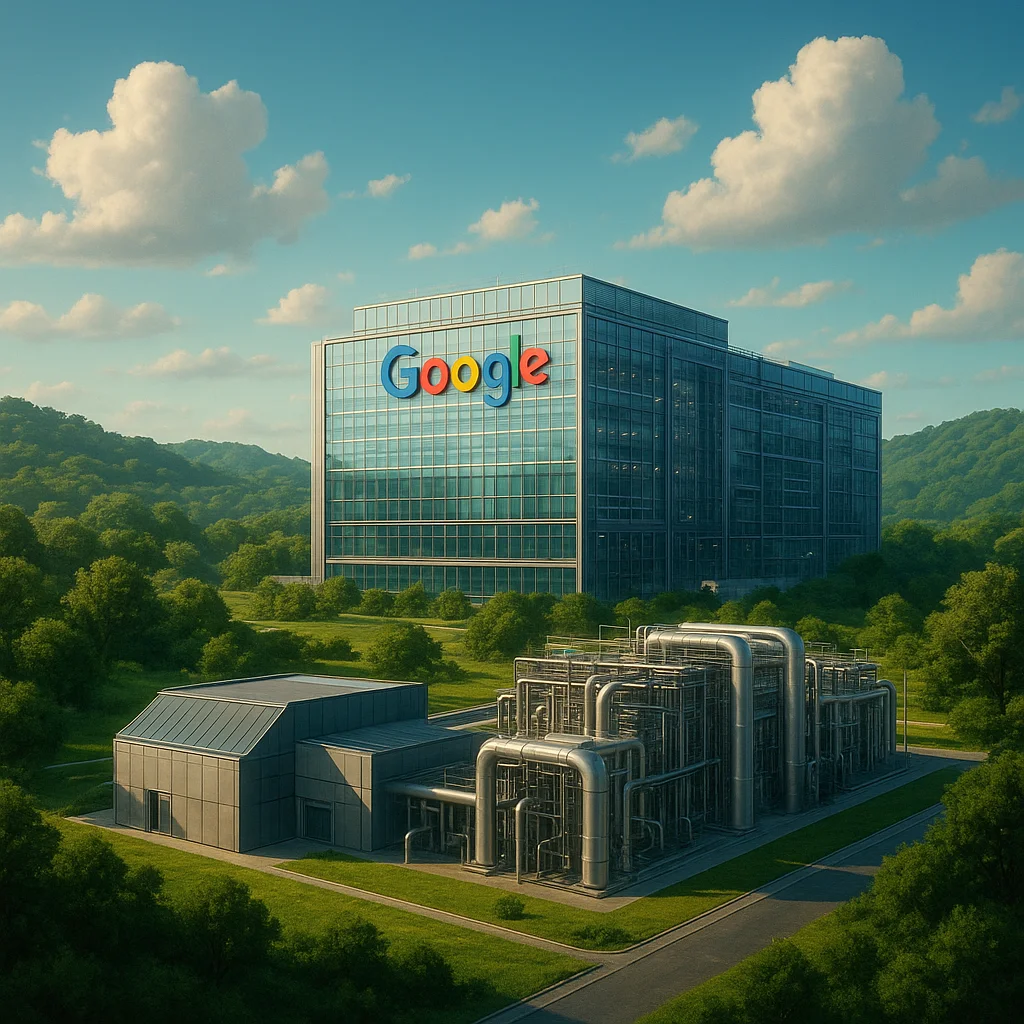

Unveiling the Paradox: Google’s New Data Center Fueled by Gas
In early 2026, Google announced the launch of a sprawling data center project, a facility designed to serve its expanding cloud computing and AI workloads. The catch? This new data center will be predominantly powered by a massive natural gas plant. The news presents a striking paradox for observers of sustainable technology: a company famed for its green commitments investing in fossil fuel-powered infrastructure.
The data center, located in the U.S. Midwest, is expected to consume upwards of 500 megawatts of power, roughly equivalent to the electricity needs of a small city. Google’s rationale, as stated in their press release, hinges on ensuring reliable, continuous power supply to support critical operations. However, the environmental implications provoke intense debate.
This scenario paints a vivid scene: while renewable energy sources have surged globally, a tech giant like Google relies heavily on a traditional gas plant—an investment that seems to undermine its sustainability narrative. Yet, the details behind this decision reveal complex layers of energy economics, grid realities, and evolving corporate strategies.
“Our top priority is reliability to power the services billions depend on daily, and natural gas currently offers a stable backbone,” a Google spokesperson said in March 2026.
Contextualizing the Energy Choices: How Did We Arrive Here?
Google’s path to this decision is shaped by the broader energy transition challenges facing data centers worldwide. Data centers consume approximately 1% to 2% of global electricity, with projections suggesting growth as digital demand intensifies. To mitigate carbon footprints, many tech companies have invested heavily in renewables, including solar, wind, and emerging green technologies.
Despite these efforts, the intermittency of renewables presents a challenge. Data centers require uninterrupted power to avoid disruptions, which can lead to significant financial and reputational damage. Backup batteries and grid storage solutions remain expensive and limited in scale.
Natural gas plants offer several advantages: rapid ramp-up capabilities, relatively lower carbon emissions compared to coal, and existing infrastructure. Google’s investment aligns with industry patterns where gas-fired power still plays a transitional role alongside renewables.
According to industry reports, the Midwest region benefits from a diverse generation mix but faces grid reliability concerns during peak demand periods or renewable shortfalls. This regional context shapes Google's strategy to ensure a dependable power supply.
“Natural gas acts as a bridge fuel, providing the flexibility renewables currently lack,” energy analyst Martina Rossi explained.
Dissecting the Data: Energy, Emissions, and Economic Factors
Evaluating Google’s decision requires a detailed look at the plant’s specifications and environmental impact. The gas plant is projected to generate 550 MW, with a combined cycle design enhancing efficiency to approximately 60%. This efficiency level is significantly higher than older plants, reducing carbon emissions per unit of electricity generated.
Nevertheless, the plant will emit an estimated 2.5 million metric tons of CO2 annually—substantial when compared against Google's overall carbon reduction targets. The company claims to offset this impact through carbon capture investments and renewable energy credits, though critics question the net effect.
Financially, the gas plant offers cost advantages. Natural gas prices in the region have remained relatively stable, and the capital expenditure for the plant is forecast at around $1.2 billion. The data center’s operational costs benefit from this stable pricing, especially given the volatility seen in renewable energy markets.
- Efficiency: 60% combined cycle efficiency
- Capacity: 550 MW output
- Emissions: Approx. 2.5 million metric tons CO2/year
- Investment: $1.2 billion capital cost
- Operational stability: High grid reliability advantage
Comparatively, Google's renewable energy contracts in the region supply an additional 300 MW, but intermittency necessitates gas as a firming resource. This hybrid approach, while pragmatic, sparks debate on the authenticity of sustainability claims.
Recent Developments in 2026: Shifts in Corporate Energy Strategies
This year has seen a notable shift in how major tech companies approach energy procurement. Many have doubled down on green hydrogen, advanced battery storage, and space-based solar initiatives as alternative solutions to fossil fuels. However, Google’s gas-powered data center highlights the persistent tension between sustainability aspirations and operational realities.
Notably, Google's funding in 2026 includes investments in fusion energy research and space solar projects, reflecting a long-term commitment to greener power sources. Meanwhile, the immediate necessity for reliable energy drives the decision to utilize a gas plant, a dual strategy that some experts term “transition pragmatism.”
Simultaneously, regulatory pressures are mounting. U.S. senators have called for greater transparency around data center energy use and carbon footprints, as reported in a recent WriteUpCafe article Senators Demand Transparency on Data Center Energy Use Amid Sustainability Push. These developments indicate that companies will face increased scrutiny on how they balance green commitments with practical energy needs.
In parallel, new technologies such as carbon capture and storage (CCS) have advanced, with Google's gas plant slated to integrate CCS systems to reduce net emissions by up to 40%. While promising, CCS remains costly and at early commercial stages, leaving questions about scalability and true environmental impact.
Industry Insights: Expert Opinions and Broader Implications
Energy experts and sustainability advocates express mixed views on Google’s approach. Some emphasize the importance of reliability and transitional solutions, particularly for critical infrastructure like data centers. Others argue that investing in fossil fuel infrastructure contradicts the urgency of climate commitments.
Dr. Elena Bianchi, an environmental economist, commented, “While natural gas plants emit less CO2 than coal, they still contribute significantly to greenhouse gases. Tech giants must prioritize accelerating renewables and storage solutions rather than prolonging fossil fuel dependency.”
Meanwhile, industry insiders point out that the scale of Google’s data needs demands innovative energy solutions not yet widely available. The company’s simultaneous investments in fusion and space solar, as highlighted by an OilPrice.com report, illustrate a dual approach balancing present realities with future ambitions.
- Reliability remains paramount for data infrastructure
- Natural gas serves as a transitional fuel but poses emission risks
- Emerging tech like fusion and space solar could redefine energy mix
- Carbon capture integration is critical but still evolving
- Regulatory and public scrutiny on fossil fuel use is intensifying
Looking Ahead: What This Means for Sustainable Tech and Energy
The Google gas plant-powered data center embodies the complex intersection of sustainability ambitions and operational necessities. As the tech sector advances, the pressure to innovate clean, reliable power solutions grows stronger.
Future developments to watch include:
- Advancements in energy storage: Breakthroughs in battery and hydrogen storage could reduce reliance on fossil backup.
- Scaling carbon capture: Effective and affordable CCS could mitigate emissions from transitional gas plants.
- Renewable grid integration: Improved grid management can enhance renewables’ reliability for energy-intensive operations.
- Policy shifts: Increased regulatory demands may compel tech firms to rethink energy sourcing strategies.
- Corporate transparency: Growing calls for clear sustainability reporting will influence public perception and investment.
Google’s decision serves as a case study for other companies wrestling with similar challenges. It underscores the need for pragmatic, multifaceted approaches that acknowledge current grid limitations while pushing aggressively toward cleaner futures.
For those interested in sustainable infrastructure, exploring the nuances of such projects is essential. You might enjoy reading more about Google’s 2026 Data Center Powered by a Massive Gas Plant: A Sustainable Paradox as well as practical green tech applications like the Essential Guide to Installing Your Home EV Charging Station.




































Sign in to leave a comment.