
Introduction
Smartcard readers are available in two primary forms: contact and contactless. While both serve the same fundamental purpose—secure authentication—their operation, standards, and ideal use cases differ significantly.
Understanding the difference between contact and contactless smartcard readers is essential when designing secure authentication systems for enterprise, finance, government, or cryptographic environments.
What Is a Contact Smartcard Reader?
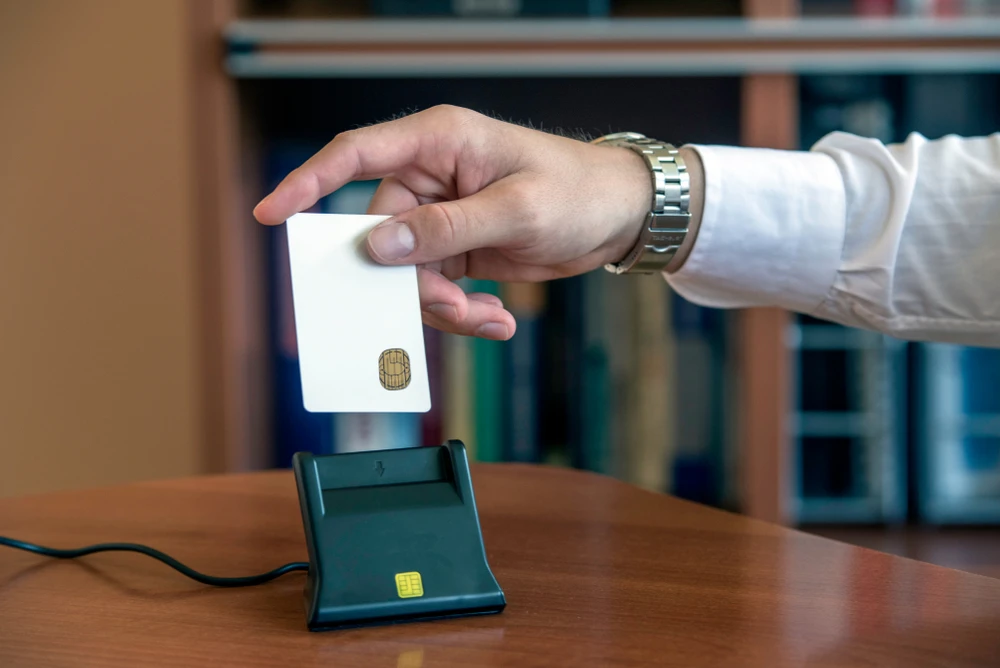
Contact smartcard readers require physical insertion of the card into the reader. Electrical contacts connect the card’s chip to the reader hardware.
These readers are governed by ISO 7816 standards and are commonly used where maximum reliability and physical security are required.
What Is a Contactless Smartcard Reader?
Contactless smartcard readers use NFC technology to communicate wirelessly with the card. The card does not require physical insertion, improving convenience and durability.
Contactless readers operate under ISO 14443 standards and are widely used in access control, authentication, and modern security systems.
Key Differences Between Contact and Contactless Readers
| Feature | Contact Reader | Contactless Reader |
| Communication | Physical contact | NFC wireless |
| Standard | ISO 7816 | ISO 14443 |
| Durability | Moderate | High |
| Speed | Fast | Very fast |
| User Convenience | Lower | Higher |
Security Comparison
Both reader types are highly secure when implemented correctly. Contact readers benefit from physical presence, while contactless readers rely on short-range encrypted communication.
For advanced authentication workflows, dual-interface solutions combine both technologies effectively.
Deployment Considerations
When choosing between contact and contactless smartcard readers, consider:
- Environment (industrial, office, mobile)
- Authentication frequency
- User convenience requirements
- Existing infrastructure
Organizations often deploy both technologies in parallel.
For combined solutions supporting both methods, refer to:
https://cryptnox.com/cardreaders/
Practical Applications
- Contact readers: PKI authentication, government ID
- Contactless readers: access control, NFC authentication
- Dual-interface readers: enterprise security systems
A technical overview of contactless implementation is available here:
https://cryptnox.com/contactless-reader-tuto/
Conclusion
Contact and contactless Smartcard readers each serve critical roles in secure authentication systems. Selecting the right technology depends on security requirements, usability, and deployment context.



















Sign in to leave a comment.