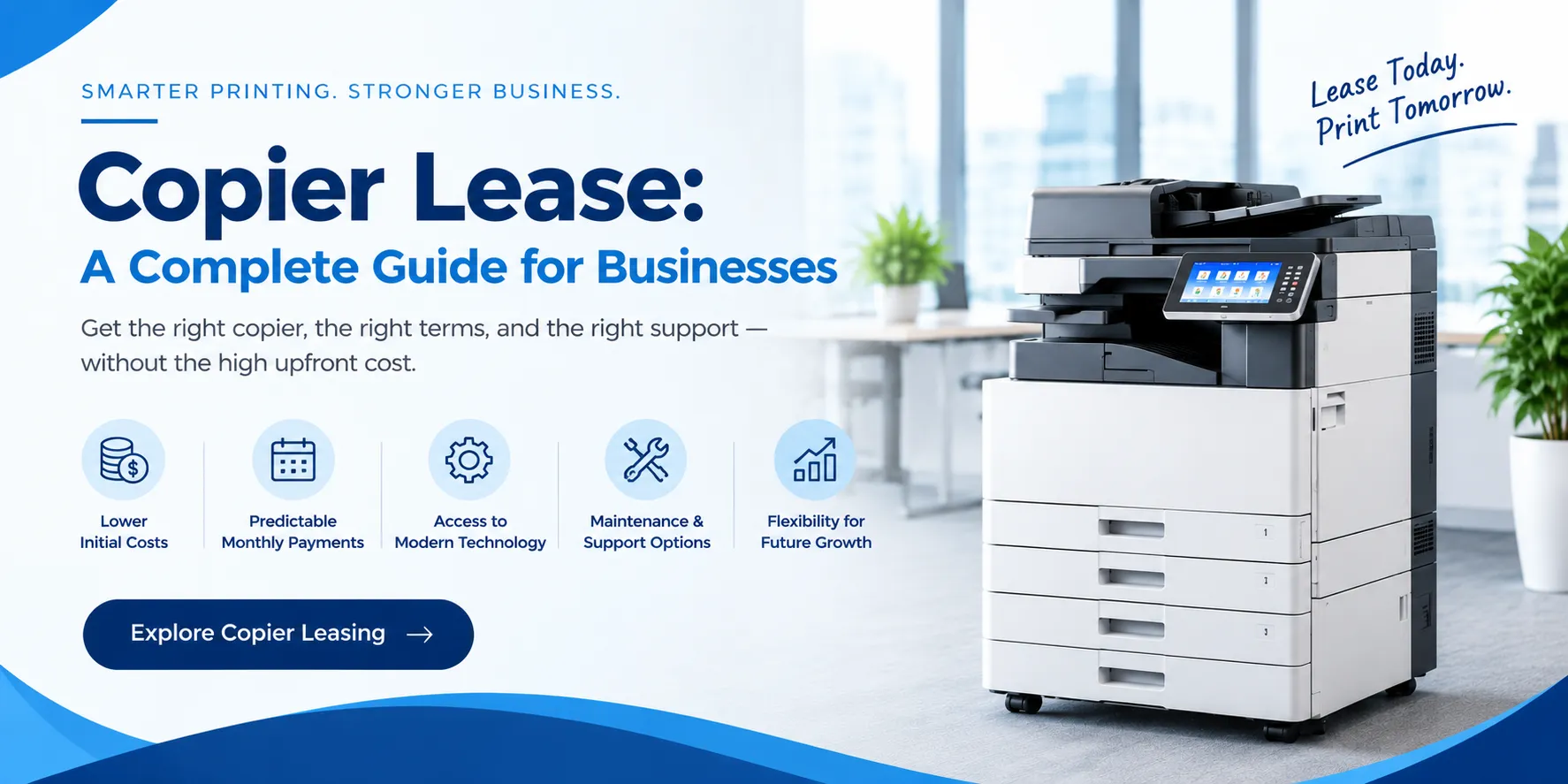

Choosing the right printing equipment is an important part of running an efficient office. Businesses rely on copiers to print contracts, invoices, reports, presentations, and other essential documents. However, purchasing a copier outright can require a significant upfront investment, especially for small and growing businesses.
A copier lease offers an alternative by allowing businesses to use office copying equipment through scheduled payments over an agreed period. Depending on the agreement, leasing may also provide access to maintenance, technical support, and equipment upgrades.
In this guide, we explain how copier leasing works, its benefits, the costs to consider, and how to determine whether leasing is the right choice for your business.
What Is a Copier Lease?
A copier lease is an agreement that allows a business to use a copier or multifunction printer for a specified period in exchange for regular payments. Instead of purchasing the equipment outright, the business pays to use the machine under the terms of the lease.
Copier leases are available for different types of equipment, including black-and-white copiers, color copiers, multifunction devices, and high-volume commercial machines.
Depending on the provider and agreement, a copier lease may include equipment delivery, installation, maintenance, or service support. Toner, paper, repairs, and other expenses may be charged separately, so it is important to review what the contract covers.
How Does a Copier Lease Work?
The copier leasing process typically involves a few straightforward steps.
1. Assess Your Office Printing Needs
Start by evaluating how many pages your business prints each month and which features your employees need. Consider printing speed, color output, scanning capabilities, paper capacity, and network connectivity.
Understanding your requirements helps you select equipment that can handle your workload without paying for unnecessary features.
2. Choose the Right Copier
Compare available copier models based on performance, functionality, reliability, and operating costs. A small office may need a compact multifunction device, while a larger organization may require a commercial copier designed for higher print volumes.
3. Review the Lease Agreement
Before signing, review the lease duration, monthly payment, service coverage, usage limits, and end-of-term options. Check whether maintenance, supplies, installation, and technical support are included or billed separately.
4. Arrange Installation and Setup
Once the agreement is finalized, the provider arranges delivery and installation according to the contract. The copier may need to be configured for your office network and connected to employee computers or document management systems.
5. Make Payments Throughout the Lease
Your business makes the agreed payments for the duration of the contract. Depending on the agreement, service charges, supply costs, and excess usage fees may be billed separately.
6. Decide What to Do at the End of the Lease
When the lease ends, the available options depend on the contract. You may be able to return the equipment, renew the agreement, lease a newer model, or purchase the machine if a buyout option is available.
Benefits of a Copier Lease for Businesses
Leasing can provide several advantages for organizations that depend on reliable office printing.
Lower Initial Investment
Purchasing a commercial copier can require a substantial upfront payment. A copier lease allows businesses to spread equipment expenses over time, which may help preserve cash for payroll, supplies, marketing, and other operational priorities.
Keep in mind that initial fees, deposits, or other charges may still apply.
Predictable Equipment Payments
Scheduled lease payments can make equipment expenses easier to plan for. However, businesses should also budget for any separate charges associated with supplies, maintenance, repairs, or usage limits.
Access to Modern Technology
Leasing may make it easier to access newer copier models with updated printing, scanning, connectivity, and security features. Businesses can evaluate replacement or upgrade options when their needs change, subject to the agreement.
Maintenance and Technical Support Options
Some copier leasing arrangements include service and maintenance plans. These services can help businesses address equipment issues and reduce the administrative burden of coordinating repairs.
Always confirm the scope of service coverage, response times, and exclusions before signing.
Flexibility for Growing Businesses
A company's printing needs may change as its workforce expands or office operations evolve. Leasing can provide flexibility when choosing equipment that matches current requirements, provided the contract allows suitable changes at renewal or replacement.
How Much Does a Copier Lease Cost?
The cost of a copier lease depends on the equipment model, features, lease duration, expected print volume, service coverage, and provider.
As a broad illustrative estimate, some basic office copier or multifunction printer leases may start around $50–$150 per month, while advanced commercial copier arrangements can cost several hundred dollars per month or more. These figures are not live quotes, and actual pricing varies significantly by configuration and contract terms.
Factors That Affect Copier Lease Pricing
Equipment type: Advanced commercial copiers with higher speeds, color printing, and finishing features generally cost more than basic office devices.
Monthly print volume: Businesses with higher printing demands may require more capable equipment or a different pricing structure.
Lease duration: Contract length can affect the monthly payment and total cost over the agreement.
Maintenance coverage: Agreements that include service and repairs may have different pricing from equipment-only leases.
Cost per page: Some arrangements charge separately for printed pages or include a specified volume of prints in a monthly package.
Installation and additional fees: Delivery, setup, insurance, and other charges may affect the overall cost.
Before committing, compare the total expected cost over the entire lease period rather than focusing only on the monthly payment.
Copier Lease vs. Buying a Copier
Both leasing and purchasing can work well, depending on your business's financial situation and equipment requirements.
Leasing a Copier
A copier lease may be suitable for businesses that want to spread equipment costs over time or prefer to review their equipment options at the end of a contract.
Potential advantages include lower initial equipment expenditure, scheduled payments, and access to optional service plans. However, the business may have ongoing contractual obligations and may pay more over time than it would for an outright purchase.
Buying a Copier
Buying a copier gives your business ownership of the equipment once the purchase is completed. This may be a good option for businesses that have sufficient capital and plan to use the machine for several years.
However, the business may be responsible for arranging maintenance, repairs, and eventual replacement unless these services are covered separately.
Which Option Is Better?
Consider leasing if preserving upfront capital and maintaining flexibility are priorities. Buying may be more appropriate if you prefer ownership and expect to use the equipment over the long term.
Compare the purchase price, financing costs, supplies, maintenance, expected equipment life, and lease-end obligations before deciding.
What Should You Check Before Signing a Copier Lease?
A copier lease is a contractual commitment, so it is important to understand the terms before proceeding.
Review the following points:
- Lease duration: Understand how long the agreement lasts and whether early termination is permitted.
- Monthly payments: Confirm the pay
Choosing the right printing equipment is an important part of running an efficient office.
Businesses rely on copiers to print contracts, invoices, reports, presentations, and other essential documents. However, purchasing a copier outright can require a significant upfront investment, especially for small and growing businesses.
A copier lease offers an alternative by allowing businesses to use office copying equipment through scheduled payments over an agreed period. Depending on the agreement, leasing may also provide access to maintenance, technical support, and equipment upgrades.
In this guide, we explain how copier leasing works, its benefits, the costs to consider, and how to determine whether leasing is the right choice for your business.
What Is a Copier Lease?
A copier lease is an agreement that allows a business to use a copier or multifunction printer for a specified period in exchange for regular payments. Instead of purchasing the equipment outright, the business pays to use the machine under the terms of the lease.
Copier leases are available for different types of equipment, including black-and-white copiers, color copiers, multifunction devices, and high-volume commercial machines.
Depending on the provider and agreement, a copier lease may include equipment delivery, installation, maintenance, or service support. Toner, paper, repairs, and other expenses may be charged separately, so it is important to review what the contract covers.
How Does a Copier Lease Work?
The copier leasing process typically involves a few straightforward steps.
1. Assess Your Office Printing Needs
Start by evaluating how many pages your business prints each month and which features your employees need. Consider printing speed, color output, scanning capabilities, paper capacity, and network connectivity.
Understanding your requirements helps you select equipment that can handle your workload without paying for unnecessary features.
2. Choose the Right Copier
Compare available copier models based on performance, functionality, reliability, and operating costs. A small office may need a compact multifunction device, while a larger organization may require a commercial copier designed for higher print volumes.
3. Review the Lease Agreement
Before signing, review the lease duration, monthly payment, service coverage, usage limits, and end-of-term options. Check whether maintenance, supplies, installation, and technical support are included or billed separately.
4. Arrange Installation and Setup
Once the agreement is finalized, the provider arranges delivery and installation according to the contract. The copier may need to be configured for your office network and connected to employee computers or document management systems.
5. Make Payments Throughout the Lease
Your business makes the agreed payments for the duration of the contract. Depending on the agreement, service charges, supply costs, and excess usage fees may be billed separately.
6. Decide What to Do at the End of the Lease
When the lease ends, the available options depend on the contract. You may be able to return the equipment, renew the agreement, lease a newer model, or purchase the machine if a buyout option is available.
Benefits of a Copier Lease for Businesses
Leasing can provide several advantages for organizations that depend on reliable office printing.
Lower Initial Investment
Purchasing a commercial copier can require a substantial upfront payment. A copier lease allows businesses to spread equipment expenses over time, which may help preserve cash for payroll, supplies, marketing, and other operational priorities.
Keep in mind that initial fees, deposits, or other charges may still apply.
Predictable Equipment Payments
Scheduled lease payments can make equipment expenses easier to plan for. However, businesses should also budget for any separate charges associated with supplies, maintenance, repairs, or usage limits.
Access to Modern Technology
Leasing may make it easier to access newer copier models with updated printing, scanning, connectivity, and security features. Businesses can evaluate replacement or upgrade options when their needs change, subject to the agreement.
Maintenance and Technical Support Options
Some copier leasing arrangements include service and maintenance plans. These services can help businesses address equipment issues and reduce the administrative burden of coordinating repairs.
Always confirm the scope of service coverage, response times, and exclusions before signing.
Flexibility for Growing Businesses
A company's printing needs may change as its workforce expands or office operations evolve. Leasing can provide flexibility when choosing equipment that matches current requirements, provided the contract allows suitable changes at renewal or replacement.
How Much Does a Copier Lease Cost?
The cost of a copier lease depends on the equipment model, features, lease duration, expected print volume, service coverage, and provider.
As a broad illustrative estimate, some basic office copier or multifunction printer leases may start around $50–$150 per month, while advanced commercial copier arrangements can cost several hundred dollars per month or more. These figures are not live quotes, and actual pricing varies significantly by configuration and contract terms.
Factors That Affect Copier Lease Pricing
Equipment type: Advanced commercial copiers with higher speeds, color printing, and finishing features generally cost more than basic office devices.
Monthly print volume: Businesses with higher printing demands may require more capable equipment or a different pricing structure.
Lease duration: Contract length can affect the monthly payment and total cost over the agreement.
Maintenance coverage: Agreements that include service and repairs may have different pricing from equipment-only leases.
Cost per page: Some arrangements charge separately for printed pages or include a specified volume of prints in a monthly package.
Installation and additional fees: Delivery, setup, insurance, and other charges may affect the overall cost.
Before committing, compare the total expected cost over the entire lease period rather than focusing only on the monthly payment.
Copier Lease vs. Buying a Copier
Both leasing and purchasing can work well, depending on your business's financial situation and equipment requirements.
Leasing a Copier
A copier lease may be suitable for businesses that want to spread equipment costs over time or prefer to review their equipment options at the end of a contract.
Potential advantages include lower initial equipment expenditure, scheduled payments, and access to optional service plans. However, the business may have ongoing contractual obligations and may pay more over time than it would for an outright purchase.
Buying a Copier
Buying a copier gives your business ownership of the equipment once the purchase is completed. This may be a good option for businesses that have sufficient capital and plan to use the machine for several years.
However, the business may be responsible for arranging maintenance, repairs, and eventual replacement unless these services are covered separately.
Which Option Is Better?
Consider leasing if preserving upfront capital and maintaining flexibility are priorities. Buying may be more appropriate if you prefer ownership and expect to use the equipment over the long term.
Compare the purchase price, financing costs, supplies, maintenance, expected equipment life, and lease-end obligations before deciding.
What Should You Check Before Signing a Copier Lease?
A copier lease is a contractual commitment, so it is important to understand the terms before proceeding.
Review the following points:
- Lease duration: Understand how long the agreement lasts and whether early termination is permitted.
- Maintenance coverage: Check whether repairs, replacement parts, and technician visits are included.
- Supply costs: Confirm whether toner and other consumables are included or charged separately.
- Print volume limits: Understand any included page allowances and excess usage charges.
- Equipment ownership: Determine who owns the copier during and after the agreement.
- End-of-lease options: Check return requirements, renewal conditions, and any purchase or buyout options.
- Upgrade terms: Confirm whether you can replace the equipment before the contract expires and what charges may apply.
Carefully reviewing these details can help you avoid unexpected costs and select an arrangement that meets your business needs.
How to Choose the Right Copier Leasing Provider
The leasing provider can have a significant impact on your overall experience. Beyond the equipment itself, businesses should evaluate the provider's service capabilities and the clarity of its contract terms.
Look for a provider that offers suitable equipment choices, transparent pricing, clearly defined service coverage, and access to technical support when needed.
It is also useful to compare several proposals and ask for a breakdown of equipment costs, maintenance charges, supplies, and any additional fees. This makes it easier to compare agreements fairly.
Is a Copier Lease Right for Your Business?
A copier lease can be a practical solution for businesses that need dependable office equipment without paying the entire purchase price upfront. It may be particularly useful for small businesses, professional offices, and organizations that want predictable equipment payments or access to optional maintenance services.
However, leasing is not automatically the least expensive option. The best decision depends on your printing volume, available budget, expected equipment life, and the terms of the agreement.
By comparing leasing and purchasing options carefully, you can choose a copier solution that supports your daily operations and long-term business goals.
Explore Copier and Office Equipment Solutions With Network Digital
Finding the right copier arrangement starts with understanding your office's printing requirements and operating budget.
Network Digital provides office equipment and print management solutions for businesses looking to support their document workflows. Whether you are exploring a copier lease or comparing equipment options, reviewing your expected print volume, required features, and service needs can help you make an informed decision.
Visit Network Digital to learn more about its office equipment solutions and explore options for your business.





















Sign in to leave a comment.