

Data Center Security is no longer a back-office concern — it is a strategic imperative for every enterprise, government entity, and cloud service provider operating across the Gulf Cooperation Council. As Bahrain cements its role as a regional digital hub and GCC nations race toward Vision 2030 and National Transformation Programs, the physical and cyber resilience of critical infrastructure has never mattered more. This comprehensive guide walks you through the multi-layered framework that world-class data centers deploy to protect data, continuity, and compliance.
Whether you are a CIO evaluating a colocation partner, an IT manager responsible for on-premises infrastructure, or a compliance officer navigating PDPL, PDPDL, and NIST CSF requirements, this guide delivers the authoritative, practitioner-grade insight you need.
1. Why Data Center Security Is a GCC Board-Level Priority
The GCC is home to some of the world’s fastest-growing digital economies. Bahrain’s FinTech Bay, Saudi Arabia’s NEOM smart city, the UAE’s cloud-first government, and Qatar’s World Cup digital legacy have collectively attracted billions in technology investment. This growth creates an expanding attack surface that adversaries — state-sponsored, criminal, and hacktivist — are actively exploiting.
Key regional risk drivers include:
- Geopolitical exposure: The GCC sits at the crossroads of global energy and trade, making data assets a high-value target.
- Regulatory acceleration: Bahrain’s PDPDL, Saudi Arabia’s PDPL, and UAE Federal Decree Law 45/2021 mandate documented security controls, breach notification windows, and localised data residency.
- Supply chain complexity: Hyper-connected ecosystems increase the risk of third-party intrusion vectors.
- Talent gap: Cybersecurity professionals remain scarce across the region, placing a premium on technology-driven, automated defences.
Organisations that treat Data Center Security GCC as a compliance checkbox rather than a resilience strategy consistently suffer higher breach costs, longer recovery times, and reputational damage that erodes investor confidence.
2. The Six-Layer Security Model: An Industry-Standard Framework
Leading analysts and the Uptime Institute endorse a concentric, defence-in-depth approach. Each layer compensates for weaknesses in adjacent layers, ensuring that a failure in one zone does not cascade into a full compromise. The six layers are:
- Perimeter Security — Physical boundary protection
- Facility Controls — Building-level hardening
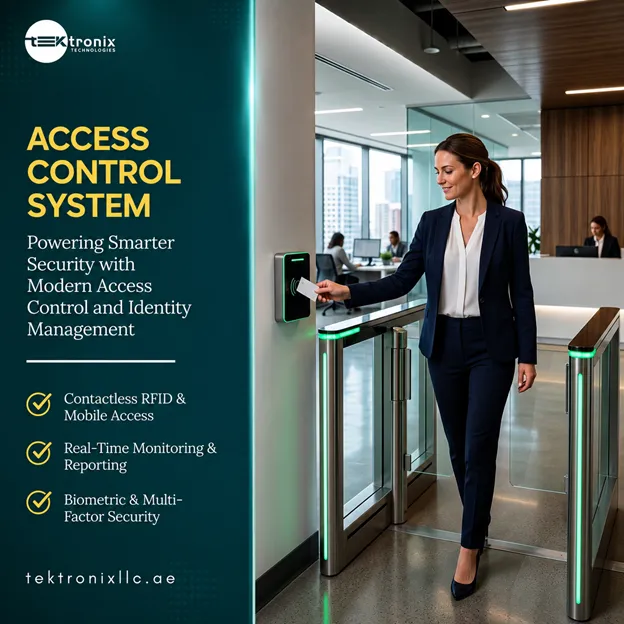
- Data Center Access Control — Identity-based entry management
- Data Center Surveillance — Continuous visual monitoring
- Data Center Intrusion Detection — Automated threat alerting
- Data Center Firewalls & Cybersecurity — Network-layer enforcement
Let’s examine each layer in practitioner-level detail.
3. Physical Perimeter and Facility Hardening
The first two layers establish the secure zone before any digital control is relevant. A data center facility in Bahrain or the wider GCC must account for the regional threat landscape: desert climate extremes, seismic micro-zones, and the possibility of civil unrest in neighbouring regions.
3.1 Perimeter Controls
- Reinforced barriers: Anti-ram bollards, concrete blast walls, and vehicle exclusion zones around server halls.
- Mantraps and airlocks: Sequential door entry points that prevent tailgating — a primary vector for insider-threat actors.
- Perimeter lighting: High-lumen LED arrays with motion-triggered intensification eliminate shadow zones.
- Security personnel: Trained guards conducting randomised patrol schedules, verified against log records to prevent routine exploitation.
3.2 Environmental Hardening
- Raised floors and hot/cold aisle containment: Prevent accidental or deliberate tampering with cable infrastructure.
- Water and fire suppression: Dual-interlock pre-action systems that reduce false discharge risk while maintaining rapid suppression capability.
- Redundant power and cooling: N+1 or 2N UPS and generator configurations ensure continuity during grid disruptions common in emerging GCC markets.
4. Data Center Access Control: Zero-Trust Identity Management
Data Center Access Control is the operational gateway between physical perimeter protection and deeper facility layers. In a Zero-Trust architecture — now mandated or recommended by most GCC national cybersecurity authorities — no identity is trusted by default, regardless of network location or prior authentication.
4.1 Multi-Factor Authentication (MFA) at Every Threshold
Modern GCC data centers deploy a three-factor model at critical access points:
- Something you have: Proximity smart card encoded with AES-256 credentials.
- Something you know: PIN or passphrase validated against a hardened directory service.
- Something you are: Biometric verification — fingerprint, palm vein, or iris scan — cross-referenced against an enrolled database.
4.2 Role-Based Access Control (RBAC) and Least-Privilege Provisioning
RBAC ensures that engineers, contractors, auditors, and executives each receive the minimum access needed for their function. Access reviews should occur quarterly, with automated deprovisioning triggered by HR system changes.
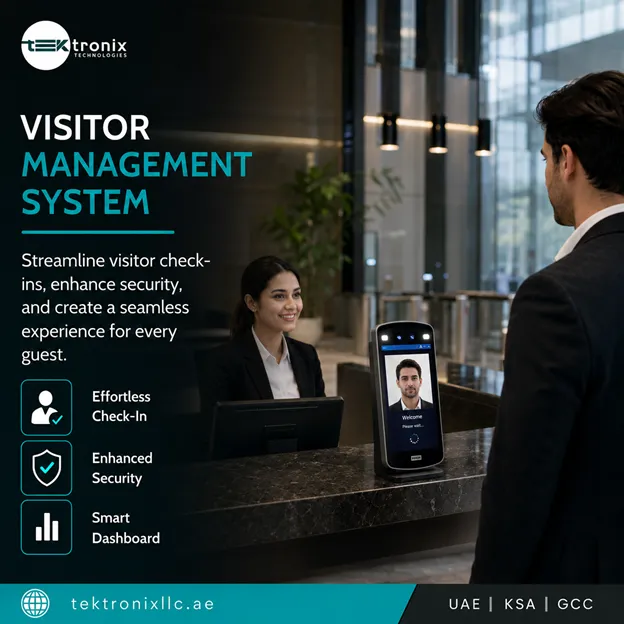
4.3 Visitor and Contractor Protocols
- Pre-registration with photo ID and background screening at least 48 hours in advance.
- Escorted access for all third-party personnel throughout the facility.
- Digital visitor logs with timestamped entry/exit events, retained for a minimum of 90 days to satisfy regulatory audit requirements.
Tektronix LLC’s data center physical security framework integrates RBAC, biometrics, and audit logging into a unified dashboard purpose-built for GCC compliance requirements.
5. Data Center Surveillance: Eyes-On Continuity
A robust Data Center Surveillance programme extends visibility from the loading dock to the server cage, operating continuously and redundantly. The goal is not only detection but legal-grade evidence preservation that supports forensic investigation and regulatory reporting.
5.1 IP-Based CCTV Architecture
- Camera density: 4K IP cameras with overlapping fields of view at every door, corridor, and cage row. No blind spots. PTZ (pan-tilt-zoom) units cover wide open areas.
- Low-light capability: Infrared and thermal imaging for areas where standard lighting is reduced.
- Tamper detection: Cameras equipped with motion sensors and physical vibration alarms that trigger alerts if repositioned.
5.2 Video Analytics and AI-Driven Monitoring
Modern surveillance moves beyond passive recording. Artificial intelligence video analytics now deliver:
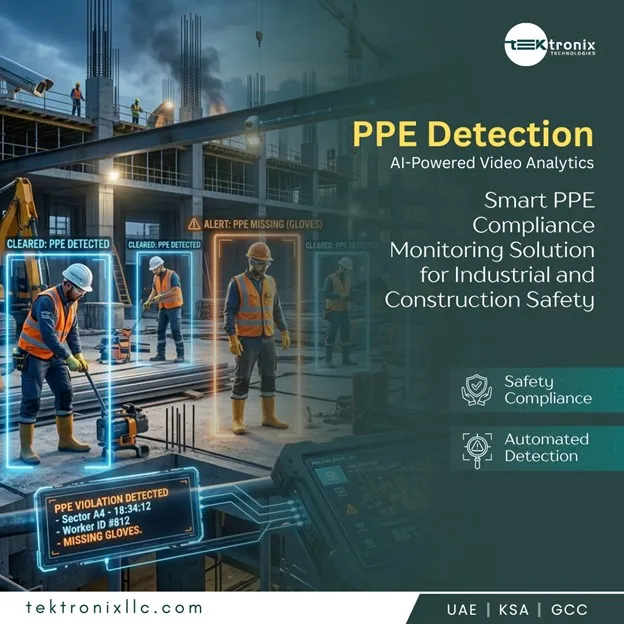
- Behavioural anomaly detection: Alerts when individuals loiter near restricted zones or exhibit unusual movement patterns.
- Occupancy counting: Validates that the number of persons in a zone matches access control records in real time.
- Licence plate recognition: Automated logging of all vehicles entering facility premises.
5.3 Retention, Redundancy, and Compliance
- Video stored on encrypted, geo-redundant NVR/NAS systems with 90-day minimum retention.
- Backup feeds transmitted off-site via encrypted VPN to a secondary monitoring centre.
- Chain-of-custody metadata embedded in video files for admissibility in GCC courts.
6. Data Center Intrusion Detection: Sensing Every Threat Vector
While surveillance provides visual evidence, Data Center Intrusion Detection provides real-time alerting across physical and environmental threat vectors. An integrated intrusion detection system (IDS) operates as the nervous system of facility security, triggering automated responses within seconds of an anomaly.
6.1 Physical Intrusion Detection Sensors
- Door and window contacts: Magnetic reed switches on every access point alert security operation on unauthorised opening.
- Passive infrared (PIR) motion sensors: Mounted in corridors, raised floors, and above ceiling voids to detect human presence outside operational hours.
- Vibration and glass-break sensors: Detect attempts to breach walls, raised floors, or equipment cabinets.
- Cable management sensors: Alert when network or power cables are disconnected from specific ports, signalling physical tampering.
6.2 Environmental Intrusion Detection
- Temperature and humidity thresholds: Automated alarms and HVAC responses prevent hardware failure caused by cooling compromise.
- Flood and leak detection: Under-floor and ceiling sensors protect against water ingress, a significant risk in facilities near coastal GCC locations.
- Smoke and particulate detection: High-sensitivity VESDA (Very Early Smoke Detection Apparatus) systems detect sub-visible combustion particles before flames develop.
6.3 Integration with Security Operations Centre (SOC)
All physical IDS signals feed into a 24/7 Security Operations Centre via a SIEM (Security Information and Event Management) platform. Correlation rules identify compound events — for example, simultaneous door sensor tamper and motion detection — and escalate with higher-severity classifications.
7. Data Center Firewalls and Network Security Architecture
Data Center Firewalls form the first line of Cybersecurity for Data Center operations. In the GCC’s hyperconnected environment — where facilities serve cloud providers, financial institutions, government ministries, and telecoms simultaneously — network segmentation and policy enforcement are existential requirements.
7.1 Next-Generation Firewalls (NGFW)
NGFWs go beyond traditional port-and-protocol filtering to deliver:
- Deep packet inspection (DPI): Analyses payload content, not just headers, to identify malware, exploit code, and data exfiltration attempts.
- Application-layer control: Enforces policies at the application level, blocking unauthorised SaaS usage and shadow IT within the data center.
- SSL/TLS inspection: Decrypts, inspects, and re-encrypts encrypted traffic to neutralise threats hidden within HTTPS tunnels.
- Threat intelligence integration: Real-time feeds from global threat databases ensure firewall rules reflect the latest indicators of compromise.
7.2 Network Segmentation and Micro-Segmentation
A flat network is a liability. Modern data center network architecture enforces:
- DMZ architecture: Public-facing services isolated from internal management networks and customer VLAN environments.
- East-west micro-segmentation: Software-defined perimeters that restrict lateral movement between workloads, limiting blast radius in the event of a breach.
- Out-of-band management networks: Dedicated, physically separate management planes that remain accessible even during a primary network attack.
7.3 DDoS Mitigation
Bahrain and the GCC region experience elevated rates of Distributed Denial-of-Service attacks targeting government services and financial platforms. Data center network infrastructure must include:
- Upstream scrubbing centres: Traffic rerouted through cloud-based mitigation platforms that absorb volumetric attacks before they reach the facility.
- Anycast routing: Distributes attack traffic across multiple PoPs to prevent single-facility saturation.
- Rate limiting and traffic shaping: Automated policies throttle suspicious traffic patterns without impacting legitimate user sessions.
8. Data Center Encryption: Protecting Data at Rest and in Transit
Data Center Encryption is the final technical safeguard ensuring that even if a physical or network breach occurs, the data accessed is operationally useless to adversaries. In the GCC, where data sovereignty regulations require local storage and processing, robust encryption is simultaneously a compliance and competitive differentiator.
8.1 Encryption at Rest
- AES-256 full-disk encryption: Applied to all storage media including SSDs, HDDs, and backup tapes. Hardware Security Modules (HSMs) manage key storage independently of encrypted data.
- Self-encrypting drives (SEDs): OPAL-compliant SEDs perform encryption at the hardware level, eliminating performance overhead.
- Cryptographic erasure: On drive decommissioning, key destruction renders all data irrecoverable without physical destruction — critical for GCC data residency compliance.
8.2 Encryption in Transit
- TLS 1.3: Mandated for all management interfaces, customer portals, and API endpoints. Legacy TLS 1.0/1.1 disabled at firewall and load balancer layers.
- IPsec VPN: Site-to-site connectivity between data center locations and enterprise customer premises encrypted at the network layer.
- MACsec (IEEE 802.1AE): Hardware-based encryption of Ethernet frames between switches and servers within the facility, protecting against insider eavesdropping.
8.3 Key Management
Encryption is only as strong as key management. Best practice for GCC data centers includes:
- Centralised Key Management Service (KMS) with FIPS 140-2 Level 3 certified HSMs.
- Dual-control, split-knowledge key access procedures to prevent any single administrator from accessing raw keys.
- Automated key rotation on 90-day cycles, with immediate rotation triggered by any personnel change event.
9. Data Center Threat Detection: From Alert to Response in Minutes
Data Center Threat Detection bridges the gap between passive monitoring and active incident response. The most sophisticated physical and cyber controls in the world are undermined if alerts are not acted upon quickly and correctly.
9.1 Security Information and Event Management (SIEM)
A SIEM platform aggregates log data from firewalls, access control systems, IDS, surveillance analytics, and endpoint agents into a unified correlation engine. Use cases specific to GCC data centers include:
- Credential abuse detection: Identifies repeated failed authentication attempts followed by successful logins from unexpected geographic locations.
- Privilege escalation alerting: Flags attempts to assume administrative roles outside approved change windows.
- Data exfiltration baseline deviation: Alerts when outbound data volumes deviate from established behavioural baselines.
9.2 Endpoint Detection and Response (EDR)
EDR agents deployed on all servers, virtual machines, and management workstations provide:
- Real-time process monitoring: Detects malicious execution chains, fileless malware, and living-off-the-land (LotL) attack techniques.
- Automated containment: Isolates compromised endpoints from the network within seconds, preventing lateral movement.
- Forensic telemetry: Complete process, network, and file activity timelines preserved for post-incident investigation.
9.3 Threat Intelligence and Proactive Hunting
Reactive detection alone is insufficient against advanced persistent threats (APTs) documented in the GCC. Proactive capabilities include:
- Threat intelligence platform (TIP): Automated ingestion of MITRE ATT&CK-mapped indicators relevant to GCC-targeted adversary groups.
- Red team exercises: Simulated physical and cyber-attacks conducted quarterly to validate detection and response capabilities.
- Purple team programmes: Collaborative exercises between offensive and defensive teams to accelerate detection rule development.
10. Why Tektronix LLC Is the GCC's Trusted Data Center Security Partner
Tektronix LLC brings over a decade of regional experience delivering enterprise-grade security solutions to financial institutions, government entities, telecoms, and cloud providers across Bahrain, Saudi Arabia, the UAE, Qatar, Kuwait, and Oman. Our six-layered security methodology is specifically engineered to address the GCC’s unique regulatory, environmental, and threat landscape.
Our differentiators include:
- Regional regulatory fluency: Deep expertise in PDPDL, PDPL, CBB, SAMA, NESA, and related GCC frameworks.
- Vendor-neutral architecture: We design and integrate best-of-breed solutions from Cisco, Palo Alto Networks, Genetec, Lenel, and others rather than locking clients into proprietary stacks.
- End-to-end delivery: From design and procurement through installation, commissioning, and 24/7 SOC management.
- Proven track record: Hundreds of successful data center security deployments across Tier 2, Tier 3, and Tier 4 facilities in the GCC.
Conclusion
The digital ambitions of Bahrain and the GCC depend entirely on the integrity of the infrastructure that underpins them. Data Center Security is not a one-time project but a continuous programme encompassing physical hardening, identity-based access governance, AI-powered surveillance, layered intrusion detection, next-generation firewall enforcement, end-to-end encryption, and proactive threat detection.
Organisations that invest in this multi-dimensional framework do not merely protect data — they protect business continuity, regulatory standing, customer trust, and competitive position. As the threat landscape evolves and regional regulators raise the compliance bar, those with mature, tested security programmes will lead, while those relying on legacy controls will face mounting exposure.
FAQs
Q1. What are the most critical layers of data center security for a GCC facility?
The most critical layers are Data Center Access Control (preventing unauthorised physical entry), Data Center Firewalls (blocking network-layer attacks), and Data Center Encryption (ensuring data remains protected even if other layers are breached). In the GCC, these three must be complemented by surveillance, intrusion detection, and compliance-aligned policies to meet PDPDL, PDPL, and CBB requirements.
Q2. How does data center security in Bahrain differ from other GCC countries?
Bahrain operates under the PDPDL (Personal Data Protection Law) and is subject to CBB Rulebook requirements for financial entities. As a regional FinTech hub with strong connectivity to Saudi Arabia and the UAE, Bahrain’s facilities face a distinct mix of financial-sector threats and government digital service requirements. However, the underlying security framework — physical controls, network enforcement, and encryption — follows the same six-layer model applicable across the GCC.
Q3. What is the role of Data Center Intrusion Detection in a Zero-Trust architecture?
In a Zero-Trust model, Data Center Intrusion Detection systems validate that observed behaviour matches authorised activity. Even after authentication, an IDS continuously monitors for anomalous actions — such as accessing zones outside a user’s assigned role, triggering environmental sensors, or connecting unauthorised devices — and generates alerts for SOC investigation. This provides a critical verification layer that compensates for credential compromise or insider threats.
Q4. How often should data center security assessments be conducted?
Industry best practice and most GCC regulatory frameworks recommend formal security assessments at least annually, with vulnerability scans conducted quarterly and penetration testing (both physical and cyber) performed every six months. Any significant infrastructure change — new hardware, new connectivity, or personnel changes in privileged roles — should trigger an out-of-cycle review. Continuous Data Center Threat Detection via SIEM provides ongoing assurance between formal assessments.
Q5. How does Tektronix LLC approach Data Center Surveillance for compliance?
Tektronix LLC designs Data Center Surveillance systems with compliance evidence at their core. This means deploying encrypted, geo-redundant video storage with minimum 90-day retention, embedding chain-of-custody metadata for legal admissibility, and integrating AI-powered analytics that generate structured incident reports. All surveillance architectures are mapped to applicable GCC regulatory requirements before design is finalised, ensuring clients can demonstrate compliance during audits without costly retroactive modifications.
For more information contact us on:
Tektronix Technology Systems Dubai-Head Office
+971 55 232 2390































Sign in to leave a comment.