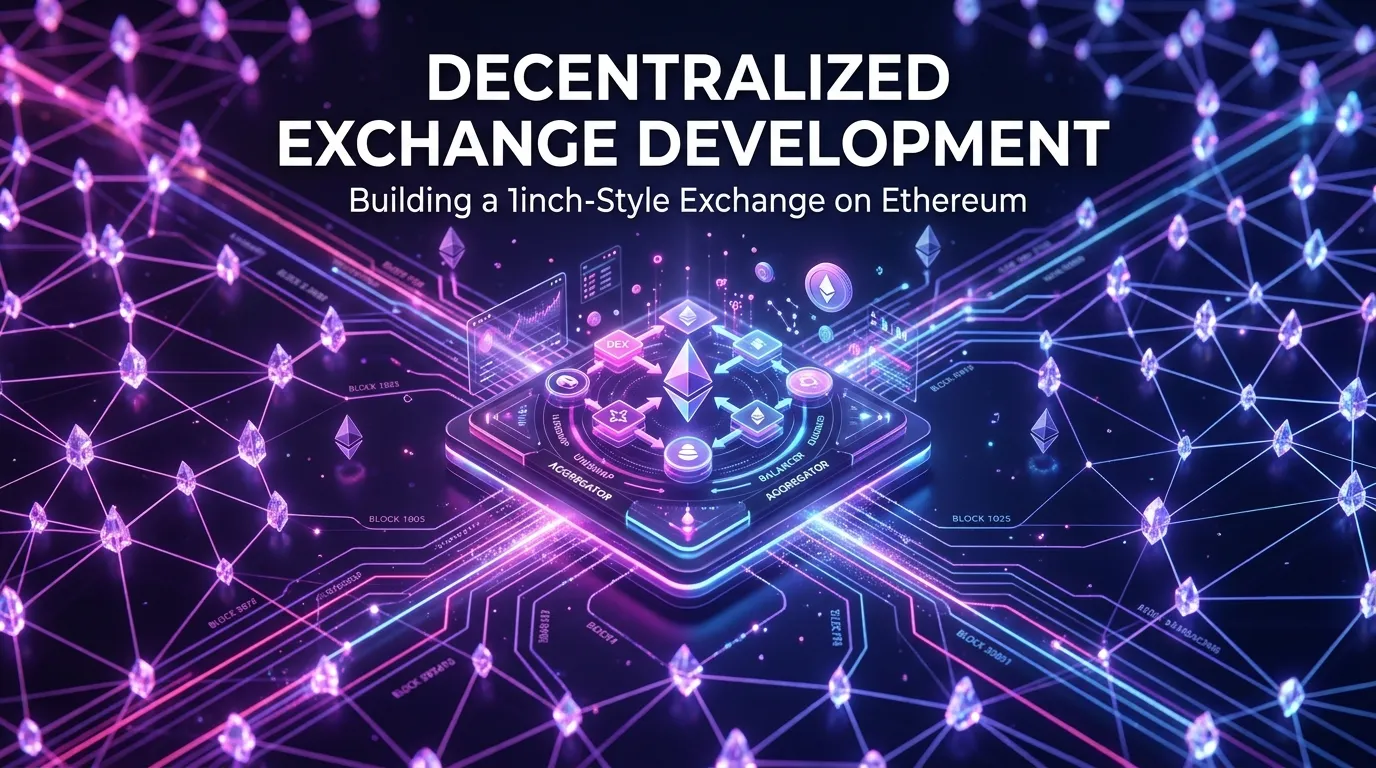

The decentralized finance ecosystem has transformed the way digital assets are traded, managed, and exchanged across blockchain networks. Among the many innovations that have emerged from DeFi, decentralized exchanges have become a cornerstone of crypto trading by enabling users to transact directly from their wallets without relying on centralized intermediaries. While traditional decentralized exchanges focus on a single liquidity source, platforms such as 1inch introduced a more sophisticated approach by aggregating liquidity from multiple protocols to deliver better pricing, reduced slippage, and improved trading efficiency. As the demand for seamless decentralized trading continues to grow, businesses and entrepreneurs are increasingly exploring opportunities to build advanced exchange platforms that replicate and enhance the capabilities of liquidity aggregators. Developing a 1inch-style exchange on Ethereum requires a combination of smart contract engineering, liquidity integration, security implementation, user experience optimization, and scalable infrastructure. Understanding the architecture and development process is essential for creating a competitive platform that meets user expectations and operates efficiently within the evolving DeFi landscape.
Understanding the 1inch Exchange Model
A 1inch-style decentralized exchange operates differently from conventional trading platforms. Instead of maintaining its own liquidity pools exclusively, it aggregates liquidity from multiple decentralized exchanges and routes trades through the most efficient paths available.
Liquidity aggregation improves trading efficiency
The platform continuously scans multiple liquidity sources to identify the most favorable trading routes. This approach allows traders to access competitive rates without manually comparing prices across various exchanges.
Smart routing enhances transaction outcomes
Intelligent routing algorithms split orders across different protocols when necessary. By distributing trades strategically, the platform minimizes slippage and helps users secure better execution prices.
Cross-protocol integration expands market access
Connecting with multiple decentralized exchanges enables broader market coverage. Users gain access to deeper liquidity pools and a wider range of trading opportunities.
Automated optimization improves user experience
The platform automatically performs complex calculations behind the scenes. Traders receive optimal routes without needing advanced technical knowledge or manual intervention.
Why Ethereum Is the Preferred Blockchain for DEX Development
Ethereum remains the leading blockchain for decentralized exchange development due to its mature ecosystem, extensive developer support, and established DeFi infrastructure.
Robust smart contract functionality
Ethereum introduced programmable smart contracts that enable developers to create complex decentralized applications. These capabilities provide the foundation for sophisticated exchange operations.
Access to established DeFi protocols
Most leading liquidity providers and decentralized finance applications operate within the Ethereum ecosystem. This creates abundant integration opportunities for new exchange platforms.
Strong developer community
Ethereum benefits from one of the largest blockchain developer communities globally. Extensive documentation, frameworks, and support resources accelerate development and troubleshooting.
High security and network reliability
Years of continuous operation have strengthened Ethereum's security model. The network's decentralized structure contributes to long-term reliability and resilience.
Essential Components of a 1inch-Style Decentralized Exchange
Building a liquidity aggregation platform requires several interconnected components that work together to provide efficient and secure trading experiences.
Smart contract infrastructure
Smart contracts manage trade execution, liquidity routing, transaction validation, and protocol interactions. Well-designed contracts form the operational backbone of the exchange.
Liquidity aggregation engine
The aggregation engine analyzes liquidity across multiple decentralized exchanges. It identifies the most efficient trading paths based on price, liquidity depth, and transaction costs.
Trading interface
A user-friendly interface simplifies complex blockchain interactions. Clear navigation and responsive design help users trade confidently and efficiently.
Wallet connectivity
Secure wallet integration allows users to maintain control of their assets. Compatibility with popular wallets enhances accessibility and user adoption.
Designing the Smart Contract Architecture
The smart contract layer determines how effectively the exchange operates and scales over time. A carefully planned architecture improves security, efficiency, and maintainability.
Modular contract structure
Separating functionality into independent modules simplifies upgrades and maintenance. Modular design reduces development complexity while improving flexibility.
Efficient trade execution logic
Trade execution contracts must process transactions quickly and accurately. Optimized code minimizes gas consumption and improves transaction performance.
Permission management systems
Administrative controls should be carefully implemented to balance operational requirements with decentralization principles. Transparent governance mechanisms increase user trust.
Upgradeability considerations
Exchange platforms often evolve after deployment. Upgradeable contract frameworks allow improvements while preserving critical functionality and user assets.
Integrating Multiple Liquidity Sources
Liquidity aggregation is one of the most important aspects of a 1inch-style exchange. Successful integration determines the platform's ability to provide competitive trading outcomes.
Connection to major DEX protocols
Integrating established exchanges expands liquidity availability. Multiple connections increase the likelihood of finding optimal trading routes.
Real-time liquidity monitoring
Continuous monitoring ensures accurate pricing and route selection. Current market data enables more reliable trade execution.
Dynamic route optimization
Market conditions change rapidly across decentralized exchanges. Dynamic optimization allows the platform to adapt routing decisions instantly.
Support for various token pairs
Broader asset support attracts more users and increases platform utility. Comprehensive token coverage improves market competitiveness.
Developing an Advanced Routing Algorithm
Routing technology serves as the intelligence layer of a liquidity aggregation platform. The effectiveness of this system directly impacts trading quality.
Price comparison across exchanges
The algorithm evaluates available prices from multiple liquidity providers. Continuous comparison ensures users receive favorable rates.
Slippage reduction mechanisms
Large trades can affect market prices significantly. Advanced routing techniques distribute transactions to minimize price impact.
Gas fee optimization
Transaction costs influence overall trading efficiency. Route selection should account for both pricing advantages and network fees.
Multi-path trade execution
Splitting trades across several liquidity pools can improve outcomes. Multi-path execution helps maximize value for users.
Prioritizing Security Throughout Development
Security remains a critical requirement for any decentralized exchange. Vulnerabilities can result in financial losses and reputational damage.
Comprehensive smart contract audits
Independent security reviews help identify vulnerabilities before deployment. Professional audits strengthen platform reliability.
Rigorous testing procedures
Functional, integration, and stress testing reveal potential weaknesses. Extensive testing improves operational stability.
Protection against common exploits
Security measures should address reentrancy attacks, flash loan exploits, and other blockchain-specific risks. Preventive safeguards reduce exposure.
Continuous monitoring systems
Post-launch monitoring enables rapid detection of unusual activities. Early intervention helps mitigate emerging threats.
Creating a User-Centric Trading Experience
User experience significantly influences adoption and retention. Even highly advanced platforms require intuitive interfaces to attract traders.
Simple trade execution process
Reducing complexity encourages broader participation. Clear workflows help users complete transactions efficiently.
Transparent pricing information
Displaying fees, slippage estimates, and route details improves trust. Users appreciate visibility into transaction mechanics.
Responsive platform performance
Fast-loading interfaces contribute to a smooth trading experience. Performance optimization reduces user frustration.
Mobile-friendly accessibility
Many traders access DeFi platforms from mobile devices. Responsive design expands accessibility across different screen sizes.
Conclusion
Building a 1inch-style exchange on Ethereum involves far more than creating a standard decentralized trading platform. Success requires a sophisticated combination of liquidity aggregation, intelligent routing, secure smart contracts, seamless user experience, and scalable infrastructure. As decentralized finance continues to expand, liquidity aggregation exchanges are becoming increasingly important for delivering efficient trading experiences and maximizing value for users. Organizations seeking to enter this market can benefit significantly from partnering with a trusted Decentralized Exchange Development Company capable of handling complex technical requirements and evolving market demands. By leveraging Ethereum's mature ecosystem and implementing advanced exchange architecture, businesses can create competitive DeFi platforms that support sustainable growth, attract users, and contribute to the future of decentralized trading. A reliable Decentralized Exchange Development Company provides the expertise needed to transform innovative concepts into secure and scalable exchange solutions, helping organizations establish a strong presence within the rapidly expanding DeFi ecosystem.

















Sign in to leave a comment.