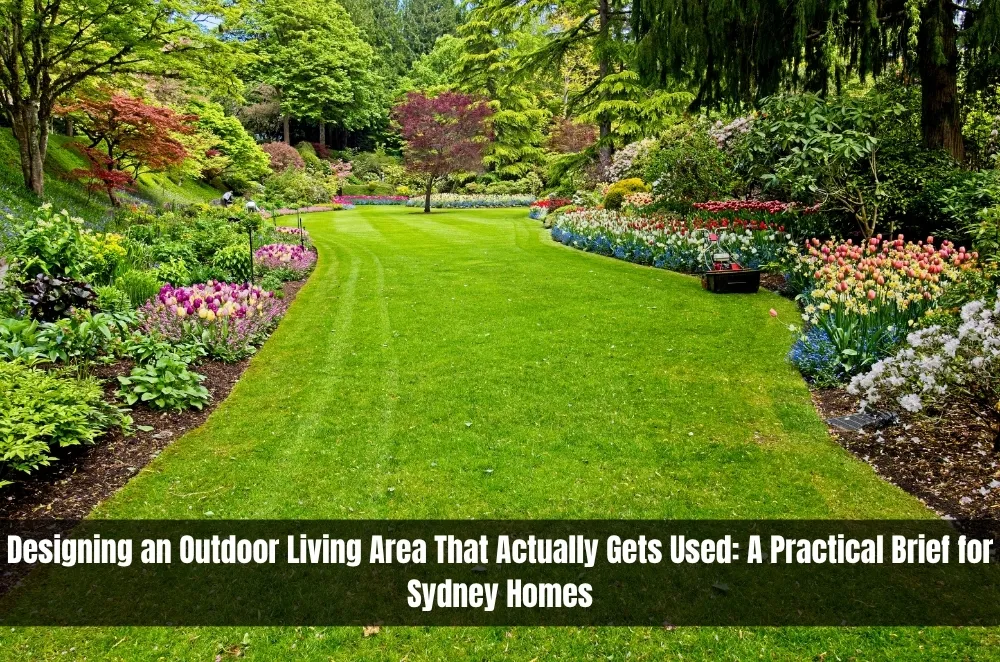

Most backyards don’t need grand redesigns — they need a space people actually step into after work. When the table is too far from the kitchen, the paving gets scorching at 3pm, or rainwater tracks muck to the door, the area sits idle. This brief covers the practical choices that make outdoor living work in Sydney without blowing the budget.
Start with use, not the look
Before choosing pavers or plants, decide what “success” looks like in plain language.
Write down the top three uses: weeknight dinners, Sunday lunch with friends, kids’ play, a quiet coffee spot, pets, or a small edible garden.
Then add the real-world constraints: privacy, wind, storage, noise, and who will look after it when everyone’s busy.
Once the priorities are clear, it’s easier to brief professional landscapers for garden upgrades without losing the practical details that make the space work day to day.
Do a fast site reality check
A quick site check saves expensive rework later.
Walk the yard at breakfast, mid-afternoon, and late day and note where sun and shade actually land (not where you hope they will).
After rain — or with a hose test — watch where water runs, where it pools, and which spots stay damp.
Measure access (gates, stairs, narrow side paths) because that affects what can be built and how materials and equipment get in.
If slope or drainage is messy, deal with it early because it quietly dictates the entire design.
Layout that feels easy to live with
Good outdoor areas are basically a few simple “zones” that connect well.
Common zones: cooking, dining, lounging, a lawn/play patch, garden beds, and a tucked-away utility/storage spot.
Keep the kitchen-to-dining route direct, wide enough for two people to pass, and not cutting across the cooking “hot zone”.
If the yard is small, shrink the number of zones, not the function—nobody enjoys dining at a table you can barely walk around.
A small bench or landing near the back door can do more for usability than another garden bed.
Surfaces and structures that don’t punish you later
Materials should suit comfort, safety, and the kind of maintenance that will actually happen.
Think about slip resistance when wet, glare in full sun, how quickly a surface dries after rain, and whether it becomes a heat trap on warm days.
If annual sealing or constant fiddling isn’t realistic, choose finishes that tolerate Sydney’s weather and normal wear.
A smaller, well-finished entertaining pad often beats a huge hardscape that feels bright, exposed, and oddly empty.
The hidden enablers: lighting, power, and water
This is where many projects feel “almost done” forever.
Start with safe movement lighting: steps, edges, and paths come before feature uplights.
Plan power needs early for cooking gear, speakers, pumps, and low-voltage lighting components, so you’re not cutting into new paving later.
Make water access convenient: a sensible tap location, an irrigation approach if needed, and a plan for keeping pots alive without constant hand-watering.
Planting that improves comfort (not just curb appeal)
Plants aren’t decoration; they’re shade, privacy, wind filtering, and temperature control.
Use layers: screening (for privacy), mid-height structure (to soften boundaries), and groundcovers (to reduce weeds and bare soil).
Pick plants that match real upkeep, not the fantasy version of spare weekends.
In Sydney conditions, “right plant, right place” usually beats chasing unusual varieties that sulk in the wrong microclimate.
Common mistakes that blow budgets and timelines
Most blowouts come from vague scope and late discoveries.
One classic mistake is locking in the layout and finishes before confirming falls and drainage, then learning water is running toward the house.
Another is underestimating access constraints—if equipment can’t get in, the build gets slower and more expensive.
People also overbuild hard surfaces and underbuild comfort, then wonder why the area isn’t used.
And the sneakiest problem: quotes that aren’t comparable because inclusions differ (excavation, spoil removal, drainage work, disposal, edging).
Decision factors: choosing a landscaper and comparing quotes
First, be honest about what kind of project it is.
Design-led projects need someone who can translate routines into zones, circulation, and a staged plan.
Construction-led projects need strong capability in base preparation, falls, retaining, and detailing, because finishes only look good when the groundwork is right.
Problem-led projects (water, levels, drainage) need the “invisible” work solved first, even if it’s not the fun part.
When comparing quotes, check you’re comparing the same scope: demolition, excavation, spoil removal, base prep, drainage, edging, disposal, and who supplies what.
Ask what assumptions were made and what changes if site conditions differ once digging starts—because they often do.
If it helps to see what a typical scope includes before requesting quotes, the creative landscapers for outdoor living areas can be a useful reference for shaping a clear project brief.
A solid provider will also talk through trade-offs without drama: cost vs longevity, speed vs disruption, and what to prioritise if the budget has a ceiling.
A simple first-actions plan (next 7–14 days)
Days 1–2: Write your three main uses, then split ideas into must-haves vs nice-to-haves.
Days 3–4: Map sun/shade and water movement; take photos from doorways and key viewpoints.
Day 5: Sketch zones with rough sizes and mark walking routes (even a messy sketch helps).
Day 6–7: Decide maintenance tolerance and shortlist surface/structure preferences.
Week 2: Turn everything into a one-page brief and request quotes against that same brief.
If drainage, retaining, or levels are involved, schedule that work first and treat finishes as layer two.
Operator experience moment
A pattern that shows up often is people pushing the entertaining area to the far corner “so it’s out of the way”, then barely using it because it’s inconvenient.
When dining and cooking sit closer to the back door, the space gets used on regular weeknights, not just special occasions.
Clear priorities up front also reduce mid-project changes when the ground tells the truth.
Local SMB mini-walkthrough (Sydney example)
A smaller Sydney block often has limited side access and neighbours close by.
Start with a compact dining zone near the back door so serving and clean-up stay simple.
Add privacy with layered planting or a lightweight screen rather than one tall “instant fix”.
Set falls and drainage to move water away from the house and low points.
Choose surfaces that cope with wet shoes near thresholds and steps.
Stage planting so it functions immediately, then softens and shades the space over time.
Practical Opinions
Fix drainage and levels before paying for premium finishes.
Keep dining closer than you think; convenience drives use.
Choose materials for the maintenance you’ll actually do.
Key Takeaways
- Start with real routines, then build zones and movement around them.
- Confirm sun, slope, drainage, and access early because they dictate the build.
- Compare quotes only when scope and inclusions clearly match.
- Comfort comes from shade, privacy, lighting, and layout—not just hard surfaces.
Common questions we hear from Australian businesses
How close should the entertaining area be to the back door?
Usually closer works better, because convenience decides whether it gets used on ordinary nights. A practical next step is to do a “tray test” from kitchen to table and see where the walk feels annoying or unsafe. In many Sydney homes, sudden rain makes shorter, well-lit routes a lot more forgiving.
What should be decided before requesting quotes?
In most cases, a one-page brief (zones, materials preferences, drainage/level notes, access constraints) produces clearer quotes and fewer assumptions. The next step is to list inclusions like excavation, spoil removal, base prep, and disposal so nothing is missing. Around NSW, drainage often stops being optional after a few heavy rain events.
Is it better to build in stages?
It depends on budget, disruption tolerance, and whether major groundwork is required. A good next step is to separate “make it usable” (falls, safe paths, a stable entertaining surface, basic lighting) from “make it lush” (full planting and finishing touches). In Sydney, staging can also help time planting for better seasonal conditions.
How do you balance low maintenance with a natural look?
Usually the answer is fewer plant varieties, stronger structural planting, and groundcovers that suppress weeds, paired with surfaces that don’t need constant upkeep. The next step is to be honest about watering and pruning time, then choose plants to match that reality. In many Sydney suburbs, heat and reflected glare can punish high-maintenance choices, so placement matters as much as plant selection.





















Sign in to leave a comment.