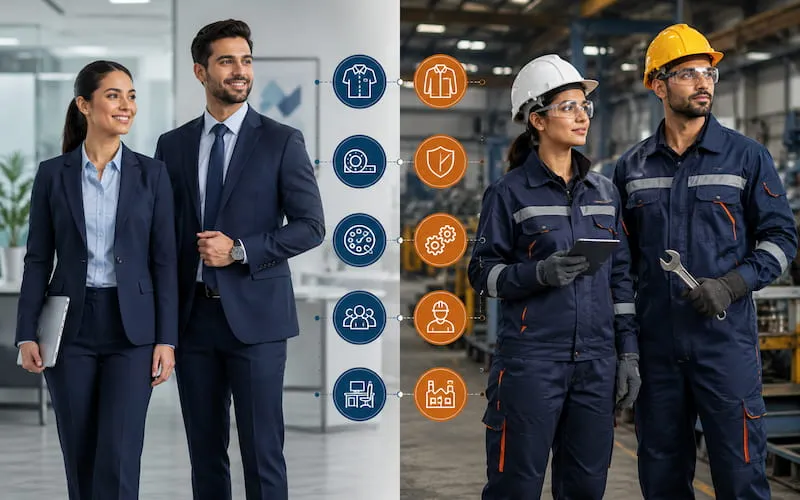

Choosing the right work attire is more than just following a dress code. The way your employees dress influences safety, performance and the perception of your brand. It is important to know the differences between Corporate and Industrial Uniforms which is crucial to any business. Reputable Uniform Suppliers in Dubai like Futuremind Uniforms offer customized services to satisfy the needs of individual office groups and industrial workers and to keep each employee in a professional appearance but in a safe and comfortable manner.
Regardless of the fact that your employees are sitting in a contemporary office or work in a factory, the kind of professional clothes you offer depicts the image and principles of your company. Corporate clothing focuses on a sophisticated, professional appearance, facilitating uniformity of the brand. The industrial workwear is aimed at protection, durability and comfort as well as enable the employees to work in physically demanding environments. The realization of these differences will enable businesses to choose the clothing that will not only boost employee satisfaction but also productivity.

Understanding the Difference between Corporate and Industrial Uniforms
1. Purpose and Function
Corporate and Industrial Uniforms are used to different purposes. Corporate clothes are made to give the impression of professionalism to the employees who are in offices, customer service and managerial roles. It emphasizes on sophistication, uniformity and solidification of brand identity. Industrial clothing, on the other hand, emphasizes on the safety and functionality of the employees. Employees at warehouses, manufacturing facilities, or construction sites require workwear that safeguards them against the possible dangers such as chemicals, heat, machinery or sharp objects. The objective is straightforward: business attire makes one look professional and industrial garments can provide protection and productivity.
2. Material and Fabric
Corporate and industrial workwear are different in terms of the material used. Office attire is usually composed of lightweight clothes that are breathable such as cotton, polyester or combinations, and are comfortable to wear over an extended period in the office. The apparel of the industrial teams, on the other hand, is made of hardy materials like canvas, denim, or flame-resistant materials. These fabrics are made to resist wear and tear, damage by harsh working conditions and they adhere to safety requirements. The choice of materials provides comfort and durability, depending on the conditions under which the employee has to perform his duties.
3. Design and Appearance
Corporate business clothing is aesthetically oriented. Custom made shirts, blazers, skirts, trousers and matching accessories such as ties or scarves form a unified and professional team image. Clothing in industries is functional and does not focus on looks. Reinforced stitching, a variety of pockets, adjustable fits, and high-visibility panels are among the features that will help employees to work safely and efficiently. Whereas style is a consideration in corporate wear, practicality and safety characterize industrial wear.
4. Safety Features
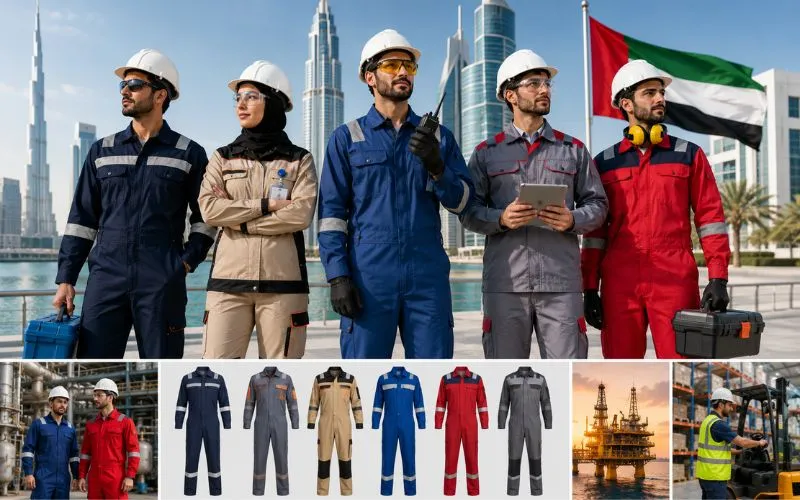
Among the key differences is safety. The industrial workwear usually comes with flame resistant clothes, reinforced pads, reflective strips or chemical resistant coatings to reduce the chances of accidents at the workplace. The features are essential in dangerous conditions. Such safety measures are not often included in corporate attire since the office is usually a risk-free place. Companies should take into account the type of work in order to give the right protective garments to their workers.
5. Maintenance and Durability
The maintenance requirements between the corporate and industrial clothing are very different. Office clothing needs frequent cleaning, ironing and at times dry cleaning to keep it in a professional look. Industrial work wear is however designed to be washed many times and used heavily without compromising in integrity. Industrial apparel is durable with reinforced stitches, tough fabrics and hardy finishes. High quality workwear would help in saving the expenses of replacement and at the same time help in keeping the employees safe and comfortable during their working hours.
6. Branding and Customization
Both types of attire are significant in branding, albeit in a different way. Corporate clothing is designed with slight elements of design like logos, embroidery or company colors to ensure a professional image and to strengthen brand identity. Industrial team apparel is a combination of branding and safety. The use of bright colors, big logos, reflective strips and custom fitting aids in the identification of teams and enhancing visibility in a crowded or risky working environment. These two styles of clothing convey brand values and fit in with the environment and employee requirements.
7. Comfort and Fit
Comfort is key in any workplace. Professional business wear is concerned with a fitted style whereby the employees can feel comfortable in meetings, presentation and when dealing with clients. Industrial clothing is designed with an emphasis on ergonomics, ventilation and freedom of movement. Industrial work wear is fitted accordingly and this minimizes strain and fatigue which enhances productivity in physically demanding jobs. Comfortable clothes in office and industrial environment have been shown to bring satisfaction, engagement and performance to employees.
8. Cost Considerations
Corporate attire is more focused on appearance however industrial workwear is usually more expensive to produce because it is made of durable materials and is safer. Companies ought to strike a balance between cost and features, excellence and durability. The appropriate professional clothes or workwear investment guarantees the employees that they have the right equipment to work in their environment, minimize accidents in the workplace and minimize changing of the equipment which is a cost saving strategy in the long-term.
9. Versatility and Usage
Corporate attire or clothing is mostly appropriate in an indoor office setting or in a client facing position. Industrial workwear is multi-purpose and can be used in various industrial activities such as operating heavy machinery, construction and managing warehouses. Other companies also offer a hybrid clothing to employees who divide their days between the office and the field. Wearing suitable attire that is appropriate to the workplace enhances work efficiency, safety and comfort to the employee.
Conclusion
Knowing the differences between the Corporate and Industrial Uniforms enables businesses to equip their workforce with the right uniforms. Corporate wear is used to achieve professionalism, style and branding whereas industrial workwear is used to achieve durability, safety and functionality. Working with reputable suppliers such as Futuremind Uniforms and other reputable Uniform Suppliers will ensure that each employee is provided with the appropriate team apparel to their job. Dressing correctly is not only a policy but an investment in both safety and productivity as well as your brand identity.



























Sign in to leave a comment.