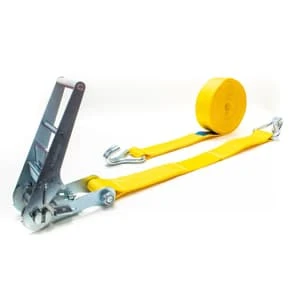

Securing loads safely and efficiently is a key requirement in transport, construction, warehousing, and many other industries. ratchet straps are widely used because they provide strong, adjustable tension that helps keep loads stable during movement or storage. While they may appear similar at first glance, there are several different types available, each designed for specific applications and load requirements. Understanding these variations helps users choose the most suitable option for their needs.
Each type of ratchet strap differs in strength, design, and intended use. Factors such as load weight, environment, and attachment points influence which strap performs best. By learning how these types differ, operators can improve safety, protect cargo, and ensure more reliable load restraint.
Standard Ratchet Straps
Standard ratchet straps are among the most commonly used load securing tools. They are typically made from durable polyester webbing and include a ratcheting mechanism that allows users to tighten the strap incrementally. These straps are suitable for general purpose applications such as securing goods on trailers or vehicles.
Their versatility makes them a popular choice for everyday tasks. They offer a balance between strength and ease of use, making them ideal for light to medium duty loads where consistent tension and reliability are required.
Heavy Duty Ratchet Straps
Heavy duty ratchet straps are designed for larger and heavier loads. They are manufactured with wider and thicker webbing to increase strength and reduce stretching under pressure. These straps are often used in industrial transport, construction, and equipment hauling.
Because of their higher load capacity, heavy duty options provide greater security for demanding applications. They are particularly useful when transporting machinery, vehicles, or bulky materials that require maximum stability during movement.
Endless Ratchet Straps
Endless ratchet straps feature a continuous loop of webbing without hooks or end fittings. This design allows the strap to wrap completely around a load, making it useful for bundling items together or securing cylindrical objects.
These straps are commonly used in warehouses and storage areas where loads need to be compressed rather than anchored to a vehicle. Their simple structure reduces the risk of hardware damage and provides even pressure around the load.
E Track Ratchet Straps
E track ratchet straps are designed to work with E track rail systems commonly found in enclosed trailers and cargo vans. Instead of hooks, these straps use fittings that lock directly into the track, creating a secure and adjustable anchor point.
This type of strap allows for flexible load positioning along the rail system. It is especially useful in logistics and freight transport where loads vary in size and need to be secured quickly and efficiently.
Cam Buckle Straps Compared to Ratchet Straps
Cam buckle straps are sometimes considered alongside ratchet straps due to their similar purpose. However, they rely on a spring loaded cam mechanism rather than a ratchet. This makes them quicker to adjust but limits their load capacity.
While cam buckle options are suitable for lighter loads, ratchet mechanisms provide greater tension and security. Understanding this difference helps users choose the right solution based on load weight and safety requirements.
Specialty Ratchet Straps for Specific Uses
Some ratchet straps are designed for specialized applications such as vehicle transport or delicate cargo handling. These may include protective sleeves, soft loops, or rubber coated hooks to prevent damage to surfaces.
Specialty designs address unique challenges that standard straps may not handle effectively. Choosing the right specialty option ensures both load security and protection, particularly when working with sensitive or high value items.
Conclusion
Ratchet straps come in a variety of types, each suited to different load securing needs and environments. From standard and heavy duty designs to endless and track based options, understanding their differences helps users make safer and more effective choices. Selecting the correct strap improves load stability, reduces risk, and supports efficient operations. For access to quality load securing solutions and professional guidance, UK Lifting Store is a reliable name to consider.



























Sign in to leave a comment.