Urban Redevelopment and Spatial Renewal in Contemporary India
As Indian cities confront pressures of density, aging infrastructure, and fragmented planning, urban redevelopment has emerged as a preferred mode of spatial regeneration. Particularly in land-constrained economic hubs such as Gurgaon, the replacement of old housing with vertical residential typologies presents both opportunity and complexity. One such case is DLF The Icon, a residential redevelopment project in Gurgaon Sector 43, which serves as a contemporary example of how private real estate can intersect with larger urban renewal agendas.
This article evaluates DLF The Icon not as a standalone luxury housing initiative, but as a spatial transformation project embedded in questions of land use, density, sustainability, and governance. It considers the project’s architectural rationale, infrastructure provisioning, socio-economic context, and planning outcomes.
The Rationale for Redevelopment
The transformation of previously low-rise or mid-rise housing into high-rise towers is a central feature of Gurgaon’s urban evolution. In the case of DLF The Icon, the redevelopment responds to the obsolescence of earlier built stock, limitations in utility servicing, and the need to maximize urban land within master-planned sectors.
This form of vertical intensification is positioned as an alternative to urban sprawl. It allows higher floor area ratios (FAR), expanded communal services, and improved transport connectivity all within the existing city grid. Unlike greenfield development, which involves virgin land and often poor integration with civic networks, projects like DLF The Icon claim spatial continuity and infrastructural efficiency.
Architectural and Infrastructure Features
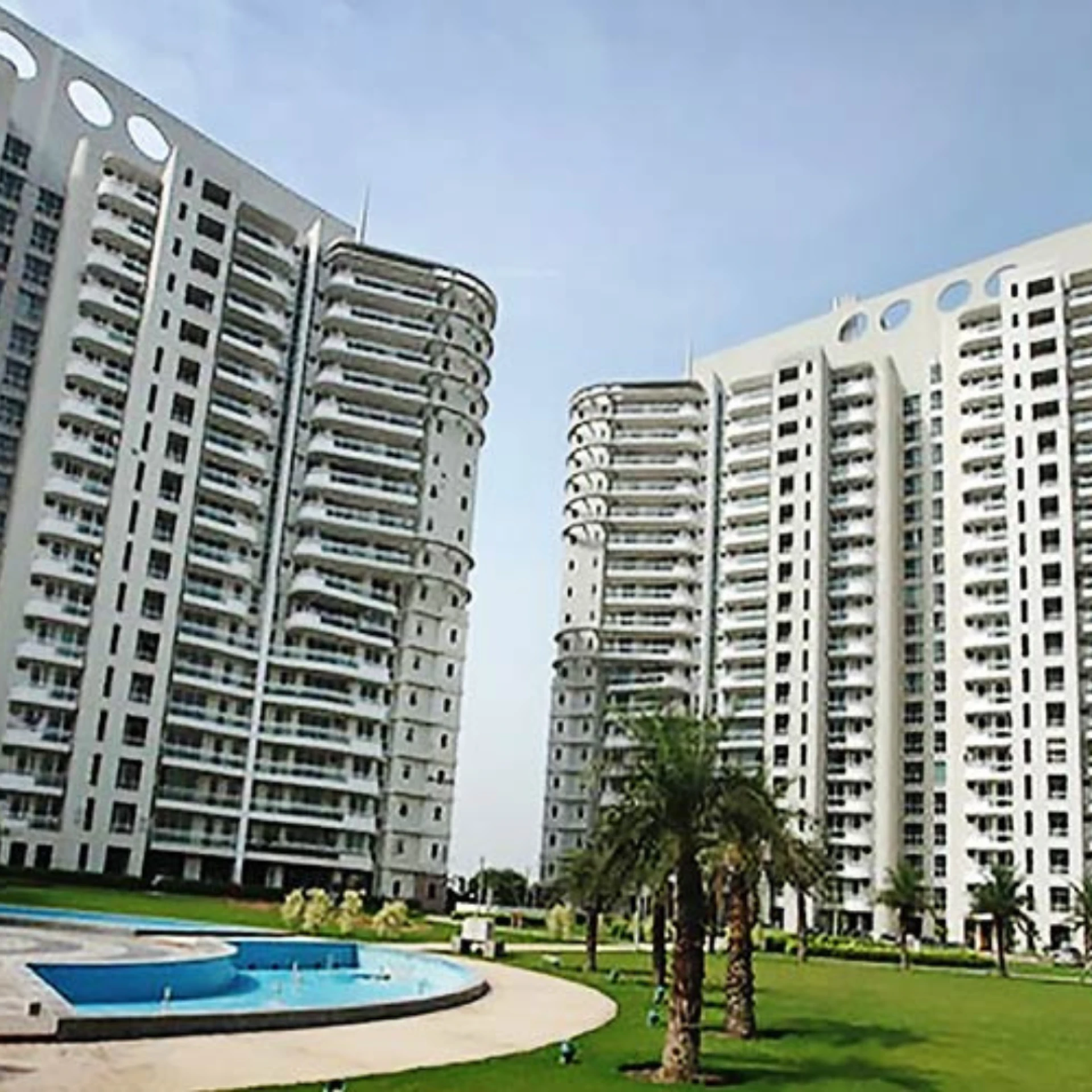
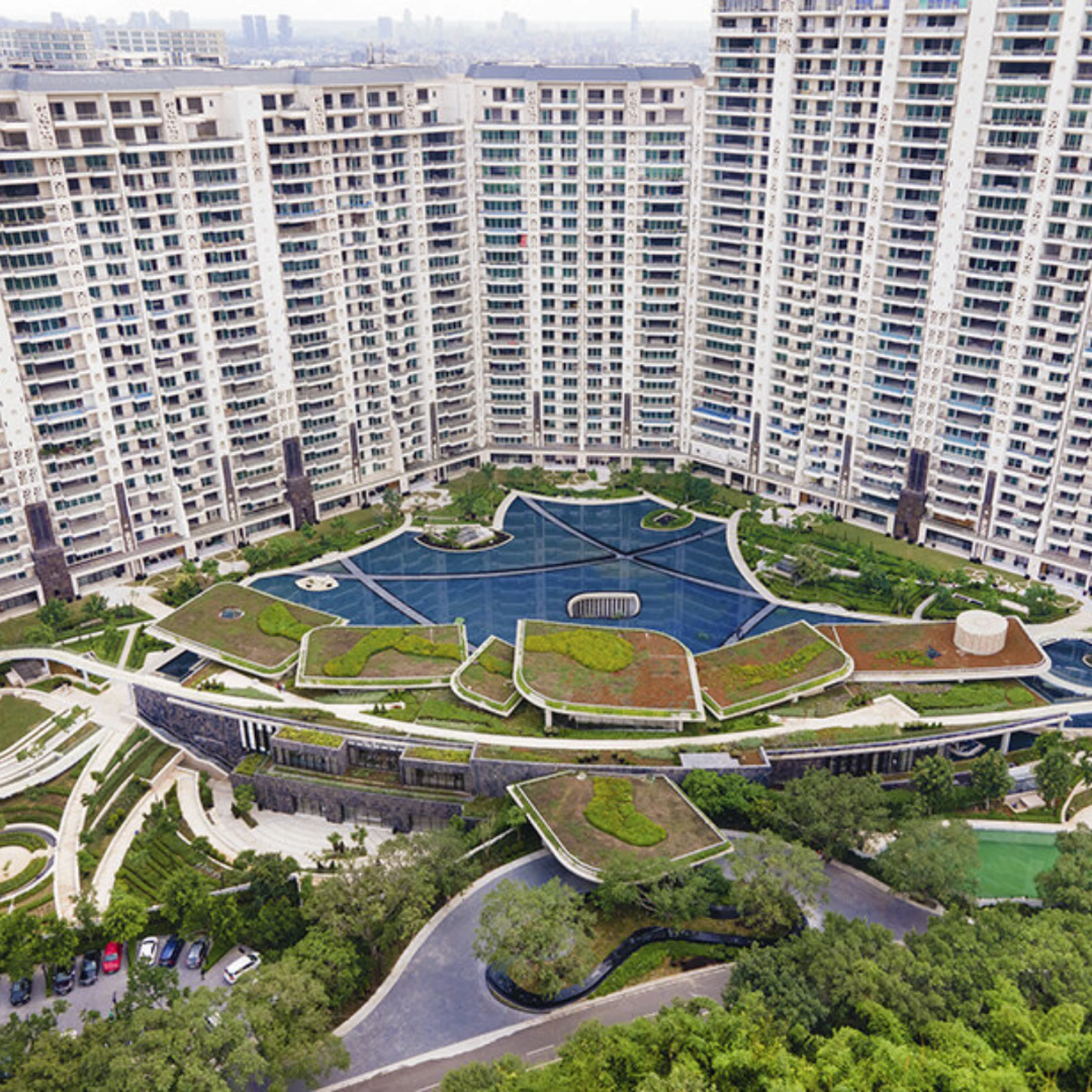
The architectural vocabulary of DLF The Icon reflects a shift toward high-density residential environments with vertically stacked apartments, shared amenity cores, and underground service infrastructure. The site plan integrates:
- High-rise residential towers with earthquake-resistant design.
- Dedicated service corridors and waste management systems.
- Landscaped public areas with layered pedestrian and vehicular zones.
- Water conservation, sewage treatment, and energy-efficient lighting systems.
Importantly, the project attempts to reconcile luxury specifications with regulatory compliance, ensuring alignment with Haryana’s urban development policies and environmental impact norms.
Socio-Spatial Implications
The transformation of older residential layouts into gated vertical enclaves raises questions about socio-spatial equity. Projects such as DLF The Icon may improve internal service delivery and safety, but can also intensify privatization of urban space, limit permeability, and increase socio-economic segmentation.
However, it is worth noting that the inclusion of pre-existing residents (via buyback schemes or allotments) attempts to address displacement, a common criticism in redevelopment. The project’s proximity to educational institutions, commercial hubs, and metro connectivity places it within a high-value urban node, further shaping its demographic and land value profile.
Urban Policy and Planning Considerations
The larger significance of DLF The Icon lies in its representation of a model that is being increasingly institutionalized through urban policy, namely, incentivized redevelopment with high FAR, vertical integration, and private-sector participation.
While such models offer efficiency, they require a corresponding public sector capacity to manage externalities such as traffic generation, stress on drainage systems, and ecological imbalance. The replicability of this model across the National Capital Region (NCR) demands better inter-agency coordination, monitoring, and long-term maintenance frameworks.
Comparative Typologies in Urban Redevelopment
When positioned against similar high-density residential redevelopments in India such as Lodha's projects in Mumbai, Prestige Group in Bangalore, or Tata Housing initiatives in Pune, DLF The Icon represents a particularly North Indian iteration of the vertical township. Unlike Mumbai's SRA-based verticalization or Bengaluru's IT-led apartment boom, Gurgaon’s redevelopment logic is rooted in master-planned sectors, wide arterial roads, and adjacent institutional land parcels.
This planning background offers greater flexibility in site planning, building heights, and layout design. The Gurgaon model also enables a degree of aesthetic and infrastructural experimentation that is difficult to achieve in older, organically developed cities. In this context, DLF The Icon gains relevance not merely for its real estate typology, but for its spatial autonomy within a controlled planning environment.
Design Language and Urban Identity
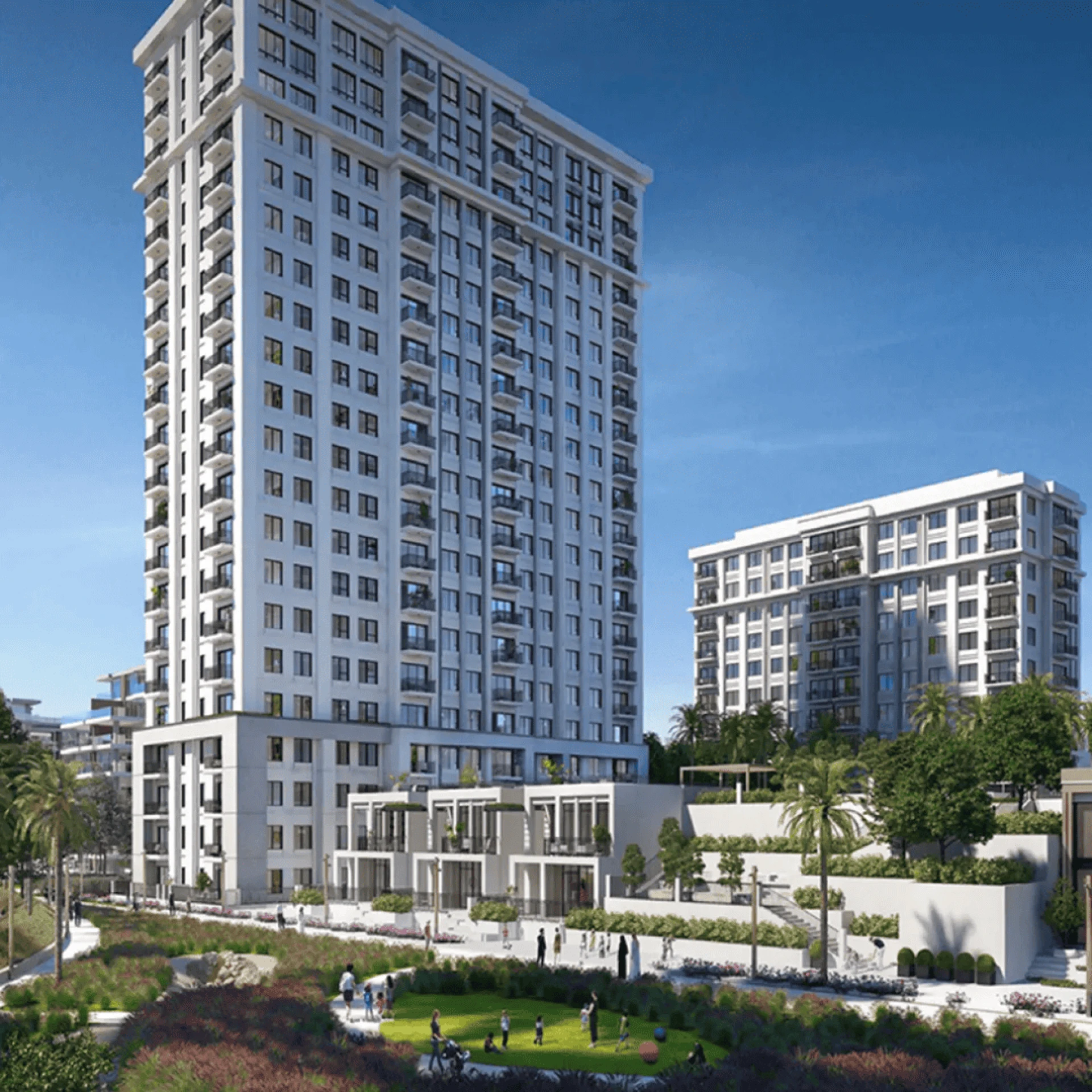
The architectural character of DLF The Icon, glass-clad facades, rectilinear balconies, and landscaped podiums reflects a globalised visual language common in upper-tier housing projects. This approach, while visually contemporary, often leads to the homogenisation of city skylines. The pursuit of visual coherence and luxury branding can diminish local architectural vernacular, potentially erasing context-sensitive design principles.
However, such design decisions also stem from consumer expectations, where floor-to-ceiling glazing, club lounges, and climate-responsive landscaping are seen as baseline requirements. This raises an important tension between market aesthetics and architectural responsibility, especially in a region as climatically demanding as Gurgaon.
Future redevelopment efforts in the city could benefit from a recalibration of design templates that blend market competitiveness with climate performance and cultural identity.
Infrastructure Synchronisation and Risk
A frequently overlooked aspect of private redevelopment projects like DLF The Icon is their dependency on external civic infrastructure. Roads, drainage, electricity supply, and waste management beyond the project boundary are often managed by public agencies. If external systems remain un-upgraded or inconsistently maintained, even the best-designed gated communities can experience functional inefficiencies.
For instance, high-rise towers demand significant water pressure, load-bearing drainage, and a consistent electricity grid, none of which can be solved through internal design alone. The need for synchronised infrastructure planning between private developers and public utilities is, therefore, paramount.
DLF’s long-standing presence in Gurgaon allows for some institutional familiarity with the municipal ecosystem, but such coordination remains an ongoing concern for redevelopment viability across Indian cities.
Future Trajectories in Policy and Regulation
The redevelopment approach embodied by DLF The Icon will likely become a reference point for urban planning frameworks in NCR and beyond. However, for this model to be sustainable and equitable, regulatory bodies must address several policy gaps:
- Incentive Structures: FAR bonuses and tax breaks must be carefully calibrated to avoid hyper-density and ecological degradation.
- Public Access: Gated developments should be evaluated for their impact on street-level vitality, permeability, and inclusive urbanism.
- Tenant Rights: Clearer legal mechanisms are needed to protect tenants and non-owning residents during the redevelopment process.
Planning authorities may also consider embedding mandatory social impact assessments, post-occupancy evaluations, and disaster resilience audits into redevelopment approvals. These tools can ensure that urban renewal does not merely reflect capital-led growth but aligns with long-term public interest.
Evaluating the Model of Redevelopment and Its Viability
DLF The Icon exemplifies a typology of urban redevelopment that prioritizes vertical growth, compact living, and integrated infrastructure. As Indian cities expand under constrained geographies and rising population densities, such projects may serve as precedents provided they are accompanied by transparent governance and long-term public utility planning.
For scholars, planners, and developers examining sustainable urban futures, the case of DLF The Icon offers a concrete lens through which to analyze policy execution, design rationality, and lived spatial outcomes. Further research may examine resident satisfaction, lifecycle costs, and environmental performance post-occupancy.
Those interested in urban transformation models or sector-specific redevelopment in the NCR may consider visiting the site or reviewing official regulatory filings for technical insight. Do not waste any more time and visit dlf developer today.
Frequently Asked Questions (FAQs)
1. Is DLF The Icon a greenfield or redevelopment project?
It is a redevelopment project, transforming an older residential site into a modern high-rise gated complex.
2. How does it address environmental concerns?
The project incorporates rainwater harvesting, STP systems, energy-efficient lighting, and green landscaping in compliance with state norms.
3. Are the original residents accommodated?
Typically, redevelopment agreements include provisions for existing allottees, but terms vary case by case. Public records may offer more detail.
4. What regulatory body oversees the project?
The project falls under the jurisdiction of Haryana Real Estate Regulatory Authority (HRERA), and must comply with local planning authority guidelines.
5. Does DLF The Icon influence planning trends in Gurgaon?
Yes. It reflects a broader shift toward high-density, mixed-use, and vertical redevelopment in planned sectors of the city.




























Sign in to leave a comment.