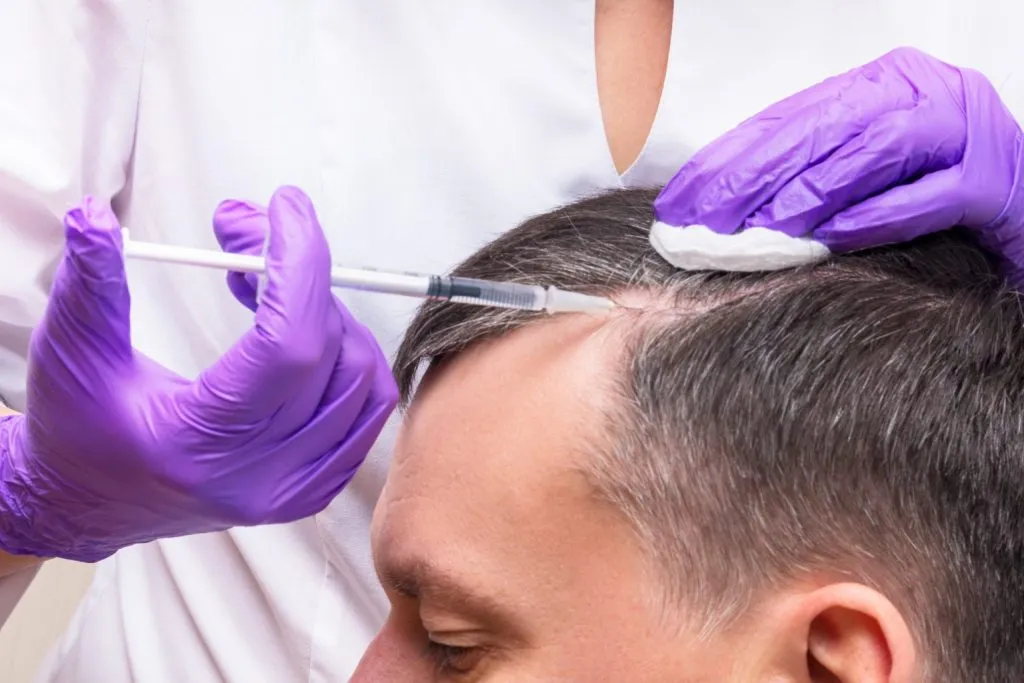

Yes, PRP hair treatment can help some people experiencing early hair loss by supporting healthier hair growth and improving hair density. The treatment uses concentrated platelets taken from your own blood, which contain growth factors that may help stimulate hair follicles. PRP is often most effective when hair thinning is identified early, before significant follicle damage has occurred. While results vary between individuals, many patients choose PRP hair treatment as a non-surgical option to help slow hair loss and support natural hair growth.
Hair thinning is a concern that affects both men and women. For many people, the first signs include increased shedding, reduced hair density, or a widening parting line. Acting early is often important because treatments tend to work better when hair follicles remain active.
What Is PRP Hair Treatment?
PRP hair treatment stands for Platelet-Rich Plasma therapy.
The treatment involves:
- Taking a small sample of your blood
- Processing it to concentrate the platelets
- Injecting the platelet-rich plasma into targeted areas of the scalp
Platelets contain growth factors that play a role in tissue repair and healing. The goal of treatment is to create a healthier environment for existing hair follicles.
Why Does Early Hair Loss Matter?
Hair loss is often progressive.
In the early stages, follicles may still be active but produce thinner, weaker hairs.
Over time, some follicles can become dormant or stop producing visible hair altogether.
This is why many clinicians recommend assessing hair loss early rather than waiting until significant thinning has occurred.
Who May Benefit from PRP Hair Treatment?
PRP is commonly considered for individuals experiencing:
- Early male pattern hair loss
- Female pattern hair thinning
- General hair shedding
- Reduced hair density
- Thinning around the crown or hairline
The treatment is generally designed to support existing hair follicles rather than regrow hair in completely bald areas.
How Does PRP Support Hair Growth?
Although research is ongoing, PRP is believed to work by delivering growth factors directly to the scalp.
These growth factors may help:
- Support follicle function
- Improve scalp health
- Encourage healthier hair growth cycles
- Increase hair thickness
- Improve overall hair density
Because PRP uses material from your own blood, it is often described as a regenerative treatment approach.
When Can You Expect Results?
PRP is not an overnight solution.
Hair growth naturally occurs in cycles, which means improvements take time.
Many patients begin noticing changes after several months, although timelines vary.
Potential improvements may include:
- Reduced hair shedding
- Increased hair thickness
- Better hair density
- Improved hair quality
A series of treatments is often recommended rather than a single session.
Is PRP Better Than Hair Transplant Surgery?
These treatments serve different purposes.
A hair transplant physically moves hair follicles from one area to another.
PRP aims to support existing follicles and encourage healthier growth.
For patients with early-stage thinning, PRP may be considered before surgical options are explored.
Why Is a Proper Assessment Important?
Not all hair loss has the same cause.
Hair thinning can result from:
- Genetics
- Hormonal changes
- Nutritional deficiencies
- Stress
- Medical conditions
A detailed assessment helps determine whether PRP is likely to be appropriate and whether further investigation may be required.
What Are Realistic Expectations?
One of the most important aspects of any hair restoration treatment is understanding what it can and cannot achieve.
PRP may help:
- Improve hair density
- Support healthier hair growth
- Slow ongoing hair thinning
However, it is not guaranteed to restore all lost hair, and results vary from person to person.
Patients with realistic expectations are often better positioned to evaluate treatment success.
Conclusion
PRP hair treatment may be a valuable option for people experiencing early hair loss who want a non-surgical approach to supporting hair growth. By using growth factors from your own blood, the treatment aims to create a healthier environment for hair follicles and improve overall hair density. While results are not immediate and vary between individuals, early intervention and proper assessment can play an important role in achieving the best possible outcome.
Frequently Asked Questions
Is PRP hair treatment suitable for both men and women?
Yes. PRP is commonly used for both male and female pattern hair thinning, depending on individual suitability.
How many PRP sessions are usually needed?
Treatment plans vary, but most patients require a series of sessions followed by maintenance treatments.
Does PRP hair treatment hurt?
Most patients tolerate treatment well. Some mild discomfort may occur during the injections.
Can PRP regrow hair in completely bald areas?
PRP is generally more effective for thinning hair where active follicles are still present.
How long does it take to see PRP hair treatment results?
Hair growth occurs gradually, and noticeable improvements often take several months to develop.




























Sign in to leave a comment.