
Hair loss can affect confidence in ways many people do not expect. For some, it starts with a wider parting, more hair in the shower, or noticing that the hair feels thinner than it used to. For others, it becomes more obvious with visible scalp areas or reduced hair density over time.
This is often when patients start looking into PRP hair treatment as a non-surgical option.
Over the last few years, PRP for hair loss has become increasingly popular among patients who want to improve hair density, support scalp health, and slow down early hair thinning without medication or surgery.
But does it actually work?
The answer depends on the cause of hair loss, the health of the hair follicles, and whether treatment starts early enough.
What Is PRP Hair Treatment?
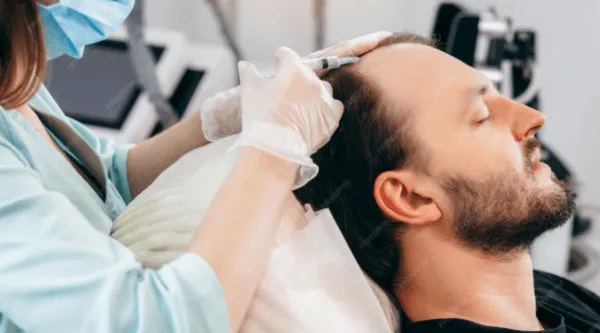
PRP hair treatment, also known as platelet rich plasma hair treatment, uses a small sample of your own blood to help support hair follicle activity.
The process starts by taking a blood sample, usually from your arm. The blood is then processed to separate the platelet-rich plasma, which contains natural growth factors.
This plasma is then carefully injected into targeted areas of the scalp.
The goal of hair PRP treatment is to stimulate weaker hair follicles, improve scalp circulation, and support healthier hair growth over time.
Because your own blood is used, many patients see this as a more natural hair restoration treatment option.
How Does PRP for Hair Loss Work?
Hair follicles can become weaker over time for many reasons, including genetics, hormonal changes, stress, ageing, or general scalp health.
The growth factors found in platelet-rich plasma may help by supporting:
- Hair follicle stimulation
- Improved scalp circulation
- Better scalp tissue health
- Support for new hair growth
- Improved hair density over time
This does not usually create overnight results. Hair growth is naturally slow, so improvements often happen gradually.
That said, patients who begin PRP for hair loss early often see better outcomes than those who wait until hair loss becomes more advanced.
Who Is PRP Hair Treatment Best For?
PRP hair treatment may be suitable for patients experiencing:
- Early hair thinning
- Increased hair shedding
- Male pattern hair loss
- Female hair thinning
- Reduced hair density
- Weak or slow-growing hair
It tends to work best when the hair follicles are still active.
If follicles have completely stopped producing hair, other hair restoration treatment options may need to be discussed.
A consultation at a trusted medical aesthetic clinic can help identify whether PRP is likely to be beneficial.
What Happens During Treatment?
Most hair PRP treatment sessions are straightforward and usually completed within 45 to 60 minutes.
The process usually includes:
- Medical consultation and scalp assessment
- Blood collection
- Plasma separation
- Targeted scalp injections
Some patients describe the injections as mildly uncomfortable, but treatment is generally well tolerated.
There may be slight scalp tenderness or redness afterwards, but this usually settles quickly.
How Many PRP Sessions Are Needed?
This depends on the level of hair thinning, scalp health, and treatment goals.
Many patients start with an initial course of 3 to 4 sessions, spaced several weeks apart.
After that, maintenance treatments may be recommended depending on response.
Hair growth cycles take time, so patience is important.
Most patients begin noticing changes in hair texture, reduced shedding, or improved density after several months.
Does PRP Hair Treatment Really Work?
For the right patient, yes.
PRP hair treatment can help support healthier hair growth, improve scalp health, and slow down early thinning.
It is not a miracle treatment, and it will not work the same way for everyone.
The best results usually come from:
- Early treatment
- Consistent sessions
- Healthy scalp condition
- Realistic expectations
- Professional treatment planning
Some patients also combine PRP with other scalp or skin regenerative treatments depending on their goals.
Are Results Permanent?
No hair treatment is usually permanent, especially when hair loss is linked to genetics or hormones.
PRP for hair loss often works as an ongoing maintenance treatment rather than a one-time fix.
Maintenance sessions can help support long-term results.
Without maintenance, the hair may gradually return to its natural shedding pattern over time.
Conclusion
For patients dealing with thinning hair, early shedding, or reduced hair density, PRP hair treatment can be a useful non-surgical option.
It works by using your body’s own growth factors to support scalp health and stimulate weaker follicles.
The best results usually come from early treatment, realistic expectations, and proper assessment at an experienced medical aesthetic clinic.
Frequently Asked Questions
Is PRP hair treatment painful?
Most patients describe it as manageable. You may feel mild discomfort during the scalp injections.
How soon does PRP for hair loss work?
Hair growth takes time. Most patients start noticing changes over several months.
Can women have hair PRP treatment?
Yes. Hair PRP treatment can be suitable for both men and women experiencing hair thinning.
How long do PRP hair results last?
Results vary, but maintenance treatments are often needed to support long-term improvement.

























Sign in to leave a comment.