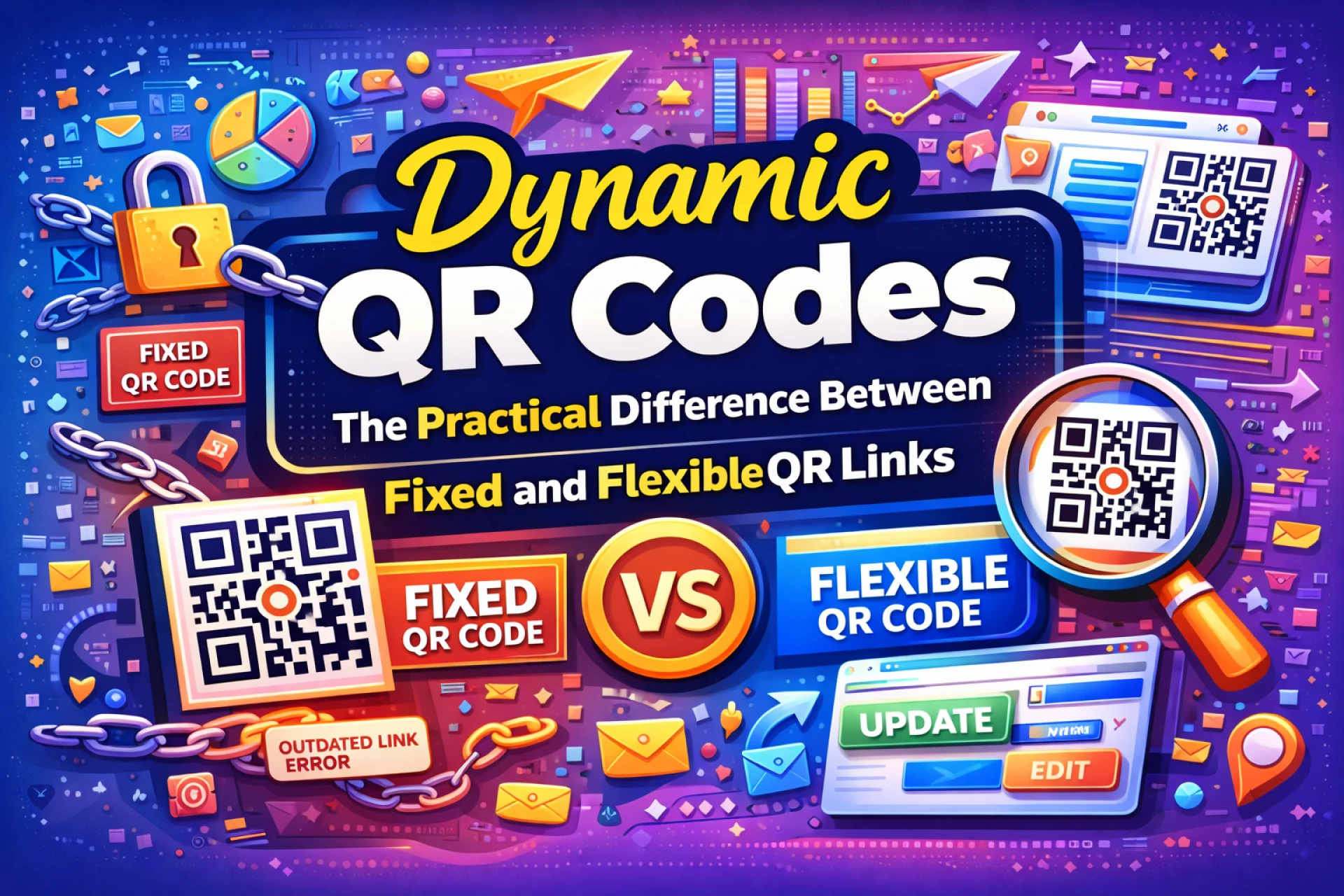

QR codes are often created with the assumption that nothing will change after printing. In reality, links get updated, pages move, and campaigns evolve. When a QR code can’t adapt to those changes, it quickly loses value.
This is where dynamic QR codes offer a more practical approach compared to traditional static QR codes.
How Dynamic QR Codes Work
A static QR code stores its destination directly inside the code. Once generated, it cannot be modified.
A dynamic QR code works indirectly. It points to a redirect that leads users to the final destination. That redirect can be changed at any time without altering the QR code itself.
The QR code remains the same, but the content behind it can be updated as needed.
Why Flexibility Is Important
Flexibility becomes critical when QR codes are printed on materials that are difficult or expensive to replace.
Common examples include:
- printed marketing materials
- menus or signage
- product packaging
- business cards or labels
If a destination link changes, a dynamic QR code allows the update to happen instantly without reprinting anything.
Tracking Makes QR Codes More Useful
Dynamic QR codes also provide insight into how they are used. Instead of guessing whether people scan a code, you can see basic scan activity such as frequency and timing.
This information helps determine:
- whether a QR code placement is effective
- when people interact with it
- which campaigns generate interest
Tracking turns QR codes into a measurable tool rather than a blind shortcut.
Using One QR Code for Multiple Purposes
Because dynamic QR codes can be updated, they are well suited for ongoing or rotating use.
They can support:
- campaign changes over time
- seasonal content updates
- testing different landing pages
- long-term printed materials
Rather than generating a new QR code for each change, the same code can remain active while the destination evolves.
When Dynamic QR Codes Are the Better Choice
Dynamic QR codes are typically the better option when:
- the destination may change in the future
- scan data is important
- the QR code is printed long-term
- the QR code supports marketing or communication goals
Static QR codes still work well for permanent, unchanging information, but dynamic codes are more adaptable in real-world scenarios.
Creating Dynamic QR Codes
Dynamic QR codes are usually created and managed through a platform that allows destination updates and basic tracking. The setup process varies, but the underlying concept remains the same.
Tools such as https://generate-qr-code.com are designed for QR codes that need to remain flexible and useful beyond their initial creation.
Conclusion
Dynamic QR codes provide a practical solution to a common problem: change. By allowing edits, tracking, and reuse, they extend the usefulness of QR codes long after they are printed.
For projects where flexibility matters, dynamic QR codes offer a more sustainable and adaptable option.































Sign in to leave a comment.