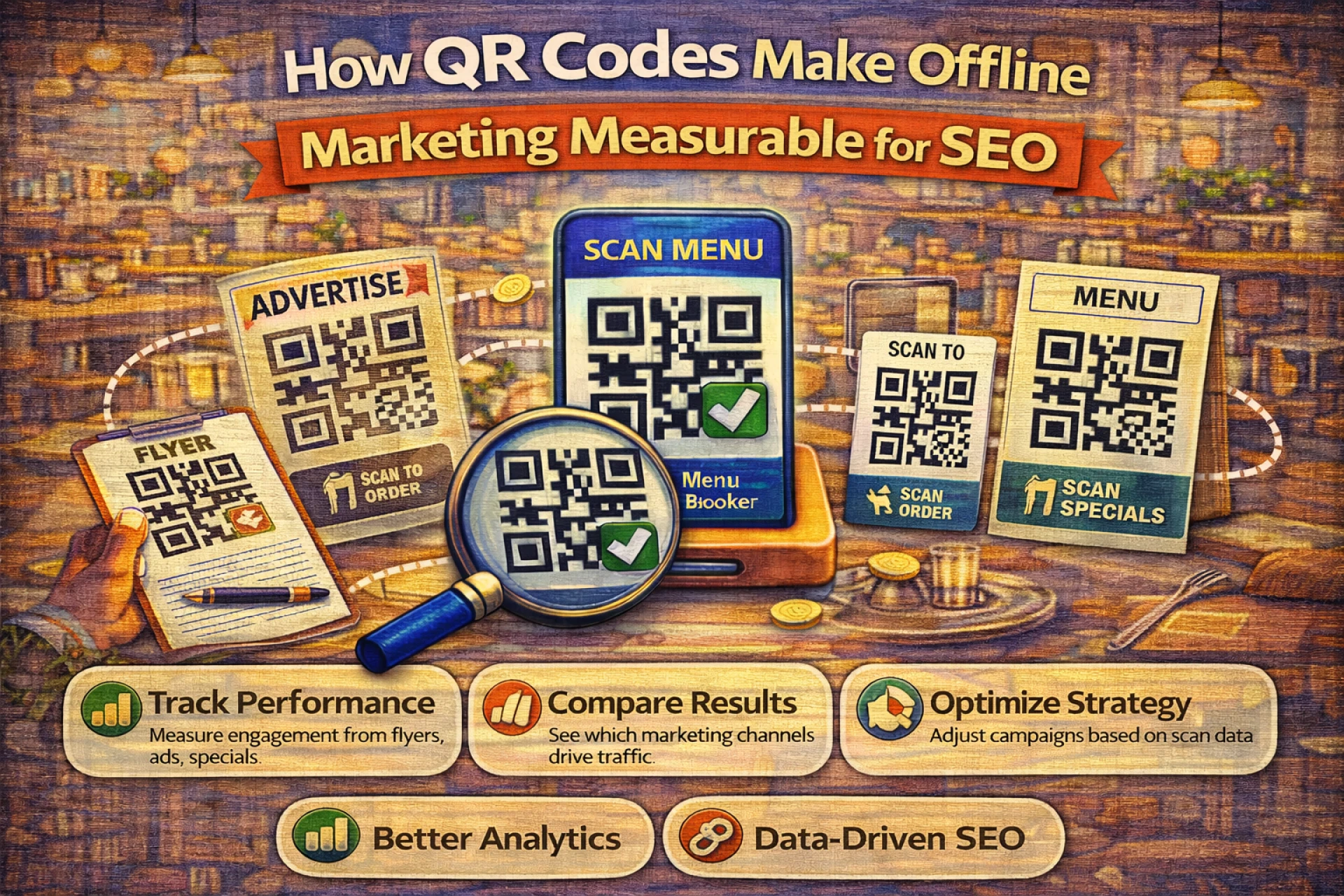

QR codes are often misunderstood in SEO discussions. Some people expect them to improve rankings directly, while others dismiss them as irrelevant to search altogether.
The truth sits in between.
QR codes don’t influence search engines directly, but they can play an important role in how offline marketing contributes to online performance.
QR Codes Are Not an SEO Shortcut
It’s important to set expectations clearly.
QR codes:
- Do not act as backlinks
- Do not affect crawling or indexing
- Do not increase rankings on their own
From a technical SEO perspective, scanning a QR code is simply another way of visiting a URL.
The value comes from where that visit originates.
Offline Attention Is Usually Invisible
Offline promotion has always had a measurement problem.
Posters, flyers, menus, packaging, and signage can reach thousands of people, but without a direct link, there’s no reliable way to know who acted on that exposure.
QR codes solve this by converting offline attention into online sessions.
Each scan becomes:
- A trackable website visit
- A measurable user session
- A data point you can analyze
This is what makes QR codes strategically useful.
Why QR Code Traffic Behaves Differently
People who scan QR codes are not passive visitors.
Scanning requires intent. Someone has to notice the code, decide it’s worth scanning, and take action. That intent often leads to:
- Longer time on page
- Lower bounce rates
- Higher interaction
These are the same engagement signals search engines already care about.
Landing Pages Matter More Than the Code
QR codes work best when the destination matches the context of the scan.
Sending QR traffic to a homepage usually leads to confusion and quick exits. Focused landing pages perform better because they:
- Load faster
- Answer a specific expectation
- Guide the next action clearly
A menu QR should open a menu. A product QR should open the product. Context alignment improves engagement.
Tracking Turns QR Codes Into Strategy
Without tracking, QR codes are just convenience tools.
With tracking, they become part of your marketing strategy.
Dedicated URLs, campaign pages, or analytics tagging allow you to see:
- How many scans happened
- Where they occurred
- What users did afterward
This data helps you refine both offline and online efforts.
Static vs Editable QR Codes in Long-Term Campaigns
QR codes can be fixed or editable.
Fixed QR codes always lead to the same page. Editable QR codes allow you to update the destination later without changing the printed code.
For long-term use, editable QR codes help prevent broken links and outdated campaigns, preserving traffic value over time.
Creating QR Codes With Purpose
The technical step is simple. The planning is not.
Once you decide what page should receive the traffic, generating the QR code is quick. A straightforward tool like
https://generate-qr-code.com
allows you to create clean, scannable QR codes without unnecessary complexity.
The success of the QR code depends far more on the destination than on the design.
When QR Codes Fail to Add Value
QR codes tend to underperform when:
- Pages load slowly or aren’t mobile-friendly
- The content doesn’t match the scanning context
- There’s no clear next step
- Traffic isn’t measured at all
In these cases, scans happen but value is lost.
Final Thoughts
QR codes don’t replace SEO and they don’t improve rankings by themselves.
What they do is make offline marketing visible, measurable, and connected to digital performance. By turning physical-world attention into intentional website visits, QR codes help bridge a gap SEO alone can’t cover.
Used with purpose, QR codes extend your online strategy beyond the screen.






























Sign in to leave a comment.