
Sewer problems in Tujunga don't usually start with a dramatic moment. They start with a drain that's a little sluggish, or a toilet that takes an extra second to clear, or a faint smell outside near the yard that wasn't there before. Easy to brush off. Easy to delay. But here's what makes delay a real gamble: the American Society of Civil Engineers gives US wastewater infrastructure a grade of D+ in its national infrastructure report card, and a lot of the aging pipes feeding that statistic run right under residential neighborhoods. If you've been putting off looking into reliable sewer repair in Malibu, that small problem you're working around right now has a way of turning into something that costs five to ten times more. Here's what you actually need to know.
What Is Sewer Repair and When Does a Home Actually Need It?
Sewer repair covers anything that fixes damage, blockage, or deterioration in the pipes that carry wastewater away from your home and out to the main municipal line. That includes clearing blockages, patching or relining cracked sections, repairing offset joints, and in the worst cases, replacing the line entirely.
Not every sewer issue needs a full repair right away. Some just need cleaning. Some need a camera inspection to understand what's actually happening before anyone decides anything. The point is, the fix matches the actual problem — and finding out what the actual problem is costs a lot less than assuming and guessing wrong.
Why Are Sewer Problems So Common in the Tujunga Area?
A few factors work against sewer lines in this part of the San Fernando Valley, and they're worth understanding because they explain why some homes here deal with these issues more than once.
Tujunga sits against the Verdugo Mountains and the Big Tujunga Wash, which means the local soil has a mix of sandy, rocky, and clay-based profiles depending on the specific block. Clay soil especially tends to shift with moisture changes, and Southern California goes through serious wet-dry cycles — heavy rain seasons followed by long dry stretches. That shifting soil puts constant pressure on underground pipes, especially older ones that weren't designed to flex much.
Add to that the age of a lot of the housing stock in Tujunga. Many homes were built in the 1950s through 1970s, which means sewer laterals made of clay, concrete, or early PVC that are now 50 to 70 years old. The National Association of Home Builders estimates clay pipes have a serviceable life of 50 to 60 years under normal conditions. A lot of Tujunga homes are at or past that threshold.
What Are the Warning Signs That Your Sewer Line Needs Attention?
How Do I Know If My Sewer Line Is the Problem?
There's a difference between a localized clog and a sewer line issue, and it matters because the solutions are completely different. A single slow drain in one bathroom is usually a pipe-level clog — a snake or some cleaning work handles it. When multiple drains in different parts of the house are all sluggish or backing up at the same time, that points to the main sewer line.
A few signs that specifically suggest sewer line trouble rather than a simple clog: toilets that gurgle after someone uses a sink or runs the washing machine, slow drains on the ground floor that don't improve after cleaning, wet or sunken patches in the yard above where your sewer line runs, or a persistent sewage smell that comes and goes without any obvious cause inside the house.
Any one of these is worth having checked. A combination of two or more together is pretty much a clear signal that something's happening in the main line, not just a single fixture.
What's the Difference Between Sewer Cleaning and Sewer Repair?
This question comes up a lot, and it's an important one because the answer affects both what gets done and what it costs.
Sewer cleaning — whether that's snaking or hydro-jetting — removes blockages from inside the pipe. Think of it like clearing a clogged straw. The pipe itself is structurally okay; something's just stuck inside it. Cleaning is faster, less invasive, and significantly cheaper.
Sewer repair means the pipe itself has a problem — a crack, a collapsed section, a displaced joint, tree roots that have broken through the wall, or corrosion that's weakened the structure. You can clean a damaged pipe all you want, but the damage doesn't go away, and the blockages will keep coming back. Repair addresses the pipe itself, not just what's inside it.
The only way to know which one a specific situation actually needs is a camera inspection. A small camera goes through the line and feeds live video so a plumber can see exactly what's happening — blockage only, or structural damage, or both. It removes the guesswork completely.
What Repair Methods Are Available — and Which One Is Right?
Does Sewer Repair Always Mean Digging Up the Yard?
No, and this is one of the things that has genuinely changed in the plumbing industry over the past couple of decades. Traditional sewer repair did mean excavating the yard, sometimes breaking through driveways or concrete, pulling out the damaged section, and replacing it. Expensive, slow, and messy.
Trenchless sewer repair changed the math significantly. Pipe lining — also called CIPP, or cured-in-place pipe lining — works by inserting a resin-saturated liner into the existing pipe, then curing it in place to form a smooth, hard new pipe wall inside the old one. No digging. The old damaged pipe becomes the form, and the liner handles the flow from that point forward.
Pipe bursting is another trenchless method where a tool pulls through the old pipe, fracturing it outward while simultaneously pulling a new pipe into place behind it. Good for situations where the old pipe is too far gone for lining.
These methods don't work in every situation — a fully collapsed line or a section with major displacement sometimes still needs excavation. But for a lot of the cracked and root-invaded clay pipes common in Tujunga homes, trenchless options are worth asking about specifically.
The Cost Reality: What Does Sewer Repair Actually Run?
Numbers vary widely based on what's wrong, how long the damaged section is, and which repair method applies. But here's a realistic framework.
A camera inspection usually runs $150 to $300 and is always worth doing before any repair decisions are made. Sewer cleaning — snaking or hydro-jetting — typically costs $200 to $500 depending on severity. Trenchless pipe lining for a residential lateral runs roughly $80 to $250 per linear foot, making a full-length repair anywhere from $3,000 to $10,000 depending on the length of the run. Traditional excavation and replacement tends to run higher — $5,000 to $20,000 or more when you factor in landscaping, concrete, and restoration work.
Here's the comparison that actually matters: ignoring a sewer issue until it causes sewage backup into the house triggers both a repair cost AND a remediation cost. The IICRC categorizes sewage backup as Category 3 water damage — the most contaminated type — which means professional cleanup, potential material removal, and health precautions. That remediation alone routinely runs $3,000 to $10,000 before a single pipe gets fixed. Catching the sewer problem first, with a camera inspection and repair, is almost always the cheaper path by a significant margin.
What Usually Works — and What Often Fails
What works: Getting a sewer camera inspection done at the first sign of recurring slow drains or backups. Once you know what's actually in the pipe, the decision about repair versus cleaning versus replacement is easy. Without the camera, every decision is a guess.
What works: Hydro-jetting for grease and organic buildup, especially in kitchen lines. Unlike snaking, which punches a hole through a clog, hydro-jetting scours the pipe walls clean with high-pressure water. It's more thorough and leaves the pipe in significantly better shape. For homes with chronic slow kitchen drains, this is the right tool.
What often fails: Snaking a line repeatedly without investigating why it keeps blocking. If a drain gets snaked every few months and keeps slowing back down, that's a clear sign something structural is going on — root intrusion, a crack that catches debris, a displaced joint — and the snake is just buying time. The actual problem isn't getting addressed.
What also often fails: Waiting on a sewer issue because everything still technically works. "It still drains, just slowly" is how most serious sewer damage is described in the months before it becomes a full backup. The line doesn't announce when it's about to cross the line from manageable to emergency. That threshold gets crossed quietly, and usually at a bad time.
Practical Tips for Tujunga Homeowners
If your home was built before 1980 and you've never had a sewer scope done, it's worth scheduling one just to know what you're working with. A lot of homeowners in older parts of Tujunga are living above pipes they've never seen, and some of those pipes are well past their expected lifespan. A camera inspection is cheap peace of mind compared to the alternative.
Keep mature trees in mind. The Tujunga area has a lot of established trees — mature landscaping is part of what makes the neighborhood appealing. It's also root intrusion territory. Tree roots track moisture and nutrients and find their way into even small cracks in aging pipes. If you have large trees near your property line or close to where your sewer lateral runs, it's worth knowing what the roots are doing underground.
Watch what goes down the drains. Grease is the biggest controllable factor for kitchen sewer lines. It goes down liquid and solidifies inside the pipe. Add food particles over time and you get a progressive buildup that narrows the pipe until it's functionally blocked. Scraping grease into the trash before washing dishes makes a measurable difference over the years.
Conclusion
The homeowners in Tujunga who end up with a sewage backup in the house, a yard full of digging equipment, and a four-figure remediation bill didn't get there because of bad luck. They got there because a warning sign got filed away as "not urgent" long enough to become exactly that. Reliable sewer service isn't about calling someone the moment disaster strikes. It's about calling early enough that disaster doesn't have to be part of the story.
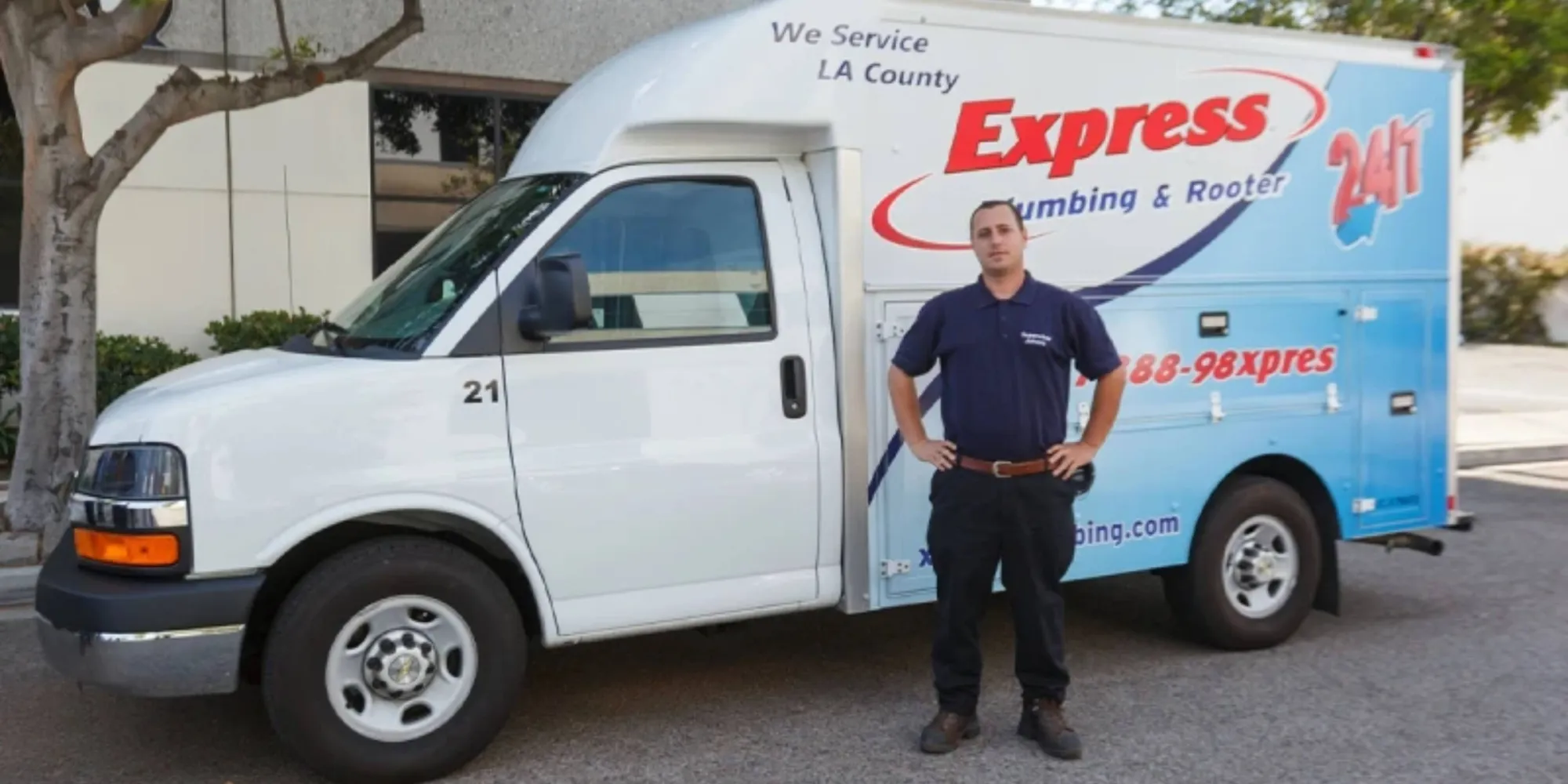
Express Plumbing and Rooter serves homeowners throughout Tujunga and the greater San Fernando Valley with honest sewer inspections, cleaning, repair, and full replacement when it's genuinely needed. The team uses camera inspection to show you exactly what's happening in your line before recommending anything — no guesswork, no upselling, just a clear picture and straight answers. If something feels off with your drains, that's the right time to call.
Frequently Asked Questions
Q: How do I know if I need sewer repair versus just a sewer cleaning?
A: A camera inspection tells you definitively. Cleaning works when the pipe is structurally intact and something's just blocking it. Repair is needed when the pipe itself is cracked, displaced, or root-damaged. Without the camera, you're guessing.
Q: Does trenchless sewer repair work for all types of pipe damage?
A: It works for most crack and root intrusion situations, but not for completely collapsed or severely displaced pipes. A camera inspection determines which method is appropriate for your specific situation.
Q: How long does trenchless pipe lining last?
A: Most manufacturer warranties on CIPP lining run 25 to 50 years. In many cases, the lined pipe outlasts what the original pipe would have been expected to do.
Q: Does Express Plumbing and Rooter serve all of Tujunga?
A: Yes. Express Plumbing and Rooter provides sewer repair, inspection, cleaning, and replacement services throughout Tujunga and the surrounding communities in the San Fernando Valley area.
Q: What's the first thing I should do if I have sewage backing up into my house?
A: Stop using all water immediately — don't flush, run sinks, or use the washing machine. Call a plumber right away. The longer sewage sits, the more contamination spreads and the more expensive the cleanup becomes.





























Sign in to leave a comment.