

Electrical inspection and testing protect people, property, and equipment. Faults in wiring or poor installations lead to serious risks such as fires, electric shock, and equipment failure. The Electrical Inspection & Testing Course in London trains electricians to carry out these essential checks safely, accurately, and legally.
This course follows BS 7671 (IET Wiring Regulations) and Part P Building Regulations, ensuring that learners can issue valid Electrical Installation Condition Reports (EICRs) in domestic, commercial, and industrial environments.
It is a City & Guilds Level 3 qualification, designed for practising electricians, maintenance engineers, and those progressing toward becoming a Qualified Supervisor (QS).
What Is an Electrical Inspection & Testing Course?
An Electrical Inspection & Testing Course teaches how to verify the safety and compliance of electrical installations. Learners gain the skills to perform Initial Verification (new installations) and Periodic Inspection & Testing (existing installations).
Training focuses on identifying faults, verifying compliance with BS 7671, and ensuring that all circuits and equipment are safe before use. The qualification supports the issue of EICRs, a legal requirement for landlords and businesses under the Electricity at Work Regulations 1989.

Who Should Take the Electrical Inspection & Testing Course in London?
The course suits electricians, contractors, and maintenance staff responsible for electrical safety and compliance. It is essential for those working under competent person schemes such as NICEIC, NAPIT, or ELECSA.
Those seeking to become Qualified Supervisors or renew insurance cover for inspection work must complete this qualification. Many electrical firms in London require this certification before assigning testing duties.
What Will You Learn During the Course?
Training combines theory with structured practical sessions. Learners develop the ability to test, inspect, and report on electrical systems using recognised instruments and methods.
Core Modules Include:
- Understanding BS 7671 Wiring Regulations
- Safe isolation and verification of circuits
- Use of testing instruments and measurement accuracy
- Fault finding and rectification techniques
- Recording and reporting results
- Completing EICR and certification documentation
- Evaluating compliance with Part P Building Regulations
Each section directly aligns with IET and City & Guilds standards. Assessments measure both knowledge and applied skill in simulated or live environments.
Course Structure and Duration — How Long Is the Training?
Most Electrical Inspection & Testing Courses in London run over five consecutive days, typically Monday to Friday. The final day focuses on practical and written assessments.
Centres also offer weekend or evening classes for working electricians. Fast-track courses are available for those with prior inspection experience.
Refresher Option
Professionals already holding inspection qualifications can complete a refresher module, usually lasting two to three days, to stay updated with the latest BS 7671:2018 (Amendment 2) requirements.
Level 3 Award Explained
The City & Guilds Level 3 Award in Initial and Periodic Inspection and Testing of Electrical Installations (2391-52) is the current standard qualification.
It combines two previous awards:
- 2391-50 – Initial Verification
- 2391-51 – Periodic Inspection and Testing
Completing 2391-52 proves advanced technical competence and full compliance knowledge. It is recognised by insurers, employers, and competent person schemes across the UK.
What Qualifications and Experience Do You Need to Enrol?
Applicants should hold a Level 2 or equivalent qualification in electrical installation, such as City & Guilds 2365 or 2330.
They must also demonstrate working knowledge of BS 7671 and experience using electrical test equipment.
Entry without formal qualifications is possible if candidates can show relevant on-site experience and understanding of current regulations.
Some centres in London offer bridging modules for apprentices or overseas-qualified electricians who want to align with UK standards.

Course Delivery Options — Classroom, Blended, and Online Learning
Training providers in London deliver the Electrical Inspection & Testing Course in several formats:
- Classroom Learning:
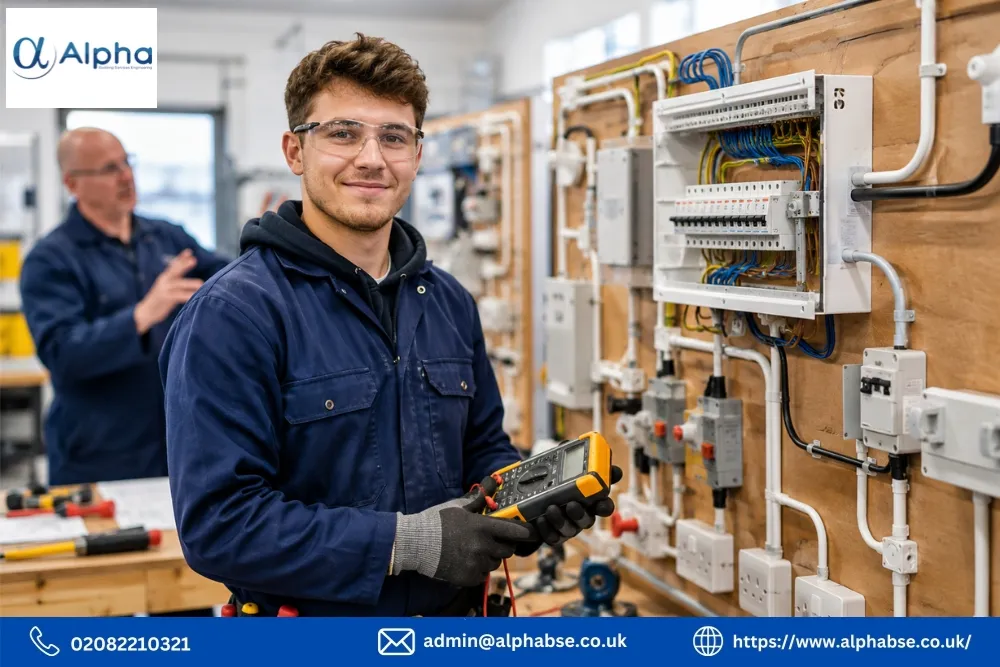
- Conducted in fully equipped workshops. Learners use live rigs and instruments to practise inspection and testing.
- Blended Learning:
- Combines online theoretical study with in-person practical sessions. Suitable for professionals balancing work and study.
- Online Courses:
- Designed mainly for refresher training. Learners complete theory and revision modules remotely, followed by assessment at an approved test centre.
All recognised courses are delivered through City & Guilds or EAL-accredited centres, ensuring national recognition and compliance with UK training standards.
How Much Does the Electrical Inspection & Testing Course Cost in London?
The Electrical Inspection & Testing Course in London generally costs between £600 and £950, depending on factors such as course type, provider, and delivery format. Most fees include registration, tuition, practical assessments, and certification.
Here’s a quick breakdown:
- Standard Course
- Duration: Around 5 days
- Average Cost: Approximately £800
- Best for: Practising electricians who need full training and certification
- Fast-Track Course
- Duration: Around 3 days
- Average Cost: Approximately £650
- Best for: Experienced testers who want to qualify quickly
- Refresher Course
- Duration: Around 2 days
- Average Cost: Approximately £450
- Best for: Qualified electricians updating skills and knowledge of the latest BS 7671 Wiring Regulations
What Certification Will You Receive After Completion?
Successful candidates earn the City & Guilds Level 3 Award (2391-52) in Initial and Periodic Inspection and Testing of Electrical Installations.
This qualification authorises holders to:
- Conduct initial verification of new installations
- Carry out periodic inspection and testing
- Produce and sign EICRs
- Comply with Part P and insurance requirements
Certification remains valid indefinitely, though electricians are encouraged to refresh training after regulatory updates.
Why Is This Course Important for Electrical Safety and Legal Compliance?
Inspection and testing directly protect lives and property. Faulty installations are among the leading causes of electrical fires in the UK.
According to the Health and Safety Executive (HSE), inadequate testing accounts for a significant portion of workplace electrical accidents each year.
The course ensures that electricians can:
- Verify compliance with BS 7671
- Identify defects before they cause harm
- Maintain documentation for landlords, clients, and insurers
- Fulfil obligations under the Electricity at Work Regulations 1989
Professional competence also helps avoid legal penalties for non-compliant work.
Benefits of Completing the Course in London
Studying in London provides access to some of the UK’s best-equipped training centres and highly experienced tutors.
Benefits include:
- Hands-on practical training with live test rigs
- Direct links to City & Guilds-approved centres
- Networking with professional electricians and employers
- Convenient transport and flexible course schedules
For electricians in and around London, certification enhances employability, salary potential, and the ability to issue official inspection reports independently.
How to Apply for the Electrical Inspection & Testing Course in London
Applying is straightforward:
- Select a City & Guilds-approved training centre in London.
- Confirm that you meet the entry requirements.
- Register through the provider’s website or by phone.
- Attend the scheduled theory and practical sessions.
- Complete written and practical assessments.
After passing, candidates receive their official City & Guilds certificate and can begin issuing EICRs immediately.
Last Thoughts
Electrical inspection and testing safeguard lives and property. Completing a City & Guilds-accredited Electrical Inspection & Testing Course in London proves competence, professionalism, and legal compliance.
The course equips electricians with the technical skill and confidence to test, certify, and maintain installations safely.
London remains one of the best locations to study due to its concentration of accredited centres and industry connections.
Becoming certified is not just a career milestone — it is a professional responsibility under UK law. Every qualified electrician should aim to maintain full compliance with BS 7671, Part P, and EICR standards.
Frequently Asked Questions (FAQs)
Q: What is the difference between 2391-50, 2391-51, and 2391-52?
A: 2391-50 covers Initial Verification only. 2391-51 covers Periodic Inspection only. 2391-52 combines both, offering the most comprehensive qualification.
Q: Can I take the Electrical Inspection & Testing Course online?
A: Theory modules may be studied online, but practical assessments must be completed at an approved City & Guilds centre.
Q: Does the course cover EICR requirements?
A: Yes. Learners gain full competence to inspect, test, and produce compliant Electrical Installation Condition Reports (EICRs).
Q: How often should I renew my inspection and testing certification?
A: The certificate does not expire, but updating knowledge after new BS 7671 amendments is strongly recommended.
Q: What tools or equipment will I need for training?
A: Centres supply instruments during training. Electricians are advised to use a multifunction tester such as the Megger MFT series for practice and ongoing work.





























Sign in to leave a comment.