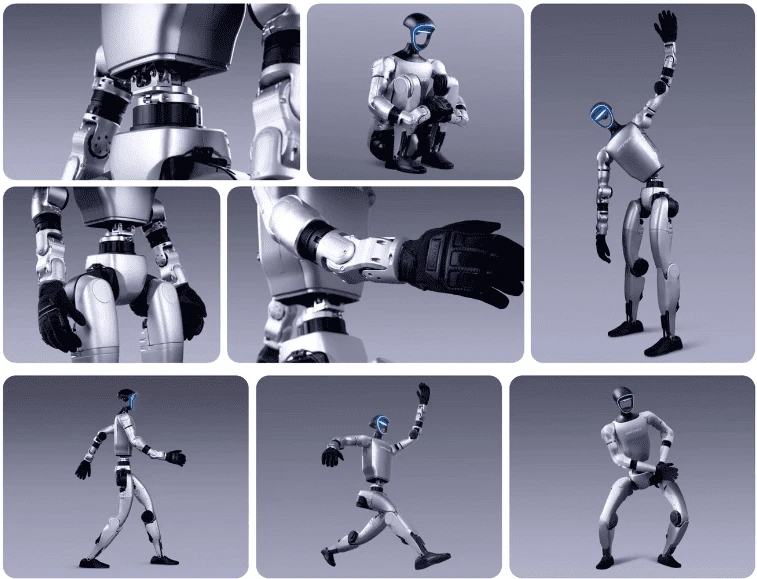
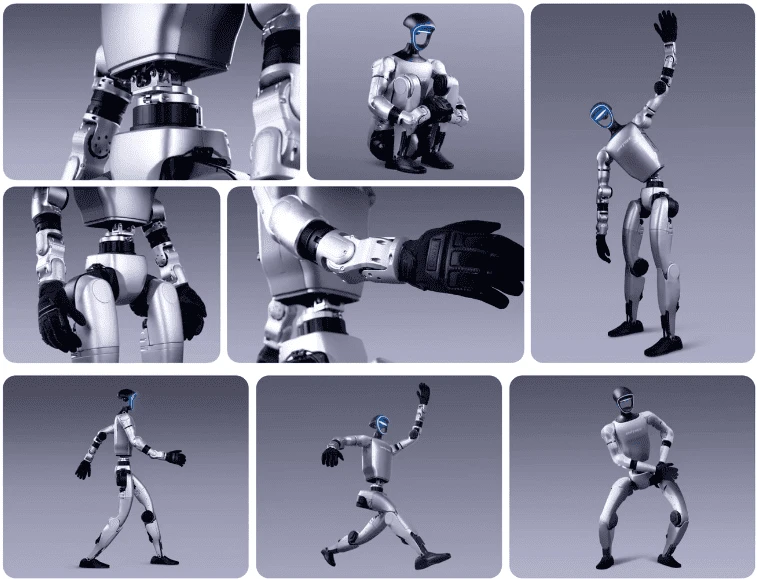
Empowering Research and Education with the Unitree G1 Base
The frontier of robotics research depends on accessible, versatile platforms that let innovators experiment with AI, motion control, and human-machine interaction. The Unitree G1 Base has emerged as a leading educational and research robot—bridging the gap between theoretical learning and real-world application.
A Platform for Exploration
Unlike closed industrial systems, the G1 Base is fully programmable. Universities and laboratories can modify its gait algorithms, sensory responses, and decision-making protocols. Whether a researcher is developing reinforcement-learning techniques or testing bipedal balance under uneven terrain, the robot’s open interface provides a hands-on, reproducible environment.
STEM Education and Student Engagement
In classrooms and robotics clubs, engaging students goes beyond textbooks. The Unitree G1 Base gives learners a tangible representation of complex subjects—control systems, machine vision, and neural networks. Students can write code that immediately animates a physical robot, helping them grasp cause and effect in real time. Such direct interaction fosters creativity and prepares graduates for the rapidly expanding robotics job market.
Human-Robot Interaction (HRI) Studies
Understanding how people perceive and collaborate with humanoid machines is essential for designing the next generation of service robots. The G1 Base’s human-scale proportions and expressive motions make it ideal for HRI research. Psychologists and engineers can study social cues, safety responses, and user trust by observing human behavior around the robot. These studies feed into designs for eldercare, hospitality, and assistive robotics.
Artificial Intelligence Development
For AI labs, the G1 Base is a testbed for perception and learning models. Researchers can integrate custom neural networks to handle navigation, object recognition, or motion planning. Because it supports real-time sensor feedback, algorithms can be trained on live data instead of simulations. This accelerates progress toward robots that learn continuously in dynamic environments.
Collaborative Projects and Innovation Hubs
Tech incubators and research consortia increasingly use the G1 Base as a standard unit for collaboration. Multiple institutions can share datasets and code, leading to faster innovation cycles. When one team improves locomotion efficiency, another can apply that improvement to gesture recognition or environmental mapping. The interoperability of the G1 Base fosters an open-source spirit within professional research.
Global Impact and Accessibility
Robotics used to be limited to elite institutions with million-dollar budgets. The relatively compact and cost-effective nature of the G1 Base democratizes access. Universities in emerging economies can now participate in cutting-edge robotics programs without prohibitive costs, nurturing a global talent pool. This diversification accelerates innovation and brings a wider range of cultural perspectives into robot design.
Practical Applications in Education
- Coding Competitions: Students program the G1 Base to complete obstacle courses.
- Engineering Projects: It’s used in final-year capstone designs to integrate mechanics, electronics, and AI.
- Cross-Disciplinary Learning: Art students collaborate with engineers to explore motion aesthetics and expressive robotics.
Looking Forward
The Unitree G1 Base symbolizes how robotics is evolving from industrial specialization to interdisciplinary exploration. By giving educators and researchers a versatile, durable, and modifiable humanoid platform, it not only trains future engineers but also encourages a culture of curiosity and innovation. The next generation of roboticists won’t just study theory—they’ll walk beside their creations.






















Sign in to leave a comment.