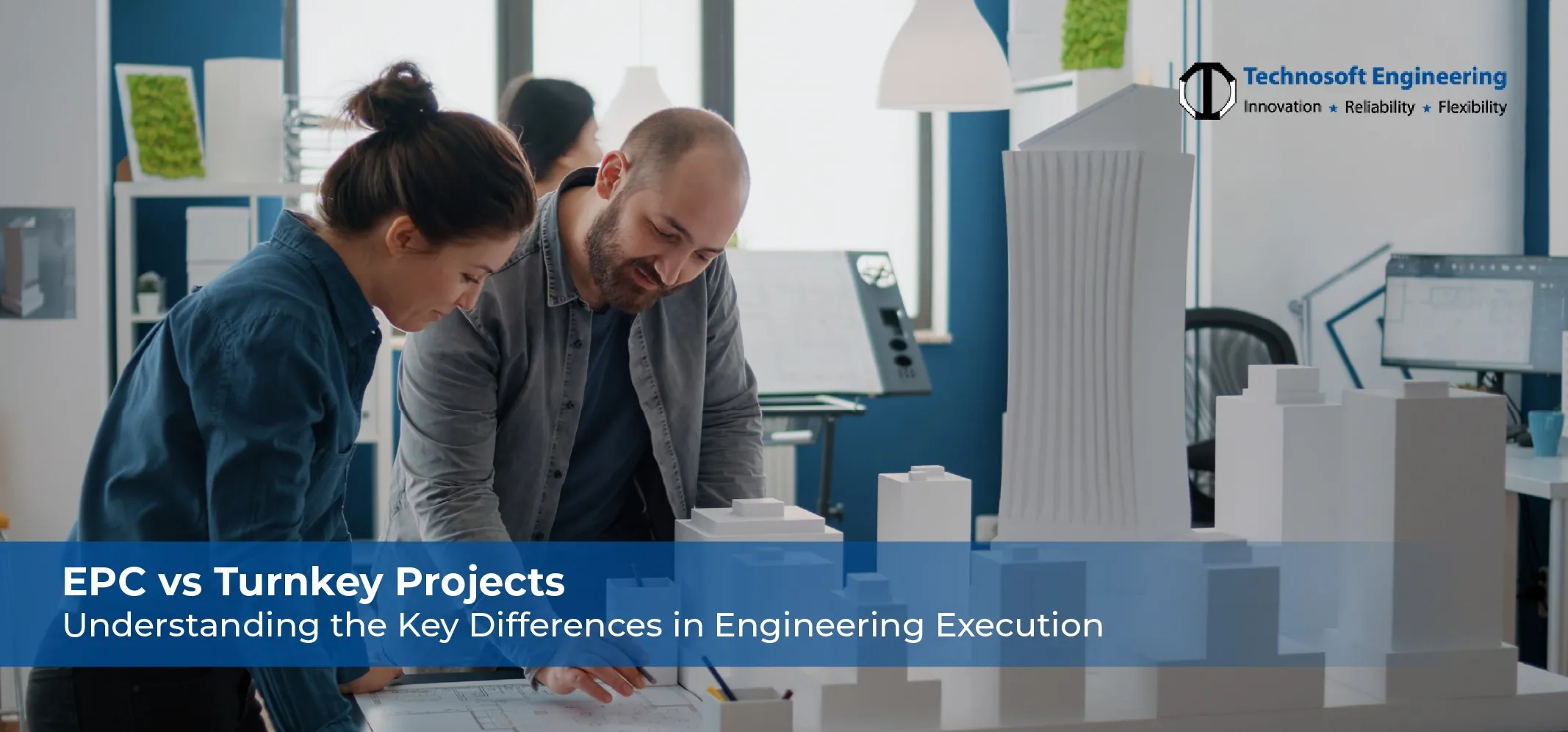

In the engineering and infrastructure sector, choosing the accurate project delivery model is crucial for considering efficiency, cost, and timely completion. In this field, two commonly used approaches, EPC (Engineering, Procurement, and Construction) and turnkey projects, are often confused because of their similarities. However, they differ significantly in scope as well as execution.
Today, we are going to explore the core difference between these two models to help businesses make informed decisions.
What is an EPC Project?
It is a contract where a single contractor is responsible for three major phases in a project, which are engineering (design), procurement (materials and equipment), and construction (execution). The job of the contractor is to deliver the project based on the client’s specifications and typically hands it over once construction and initial commissioning are complete. In today’s model, the client often plays an active role as well in defining the design and may remain involved during key decision-making stages. This makes the EPC model better for projects where the client wants more control over technical aspects.
What is a Turnkey Project?
Now, the turnkey project is something that goes a step ahead. Here, the contractor handles everything by himself, looking after all the project stages from initial concept and design to construction, installation, and final commissioning. The project is delivered for immediate use to the client with complete operation ready. The term “turnkey” here reflects the idea that the client needs to “turn the key” to start operations.
Key Differences Between EPC and Turnkey Projects
1. Scope of Responsibility
The biggest difference lies in the scope; the EPC contracts are the ones that usually focus on engineering, procurement, and construction, while turnkey projects include everything, right up to operational readiness.
2. Client Involvement
EPC projects involve greater client participation in their project, particularly in designs as well as approvals. At the same time, turnkey projects need minimal client intervention as the contractor manages the entire process.
3. Risk Allocation
In EPC models, risk is shared to some extent between the client and the contractor. However, in turnkey projects, most risks, such as cost overruns, delays, and performance issues, are borne by the contractor.
4. Cost Structure
Turnkey contracts usually have a fixed price (lump sum), offering better cost certainty. EPC contracts may change depending on project scope and design changes.
5. Project Outcome
An EPC project might require additional steps before becoming fully operational, whereas a turnkey project is delivered ready for immediate use.
Which Model Should You Choose?
The choice between EPC and turnkey depends on project requirements. If you want greater control and flexibility, EPC may be the absolutely right option for you. However, if you are someone who prefers a hassle-free approach with a single point of contact and accountability, then the turnkey option is very relevant for you. Many modern engineering firms are increasingly adopting Turnkey Solutions.
Conclusion
That’s it! Understanding the difference between EPC and turnkey projects is extremely important for making crucial decisions in engineering. While both types of models have the same goal to deliver, which is successful outcomes, they differ in execution style, responsibility, and risks.
Are you looking to simplify your next engineering project? Explore our expert Turnkey Solutions at Technosoft Engineering and experience seamless, end-to-end project execution tailored to your needs.





















Sign in to leave a comment.