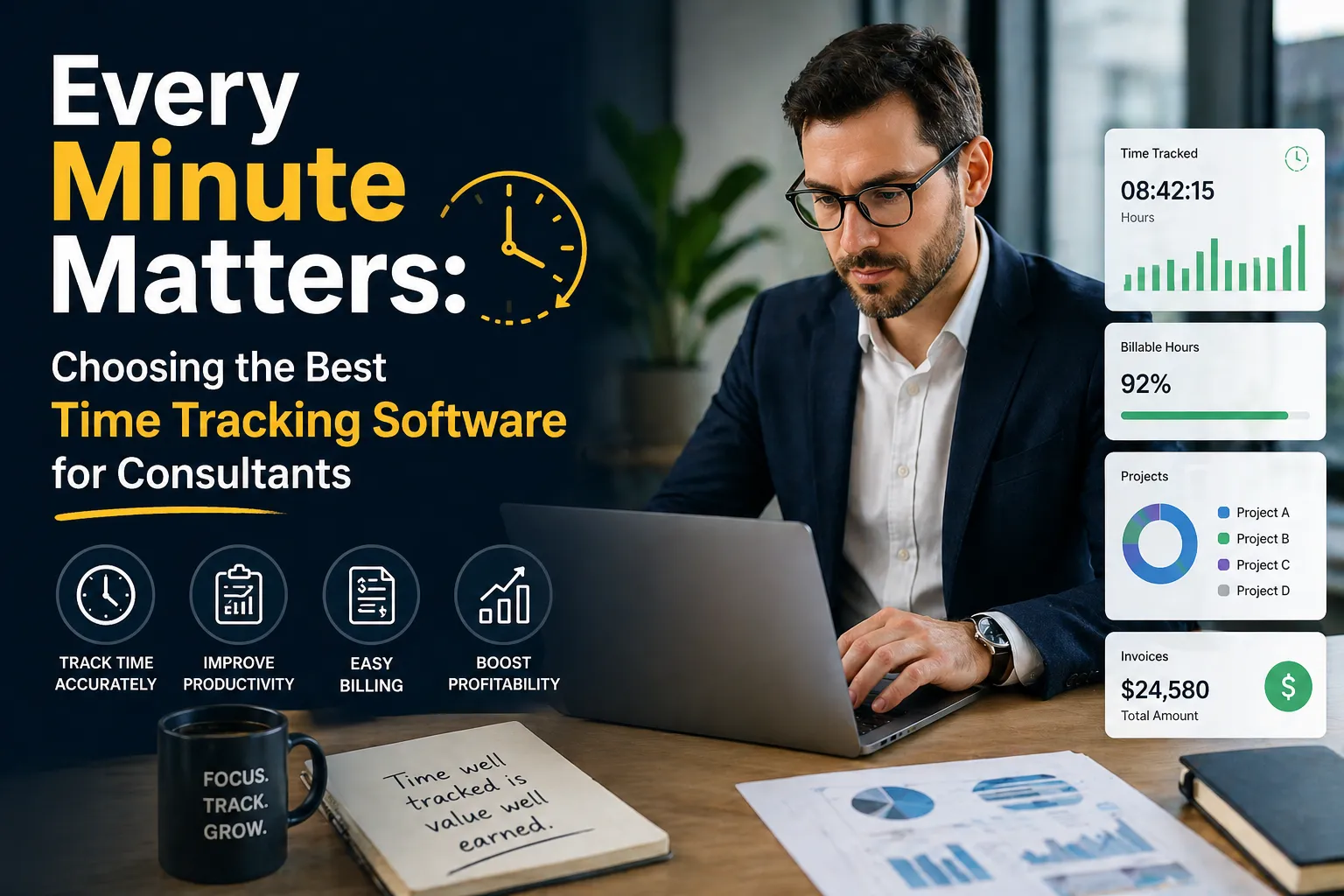

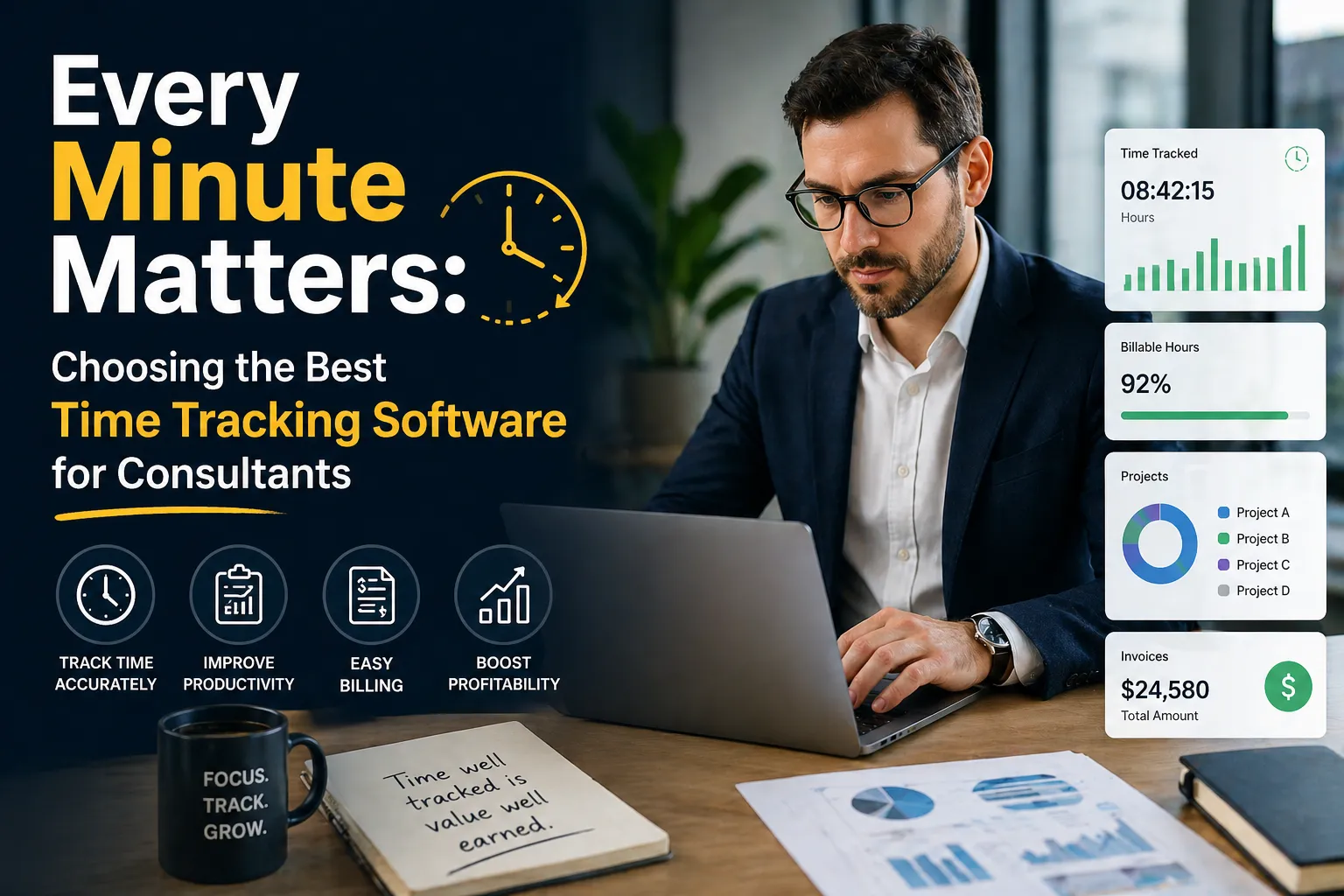
Consulting isn’t just about delivering expertise, it’s about making sure every hour contributes to real, measurable value. Yet many firms still rely on spreadsheets or memory-based tracking, which often leads to missed billable time, inconsistent reports, and lost revenue.
This is where time tracking software for consultants becomes essential, not simply as a monitoring tool, but as a system that drives growth and efficiency.
As consulting firms scale, the need for smarter, more structured solutions becomes undeniable. Choosing the best time tracking software for consultants is no longer a convenience, it’s a strategic necessity.
When Consulting Scales, Visibility Starts to Fade
In the early days, time tracking feels simple. With fewer clients, limited projects, and straightforward billing cycles, manual methods seem manageable.
But growth introduces complexity.
- An increase in clients creates overlapping workstreams
- Expanding teams make it harder to track individual contributions
- Multiple projects blur the line between billable and non-billable hours
Without a reliable system, consultants often end up logging time after the fact, which leads to inaccuracies in billing and lost revenue opportunities. What may seem like minor daily gaps can quickly add up to substantial financial losses over time.
The Real Cost of Not Using Time Tracking Software
Many consulting firms hesitate to adopt tools, assuming it adds complexity. The reality is the opposite.
Without proper systems, you face:
- Underbilling clients due to missed hours
- Overworked teams without visibility into workloads
- Unclear project profitability
- Client disputes due to lack of transparency
Accurate time tracking ensures every minute is accounted for, improves billing transparency, and strengthens client trust.
Simply put: if time is your product, not tracking it properly affects your entire business model.
From Tracking Hours to Understanding Profitability
Modern consulting isn’t just about logging hours, it’s about understanding where your revenue comes from.
That’s why the shift is happening toward time tracking and billing software for consultants that combines:
- Time tracking
- Client-wise reporting
- Billing and invoicing
- Profitability insights
The difference is powerful.
Instead of asking “How many hours did we work?”, firms can now answer:
- Which clients are most profitable?
- Which projects are over budget?
- Where is time being wasted?
This level of insight allows consulting firms to make smarter decisions and scale faster.
What Defines the Best Time Tracking Software for Consultants
Not all tools are built for consulting workflows. The best time tracking software for consultants aligns with how consulting teams actually work.
Here’s what matters most:
1. Effortless Time Capture
Manual entry leads to missed data. Look for automatic or one-click tracking to ensure accuracy.
2. Built-In Billing & Invoicing
Tracking time without billing integration creates extra work. Seamless time-to-invoice flow is critical.
3. Multi-Client & Project Management
Consultants rarely work on a single project. The tool should organize work across clients effortlessly.
4. Clear, Client-Ready Reports
Clients don’t want raw data—they want structured insights into work delivered.
5. Team Visibility & Workload Management
As firms grow, understanding who is overbooked or underutilized becomes essential.
The right software doesn’t just track time, it fits into your workflow and enhances it.
Turning Daily Work Into Billable Outcomes
One of the biggest advantages of using time tracking software for consultants is transforming everyday activity into measurable revenue.
Modern platforms help you:
- Capture every billable minute automatically
- Convert tracked hours into invoices instantly
- Track time by client, task, or project
- Monitor budget usage in real time
For example, solutions like Workstatus provide real-time visibility into consultant activity, client-wise time logs, and automated timesheets, making billing faster and more accurate.
This removes guesswork and ensures nothing slips through the cracks.
Why Consulting Firms Are Switching Now
The shift toward smarter systems isn’t just about efficiency, it’s about staying competitive.
Today’s consulting firms need:
- Faster billing cycles
- Transparent client reporting
- Data-driven decision-making
- Scalable operations
Time tracking tools help reduce non-billable work, improve utilization, and increase profitability, all while simplifying operations.
In a market where margins depend on time, this isn’t optional anymore.
The Smarter Way Forward for Consultants
Consulting success is no longer just about expertise, it’s about how effectively you manage and monetize time.
Firms that still rely on manual tracking struggle with visibility, billing accuracy, and growth. Those using time tracking and billing software for consultants gain clarity, control, and consistent profitability.
The shift is simple but powerful:
- From tracking time → to optimizing revenue
- From managing tasks → to managing profitability
- From guessing performance → to measuring it in real time
If your consulting firm is scaling, the question isn’t whether you need a tool.It’s whether your current system is helping you grow, or quietly holding you back.
Final Thoughts: Small Shift, Big Impact
In consulting, every hour carries value, but only if it’s captured, measured, and billed correctly. Relying on manual methods or scattered tools makes it harder to maintain accuracy, transparency, and profitability as your firm grows.
Adopting the best time tracking software for consultants is not just an operational upgrade, it’s a strategic move. It helps you turn everyday work into clear insights, faster billing cycles, and stronger client relationships.
The firms that scale successfully are not the ones working more hours, they’re the ones managing their time better.




























Sign in to leave a comment.