

At first glance, an excavator engine and a standard diesel engine may appear similar because both operate using diesel combustion technology. However, their working environments, load conditions, operational demands, and engineering priorities are entirely different. An engine used inside heavy construction equipment is designed for continuous high-load performance, whereas a conventional diesel engine is typically optimized for transportation or general industrial use.
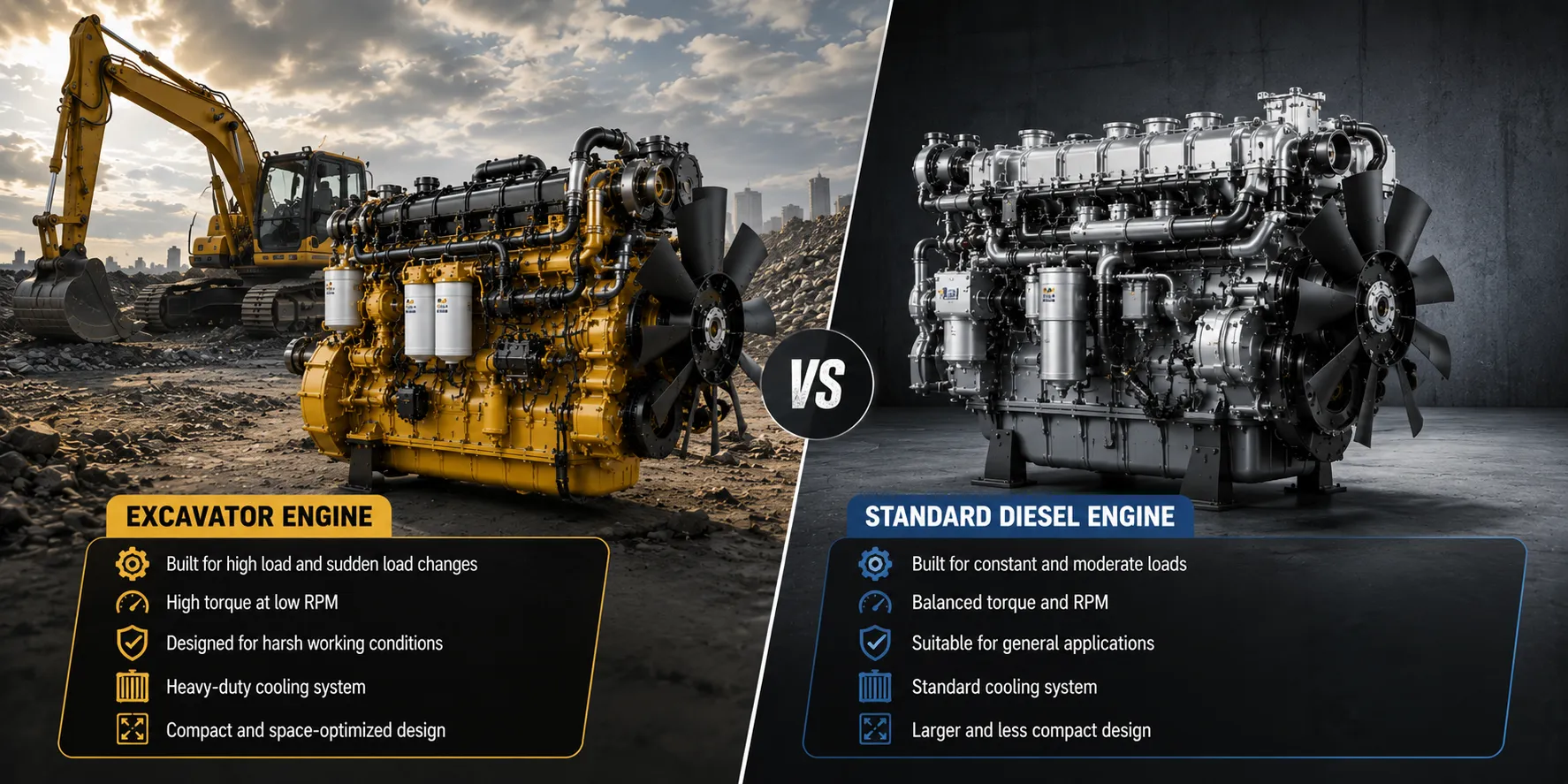
This distinction becomes important in industries where machine reliability directly affects productivity, fuel efficiency, and operating costs. Modern excavator engines are specifically engineered to handle extreme workloads, hydraulic pressure demands, and prolonged operating cycles under harsh site conditions.
Understanding the Purpose of Excavator Engines
Construction machinery operates differently from on-road vehicles. Excavators spend long hours lifting heavy loads, digging dense soil, handling debris, and operating hydraulic systems continuously at varying RPM ranges.
Because of these conditions, excavator engines are designed to deliver higher torque output, stronger thermal stability, and sustained low-speed power rather than focusing only on vehicle movement or highway efficiency.
Key Differences Between Excavator Engines and Standard Diesel Engines
Load Handling Capacity
A standard diesel engine commonly operates under fluctuating driving conditions where acceleration and cruising patterns vary frequently. In contrast, excavator engines work under constant heavy loads for extended durations.
Excavator applications demand stable torque generation even at lower engine speeds to support hydraulic pump operations and digging performance without power interruption.
Torque Delivery Characteristics
Excavators rely heavily on low-end torque because hydraulic systems require immediate force generation during lifting and excavation tasks. Standard diesel engines, especially automotive variants, are often calibrated for broader speed ranges and fuel economy during transportation.
This makes excavator engines more suitable for continuous industrial-duty operations where pulling force matters more than driving speed.
Cooling and Thermal Management Systems
Construction sites expose engines to dust, high ambient temperatures, vibration, and prolonged idle-load transitions. As a result, excavator engines are equipped with advanced cooling systems and heavy-duty thermal management components to prevent overheating during long operating hours.
Standard diesel engines may not be engineered to withstand the same level of continuous stress under extreme environmental conditions.
Structural Durability and Component Strength
Heavy machinery engines are manufactured using reinforced engine blocks, stronger crankshafts, durable pistons, and industrial-grade filtration systems. These components help excavator engines tolerate vibration, shock loads, and demanding field operations more effectively.
Standard diesel engines, particularly those designed for passenger or commercial vehicles, prioritize weight balance, fuel economy, and emission optimization differently.
Hydraulic System Compatibility
One of the biggest differences lies in hydraulic integration. Excavators depend on hydraulic pumps powered directly by the engine. Therefore, excavator engines are carefully synchronized to maintain hydraulic efficiency, pressure stability, and operational responsiveness during multi-function tasks.
Standard diesel engines are generally not engineered with this level of hydraulic dependency in mind.
Final Thoughts
The difference between a standard diesel engine and an excavator-specific engine goes far beyond fuel type or engine size. Construction equipment operates in environments where continuous load pressure, hydraulic demand, heat generation, dust exposure, and long working hours place extreme stress on mechanical systems every day.
This is why excavator engines are engineered with a completely different performance approach focused on torque stability, structural durability, thermal control, and sustained operational efficiency.
As a result, it is very much convenient for industrial operators as they have to bear reduced maintenance interruptions, and can get more reliable performance across long-duration construction and excavation operations.


























Sign in to leave a comment.