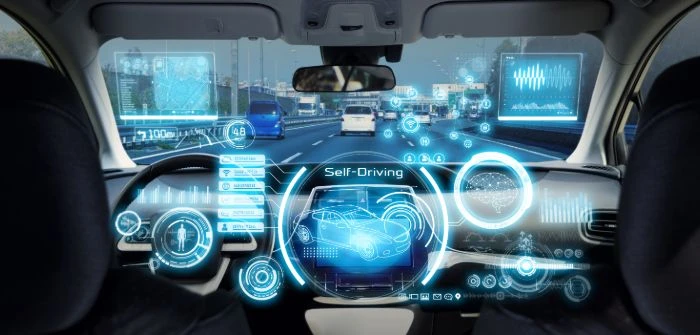

Autonomous vehicles represent a groundbreaking advancement in transportation technology, promising safer, more efficient, and convenient travel experiences. Central to the operation of these self-driving cars is online navigation, a sophisticated system that relies on real-time data, advanced algorithms, and high-precision mapping technologies. In this comprehensive exploration, we delve into the pivotal role of online navigation in autonomous vehicles, examining its capabilities, challenges, and potential impact on the future of mobility.
Understanding Autonomous Vehicles

Autonomous vehicles, also known as self-driving cars or driverless vehicles, are automobiles equipped with sensors, cameras, radar, lidar, and other technologies that enable them to perceive their environment and navigate without human intervention. These vehicles utilize artificial intelligence and machine learning algorithms to interpret sensory data, make driving decisions, and safely maneuver through complex traffic scenarios.
The development of autonomous vehicles holds the promise of revolutionizing transportation by reducing traffic accidents, alleviating congestion, and providing mobility options for individuals who are unable to drive. However, achieving fully autonomous operation requires overcoming numerous technical, regulatory, and societal challenges.
The Role of Online Navigation

At the heart of autonomous driving systems lies online navigation, a sophisticated ecosystem of technologies and services that enable vehicles to navigate their surroundings, plan optimal routes, and adapt to changing conditions in real-time. Unlike traditional GPS navigation systems, which rely on pre-loaded maps and periodic updates, online navigation leverages continuous connectivity to access up-to-date maps, traffic information, and other relevant data sources.
Key Components of Online Navigation
Online navigation systems in autonomous vehicles consist of several key components, including:
1. High-Definition Maps: Detailed maps that provide precise information about road geometry, lane markings, traffic signs, and other infrastructure elements. These maps serve as a foundational reference for the vehicle\'s navigation and localization.
2. Real-Time Traffic Data: Live information about traffic conditions, congestion, road closures, accidents, and other incidents collected from various sources, including traffic cameras, sensors, and crowd-sourced data platforms.
3. Sensor Fusion: Integration of data from multiple sensors, including cameras, radar, lidar, and ultrasonic sensors, to create a comprehensive perception of the vehicle\'s surroundings. Sensor fusion enables the vehicle to detect and classify objects, predict their movements, and make informed driving decisions.
4. Localization and Positioning: Techniques for accurately determining the vehicle\'s location and orientation relative to its surroundings. This typically involves the use of GPS, inertial measurement units (IMUs), and map matching algorithms to achieve centimeter-level precision.
5. Route Planning and Optimization: Algorithms that analyze available routes, consider factors such as traffic conditions, road geometry, and user preferences, and generate optimal driving paths. Route planning algorithms continuously update plans in response to real-time changes in the environment.
Real-Time Decision Making
One of the defining features of online navigation in autonomous vehicles is its ability to make real-time decisions based on dynamic environmental conditions. Using sensor data and live updates from external sources, such as traffic management centers and weather services, the vehicle\'s onboard computer continuously evaluates its surroundings and adjusts its behavior accordingly.
For example, if the vehicle encounters a road closure or an unexpected obstacle, it can dynamically reroute to avoid the obstruction while minimizing disruption to the passenger\'s journey. Similarly, in heavy traffic conditions, the vehicle may adjust its speed and following distance to maintain safe distances from other vehicles and optimize traffic flow.
Connectivity and Cloud Integration
Online navigation systems rely on continuous connectivity to access cloud-based services and data repositories. By leveraging the computational power and storage capacity of the cloud, autonomous vehicles can offload intensive processing tasks, such as map updates, route planning, and data analysis, to remote servers.
Cloud integration also enables vehicles to benefit from collective intelligence, as they can share anonymized sensor data and insights with other vehicles and infrastructure entities. This collaborative approach enhances situational awareness, improves decision-making algorithms, and fosters a more efficient and resilient transportation ecosystem.
Challenges and Considerations
While online navigation holds tremendous potential for advancing autonomous vehicles, several challenges and considerations must be addressed to realize its full benefits:
Data Security and Privacy
The collection, storage, and transmission of sensitive location data raise concerns about privacy, cybersecurity, and potential misuse. Ensuring robust encryption, authentication, and access control mechanisms are essential to safeguarding user privacy and protecting against malicious attacks.
Reliability and Redundancy
Dependence on online connectivity introduces vulnerabilities related to network outages, latency, and data transmission errors. Implementing redundant communication channels, local caching mechanisms, and failover strategies can mitigate the impact of connectivity disruptions and ensure the reliability of online navigation systems.
Regulatory and Legal Frameworks
The deployment of autonomous vehicles equipped with online navigation technologies requires clear regulatory frameworks, standards, and liability models. Governments and industry stakeholders must collaborate to establish rules governing vehicle operation, data sharing, safety certifications, and liability attribution in the event of accidents or malfunctions.
User Acceptance and Trust
Building public trust and acceptance of autonomous vehicles equipped with online navigation systems is essential for their widespread adoption. Educating users about the capabilities and limitations of these technologies, addressing concerns related to safety, privacy, and control, and fostering transparency in algorithmic decision-making can help cultivate positive attitudes towards autonomous mobility.
Future Perspectives

The evolution of online navigation in autonomous vehicles is poised to shape the future of transportation in profound ways. As advances in sensor technology, artificial intelligence, and connectivity continue to accelerate, we can expect online navigation systems to become increasingly sophisticated, adaptive, and resilient.
Furthermore, the integration of autonomous vehicles into smart city ecosystems, alongside emerging technologies such as connected infrastructure, shared mobility services, and electric propulsion, promises to create more sustainable, efficient, and inclusive urban transportation systems.
Conclusion
Online navigation plays a pivotal role in unlocking the full potential of autonomous vehicles, enabling them to navigate safely, efficiently, and seamlessly through complex urban environments. By harnessing real-time data, advanced algorithms, and cloud-based services, online navigation systems empower autonomous vehicles to perceive their surroundings, make informed decisions, and adapt to changing conditions in real-time.
As we continue to explore the possibilities of autonomous mobility, it is imperative to address the technical, regulatory, and societal challenges associated with online navigation. By collaborating across disciplines, sectors, and jurisdictions, we can create a future where autonomous vehicles revolutionize transportation, enhance mobility access, and contribute to a more sustainable and connected world.
For more information on cutting-edge technologies and trends in navigation systems, visit FreeOnlineCompass.com



























Sign in to leave a comment.