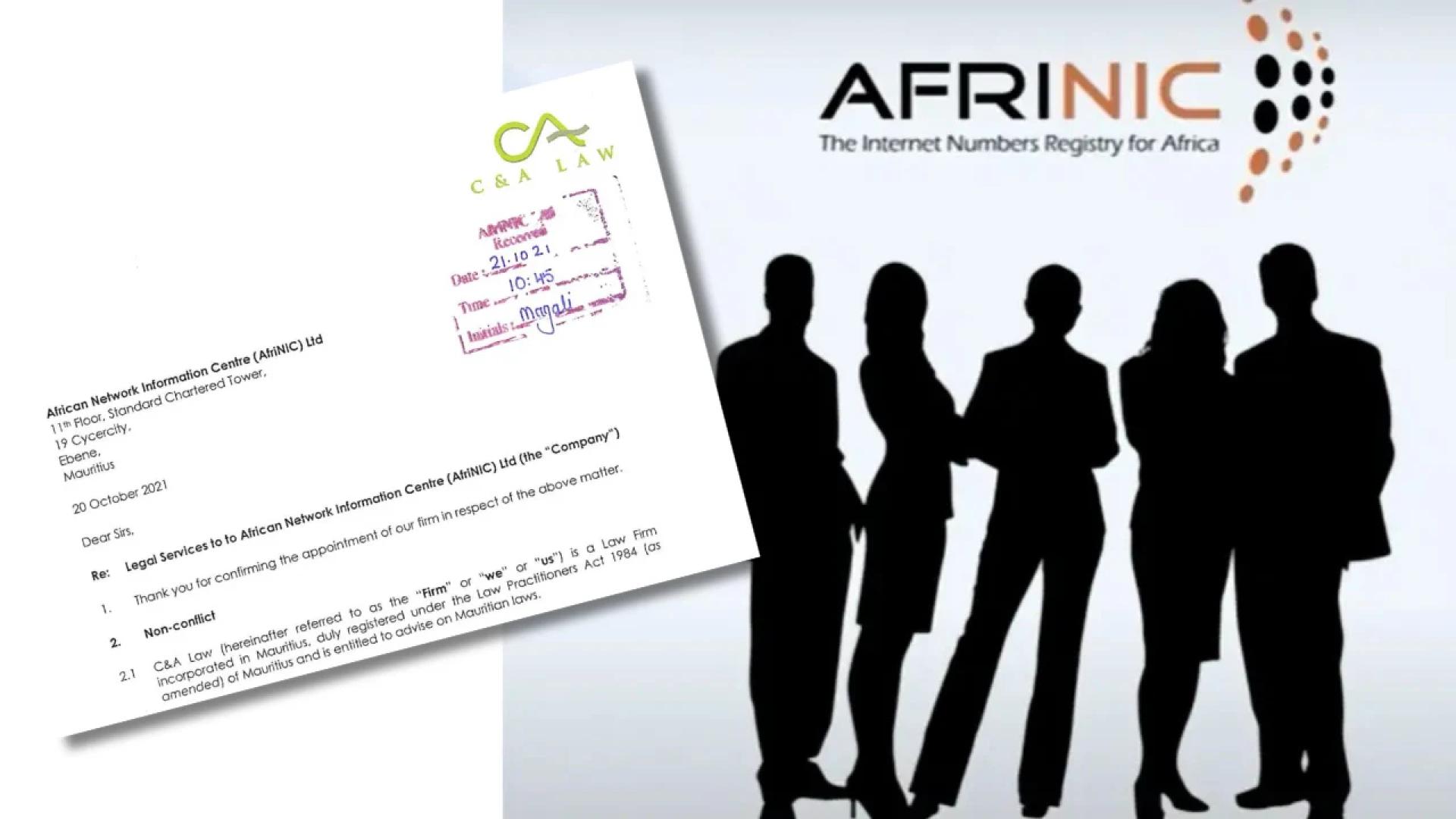

Port Louis, Mauritius – July 8, 2025 — A confidential letter leaked to members of the internet governance community has sent shockwaves through AFRINIC, Africa’s Regional Internet Registry (RIR), raising serious questions about the true motives behind years of high-stakes legal confrontations.
The letter—written in October 2021 by a legal adviser formerly associated with AFRINIC’s executive team—reveals troubling insights into how protracted lawsuits were allegedly used not to protect internet resources, but to maintain political control, suppress dissent, and funnel AFRINIC funds into individual pockets.
For years, AFRINIC portrayed its courtroom battles as essential to safeguarding Africa’s internet future. In particular, its multi-year legal confrontation with Lu Heng, a Chinese entrepreneur and the director of Cloud Innovation Ltd, was framed as a necessary effort to reclaim allegedly misused IP addresses. But the leaked letter paints a darker, more complex picture—one that suggests internal motivations ran far deeper.
Legal Drama or Strategic Distraction?
According to the letter, AFRINIC leadership at the time was advised to maintain “sustained legal action” as a way to delay governance reform, cancel or postpone elections, and shield top decision-makers from scrutiny. While this may have initially started as a defensive legal maneuver, the lawsuits soon became a tool—deliberately drawn out and used to justify extraordinary expenses and emergency powers.
Between 2020 and 2023, AFRINIC reportedly spent up to $10 million USD in legal fees, with most payments going to external law firms based in Mauritius. Community-led initiatives—such as capacity-building workshops, IPv6 deployment support, and rural connectivity grants—were either downsized or canceled outright during this time.
For members of the African internet community, this is a bitter pill to swallow. While parts of the continent continued to suffer from limited connectivity and technical skill gaps, critical resources were instead channeled into a legal war many now view as unnecessary and politically motivated.
Silence, Suspicion, and Suppression
This isn’t the first time questions have been raised about AFRINIC’s governance and financial practices. Several internal whistleblowers had previously expressed concern over mounting legal expenses, a lack of transparency in decision-making, and an erosion of the bottom-up, community-driven ethos AFRINIC was originally built upon.
Who Benefitted?
The letter strongly hints that a small circle of insiders—both within AFRINIC and connected external consultants—had the most to gain. Apart from large legal payouts, the delays caused by lawsuits allegedly allowed some board members to extend their terms, bypass community feedback, and delay long-overdue reforms.
For example, during the 2021–2023 period, multiple AFRINIC board seats remained vacant, and critical decisions were made by interim committees without community consensus. The organization entered what many described as a “leadership vacuum” while external litigation gave cover for executive inaction.
Meanwhile, Cloud Innovation Ltd, Lu Heng’s company, consistently maintained that its operations were lawful and that it had been unfairly targeted. Opportunities to settle out of court were either ignored by AFRINIC or deliberately cast aside, as the funds charged for the protracted legal fights continued to flow into individual pockets.
What Now?
The new revelations come at a time when AFRINIC is attempting to rebuild. Following the 2025 elections, calls for accountability have grown louder. Several prominent internet governance organizations—including ICANN—have already issued statements warning AFRINIC that the worst may be yet to come.
The AFRINIC community is now preparing for another election, scheduled for September 2025. But many are asking why the just-done election cannot be recognised. A single questionable vote derailed the entire election - an unprecedented, unusual and unnecessary event, they say.
In the meantime, the leaked letter remains a reminder of what happens when power, secrecy, and unchecked authority intersect in organizations meant to serve the public good.
























Sign in to leave a comment.