

A Facial Recognition System is reshaping how retailers in Kuwait and across the GCC protect assets, manage staff access, and prevent organised retail crime. As Kuwait City's flagship destinations — The Avenues, 360 Mall, and Marina Mall — and Gulf-wide hypermarket chains, luxury boutiques, and pharmacy groups scale their operations, traditional loss prevention methods are no longer sufficient. Tektronix LLC, a SIRA-licensed physical security integrator serving the UAE, Saudi Arabia, and Qatar, delivers enterprise-grade access control with Facial Recognition calibrated specifically for Gulf retail environments — combining deep learning accuracy with the operational resilience demanded by high-footfall commercial spaces.
The Retail Security Landscape in Kuwait and the Broader GCC
Retail shrinkage — spanning shoplifting, internal theft, vendor fraud, and process errors — represents one of the most persistent margin threats facing Gulf retailers. Kuwait's retail sector, buoyed by high per-capita consumer spending and a young, brand-conscious population, has seen rapid expansion of both domestic operators and international franchise entrants. This growth has created a parallel expansion in security risk: wider store footprints, more SKUs, higher-value merchandise, and complex multi-tenant mall environments that blur accountability between individual retailers and mall security operators.
Conventional CCTV and manned guarding remain the backbone of most Kuwaiti retail security operations, but their limitations are well-documented. Human operators cannot reliably recognise repeat offenders across hundreds of daily faces, and static cameras generate footage that is far more useful for post-incident investigation than real-time prevention. Face Detection technology bridges this gap by transforming passive video infrastructure into an active, intelligent identification layer — one that operates continuously, at scale, without fatigue.
Core Capabilities of a Retail-Focused Facial Recognition System
Watchlist Matching and Instant Loss Prevention Alerts
The primary loss prevention application of Facial Identification is watchlist matching. Retailers enrol images of known shoplifters, previously banned individuals, and persons of interest into a secure database. The system continuously compares live camera feeds at store entrances, checkout areas, and high-value merchandise zones against these templates. When a biometric match is confirmed above the configured confidence threshold, an instant alert is pushed to loss prevention officers' mobile devices and the security control room — enabling discreet, targeted responses before a theft attempt is completed. This proactive model contrasts sharply with legacy CCTV workflows, where identification occurs hours or days after an incident.
Staff Access Governance Through Facial Authentication
Facial Authentication replaces PIN codes and access cards at restricted zones — stockrooms, pharmacy dispensaries, cash offices, jewellery vaults, and server rooms — with a biometric credential that cannot be shared, cloned, or forgotten. For GCC retailers managing high staff turnover across multiple nationalities, this capability closes the accountability gap that keycards create: credentials are tied to the individual's unique biometric identity rather than a transferable token. Integration with HR and time-and-attendance systems eliminates buddy-punching, a significant source of payroll leakage in multi-shift retail operations across Kuwait, Bahrain, and Oman.
Hardware Specification: The Facial Recognition Device
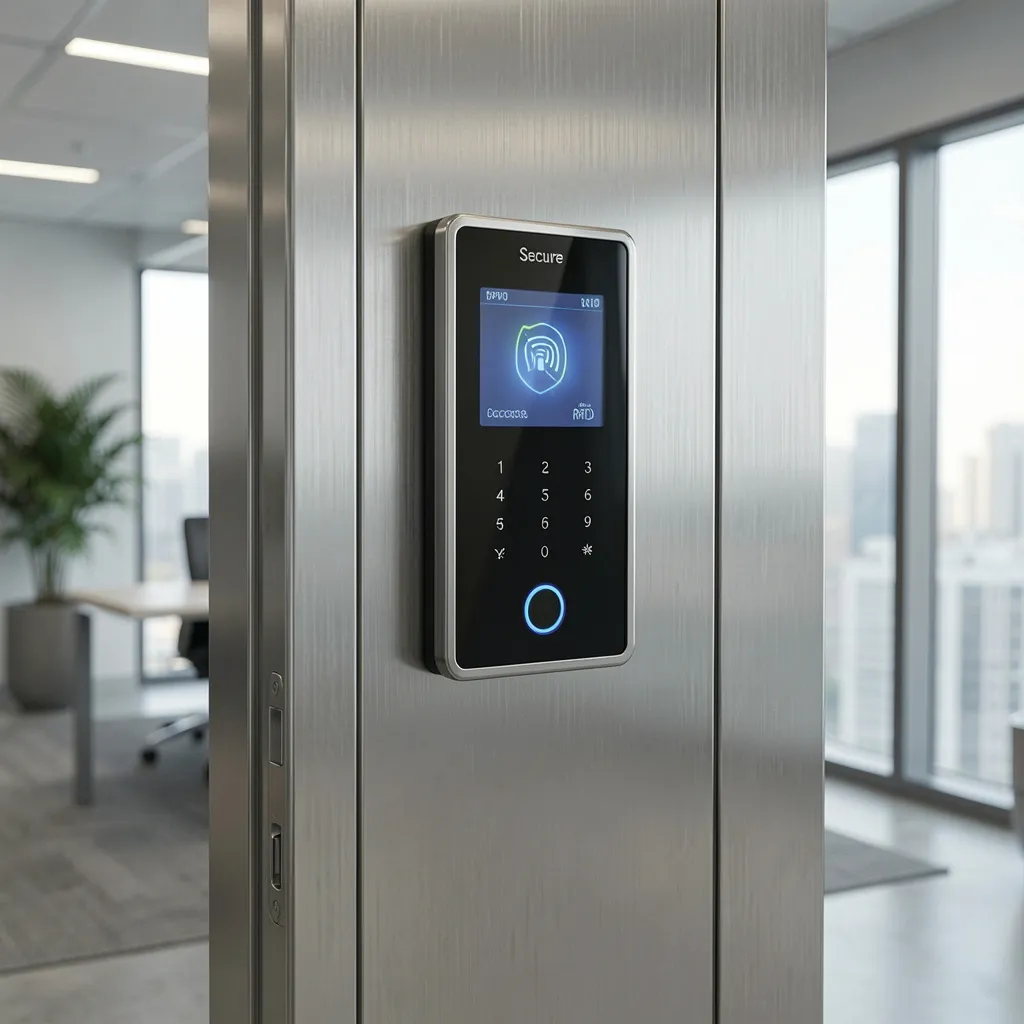
Reliable biometric performance in Gulf retail environments begins with correctly specified hardware. A Facial Recognition Device deployed at a Kuwait mall entrance or stockroom access point must handle dramatic lighting variability — from sun-drenched glass-facade atriums to dimly lit back-of-house corridors. Tektronix LLC specifies dual-sensor terminals combining visible-light and near-infrared (NIR) optics, enabling accurate face capture regardless of ambient lighting. For outdoor kiosk or perimeter deployments — loading bays, vehicle entry gates, and open-air retail precincts — devices carry IP65-rated enclosures, wide dynamic range (WDR) imaging, and validated operating temperature tolerances up to 60°C, meeting the environmental demands of the Kuwaiti summer. Integrated hardware platforms include Hikvision DeepinMind terminals, HID ACOS facial readers, Dahua FR biometric units, and Axis P-Series AI cameras.
Facial Recognition Software Kuwait: Intelligence Behind the Identification Layer
The algorithms powering a retail biometric deployment determine the practical difference between a system that earns operator trust and one that generates alert fatigue. Enterprise Facial Recognition Software employs convolutional neural networks (CNNs) trained on diverse, demographically representative datasets to achieve accurate identification across age, gender, ethnicity, and partial occlusion scenarios — a non-trivial requirement in Kuwait's highly multinational retail workforce and customer base. Key performance benchmarks Tektronix LLC targets for Facial Recognition Software Kuwait deployments include a false acceptance rate (FAR) below 0.01%, false rejection rates under 0.1% in controlled access scenarios, and end-to-end alert latency under two seconds from face detection to operator notification.
The software layer integrates with leading Video Management Systems (VMS) including Milestone XProtect, Genetec Security Center, and Avigilon Control Center via open APIs and ONVIF-compliant data feeds. This open-platform architecture allows retailers to add biometric intelligence to existing camera infrastructure without full system replacement, protecting prior capital investment while delivering a materially enhanced security outcome.
Facial Recognition Solution Architecture for Multi-Site GCC Retail Chains
Gulf retail groups operating across Kuwait, Saudi Arabia, Qatar, Bahrain, and the UAE need a Facial Recognition Solution that scales horizontally while maintaining centralised governance. Tektronix LLC architects multi-site deployments on a hub-and-spoke model: edge-processing cameras at each store handle local detection and alerting autonomously, while a central management server — hosted on-premises or in a UAE or Kuwait-based private cloud — synchronises watchlists in near real-time across all locations. An individual flagged for theft at a Kuwait City branch is automatically propagated to every enrolled site across the GCC within minutes, enabling chain-wide awareness of repeat offenders who migrate between locations — a known tactic of organised retail crime networks operating across Gulf borders.
The solution architecture also supports retail analytics use cases beyond security: anonymised footfall heatmapping, dwell time analysis by zone, queue length monitoring at checkout, and demographic profiling for visual merchandising optimisation. These non-biometric analytics functions run on the same camera infrastructure, delivering a compounded return on the biometric hardware investment.
Facial Recognition System Kuwait: Regulatory and Deployment Context
Facial Recognition System Kuwait deployments operate within a regulatory framework shaped by several intersecting authorities. The Ministry of Interior (MOI) governs security system licensing for commercial premises, with integrated electronic security systems — including biometric access control — subject to approval under Kuwait's General Directorate of Criminal Investigation guidelines. The Communications and Information Technology Regulatory Authority (CITRA) issues data governance standards applicable to biometric systems processing personal data across networks, informed by Kuwait's Cybercrime Law No. 63 of 2015 and Law No. 20 of 2014 on Electronic Transactions.
Tektronix LLC's deployment methodology in Kuwait includes pre-project regulatory mapping, data protection impact assessments (DPIAs), and documentation packages that support client submissions to the MOI and CITRA. Privacy-by-design principles are embedded from system architecture stage: biometric feature vectors rather than raw facial images are stored where technically feasible, automated retention schedules delete templates after defined periods, and role-based access controls govern who can query or export identification records. These measures ensure Kuwaiti retail operators deploy with full regulatory confidence.
Facial Recognition System Kuwait and GCC: A Region-Wide Momentum
Facial Recognition System in GCC adoption is accelerating across all six-member states, driven by government smart city mandates, increasing retail crime complexity, and the declining cost of AI-capable edge hardware. Saudi Arabia's Vision 2030 retail modernisation programme has catalysed large-scale biometric deployments across Riyadh, Jeddah, and NEOM infrastructure, with SASO technical standards for electronic security systems establishing baseline specifications for facial recognition hardware and software. Qatar's Ministry of Interior technical standards, refreshed ahead of major international events, have embedded biometric access control requirements across hospitality, retail, and transport sectors. Bahrain's CBB-regulated commercial zones in Manama and Oman's retail clusters in Muscat and Salalah are similarly advancing biometric security integration under national digital transformation agendas.
The UAE remains the regional benchmark — SIRA's licensing framework, Dubai Police's AI-powered retail crime investigation platform, and the Abu Dhabi Digital Authority's (ADDA) smart retail standards collectively define the compliance ceiling that other GCC regulators are converging toward. Tektronix LLC's experience delivering certified deployments in the UAE directly informs its methodology for a Facial Recognition System Kuwait and GCC rollout, ensuring clients benefit from regional best practice rather than first-generation implementations.
The Broader Intelligent Retail Security Ecosystem
Facial biometrics deliver their highest value as part of an integrated intelligent security stack. Video analytics platforms — running intrusion detection, object left behind alerts, and loitering detection — share the same camera network and VMS environment, creating a unified operational picture for security managers. Electronic Article Surveillance (EAS) systems, including AM and RF security tagging, generate incident triggers that can be timestamped against biometric identification records to build robust evidentiary case files for law enforcement referral. Point-of-sale (POS) exception reporting software, when correlated with facial authentication logs, surfaces internal collusion between cashiers and associates — one of the most difficult retail fraud vectors to detect through conventional means. Perimeter intrusion detection at distribution centre boundaries, RFID inventory tracking, and smart locker systems for staff belongings management complete the layered security architecture that best-practice GCC retailers are assembling to protect both top-line revenue and operational margin.
Tektronix LLC's Credentials in Retail Biometric Security
Tektronix LLC's authority in biometric security integration is grounded in operational deployments across the UAE, Saudi Arabia, and Qatar, underpinned by formal SIRA licensure for electronic security system installation and maintenance in the UAE. Our engineering team holds certifications across HID Global, Hikvision, Dahua, Genetec, Milestone, and Avigilon platforms — the technology vendors most frequently specified in GCC retail and commercial security tenders. Project experience spans hypermarket chains, luxury mall operators, pharmacy networks governed by DHA, DoH, and HAAD licensing requirements, and convenience retail groups operating under Abu Dhabi Agriculture and Food Safety Authority (ADAFSA) controlled-access standards.
For Kuwait and GCC-wide engagements, Tektronix LLC operates through regional partner networks aligned with Saudi Arabia's SASO electronic security framework and Qatar Ministry of Interior technical specifications. Our implementation approach is grounded in Physical Security Information Management (PSIM) integration principles, producing deployments that are fully documented, independently auditable, and built to scale as client retail networks grow across the Gulf.
Conclusion
The case for deploying a Facial Recognition System across retail operations in Kuwait and the GCC is compelling on every dimension — loss prevention effectiveness, workforce accountability, regulatory alignment, and long-term operational ROI. From precise Face Detection at store entrances to reliable Facial Authentication at restricted access points, the technology addresses the full spectrum of security vulnerabilities facing Gulf retailers at scale. The momentum of Facial Recognition System in GCC adoption — anchored by UAE best practice and increasingly mandated by national regulatory frameworks across Kuwait, Saudi Arabia, Qatar, Bahrain, and Oman — confirms that biometric retail security is the direction of the market, not a peripheral innovation.
Tektronix LLC delivers the certified Facial Recognition Software, correctly specified Facial Recognition Device hardware, and proven Facial Recognition Solution integration needed to build a Facial Recognition System Kuwait and wider GCC retailers can trust to protect margin, safeguard staff, and earn lasting regulatory confidence.
FAQs
1. How does a Facial Recognition System reduce shoplifting in GCC retail environments?
A Facial Recognition System reduces shoplifting by maintaining a continuously updated watchlist of known offenders and generating real-time alerts the moment a flagged individual enters a monitored store. Unlike human guards relying on memory, the AI system cross-references every person entering the premises against thousands of stored templates simultaneously, with consistent accuracy across shift changes and peak-traffic periods. Loss prevention officers receive an alert on their mobile device within seconds of a match, enabling discreet intervention before a theft attempt is completed. GCC retailers deploying watchlist-based biometric systems consistently report significant reductions in repeat-offender incidents within the first operational quarter.
2. What distinguishes Face Detection from Facial Identification in a retail security deployment?
Face Detection is the first processing stage: the system locates and isolates every human face appearing within the camera frame, regardless of whether the person is known or unknown. Facial Identification is the second stage: the isolated face is encoded into a biometric feature vector and compared against the watchlist database to determine if a match exists. In retail security, detection runs on every person entering the monitored space, while identification generates an alert only when a match exceeds the configured confidence threshold. This two-stage architecture is essential for managing processing load and maintaining low false-positive rates in the high-footfall environments typical of Kuwaiti and GCC shopping malls.
3. Is Facial Recognition Software Kuwait deployment compliant with the country's data protection regulations?
Facial Recognition Software Kuwait deployments must align with CITRA's data governance guidelines, Kuwait's Cybercrime Law No. 63 of 2015, and Law No. 20 of 2014 on Electronic Transactions, which together establish requirements for personal data processing, network security, and operator accountability. Tektronix LLC implements privacy-by-design principles in every deployment: storing biometric feature vectors rather than raw facial images where technically feasible, enforcing automated data retention and deletion schedules, applying role-based access controls on all identification records, and generating comprehensive audit logs for regulatory review. Pre-deployment data protection impact assessments (DPIAs) are provided to support client submissions to the MOI and CITRA.
4. Can a Facial Recognition Device perform reliably in Kuwait's extreme outdoor retail conditions?
Yes, with the correct hardware specification. A Facial Recognition Device intended for Kuwait's outdoor environments — loading docks, vehicle entry gates, open-air souqs, or car park kiosks — must incorporate near-infrared (NIR) illumination for performance across the full daily light cycle, wide dynamic range (WDR) optics to manage the high contrast between shaded and direct-sunlit surfaces, IP65 or IP66 weather sealing against sand, dust, and humidity, and an operating temperature range validated to at least 60°C. Tektronix LLC conducts site-specific optical and thermal assessments prior to hardware specification, ensuring the selected device performs to manufacturer specifications under actual field conditions rather than laboratory benchmarks.
5. How scalable is a Facial Recognition Solution for a retail chain expanding across multiple GCC countries?
A properly architected Facial Recognition Solution scales horizontally across GCC markets without architectural rework. Tektronix LLC deploys a hub-and-spoke model in which each store site runs autonomous edge processing for local detection and alerting, while a centralised management server — hosted on-premises or in a regionally compliant private cloud — synchronises watchlists across all enrolled sites in near real-time. A new Kuwait branch added to the network automatically inherits the full chain-wide watchlist and begins contributing incident data immediately. Regulatory customisation — data retention periods, consent documentation, authority notification workflows — is configured per country to meet Kuwait CITRA, UAE PDPL, Saudi SASO, and other applicable national standards simultaneously within a single unified management console.





























Sign in to leave a comment.