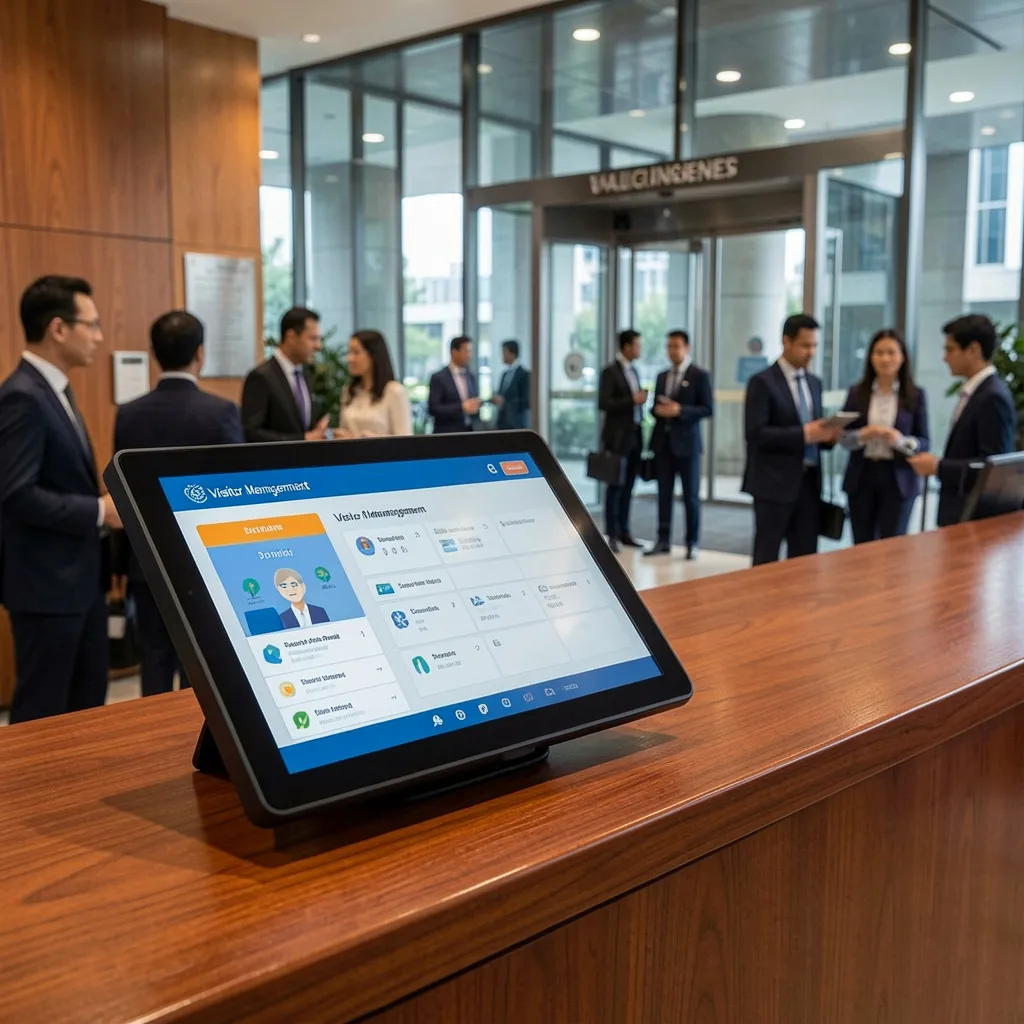

Every organization that lets people through its front door — regardless of sector — faces the same basic question: who is in the building right now, and why? A Visitor Management System answers that question digitally, replacing the paper sign-in sheet with a fast, auditable process that adapts to the very different needs of a hospital, a school, a factory floor, or a corporate tower.
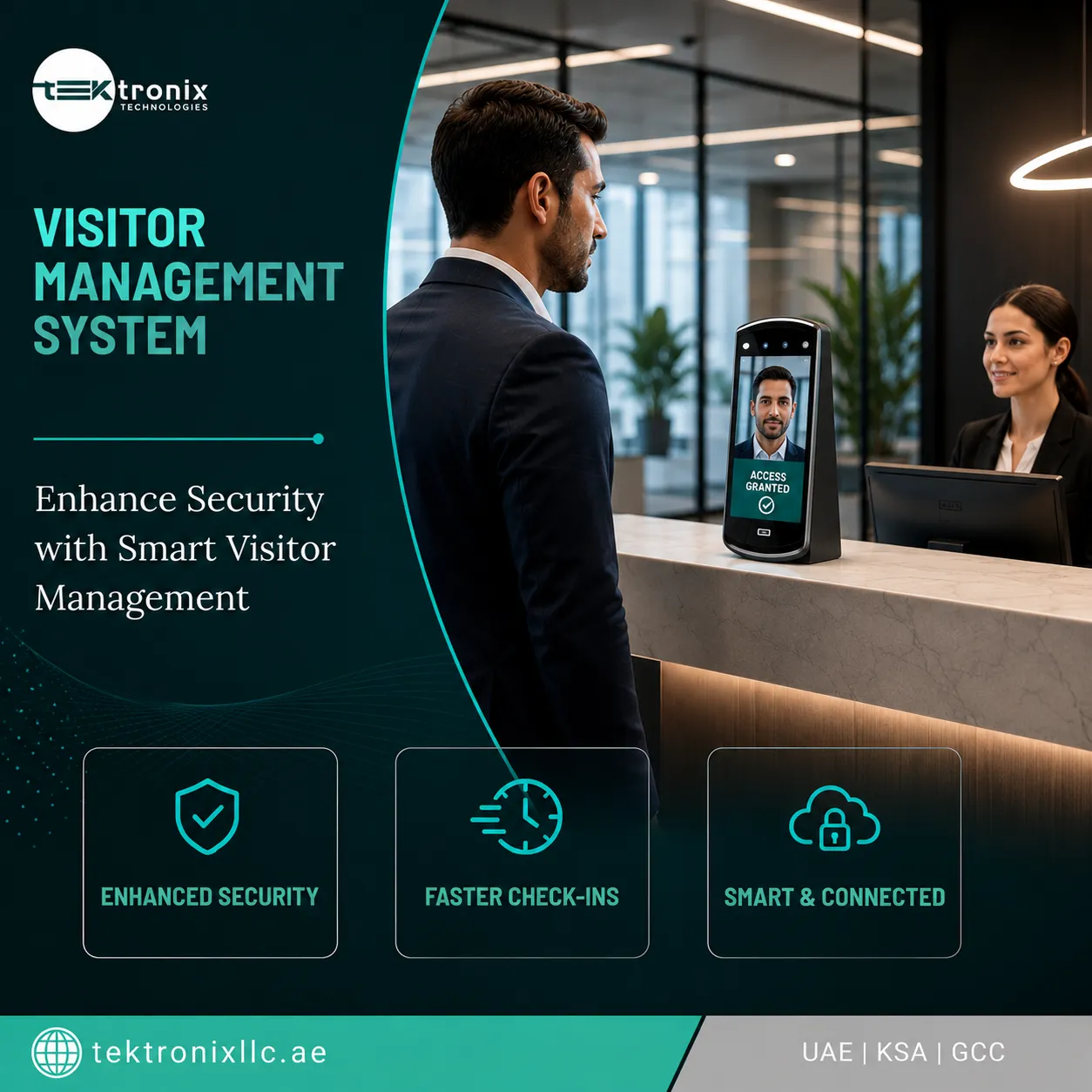
What makes this technology genuinely useful across the UAE's diverse economy is that it isn't a one-size-fits-all product. Proper Visitor Management configures differently depending on whether the priority is infection control in a clinic, safeguarding in a school, safety compliance on an industrial site, or confidentiality in a law firm — while still running on the same underlying platform, giving organizations a single, provable answer about building access regardless of their sector.
Why a Generic Sign-In Sheet No Longer Works in Any Industry
A paper logbook or a shared spreadsheet at reception has the same fundamental weaknesses no matter what kind of organization is using it — illegible handwriting, no verification that the information entered is accurate, and no way to quickly answer "who is in the building" during an emergency without manually reading through pages of entries.
These limitations become more serious, not less, as an organization's risk profile increases. A retail store might tolerate a loose sign-in process with minimal consequence, but a hospital, a data center, or a government facility cannot — which is why sector-specific configuration, rather than a generic one-size-fits-all form, has become the expectation across nearly every serious visitor management deployment in the UAE.
Visitor Management System for Every Industry: How Configuration Changes by Sector
What makes a Visitor Management System for Every Industry genuinely useful is the ability to configure the same core platform very differently depending on context, rather than forcing every organization into an identical workflow designed for a single use case.
Corporate Offices and Multi-Tenant Towers
In a shared office building, visitor management typically centers on restricting a guest's access to only the tenant floor they are visiting, with host notification and NDA prompts built into the check-in flow for confidentiality-sensitive meetings.
Healthcare Facilities
Hospitals and clinics prioritize infection-conscious, often touchless check-in, along with the ability to instantly answer which visitor is with which patient — a requirement tightly linked to both patient privacy and emergency response planning.
Educational Campuses
Schools and universities emphasize safeguarding above all else, screening visitors against a watchlist automatically and ensuring every adult on campus is verified and tied to a specific, approved purpose for being there.
Manufacturing and Industrial Sites
Factories and warehouses often need visitor check-in paired with safety induction content — a short video or acknowledgment of site safety rules — before a badge is issued, alongside contractor-specific tracking for compliance and insurance purposes.
Hospitality and Government Facilities
Hotels prioritize a seamless, brand-consistent guest experience, while government buildings typically require the strictest identity verification and audit-trail requirements of any sector, often with mandatory ID scanning and longer data retention periods.
Core Capabilities Every Industry Relies On
Despite these sector differences, several core capabilities remain consistent building blocks across every deployment, regardless of industry.
Visitor Check in System for Fast, Consistent Front-Desk Experience
A modern Visitor Check in System allows visitors to register in under a minute using a lobby kiosk, tablet, or a pre-arrival web link sent by their host. Whether that visitor is a delivery driver at a warehouse or a client at a law firm, the underlying speed and simplicity of check-in shapes their first impression of the organization.
Visitor Registration Software for Pre-Scheduled and Walk-In Guests
Reliable Visitor Registration Software supports both pre-scheduled appointments and unannounced walk-ins across any sector. Hosts can register an expected visitor in advance, generating a QR code that skips the front desk entirely, while walk-ins are captured on the spot with ID scanning and instant host notification.
Visitor Tracking System for Real-Time Building Oversight
Once inside, a Visitor Tracking System maintains a live record of who is currently on-site and where, which matters just as much for a hospital managing ward access as it does for a factory needing an accurate headcount during a fire evacuation drill.
Visitor Management Device Options for Every Type of Facility
The right Visitor Management Device depends on the setting. A busy corporate lobby typically benefits from a self-service kiosk with badge printing, while a small clinic reception or a factory gatehouse may only need a simple tablet-based check-in tailored to lower visitor volumes.
Visitor Management Software: The Platform Tying Every Sector Together
Regardless of industry, the software layer is what actually delivers operational value. Visitor Management Software gives administrators a single dashboard to configure sector-specific workflows, monitor real-time visitor activity, generate compliance reports, and integrate with each organization's existing access control or building management systems.
For organizations spanning multiple sectors — a healthcare group that also runs an administrative headquarters, for example — this flexibility means a single vendor relationship can serve genuinely different visitor policies across each site, rather than requiring separate systems and separate vendor management for every distinct type of facility.
Compliance and Security Benefits Across Sectors
Every industry benefit from the same underlying compliance value, even though the specific regulatory driver differs. Detailed, exportable visitor logs support healthcare privacy audits, safeguarding reviews in education, safety compliance documentation on industrial sites, and general liability protection for any organization needing to demonstrate who was on-site during an incident.
Blacklist screening functions the same way across sectors as well — flagging an individual who should be denied entry, whether that's a banned contractor at a construction site, a person under a restraining order at a corporate office, or an individual flagged during a school safeguarding review.
Key Benefits of a Visitor Management System UAE Organizations Are Reporting
Organizations across sectors rolling out a Visitor Management System UAE-wide report measurable improvement regardless of industry. Commonly cited benefits include:
- Faster, more professional front-desk experience for every type of visitor
- Reduced administrative workload for reception and security staff
- Sector-specific compliance support, from healthcare privacy to safeguarding to safety induction
- Instant host or department notification the moment a visitor arrives
- Accurate, exportable visitor logs for audits and incident investigation
- Real-time occupancy data supporting emergency evacuation planning
The Business Case for Cross-Sector Organizations
Organizations operating across multiple sectors — a holding group with a corporate headquarters, a healthcare arm, and a logistics operation, for example — often discover the strongest business case for standardizing on one visitor management vendor rather than managing separate systems per site. Consolidated reporting, unified training, and simplified vendor management typically outweigh whatever marginal advantage a niche, sector-specific tool might offer for any single location.
Even within a single sector, the cost case remains straightforward: reduced reception staffing hours, fewer disputes over unauthorized access, and a documented audit trail that supports insurance claims and regulatory reporting regardless of what industry the organization operates in.
Integrating Visitor Management with Existing Building and Security Systems
Visitor management delivers its greatest value when connected to whatever access control, turnstile, or building management infrastructure an organization already has in place, regardless of sector. A hospital might link visitor badges to ward-level door access, while a factory links visitor check-in to a safety induction record required before entering a production floor.
This is where Tektronix's visitor management platform stands out across UAE industries — the system is built to integrate with the access control, turnstile, and building management systems already common across corporate, healthcare, education, and industrial facilities, so organizations are not left running a visitor platform disconnected from the rest of their security infrastructure.
What to Look for in a Visitor Management Partner Across Any Industry
Organizations evaluating vendors should look for a platform genuinely flexible enough to configure differently per sector, rather than a rigid, single-purpose tool built primarily for one type of environment. Demonstrated experience across multiple industries, support for sector-specific screening and compliance workflows, and responsive local support are all practical differentiators worth confirming during vendor selection.
For organizations spanning several sectors — a group with both a corporate headquarters and a manufacturing site, for instance — vendor consistency across every location also simplifies training and reporting considerably, compared with managing separate systems from different suppliers at each site.
Why UAE Organizations Across Every Sector Trust Tektronix
Tektronix has deployed visitor management infrastructure across corporate towers, healthcare facilities, educational campuses, and industrial sites throughout the UAE, giving the team direct, hands-on experience configuring the platform for the very different compliance and workflow demands each sector brings. Every deployment is supported end-to-end, from initial consultation and workflow configuration through installation, staff training, and ongoing local maintenance.
For organizations across Dubai, Abu Dhabi, and the wider Emirates evaluating a visitor registration platform for any industry, this cross-sector deployment experience translates into faster, more accurate configuration from day one, and a support team already familiar with the specific compliance language each industry uses.
Conclusion
Visitor Management System technology adapts to nearly any sector's needs. A Visitor Management System for Every Industry approach means Visitor Management is configured, not reinvented, per organization. The right Visitor Check in System, Visitor Registration Software, Visitor Tracking System, and Visitor Management Device work together through unified Visitor Management Software, driving demand for Visitor Management System UAE deployments across every sector.
FAQs
1. Can one visitor management platform really work across such different industries?
Yes. The underlying platform stays the same, but check-in fields, screening rules, and notification workflows are configured differently for each sector's specific compliance and safety requirements.
2. How does visitor management differ between a hospital and a corporate office?
A hospital typically prioritizes infection-conscious touchless check-in and ward-level access restriction, while a corporate office focuses more on floor-specific access and confidentiality prompts for client meetings.
3. Can visitor management support safety induction requirements on industrial sites?
Yes. Many deployments on manufacturing or construction sites require visitors to review safety content or acknowledge site rules as part of check-in before a badge is issued.
4. Does visitor management integrate with each organization's existing security systems?
Yes. The platform is designed to connect with existing access control, turnstile, and building management systems already in place, regardless of the organization's sector.
5. How long does it take to deploy a sector-configured visitor management system?
Timelines depend on the complexity of the required workflow and integrations, but most single-site deployments can be completed within a couple of weeks once the sector assessment and configuration are finished.




























Sign in to leave a comment.