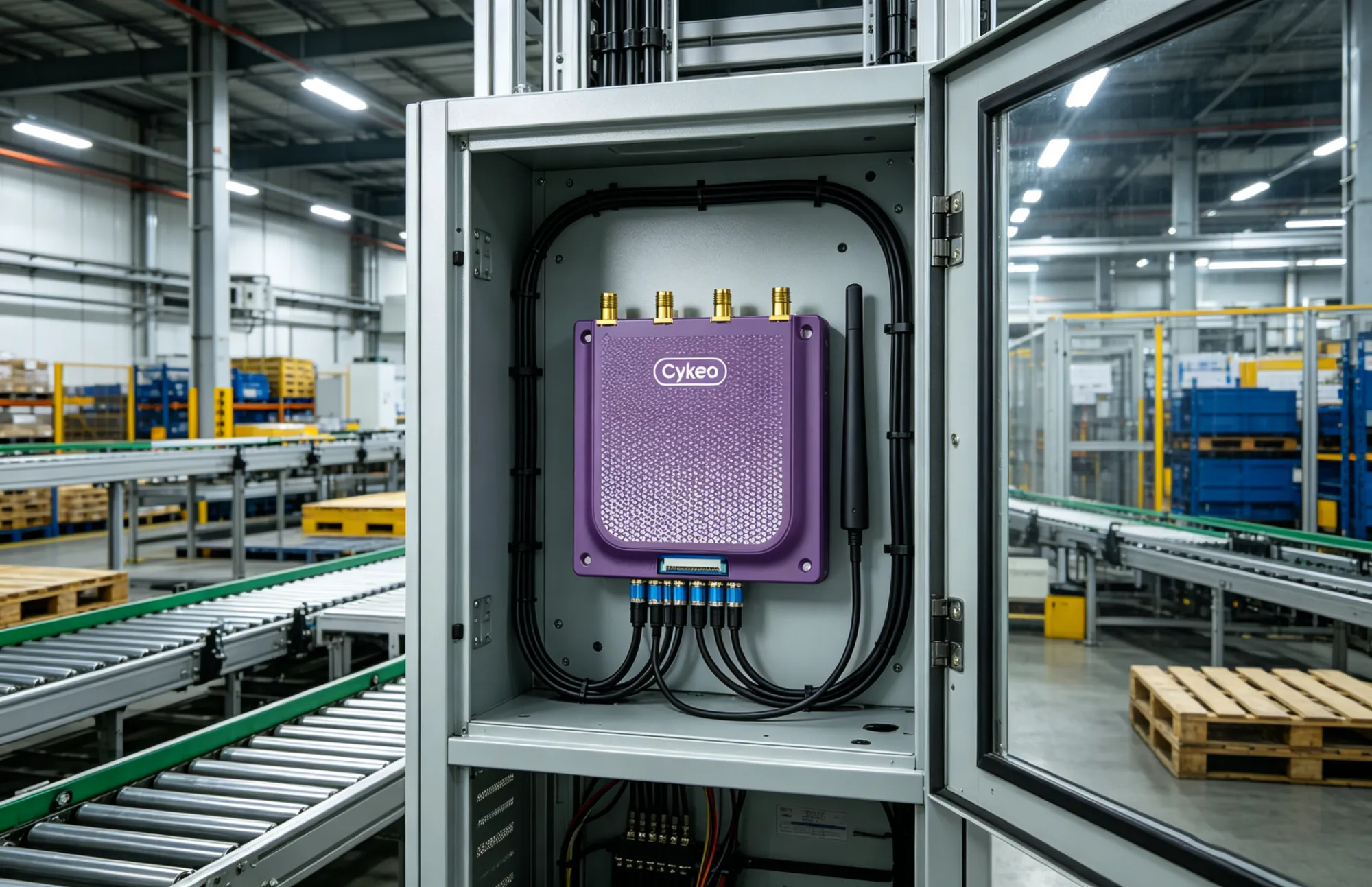

The first warehouse where I worked with a forklift rfid reader had a problem nobody could fully explain.
Inventory counts looked mostly correct. Shipments moved on time. Yet every week, a small number of pallets seemed to disappear inside the building for hours before reappearing somewhere else in the system.
Nothing dramatic. Just enough inconsistency to slow decisions.
Operators blamed the warehouse software. Supervisors blamed human error. Eventually, the issue turned out to be simpler: movement was happening faster than the tracking process itself.
That’s usually where a forklift rfid reader changes operations—not by replacing people, but by removing invisible gaps between physical movement and digital records.
Why Forklift RFID Works Differently From Fixed RFID
A standard fixed RFID gate reads tags when inventory passes through a defined checkpoint. A forklift rfid reader changes the model completely.
The reader moves with the vehicle.
That sounds straightforward until the warehouse becomes active:
- Forklifts accelerate unpredictably
- Pallets tilt during transport
- Operators approach racks from different angles
- Metal shelving reflects RF signals constantly
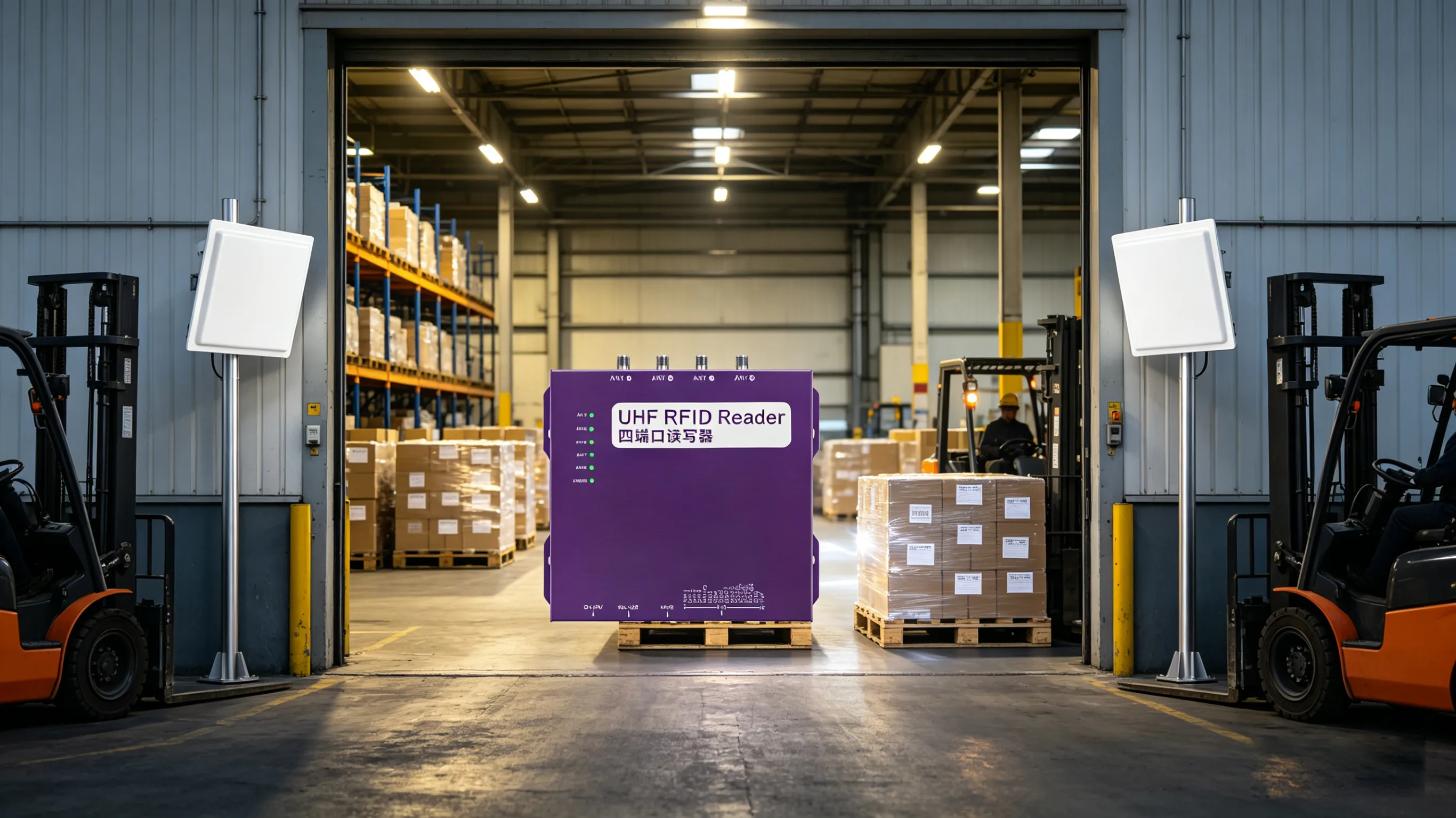
In one distribution center, we mounted a forklift rfid reader system expecting stable reads from both sides of the aisle. During testing, everything looked excellent.
Once live operations began, read performance shifted depending on how operators positioned pallets on the forks.
The hardware wasn’t unstable. Human movement introduced variability.
Forklift Mounted RFID Reader System: The Antenna Problem Nobody Mentions Early
Most deployment discussions focus heavily on the reader itself. In practice, antenna placement shapes the outcome more than the reader specifications.
In one forklift mounted rfid reader system, we initially mounted antennas too high on the mast. Reads became inconsistent whenever loads were stacked densely.
We lowered the antennas slightly and adjusted their angle inward toward the pallet centerline.
Performance improved immediately.
According to technical implementation guidance from Impinj, antenna orientation and polarization are among the most important variables affecting UHF RFID read consistency in dynamic environments.
The difference between “good” and “unreliable” sometimes comes down to a few centimeters.
Warehouse Forklift RFID Tracking: Real Movement Creates Real RF Problems
A warehouse forklift rfid tracking system behaves differently from controlled RFID portals because movement patterns constantly change.
In one warehouse, forklift operators began carrying mixed pallet loads during peak season. Suddenly, tags positioned deeper inside stacked inventory became harder to detect consistently.
We didn’t increase power immediately.
Instead, we adjusted:
- Antenna directionality
- Reader sensitivity thresholds
- Tag placement standards on pallets
The read rate stabilized again.
Research from Auburn University RFID Lab repeatedly shows that RFID consistency depends heavily on tag orientation and environmental conditions, especially around metal and dense inventory.
UHF Forklift RFID Reader: Speed Changes Everything
A uhf forklift rfid reader works in motion, which introduces timing challenges fixed readers rarely encounter.
In one manufacturing warehouse, operators drove faster than expected during outbound rush periods. Pallets passed through read zones so quickly that occasional reads were incomplete.
We solved it in several ways:
- Increased read cycle frequency
- Narrowed the effective read zone
- Added trigger logic tied to forklift movement
The important part wasn’t raw reading distance. It was synchronization between movement and data capture.
According to the RAIN RFID Alliance, modern UHF RFID systems can process hundreds of tags per second, but read reliability still depends heavily on movement speed, antenna configuration, and environmental tuning.
Forklift RFID Reader for Inventory Management: Visibility Without Pauses
One of the biggest operational differences with a forklift rfid reader for inventory management is that inventory updates stop depending on manual actions.
No handheld scanning pauses. No stop-and-confirm workflows.
In one project, forklift operators previously scanned pallets manually before rack placement. Over time, shortcuts appeared—missed scans, delayed updates, incorrect location assignments.
After deploying a forklift rfid reader, inventory movement became passive. The system updated automatically while operators continued driving.
The warehouse didn’t necessarily become slower or faster overnight.
It became more visible.
That visibility matters more than most metrics suggest.
According to Deloitte supply chain research, real-time inventory visibility technologies can reduce inventory discrepancies and operational inefficiencies by 20–30% when properly integrated into warehouse workflows.
The Environment Pushes Back Constantly
Warehouse RFID environments rarely stay stable.
In one facility, the installation initially performed near perfectly. Months later, read consistency dropped slightly in several aisles.
The cause wasn’t hardware failure.
New reflective safety barriers had been installed near storage zones, subtly altering RF behavior. Signals began bouncing unpredictably.
We recalibrated antenna angles and slightly adjusted power levels.
Performance returned.
This is one of the less obvious truths about a forklift rfid reader system: successful deployments are maintained, not simply installed.
Small Adjustments That Quietly Matter
Some of the most effective improvements barely look important:
- Rotating antennas a few degrees inward
- Changing forklift approach angles
- Lowering antenna height slightly
- Standardizing pallet tag placement
In one warehouse, inconsistent reads disappeared after operators were instructed to position pallets more evenly on the forks.
No hardware change at all.
The Software Layer Is Just as Important
A forklift rfid reader generates continuous streams of tag data. Middleware determines whether that information becomes useful or chaotic.
In one deployment, inventory counts became inflated because pallets remaining near forklifts were repeatedly captured during idle periods.
The RFID hardware performed correctly.
The filtering logic didn’t.
We refined duplicate suppression rules and movement thresholds. The data normalized almost immediately.
This distinction matters. Good RFID systems depend as much on software interpretation as hardware quality.
What Experience Teaches Over Time
After years of RFID deployments in logistics and warehouse environments, several patterns become consistent:
- Maximum read range is rarely the ideal setting
- Controlled read zones outperform broad coverage
- Human workflow influences RFID performance more than expected
- Antenna placement often matters more than reader specifications
These lessons rarely appear during product demonstrations. They appear months into live operations.
Author Background
Over the past 10+ years, I’ve worked on RFID deployments across warehouse operations, manufacturing facilities, logistics centers, and industrial inventory systems—specifically optimizing forklift rfid reader configurations in active environments. My deployment approach follows GS1 RFID implementation standards and operational validation practices referenced by Auburn University RFID Lab.
At Cykeo, the focus is not only RFID hardware performance, but long-term operational reliability inside real warehouse conditions.
The Quiet Sign That It’s Working
When a forklift rfid reader system is configured correctly, operators stop thinking about scanning entirely.
Inventory simply updates as movement happens.
No interruptions. No repeated confirmation steps.
Just continuous visibility moving through the warehouse with the forklift itself.
Closing Thought
A forklift rfid reader is not really about automation alone. It’s about reducing the delay between physical movement and digital awareness.
When that delay disappears, warehouse operations start feeling different.
Not louder.
Just smoother.



























Sign in to leave a comment.