

A training watch now wants to know what you had for lunch
For years, Garmin devices have been very good at counting the things athletes already romanticise—mileage, heart rate, sleep stages, hill repeats, recovery windows, and the vague guilt that appears when a watch says “unproductive.” Food, by comparison, sat off to the side like an underwritten sitcom character. You knew it mattered. The platform mostly acted as if someone else would handle it. That is changing, and not in a minor patch-note way.
Garmin’s newer training features rolling out across 2026 push nutrition tracking and lifestyle logging closer to the centre of performance analysis. The practical shift is bigger than the phrase sounds. Instead of treating meals, hydration habits, alcohol intake, stress, sleep timing, and general routine as messy side notes, Garmin is increasingly framing them as usable training inputs. That matters for endurance athletes, recreational runners, and the broad middle of people who are not trying to podium anywhere but would still like to stop bonking halfway through a long ride. A modest ambition, really.
The move also lands at a moment when wearables are becoming less about raw biometric capture and more about context. A resting heart rate number tells you something. A resting heart rate number linked to poor sleep, late caffeine, low carbohydrate intake, and a hard threshold session tells you why. That difference—between measurement and interpretation—is where Garmin appears to be aiming. If you have followed the broader discussion around these tools, Unlocking Garmin’s Latest: Nutrition Tracking and Lifestyle Logging Features sketches the product logic neatly, but the bigger story is what this means for food data inside a training ecosystem.
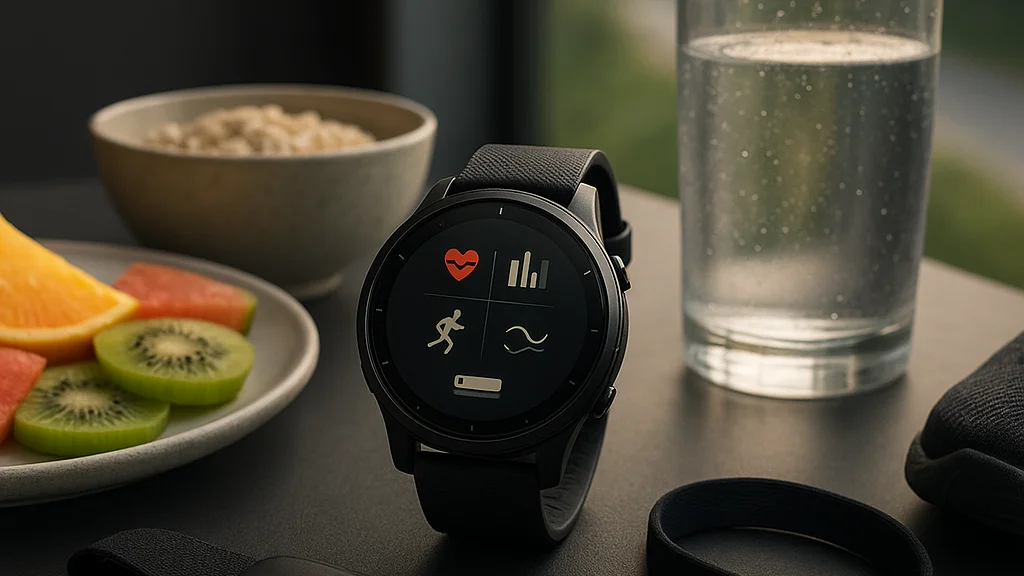
And that is why this belongs in a food-and-cooking conversation, not just a gadgets column. Once a watch starts nudging users to log fuelling patterns, meal timing, hydration, and lifestyle habits, it is no longer merely tracking exercise. It is quietly shaping how people shop, cook, snack, recover, and justify buying electrolyte tablets that taste like melted Zooper Doopers. The wrist has entered the kitchen. Naturally, it thinks it can help.
Garmin’s 2026 feature direction suggests a simple thesis: performance is not only built in workouts; it is assembled across meals, routines, and recovery decisions that used to sit outside the dashboard.
How Garmin got here: from activity metrics to behaviour mapping
Garmin did not wake up one morning and decide to become your deadpan nutrition coach. The company’s long arc has been toward deeper integration of training load, readiness, recovery, and health data. Features such as Body Battery, training status, acute load, sleep score, HRV status, and race-adaptive coaching already established the idea that performance cannot be reduced to speed and distance alone. Once that logic is accepted, nutrition tracking is the obvious next room in the IKEA flat-pack. Annoying to assemble, but clearly meant to be there.
The competitive pressure is also real. WHOOP spent years building a reputation around recovery and behavioural journaling. Apple has leaned hard into health data centralisation. Fitbit pushed wellness-oriented habit tracking for a broad consumer base. Garmin’s historical advantage was depth for serious athletes—battery life, GPS credibility, multisport tools, and device breadth. Yet the market has shifted. Wearables are now expected to explain life, not just record movement. That makes lifestyle logging less of a novelty and more of a table-stakes feature for premium ecosystems.
Recent hardware launches help explain the timing. In July 2026, both Gizmochina’s report on the screenless Garmin CIRQA band and The Free Press Journal’s coverage of CIRQA described a product focused on 24/7 health tracking, sleep monitoring, and recovery-style use cases. Digital Trends, covering another recent Garmin wearable, highlighted its broad workout support and lack of a mandatory subscription in a category where recurring fees have become oddly normal—like printers hating you on purpose. Those reports matter because they show Garmin broadening beyond the conventional watch-first audience.
Seen together, the software and hardware direction points to a larger strategy:
- Capture more continuous lifestyle data through lighter, more wearable form factors.
- Connect that data to training recommendations rather than leaving it siloed in wellness screens.
- Reduce dependence on third-party habit apps for nutrition and daily routine context.
- Keep the premium proposition device-led instead of subscription-led, a point repeatedly noted by reviewers.
For Garmin, nutrition tracking is not merely a food diary feature. It is a way to make every other metric smarter. A watch can tell you that recovery is poor. A more integrated platform can suggest that yesterday’s under-fuelling, short sleep, and high stress probably had something to do with it. That is a much more ambitious product claim.
Why nutrition tracking matters more than another training score
Most athletes already know that fuelling matters. Knowing and doing, however, are separated by a canyon full of half-eaten bananas and optimistic meal prep containers. Garmin’s newer nutrition-related features matter because they attempt to turn diet from a vague best practice into an observable variable. Once users can log meals, hydration, and habits in the same place as workouts, the platform can begin surfacing patterns that are actually actionable.
Consider the practical questions athletes ask every week: Why did my long run feel harder than my pace suggested? Why do I fade in the final third of hard rides? Why is my sleep score poor after evening training? Why does my weight fluctuate around race blocks? Traditional training logs answer these only partially. Food and lifestyle data supply the missing context. If a platform can show that low carbohydrate intake coincided with declining high-intensity performance, or that late alcohol intake preceded lower HRV and poorer sleep, the user gets more than a neat graph. They get a cause-and-effect hypothesis worth testing.
That is especially relevant in endurance sports, where under-fuelling remains common. Sports dietitians have spent years warning that many recreational athletes chronically eat too little relative to training load, particularly women and masters athletes. Garmin’s move does not replace expert guidance, but it can make the issue visible earlier. A logged pattern of missed post-workout meals, low hydration, erratic sleep timing, and repeated fatigue flags is not a diagnosis. It is still useful. Software bugs do not need to become house fires before someone opens the laptop.
Here is where the food trend angle sharpens. Wearables influence behaviour by rewarding what they can measure. When calorie burn dominated dashboards, many users fixated on expenditure. When recovery scores became prominent, sleep and stress got more attention. If nutrition logging becomes easier and more tightly linked to performance outputs, food quality and meal timing may gain similar behavioural weight.
- Pre-workout fuelling becomes visible rather than assumed.
- During-exercise carbohydrate intake can be compared against perceived effort and pace fade.
- Post-workout recovery meals can be tied to next-day readiness and soreness.
- Hydration habits can be interpreted alongside sleep, heat, and heart-rate drift.
- Alcohol and late-night eating can be logged as performance disruptors rather than moral failings.
If that sounds obvious, good. The best product shifts often do. The point is not that Garmin discovered food. The point is that it is trying to operationalise food inside a training platform used by people who already trust the device for hard decisions. That changes user behaviour faster than another abstract wellness article ever will. A little bleak for magazines, perhaps.
When nutrition data sits beside training load, sleep, and HRV, food stops being a background virtue and becomes a measurable part of performance management.
Lifestyle logging is the quiet feature with the biggest upside
Nutrition tracking gets the headline because food is tangible—people can picture oats, gels, pasta, and the occasional “recovery pastry.” Lifestyle logging is the more consequential development because it captures the conditions around eating and training. Garmin’s newer direction suggests that logging habits such as alcohol intake, stress, sleep timing, and other daily behaviours is no longer peripheral. It is becoming part of the explanatory engine.
This matters because performance is frequently derailed by ordinary life rather than dramatic training mistakes. The issue is not always a badly structured interval session. Sometimes it is a late work dinner, two drinks, six hours of sleep, and a 5 a.m. alarm stacked on top of a hard block. A watch that only records the run will miss the story. A platform that logs the surrounding behaviour can identify why the body responded poorly. It is less glamorous than VO2 max estimates. It is also more useful.
Garmin has form here. Its ecosystem already blends all-day stress tracking, sleep metrics, menstrual health support on some devices, Body Battery, and recovery-focused prompts. Lifestyle logging extends that architecture. The likely user benefit is not perfect precision—self-reported data rarely is—but better pattern recognition over time. If repeated late meals correlate with poor sleep scores, or if low hydration plus heat exposure coincide with unusually high resting heart rate, users can adjust routines before blaming their training plan, their shoes, or Mercury in retrograde.
There is also a subtler food implication. Logging lifestyle factors can improve how people interpret cravings, hunger, and energy dips. Poor sleep often increases appetite and preference for highly palatable foods. Hard training without adequate carbohydrate can do the same. Stress shifts meal timing and food choices. A platform that shows these links may encourage more strategic cooking and eating patterns at home:
- Preparing higher-carbohydrate dinners before early morning sessions
- Planning recovery snacks in advance instead of improvising with whatever is nearest
- Adjusting caffeine timing to protect sleep quality
- Recognising that “bad discipline” may actually be fatigue, under-fuelling, or stress accumulation
If that sounds like common sense, yes—and common sense is famously unreliable at 9:30 p.m. when you are standing in front of the fridge under bright light, bargaining with a tub of yoghurt. Good logging can turn hindsight into planning. That is not magic. It is merely adulting with better telemetry.
For readers who want the practical implications spelled out from a nutrition angle, Why Garmin’s New Training Features Matter for Nutrition frames the user-level value well. The larger takeaway is that Garmin is trying to map behaviour, not just workouts. Once behaviour becomes visible, food decisions tend to get less random. Mercifully.
What changed in 2026: devices, software logic, and the subscription question
The most important development in 2026 is not a single feature toggle. It is the convergence of three trends: lighter wearable formats, more comprehensive health capture, and stronger software interpretation around daily habits. Garmin’s recent launches and updates suggest the company wants to serve both the committed athlete and the wellness-minded user who may never care about lactate threshold but does care about energy, sleep, and body signals.
The CIRQA launch became a useful marker. According to The Free Press Journal, Garmin positioned CIRQA as a Whoop-like smart band, while Gizmochina reported features including 24/7 health tracking, sleep monitoring, and up to 10 days of battery life. Whether every athlete wants a screenless band is another matter. The strategic meaning is clearer: Garmin is building form factors that can stay on the body continuously, collecting the kind of lifestyle and recovery data that makes nutrition and habit logging more meaningful.
Digital Trends also noted Garmin’s appeal in avoiding the “frustrating subscription trap” with one of its newer wearables. That line lands because the wearables market has split. Some brands increasingly monetise insights after purchase; Garmin has generally made hardware the premium buy-in. For users considering nutrition and lifestyle logging, that pricing philosophy matters. A habit-tracking system only works if people keep using it. If core interpretation sits behind a fee wall, engagement often drops. Consumers are already paying enough subscriptions to feel like they are financing three streaming services and a particularly smug meditation app.
In 2026, Garmin’s direction appears to include:
- Broader all-day wearability through lighter devices and bands.
- More integrated health context so workouts are interpreted against sleep, stress, and behaviour.
- Better nutrition relevance through logging that can be tied to training readiness and recovery.
- Stronger cross-category appeal to users who care about wellness, food habits, and lifestyle management—not only race performance.
This is also why the topic has escaped the narrow tech press lane. Food trend reporting increasingly tracks tools that shape consumer behaviour, from glucose monitors to meal-planning apps to hydration products. Garmin’s updates belong in that conversation because they can alter how users think about meal timing, fuelling strategy, and recovery eating. It is not just a watch feature. It is a behaviour design feature wearing a sports badge.
What this means for food culture, meal planning, and home cooking
Once wearables start rewarding better fuelling, they begin influencing food culture in surprisingly practical ways. Garmin’s newer training features are likely to reinforce a shift already underway: from broad calorie consciousness toward performance-oriented eating. That does not mean everyone becomes a macro-counting zealot with a spreadsheet and a rice cooker the size of a bar fridge. It means more users may start asking different questions about food. Not “How little can I eat?” but “What helps me train, recover, sleep, and function tomorrow?” A healthier frame, if less dramatic.
For home cooks, that changes the value of everyday meals. Breakfast becomes a pre-session decision rather than a rushed default. Dinner becomes recovery infrastructure. Snack planning becomes less random. Hydration becomes part of prep, not an afterthought. This has knock-on effects in grocery shopping too: more carbohydrate staples, easier protein options, portable fruit, sodium-conscious hydration products, and recovery-friendly convenience foods that are actually used with intent rather than vague optimism.
There is also a cultural correction embedded in this shift. Fitness technology spent years overemphasising calorie burn and weight-centric narratives. Nutrition-aware training systems can redirect attention toward adequacy—enough energy, enough carbohydrate, enough fluid, enough consistency. For endurance and hybrid athletes especially, that is overdue. The body is not a moral project. It is a system with inputs. Ignore them and eventually the dashboard starts looking like a sitcom apartment after one person says, “I’ll just build the shelf myself.”
Three food trends are likely to benefit from this Garmin-style integration:
- Functional meal prep: meals designed around session timing, not generic “healthy eating.”
- Recovery snacking: more interest in fast, practical post-workout food rather than elaborate recipes.
- Hydration literacy: better understanding of sodium, fluid timing, and heat-related needs.
That does not mean every logged meal becomes wise. Plenty of users will still overcomplicate fuelling or obsess over data. Yet a platform that links food to felt outcomes can make cooking more purposeful. A bowl of pasta before a long run stops being “carbs” in the abstract and becomes tomorrow’s energy plan. Not glamorous, admittedly. Neither is not hitting the wall at kilometre 28.
Readers wanting a more tactical bridge between Garmin’s tools and day-to-day use may find Mastering Garmin’s New Training Features: Nutrition, Lifestyle, and Beyond a useful companion. The wider point is that training technology is now shaping kitchens as much as gyms. Quietly, and with fewer dumbbells.
The limits, risks, and what smart users should watch next
No wearable platform, Garmin included, can solve the oldest problem in sports nutrition: humans are inconsistent reporters of what they eat, drink, and do. Lifestyle logging improves context, but self-entered data remains noisy. Users forget snacks, underestimate portions, skip alcohol logs, and record meals after the fact with all the precision of a witness describing a software crash from memory. That does not make the system useless. It means the outputs should be treated as directional rather than absolute.
There is also the risk of overinterpretation. If every poor session gets blamed on one logged dinner, users can drift into false certainty. Training outcomes are multifactorial. Weather, cumulative fatigue, hormones, life stress, illness, and plain randomness all matter. Garmin’s strength will depend on how carefully it presents correlations without pretending to offer clinical truth. The best platforms nudge reflection. The worst produce horoscope-level confidence with better fonts.
Privacy is another issue worth watching. Nutrition and lifestyle logs are intimate data. They reveal routines, vulnerabilities, health patterns, and behaviour over time. Garmin has historically enjoyed a reputation for serving serious users without some of the more aggressive platform theatrics seen elsewhere, but any expansion of lifestyle logging increases the sensitivity of what is stored. Users should pay attention to data-sharing settings, ecosystem integrations, and how insights are surfaced.
What should informed users do now?
- Use logging selectively for patterns that matter most: pre-workout fuelling, hydration, recovery meals, alcohol, and sleep timing.
- Review trends weekly rather than reacting emotionally to single-day scores.
- Pair device insights with expert advice from sports dietitians or coaches when training load is high.
- Avoid perfectionism; consistency beats exhaustive tracking.
- Watch Garmin’s next software cycle for deeper analysis, easier meal entry, and stronger links between logged habits and readiness metrics.
The future likely belongs to platforms that can connect passive sensing with low-friction food and habit input. Garmin seems determined to compete there, especially as lighter wearables expand all-day use. If the company gets the balance right—useful prompts, credible interpretation, no excessive monetised nagging—it could become a serious player in nutrition-aware training, not just endurance hardware.
That would be a meaningful shift for food culture as much as fitness culture. The next phase of wearables is not merely about knowing how fast you ran. It is about understanding whether dinner, sleep, stress, hydration, and routine set you up to run well in the first place. Which is less cinematic than crossing a finish line, but far more relevant on a Tuesday. Most of life is a Tuesday.



























Sign in to leave a comment.