In today’s highly regulated industries, accurate chemical analysis is essential to ensure product safety, quality, and regulatory compliance. One of the most powerful analytical techniques used for this purpose is Gas Chromatography–Mass Spectrometry (GCMS). GCMS testing labs play a critical role in detecting, identifying, and quantifying chemical compounds even at extremely low concentrations. From pharmaceuticals to environmental monitoring, GCMS technology has become a cornerstone of modern analytical testing.
This blog explains the technology behind GCMS testing labs, the testing process, and the wide range of applications across industries.
What Are GCMS Testing Labs?
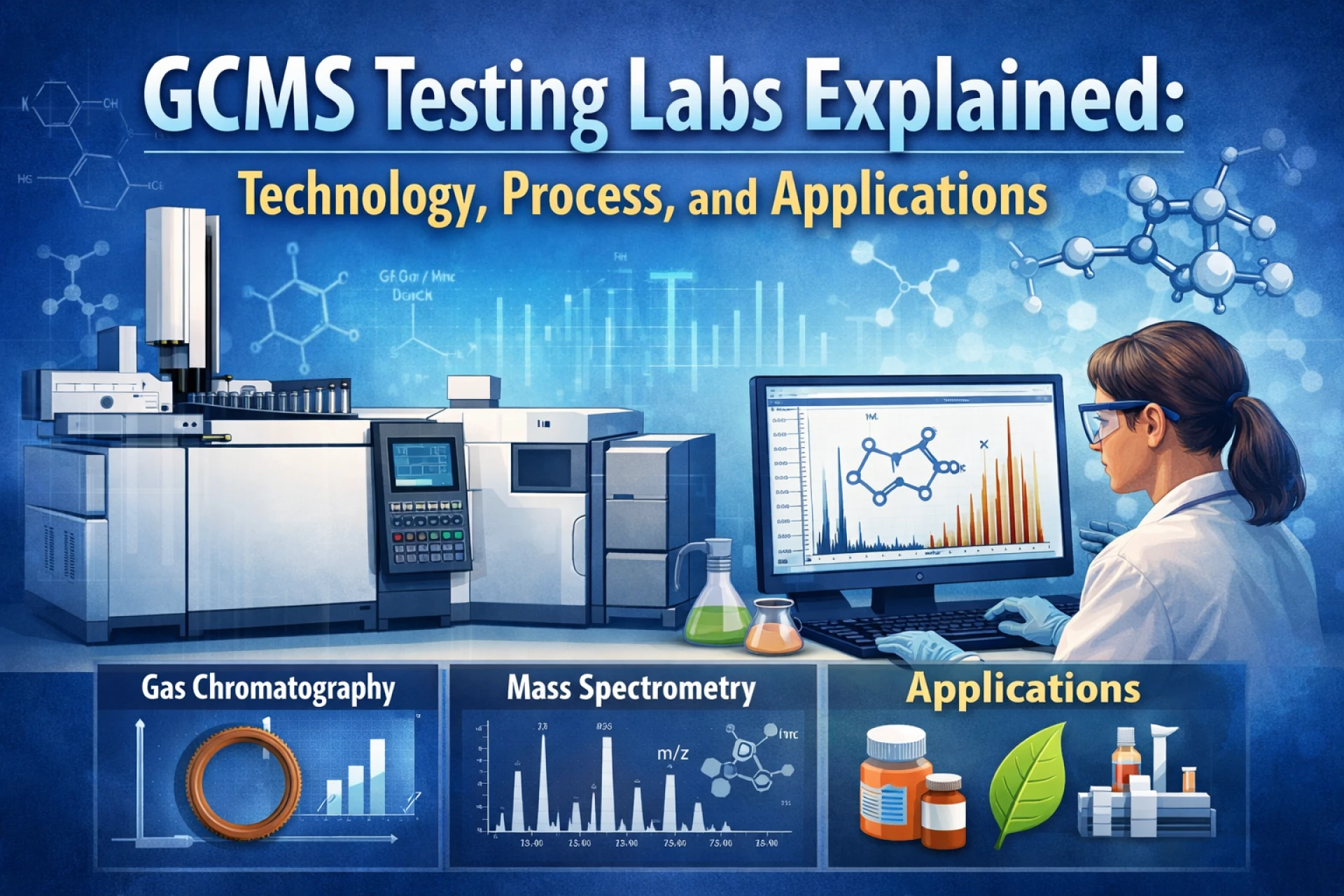
GCMS testing labs are specialized laboratories equipped with Gas Chromatography–Mass Spectrometry instruments used to analyze complex chemical mixtures. The technique combines two powerful analytical tools:
- Gas Chromatography (GC): Separates chemical compounds in a sample.
- Mass Spectrometry (MS): Identifies and quantifies those compounds based on their molecular structure.
By combining these two technologies, GCMS provides highly accurate identification of substances, making it one of the most reliable methods for chemical analysis.
These labs are commonly used for quality control, contamination detection, forensic investigations, pharmaceutical research, and environmental testing.
Understanding the Technology Behind GCMS
The GCMS system integrates two major analytical techniques to deliver precise results.
1. Gas Chromatography (GC)
Gas chromatography is responsible for separating individual compounds present in a sample.
The sample is first vaporized and carried through a column by an inert carrier gas such as helium. Inside the column, compounds separate based on their boiling point and interaction with the column’s coating. Each compound exits the column at a different time, known as its retention time.
This separation is crucial because real-world samples often contain multiple chemicals mixed together.
2. Mass Spectrometry (MS)
After separation, the compounds enter the mass spectrometer. Here, they are ionized and broken into charged fragments.
The mass spectrometer measures the mass-to-charge ratio (m/z) of these fragments, creating a unique pattern called a mass spectrum. Scientists compare this spectrum with reference libraries to accurately identify the compound.
The result is a detailed analysis that tells researchers what chemicals are present and in what quantity.
The GCMS Testing Process
GCMS testing follows a systematic process to ensure reliable and reproducible results.
1. Sample Collection
The first step involves collecting the sample that needs analysis. Samples may include:
- Food products
- Pharmaceutical formulations
- Environmental samples (water, air, soil)
- Cosmetic products
- Biological samples
Proper handling and storage are essential to prevent contamination.
2. Sample Preparation
Before analysis, samples often require preparation such as:
- Filtration
- Extraction
- Dilution
- Concentration
These steps help isolate the compounds of interest and improve detection accuracy.
3. Injection into the GCMS System
The prepared sample is injected into the GC instrument, where it is vaporized and carried through the chromatographic column for separation.
4. Compound Detection and Identification
As compounds exit the column, the mass spectrometer analyzes them. The system generates chromatograms and mass spectra that help scientists identify each compound.
5. Data Interpretation and Reporting
Laboratory experts interpret the results and prepare a detailed report including:
- Identified chemical compounds
- Concentration levels
- Compliance with regulatory standards
This information is crucial for quality control and regulatory approvals.
Key Applications of GCMS Testing Labs
GCMS testing labs support a wide variety of industries because of their ability to detect chemicals with high precision.
1. Pharmaceutical Industry
In pharmaceutical manufacturing, GCMS is used to:
- Detect impurities in drug formulations
- Analyze residual solvents
- Ensure drug safety and regulatory compliance
Accurate testing helps pharmaceutical companies meet strict regulatory guidelines.
2. Food and Beverage Industry
Food safety testing often relies on GCMS to detect:
- Pesticide residues
- Flavor compounds
- Food contaminants
This ensures that food products meet safety standards and protect consumer health.
3. Environmental Monitoring
Environmental laboratories use GCMS to analyze:
- Air pollutants
- Water contamination
- Soil pollutants
The technique helps authorities monitor environmental quality and identify hazardous substances.
4. Cosmetic and Personal Care Products
Cosmetic manufacturers use GCMS to identify:
- Fragrance compounds
- Preservatives
- Potential contaminants
This testing ensures product safety and regulatory compliance.
5. Forensic and Toxicology Testing
In forensic science, GCMS is widely used to detect:
- Drugs and narcotics
- Toxic chemicals
- Unknown substances in crime investigations
Its accuracy makes it one of the most trusted tools in forensic laboratories.
Advantages of GCMS Testing
GCMS testing offers several important benefits:
- High Sensitivity: GCMS can detect substances at extremely low concentrations.
- Accurate Identification: Mass spectra provide a unique chemical fingerprint for each compound.
- Versatile Applications: The technology can analyze a wide range of chemicals across different industries.
- Reliable Results: GCMS provides consistent and reproducible analytical data.
The Future of GCMS Testing Labs
As industries demand faster and more accurate testing, GCMS technology continues to evolve. New advancements include:
- Automated sample preparation
- High-resolution mass spectrometry
- Advanced data analysis software
These innovations improve testing efficiency and expand the capabilities of GCMS labs in research and industrial applications.
Conclusion
GCMS testing labs play a crucial role in modern chemical analysis by combining the power of gas chromatography and mass spectrometry. This technology enables laboratories to detect and identify complex chemical compounds with exceptional accuracy.
From pharmaceuticals and food safety to environmental monitoring and forensic investigations, GCMS testing provides reliable data that supports product quality, regulatory compliance, and public safety.
As technology continues to advance, GCMS testing labs will remain a vital part of scientific research and industrial quality assurance worldwide.

























Sign in to leave a comment.