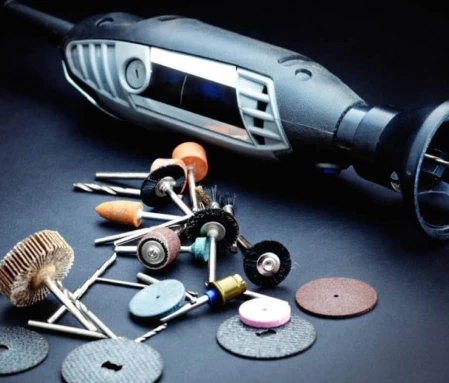

Metal finishing is a critical stage in many industrial and manufacturing processes. Whether it is shaping metal surfaces, smoothing rough edges, or preparing materials for final assembly, grinding plays an important role in achieving a professional finish. This process becomes far more efficient when the right grinding tools are used. These tools are designed to remove excess material, polish surfaces, and create smooth finishes that improve both the appearance and performance of metal components.
The Role of Grinding Tools in Metal Finishing
Grinding tools are widely used in industries such as metal fabrication, construction, automotive manufacturing, and engineering. Their main purpose is to refine metal surfaces and ensure that parts meet precise specifications.
During the manufacturing process, metal pieces often develop rough edges, welding marks, or uneven surfaces. Grinding tools help eliminate these imperfections, allowing the material to achieve the required shape and finish. This not only improves the quality of the product but also ensures that components fit together correctly during assembly.
Another important function of grinding is preparing surfaces for coating, painting, or polishing. Smooth and clean surfaces allow finishes to adhere properly, resulting in better durability and appearance.
Different Types of Grinding Tools Used in Industry
There are several types of grinding tools designed for specific tasks. Each tool serves a unique purpose in the metal finishing process.
Angle grinders are among the most commonly used tools in workshops and industrial environments. They are versatile machines capable of cutting, grinding, and polishing metal surfaces.
Bench grinders are typically fixed machines used for sharpening tools and shaping small metal parts. They provide stability and precision during grinding operations.
Surface grinders are used in industrial settings to produce extremely smooth and flat surfaces. These machines are commonly used in manufacturing environments where precision is essential.
Die grinders are compact and lightweight tools that allow workers to perform detailed grinding work in tight spaces. They are especially useful for finishing small components and intricate metal parts.
With the variety of grinding tools available, industries can select the most suitable equipment for their specific finishing requirements.
Benefits of Using High-Quality Grinding Tools
Using reliable grinding tools offers several benefits for industrial operations. One of the biggest advantages is improved efficiency. High-quality tools remove material quickly and evenly, reducing the time required for finishing tasks.
Precision is another key benefit. Advanced grinding tools are designed to maintain consistent performance, allowing operators to achieve accurate results with minimal effort.
Durability also plays an important role. Well-made grinding tools can withstand heavy usage in demanding industrial environments, which helps reduce maintenance costs and tool replacement frequency.
Additionally, proper grinding tools improve safety. Tools designed with ergonomic features and protective guards help operators work comfortably and reduce the risk of workplace accidents.
Choosing the Right Grinding Tools for the Job
Selecting the correct grinding tools depends on several factors, including the type of metal being processed, the required finish, and the scale of the project. Industries often choose tools that provide high performance, durability, and ease of use.
It is also important to select the right grinding wheels and attachments for each task. Different materials and finishes require specific abrasive types to achieve the best results.
Regular maintenance and proper handling also ensure that grinding tools continue to operate efficiently. Keeping tools clean and replacing worn grinding wheels helps maintain performance and safety.
Conclusion
Grinding plays a vital role in metal finishing, helping industries achieve smooth surfaces and precise shapes. With the right grinding tools, even complex finishing tasks can be performed efficiently and accurately. These tools not only improve product quality but also enhance productivity in industrial environments. As manufacturing continues to advance, grinding tools will remain essential equipment for achieving high-quality metal finishing results.











Sign in to leave a comment.