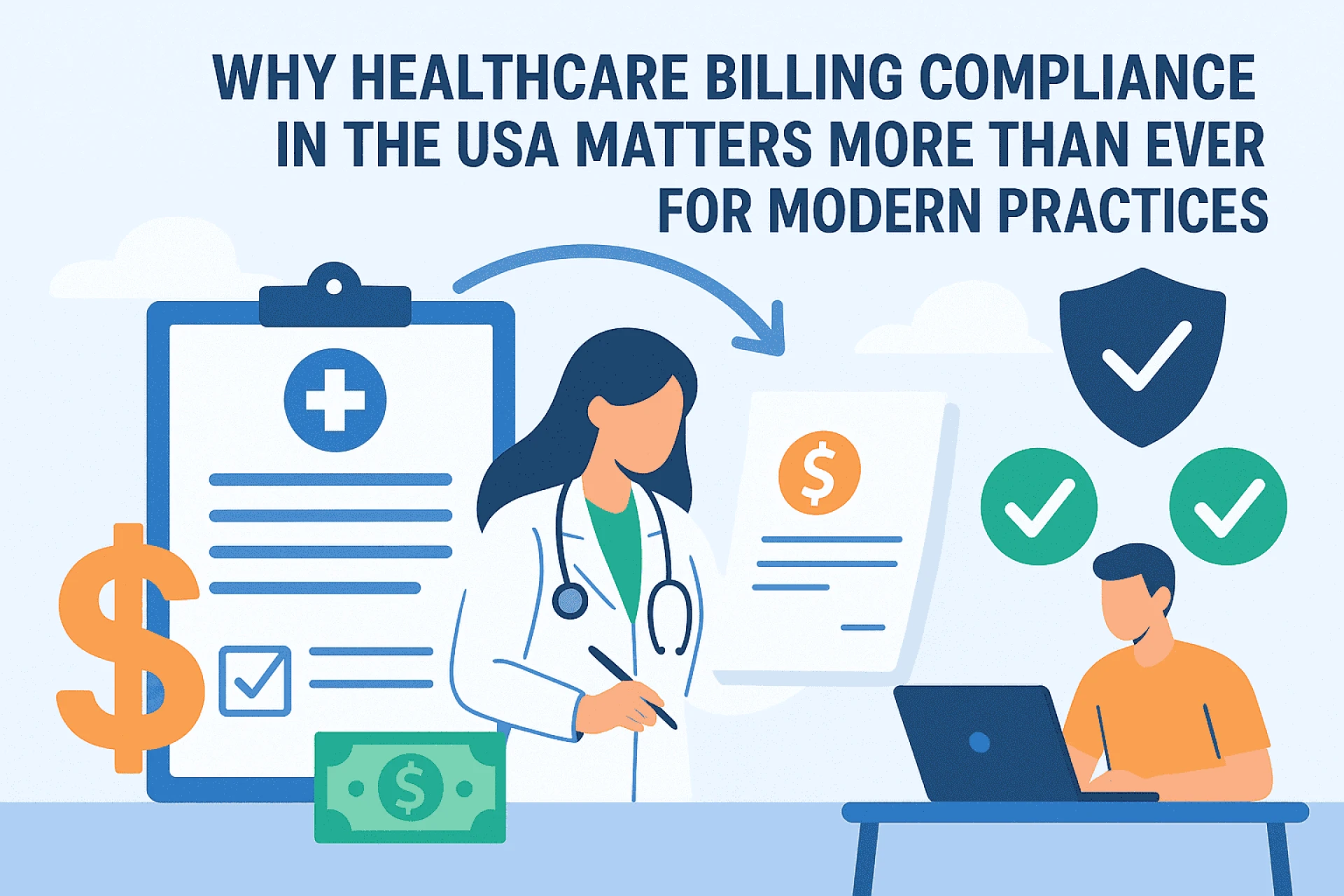

If there’s one thing every healthcare provider in the USA knows, it’s that billing isn’t just about sending out claims and waiting for payments. It’s a careful balancing act — where accuracy, compliance, and ethics all have to play together. And honestly, with so many regulations, payer rules, and changing codes, it’s easy for even experienced billers to feel like they’re walking a tightrope.
That’s where healthcare billing compliance comes in. It’s the quiet, behind-the-scenes hero that keeps everything running smoothly and legally. Without it, even the most efficient billing process can crumble under audits, denials, or penalties.
Let’s break down what healthcare billing compliance really means, why it’s so important, and how practices across the USA can stay ahead of the game.
What Exactly Is Healthcare Billing Compliance?
In simple terms, compliance means doing things “by the book.” In the world of medical billing, it’s about making sure every claim you submit meets legal, ethical, and payer-specific requirements. It covers everything — from coding accuracy and patient data privacy to proper claim documentation and timely filing.
The goal? To prevent fraud, abuse, and billing errors while ensuring the provider gets paid fairly for the services rendered.
Think of it as the safety net of your revenue cycle. When you’re compliant, you protect your organization from legal risks, audits, and financial loss — all while maintaining trust with patients and insurers.
The Big Players in U.S. Billing Compliance
Healthcare billing compliance in the USA is guided by several major laws and programs. Here are a few you’ll definitely want on your radar:
HIPAA (Health Insurance Portability and Accountability Act): This one’s a big deal. HIPAA isn’t just about protecting patient privacy; it also covers how billing data is transmitted and stored securely.
False Claims Act (FCA): Submitting false or inaccurate claims — even by mistake — can lead to serious penalties. The FCA is designed to stop fraud and recover funds lost to incorrect billing.
Stark Law: This prevents physicians from referring patients to entities where they have a financial interest unless certain exceptions apply.
Anti-Kickback Statute: This prohibits offering or receiving anything of value in exchange for referrals.
OIG Compliance Program: The Office of Inspector General provides guidelines for healthcare organizations to create internal compliance programs that prevent and detect billing errors or fraud.
Staying compliant means being aware of these regulations and embedding them into your billing workflow. It’s not just about avoiding fines — it’s about running an ethical and trustworthy practice.
Why Compliance Isn’t Optional
You might think, “We’re a small clinic — compliance issues only happen to big hospitals.” Not exactly. Even solo practitioners can face audits or penalties for billing mistakes.
Here’s what happens when compliance takes a backseat:
Claim Denials: Simple coding errors or incomplete documentation can cause claims to bounce back.
Revenue Loss: Each denied or delayed claim hits your cash flow directly.
Legal Trouble: Non-compliance with federal regulations can result in hefty fines or even criminal charges.
Damaged Reputation: Patients and payers lose trust quickly when billing issues pile up.
So yes, compliance takes time and attention — but it’s worth every bit of effort. It’s what keeps your practice safe, credible, and financially sound.
Common Compliance Challenges in Healthcare Billing
Even with the best systems in place, mistakes happen. Some of the most common compliance pitfalls include:
Incorrect Coding: Using outdated or mismatched CPT/ICD-10 codes can lead to denials and even audits.
Upcoding or Unbundling: Whether intentional or accidental, these errors can look like fraud.
Poor Documentation: Missing notes or incomplete charts make it hard to justify billed services.
Lack of Training: Billing and coding staff need regular education — compliance rules evolve constantly.
Ignoring Payer Rules: Every insurance company has its quirks. Overlooking their specific requirements can cost you reimbursements.
Avoiding these issues starts with awareness — and ends with consistency.
Building a Culture of Compliance
Compliance isn’t something one person can handle alone. It’s a team effort. Here’s what successful healthcare practices in the USA are doing to strengthen their compliance culture:
Regular Staff Training: Everyone from front-desk staff to billers should understand compliance basics and patient privacy.
Internal Audits: Periodically review your claims and documentation to catch mistakes before payers do.
Clear Policies: Establish written guidelines for billing, coding, and patient data management.
Use of Technology: Modern billing software can flag coding errors, missing documentation, and duplicate claims automatically.
Stay Updated: Subscribe to newsletters or updates from CMS, OIG, and state health departments to stay informed about new regulations.
By weaving compliance into everyday operations, you’re not just protecting your business — you’re improving your revenue flow and patient trust too.
The Role of Outsourced Billing Partners
For many practices, especially small or mid-sized ones, managing billing and compliance internally can be overwhelming. That’s why outsourcing to a trusted medical billing service is becoming the go-to solution.
When you work with a reliable billing partner, you’re not just getting claim submission support. You’re gaining a team that understands payer requirements, federal regulations, and the nuances of compliance inside out.
Here’s what a good billing partner brings to the table:
Compliance-driven claim submission
Accurate coding and documentation
Regular audits and error checks
Secure data management
Up-to-date knowledge of payer and CMS rules
Outsourcing lets providers focus on what they do best — caring for patients — while experts handle the financial side with precision and accountability.
Real Talk: Compliance Isn’t About Fear — It’s About Freedom
A lot of people associate compliance with fear — fear of audits, penalties, and endless rules. But here’s another way to look at it: compliance gives you freedom.
When your billing process is clean, transparent, and compliant, you’re free to focus on patient care without constantly worrying about what might go wrong. You’re free to grow your practice confidently, knowing that your revenue is stable and your documentation can stand up to scrutiny.
So rather than treating compliance as a box-ticking exercise, see it as a long-term investment in the health of your business.
In Conclusion
Healthcare billing compliance isn’t just a legal necessity — it’s the foundation of a successful, sustainable medical practice in the USA. It keeps your revenue cycle transparent, your staff accountable, and your patients confident that they’re in capable hands.
If you’re ready to take compliance seriously but don’t want the stress of managing it all in-house, partnering with experts can make a world of difference.
247 Medical Billing Services offers compliance-focused billing support designed to keep your practice secure, efficient, and audit-ready. With experienced professionals handling your claims, you can focus more on patient care — and less on paperwork.
Because in healthcare, peace of mind isn’t just for patients — it’s for providers too.






























Sign in to leave a comment.