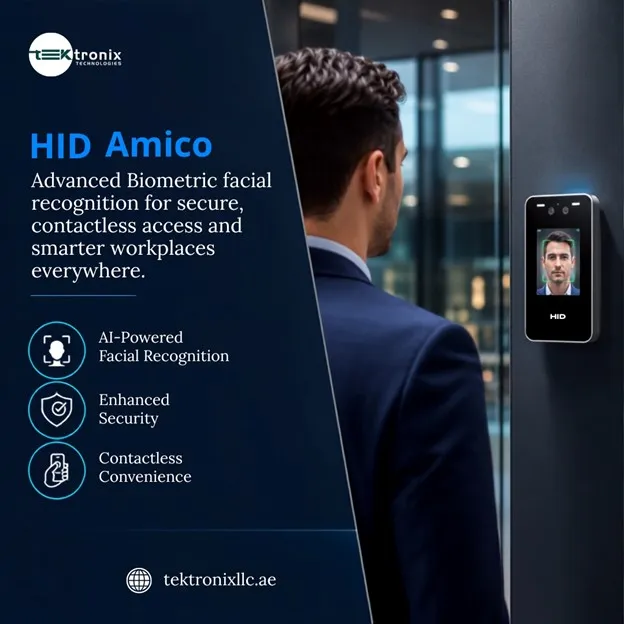

A hospital corridor separates a public waiting area from a neonatal ward or controlled substance store by only a few metres, and a shared or stolen badge is genuinely all that stands between an unauthorised person and a space where the consequences of a breach are measured in patient safety, not just property loss. HID Amico gives UAE healthcare facilities a way to close that gap decisively, and hospitals reviewing HID reader and controller solutions for healthcare security are finding that facial recognition addresses clinical access control challenges that card-based systems were never really equipped to solve.
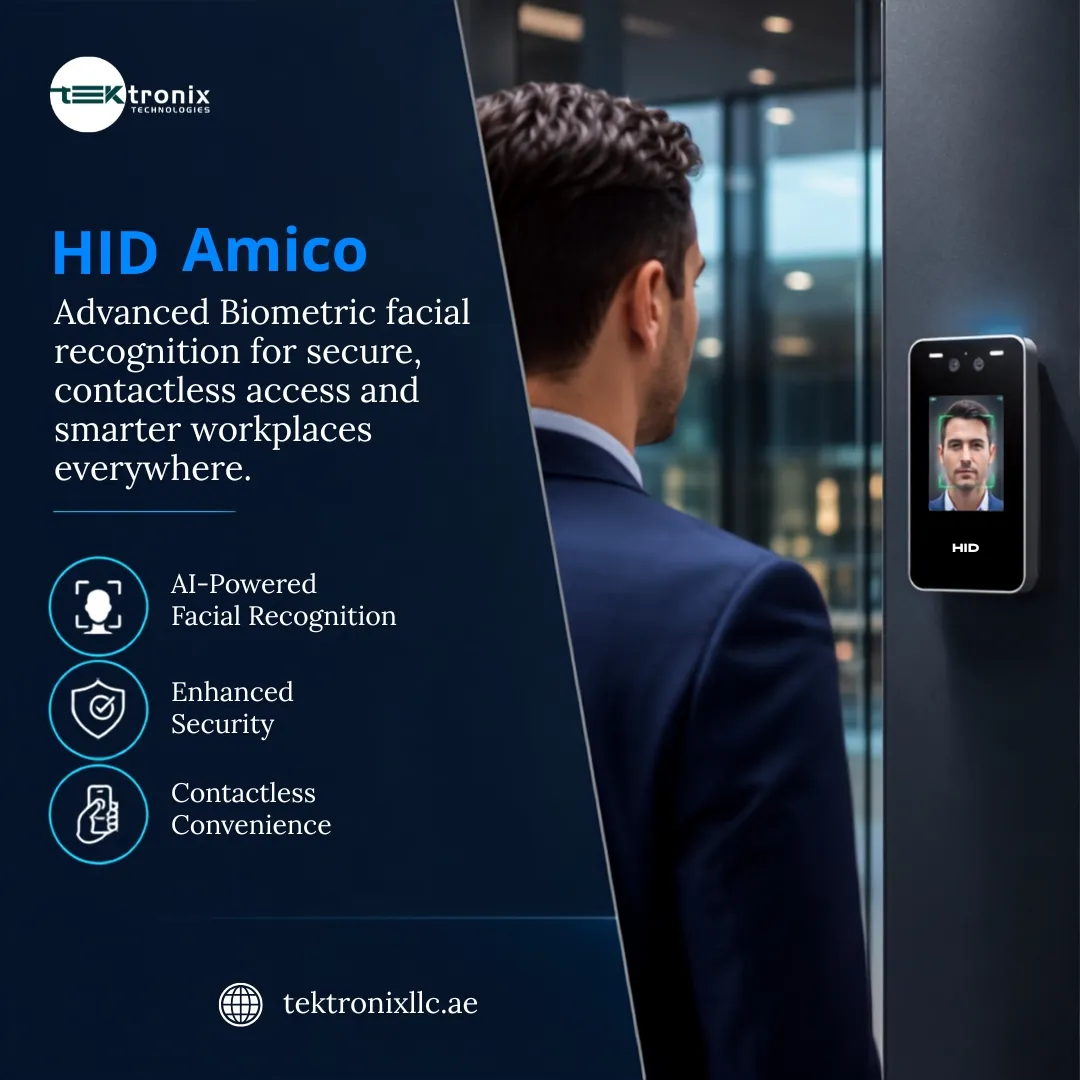
Healthcare access control carries a distinct weight compared to almost any other sector. A corporate office managing a security lapse typically faces a financial or reputational cost. A hospital managing an access control failure risks patient safety directly — an unauthorised individual reaching a controlled substance store, a maternity ward, or a restricted clinical area carries consequences that go well beyond what a typical commercial security incident involves. That elevated stakes profile is reshaping how UAE healthcare facilities specify access control, with facial recognition increasingly viewed as the appropriate response rather than a premium add-on.
Why Healthcare Facilities Need a Different Standard of Access Verification
Card-based access control in a hospital setting carries a specific, well-documented weakness: credential sharing among busy clinical staff during a hectic shift, particularly when a colleague is genuinely rushing between patients and simply borrows a badge rather than tracking down their own misplaced one. That informal sharing, while rarely malicious, quietly undermines the entire audit trail a hospital's access control system is meant to provide.
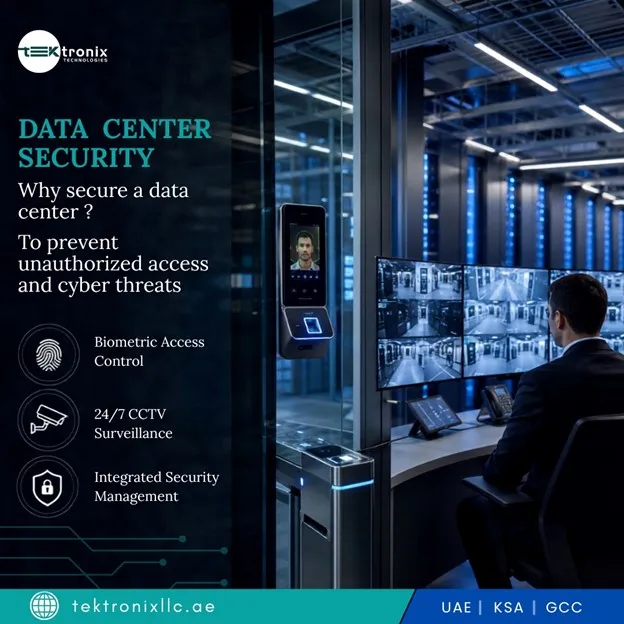
Facial recognition removes that vulnerability structurally rather than relying on staff discipline alone. A face cannot be lent to a colleague running late, cannot be left behind in a locker, and ties every single access event unambiguously back to the specific individual who actually passed through that door — a meaningfully stronger audit trail than any card-based system can offer, regardless of staff intentions.
The Touchless Advantage in Clinical Environments
Beyond the security case, touchless verification carries a genuine infection control benefit specific to healthcare settings. A shared card reader touched by dozens of staff throughout a shift represents a contact surface that facial recognition eliminates entirely, removing one small but real vector in a hospital's broader infection prevention protocol.
This benefit gained particular attention following heightened global awareness of infection control following recent public health experiences, and many UAE healthcare facilities now specifically evaluate touchless access as a genuine clinical consideration rather than purely a convenience feature, reflecting a broader shift in how hospital infrastructure decisions weigh infection prevention alongside traditional security criteria.
How HID Amico Secures Sensitive Healthcare Zones
HID Amico Facial Recognition for Clinical Staff Verification
At the centre of the platform, HID Amico Facial Recognition verifies clinical staff identity in real time at ward entrances, pharmacy doors, and restricted treatment areas, matching a face against an enrolled profile within a fraction of a second without requiring a busy nurse or physician to stop and interact with a reader mid-shift.
HID Amico Facial Recognition Reader Built for Infection Control Environments
The physical HID Amico Facial Recognition Reader is suited to clinical deployment through housing designed to withstand frequent disinfection protocols, maintaining reliable recognition performance even as the unit undergoes the same rigorous cleaning cycles applied throughout the rest of a hospital environment.
HID Aero Controller for Coordinated Hospital-Wide Door Management
Behind the reader, the HID Aero Controller manages door logic and credential validation across a hospital's often sprawling, multi-building layout, giving security and facilities teams unified visibility over every controlled door from a single management platform rather than fragmented, building-by-building oversight.
Extending Secure Access Across the Facility
HID Access Control for Pharmacies and Controlled Substance Storage
Beyond ward-level verification, broader HID Access Control secures pharmacies, controlled substance storage, and other genuinely sensitive administrative areas on the same integrated platform, ensuring a hospital's entire security infrastructure operates from one consistent standard rather than a patchwork of disconnected legacy systems.
HID Mobile Access for Rotating Clinical Staff Across Multiple Facilities
Healthcare groups operating several hospitals or clinics benefit from HID Mobile Access, letting clinical staff who rotate between facilities carry a single smartphone-based credential rather than managing separate physical badges for every site they're scheduled to work across during a given month.
Fraud Prevention Where Patient Safety Is at Stake
AI-Powered Anti-Spoofing to Protect Credential Integrity
Given the elevated stakes of healthcare access, AI-Powered Anti-Spoofing analyses depth and texture data to reject photo or video-based spoofing attempts, closing a vulnerability that would carry particularly serious consequences if exploited to gain unauthorised access to a controlled substance store or restricted clinical area.
Liveness Detection for Verified, Real-Time Clinical Identity
Complementing anti-spoofing, Liveness Detection confirms a live, physically present individual at every single verification event, adding a further safeguard specifically valuable in an environment where the consequences of a successful spoofing attempt could directly affect patient safety.
Balancing Security with Emergency Response Speed
Healthcare access control faces a genuine tension between restricting sensitive areas and ensuring emergency responders can reach any part of a facility instantly during a genuine crisis. HID Amico deployments in hospital settings typically incorporate emergency override protocols that automatically unlock designated areas upon a fire alarm or code blue activation, ensuring responding clinical staff never face a locked door during a time-critical emergency.
This override capability requires careful configuration during deployment, balancing the genuine security benefit of restricted access against the absolute priority of unimpeded emergency response, a configuration decision that benefits considerably from an integrator with specific healthcare deployment experience rather than a generic commercial installation approach.
HID Amico UAE: Healthcare Deployment Across the Emirates
Adoption of HID Amico UAE-wide among healthcare facilities spans hospitals, specialised clinics, and multi-facility healthcare groups, each managing similar considerations around clinical staff verification, controlled substance security, and infection control that shape deployment specifications across the sector.
HID Amico Dubai — DHA-Regulated Facility Deployments
A HID Amico Dubai deployment at a DHA-regulated hospital typically forms part of the facility's broader security governance documentation reviewed during licensing processes, with access control increasingly treated as core compliance infrastructure rather than a purely operational consideration.
HID Amico Abu Dhabi — DOH-Regulated Facility Deployments
Healthcare facilities pursuing HID Amico Abu Dhabi deployments under Department of Health oversight similarly need to demonstrate access governance suited to DOH regulatory expectations, particularly for facilities handling controlled substances or operating specialised units with heightened security requirements.
Protecting High-Risk Clinical Zones Beyond Pharmacies
Neonatal and paediatric units carry access control requirements even beyond standard clinical areas, given the particular vulnerability of the patients housed there. Facial recognition in these settings works alongside strict visitor management, ensuring only pre-approved family members or credentialed staff can enter without a manual escort, layering biometric verification with visit-specific approval rather than relying on either control alone.
Psychiatric and behavioural health units similarly warrant heightened access consideration, where both staff safety and patient dignity considerations shape access design differently than a standard medical ward. Operating theatres and intensive care units, meanwhile, typically restrict access to a narrower, clearly defined staff population, where facial recognition's precision in verifying exactly who is authorised for that specific clinical role becomes particularly valuable.
Reducing Administrative Burden on Hospital Security Teams
Hospital security teams typically manage credential administration for a considerably larger and more dynamic workforce than a comparable-sized commercial facility, given healthcare's characteristically high staff turnover, extensive use of temporary and contract clinical staff, and frequent departmental transfers. Facial recognition integrated with HR systems substantially reduces the manual badge issuance and deactivation workload this dynamic workforce otherwise creates.
This administrative relief matters practically, since security teams freed from constant manual credential management can redirect attention toward genuine security monitoring and incident response rather than spending disproportionate time on routine badge administration for a workforce that may see meaningful turnover even within a single month.
Supporting Compliance Audits and Regulatory Inspections
DHA and DOH regulatory inspections increasingly expect hospitals to demonstrate documented, auditable access control specifically for controlled substance storage and other sensitive clinical areas, making the detailed audit trail facial recognition provides a genuine compliance asset rather than purely a security feature. Being able to produce an exportable, individually attributed access log on demand during an inspection considerably strengthens a facility's compliance position compared to relying on aggregated card-swipe data that may not reliably attribute access to a specific verified individual.
This compliance value extends to internal incident investigations as well, where a hospital needing to determine exactly who accessed a specific area during a defined window benefits from facial recognition's inherently individual-level attribution, compared to a shared departmental credential that could implicate an entire team rather than the specific person actually responsible.
Integration with Hospital Credentialing and Workforce Systems
The genuine operational value of a healthcare facial recognition deployment comes from integration with existing hospital credentialing and HR systems, so a clinician's enrolment, department assignment, and access permissions stay synchronised automatically as staff join, change roles, or complete their employment, rather than requiring separate manual updates across disconnected systems.
This integration also supports shift-based access scheduling, automatically adjusting a staff member's active permissions to reflect their actual rostered working hours, a meaningful improvement over static, always-on access that doesn't account for the rotating shift patterns common throughout clinical staffing.
Planning a Phased Rollout Across an Active Hospital
Deploying new access control infrastructure across a fully operational hospital presents a genuine logistical challenge that differs considerably from a typical office installation, since clinical operations simply cannot pause for a convenient installation window. Successful healthcare deployments typically phase installation building by building or department by department, maintaining full existing access control functionality throughout the transition rather than risking any gap in security coverage during the changeover.
Overnight or low-activity period installation for individual door hardware, combined with a transition period where both legacy card access and new facial recognition operate in parallel, allows clinical staff to adopt the new system gradually without a disruptive single cutover date that could create confusion or access delays during active patient care hours.
Regulatory and Privacy Considerations
Because facial recognition captures biometric personal data, healthcare deployments must be designed around UAE PDPL requirements covering staff consent, data minimisation, and defined retention periods, with particular care given that healthcare environments often handle biometric data alongside other sensitive personal information. Facilities pursuing ISO 27001 alignment typically extend that framework specifically to biometric staff data, documenting how enrolled templates are stored, encrypted, and deleted when an employee's affiliation with the facility ends.
Why UAE Healthcare Facilities Choose Tektronix for HID Amico Deployments
Tektronix LLC is an established HID Global integration partner deploying HID Amico and broader HID reader and controller infrastructure specifically for hospitals and healthcare clients across the UAE. Every project includes clinical workflow assessment to properly configure shift-based access and emergency override protocols, integration with the facility's existing HR and credentialing systems, and infection-control-appropriate hardware selection suited to each deployment zone's cleaning requirements.
Healthcare facilities planning an access control upgrade can review Tektronix's HID readers and controller’s portfolio to see configurations suited to hospitals, specialised clinics, and multi-facility healthcare groups.
Conclusion
Healthcare access control carries a weight few other sectors face, and HID Amico addresses that reality directly rather than treating hospitals as just another commercial deployment. HID Amico Facial Recognition and an infection-control-appropriate HID Amico Facial Recognition Reader verify clinical staff reliably, while the HID Aero Controller coordinates access across a hospital's often sprawling, multi-building footprint. Broader HID Access Control secures pharmacies and controlled substance storage, and HID Mobile Access simplifies credential management for clinical staff rotating across multiple facilities. AI-Powered Anti-Spoofing and Liveness Detection protect against fraud in an environment where the consequences genuinely matter more than in most other sectors. As HID Amico UAE adoption grows across healthcare — including HID Amico Dubai DHA-regulated facilities and HID Amico Abu Dhabi DOH-regulated deployments — hospitals that invest in genuinely healthcare-appropriate access control now protect both patient safety and institutional trust.
FAQs
1. How does facial recognition specifically reduce infection risk in a hospital setting?
Touchless verification eliminates the shared contact surface a physical card reader creates, removing one small but genuine vector in a hospital's broader infection prevention protocol compared to touch-based credential systems.
2. Can the system handle staff who rotate between multiple hospital shifts and departments?
Yes, integration with hospital workforce management systems allows access permissions to update automatically as shift assignments and department rotations change, without requiring manual reconfiguration for every schedule adjustment.
3. Does the reader hardware withstand hospital-grade disinfection cleaning?
Healthcare-appropriate reader housing is designed to withstand frequent disinfection protocols without degrading recognition performance, unlike standard commercial hardware not built to tolerate hospital cleaning chemical exposure and frequency.
4. What happens to facial recognition access during a hospital emergency, like a fire alarm?
Properly configured systems include emergency override protocols that automatically unlock designated areas upon alarm activation, ensuring clinical staff and emergency responders are never blocked by a locked door during a genuine crisis.
5. How is clinical staff biometric data protected under UAE regulations?
Deployments must align with UAE PDPL requirements covering consent, data minimisation, and defined retention periods, with enrolled facial templates deleted according to a documented policy once a staff member's employment with the facility ends.
For more information contact us on:
Tektronix Technology Systems Dubai-Head Office
+971 50 814 4086



























Sign in to leave a comment.