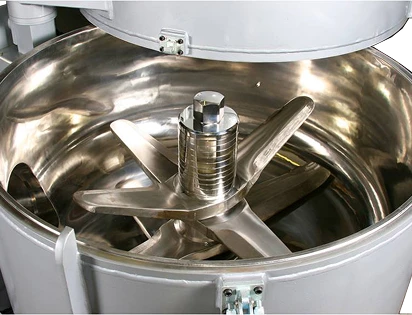

In the rubber & elastomers industry, carbon black plays a critical role in improving the strength, abrasion resistance, and durability of rubber compounds. Achieving uniform dispersion of carbon black is essential for consistent material performance, but it also presents significant processing challenges. High shear requirements, heat generation, and material sensitivity must be carefully balanced. This is where a properly engineered high-intensity mixer becomes essential.
High intensity mixing, when paired with effective thermal management, allows manufacturers to achieve reliable dispersion without compromising compound quality or process stability.
The Role of Carbon Black in Rubber Compounds
Carbon black is widely used in rubber formulations to enhance mechanical properties and improve product lifespan. However, its fine particle size and tendency to form agglomerates make dispersion difficult.
Challenges of Carbon Black Dispersion
Manufacturers in the rubber & elastomers industry often face the following issues during mixing:
- Incomplete dispersion leading to weak spots in the compound
- Excessive heat buildup during high shear mixing
- Inconsistent batch-to-batch performance
- Increased scrap and rework
These challenges highlight the need for mixing equipment designed specifically for high-load rubber applications.
Why High-Intensity Mixers Are Essential for Rubber Processing
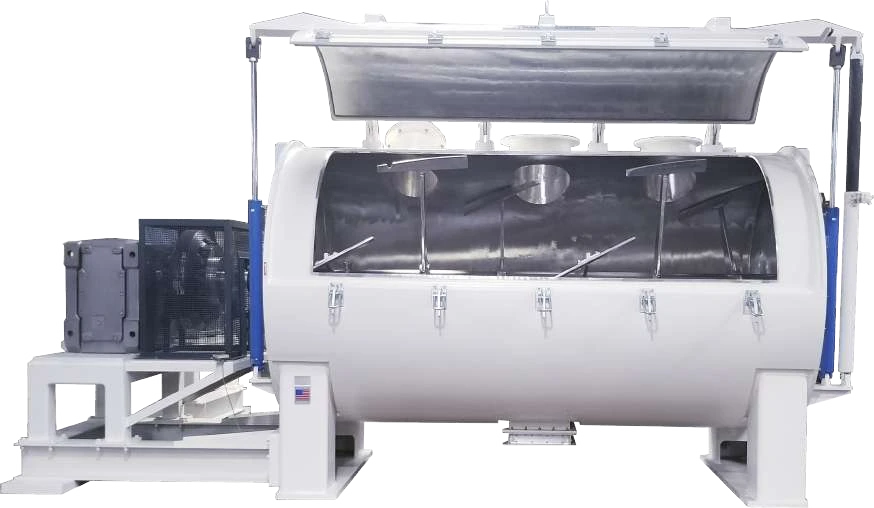
A high-intensity mixer delivers the shear energy required to break down carbon black agglomerates and distribute them evenly throughout the rubber matrix.
Key Advantages of High-Intensity Mixing
High-intensity mixing offers several benefits for carbon black dispersion:
- Rapid breakdown of pigment agglomerates
- Uniform filler distribution across the compound
- Reduced mixing times and improved throughput
- Improved mechanical properties in the final product
When engineered correctly, high-intensity mixers provide controlled energy input, ensuring effective dispersion without damaging the rubber compound.
Design Considerations for Rubber Applications
Effective high-intensity mixer design for rubber processing includes:
- Robust mixing tools capable of handling high-viscosity materials
- Optimized rotor and vessel geometry
- Controlled shear levels to prevent material degradation
- Durable construction for continuous industrial operation
These factors ensure consistent performance in demanding rubber compounding environments.
Managing Heat with Cooling Mixers
While high shear is necessary for dispersion, it also generates heat. Without proper temperature control, rubber compounds may experience scorch or premature curing. Cooling Mixers play a vital role in managing this risk.
Why Cooling Mixers Matter in Carbon Black Mixing
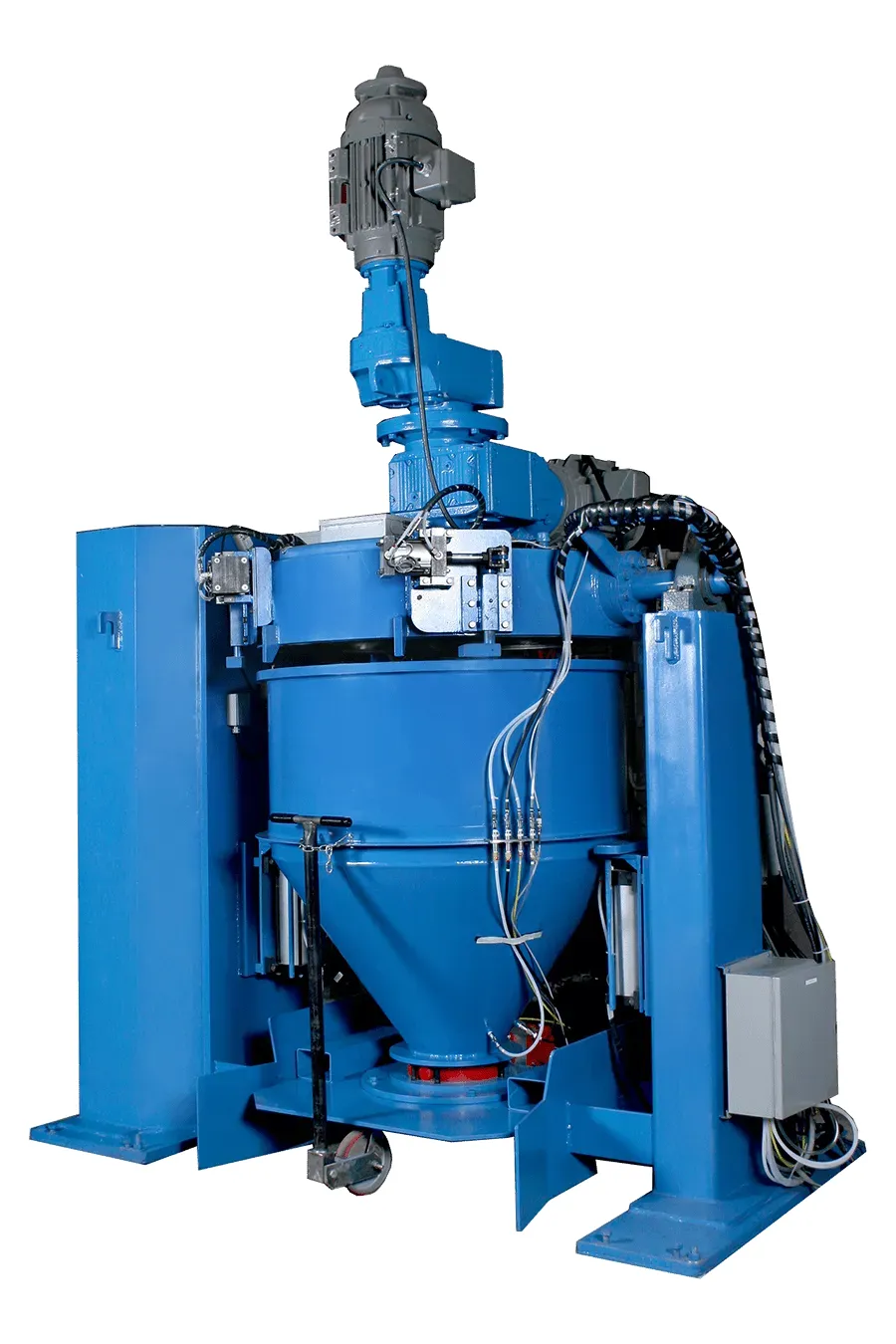
Cooling Mixers are used immediately after high intensity mixing to stabilize the compound. Their benefits include:
- Rapid temperature reduction after dispersion
- Preservation of material properties
- Improved compound handling and storage
- Consistent processing in downstream operations
By integrating Cooling Mixers into the process, manufacturers maintain tight control over temperature-sensitive rubber formulations.
Integrated Mixing Systems for Better Results
In many rubber mixing lines, High Intensity Mixers and Cooling Mixers work together as a system. This integrated approach allows manufacturers to achieve:
- Optimal dispersion followed by controlled cooling
- Improved batch consistency and repeatability
- Reduced risk of thermal degradation
- More predictable production cycles
Benefits for the Rubber & Elastomers Industry
Using high intensity mixing combined with effective cooling delivers measurable advantages across rubber processing operations.
Operational Benefits
Manufacturers benefit from:
- Higher quality rubber compounds
- Reduced scrap and material waste
- Improved process reliability
- Greater control over formulation consistency
These advantages directly support efficiency, product performance, and long-term profitability.
Choosing the Right Mixing Equipment
Not all mixers are suitable for carbon black dispersion in rubber. Selecting equipment designed for the specific demands of the Rubber & Elastomers Industry is critical for achieving reliable results.
Manufacturers should evaluate mixing systems based on material properties, shear requirements, heat control, and long-term durability. A properly designed High Intensity Mixer combined with well-integrated Cooling Mixers enables consistent carbon black dispersion while protecting compound integrity.
By investing in application-specific mixing technology, rubber manufacturers can improve the product quality, optimize production efficiency, and maintain a competitive advantage in demanding markets
Frequently Asked Questions
Why is a High Intensity Mixer important for carbon black dispersion in the Rubber & Elastomers Industry?
A High Intensity Mixer provides the shear force needed to break down carbon black agglomerates and evenly distribute them in rubber compounds. This results in improved strength, consistency, and overall product performance.
How do Cooling Mixers support rubber processing after high intensity mixing?
Cooling Mixers quickly reduce material temperature after dispersion, helping prevent scorch and thermal degradation. This ensures stable compounds and consistent downstream processing in rubber manufacturing.
Do companies in Missouri City, TX benefit from High Intensity Mixers for rubber applications?
Yes, manufacturers near Missouri City, TX, including those around 1900 FM 1092 Rd, Missouri City, TX 77459, United States, use High Intensity Mixers to achieve uniform carbon black dispersion and reliable rubber compound quality.
Are Cooling Mixers available for Rubber & Elastomers Industry customers in Missouri City, TX?
Yes, Cooling Mixers are commonly used by rubber processors in and around 1900 FM 1092 Rd, Missouri City, TX 77459, United States, to control heat after high intensity mixing and protect material properties.

























Sign in to leave a comment.