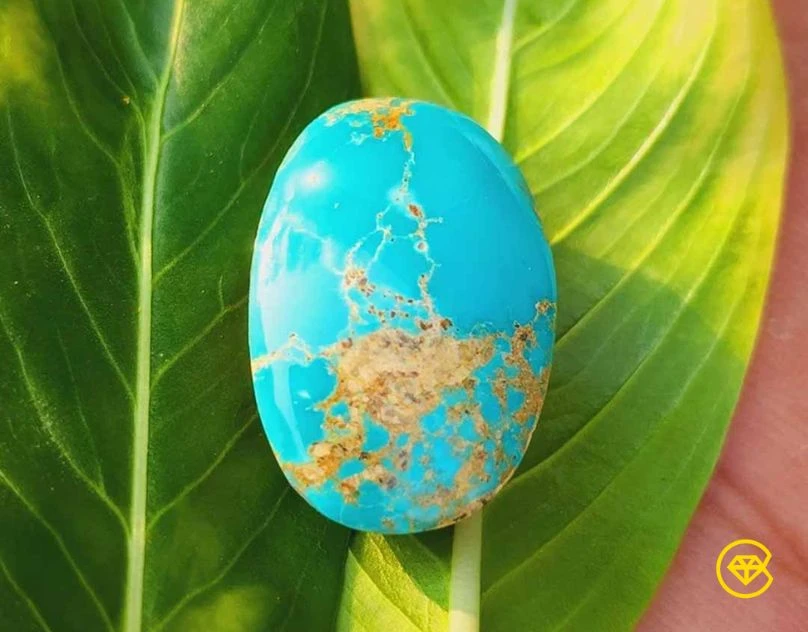

Turquoise Stone is a well-known rare gemstone that is noted for its vivid blue or green hue. In dry conditions, deposits typically accumulate on exposed slopes. This gemstone has been mined and used by many civilizations for thousands of years worldwide. The civilizations and cultures held the belief that the stone has unique properties that might protect the wearer.
In this blog post, we\'ll dive into the history of Turquoise Gemstone and will understand the roots of this serene blue gemstone.
HISTORY OF TURQUOISE IN EGYPT
One of the first civilizations to mine and use turquoise was Egypt. The turquoise crystal color captivated the Egyptians, who related a story about a monarch whose magician split the seas to retrieve a turquoise gemstone that had dropped from a maiden\'s hair.
They believed the turquoise gemstone was devoted to the goddess Hathor because the colors blue and green represented fertility and rebirth. They often referred to her as the “Lady of Turquoise Country." Numerous pharaohs of Egypt were buried with turquoise-inlaid objects.
Middle Easterners were especially well-known for Persian turquoise, which was thought to be the best in the world and was commonly used in jewelry. According to an old Persian book, the stone was connected to success and good fortune.
Muhammad Ibn Mansur made even more extravagant claims at the beginning of the 14th century. He said that authentic turquoise stone set in gold could protect its possessor from harm, that gazing upon turquoise in the morning may bring good fortune, and that staring at turquoise could improve the eyes. Because turquoise "helps its owner to victory over its enemies, protects him against injury and makes him liked by all men," he suggested glancing at it under the new moon.
Similar claims that turquoise crystal could heal anything from snake bites to epilepsy, as well as ease pain and swelling, were asserted as late as the 19th century by S. M. Tagore (1861–1941).
In addition, he claimed that wearing a turquoise ring would shield the wearer from lightning and drowning while also enhancing happiness and self-assurance. The author concluded by writing, "[h]he who casts his eyes over this stone on the Pratipada [the first day after a new moon] after looking at the moon becomes the master of fabulous wealth."
Another myth from the Mediterranean claimed that turquoise stone could protect against the "Evil Eye," which is a jealous look that inadvertently spreads disease. The notion that using turquoise as a shield against this occurrence gained traction in Europe, South America, and even India.
Turquoise gemstone was utilized in religious rituals in Tibet. In 1874-1934 one of the well-known anthropologists Berthold Laufer claimed that turquoises were used in religious services, strung like beads for rosaries, and placed on the god\'s altars.
TURQUOISE GEMSTONE IN AMERICA
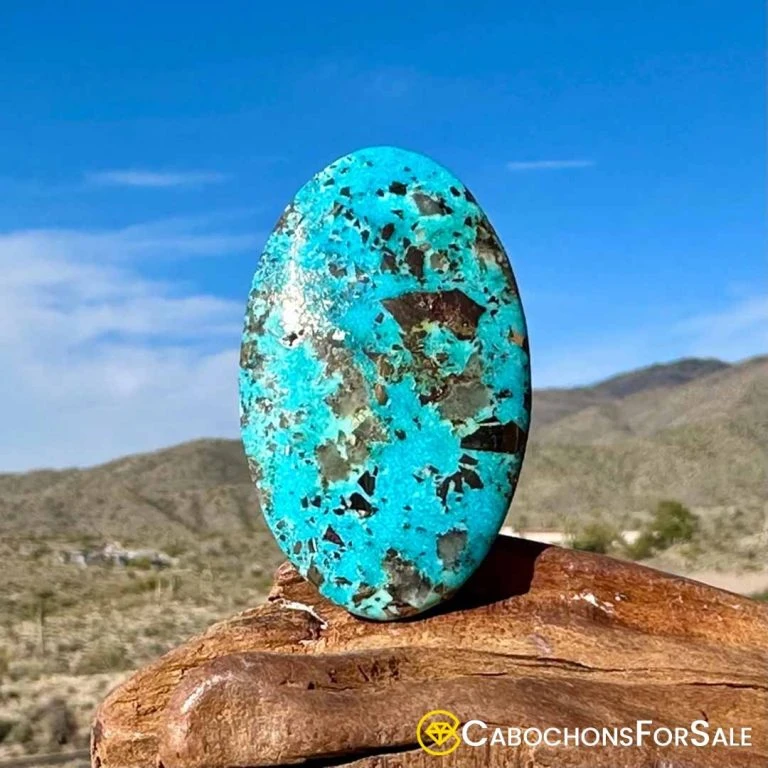
The origins of turquoise stone were the subject of repeated legends from several Native American tribes in North America. According to a tale, when a leader from the center of the universe rested in different parts of the world, he would sweat turquoise. Another myth among the Hopi people was that lizard excrement became turquoise.
Irrespective of its provenance, the turquoise stone meaning was historically associated with prosperity, joy, and good fortune by several tribes. For example, the Navajo believed that wearing turquoise appeased the gods.
Turquoise was frequently utilized by the Hopi and Zuni civilizations to create jewelry or to carve images of gods and animals. Turquoise crystal is still used in some tribes\' secret offerings and rituals. Turquoise has been included in the traditional Zuni ceremonial robes.
Blue was connected with authority by the Mayans and Aztecs. Turquoise was used as a tribute stone and was worn as a necklace by important kings or priests. Turquoise stone meaning had a substantial role in the Inca Empire in North America. This unique gemstone was frequently used in jewelry, be it necklaces, pendants, and earrings. Moreover, archaeologists have found several turquoise artifacts from the Incan era.
TURQUOISE BENEFITS IN HEALING, MENTAL, AND PHYSICAL REALMS.
Turquoise, like other stones, has strong healing properties. What advantages can turquoise stone provide, then?
Turquoise Crystal Benefits in Physical Healing
- Boosts Immune System
- Takes in nutrients
- Restores injured tissue
- Heals sore throats and eyes
- Reduces physical discomfort
Turquoise Crystal Benefits in Emotional Healing
- Fights Fatigue and Depression
- Stops panic episodes
- Encourages inner peace
Turquoise Crystal Benefits in Spiritual Healing
- Enhances Self-Realization
- Opens the chakras of the heart, throat, and third eye
- Keeps the lower chakras stable
In any case, what are the chakras? The holy energy centers known as chakras go from the top of your head to the base of your spine. Like amethyst, turquoise helps with all of your chakras overall
Heart chakra is your core of love and compassion. Your capacity for self-expression and communication is governed by your throat chakra.
Ultimately, like opal, turquoise helps the third-eye chakra open the doors to your insight and intuition.
You may experience both mental and physical suffering when your chakras are obstructed. Luckily, you can heal both inside and out by opening these chakras with turquoise.
CONCLUSION
In this blog post, we have compiled everything you need to know about turquoise gemstones. From the history of turquoise the power of this stone and to the ancient Egyptians to the Aztecs to contemporary culture.
So, are you ready to purchase turquoise on Cabochons For Sale? This calm blue stone has a vast array of magnetic qualities and applications. Turquoise is the perfect stone for jewelry, healing crystals, protective amulets, and lovely birthstones.



























Sign in to leave a comment.